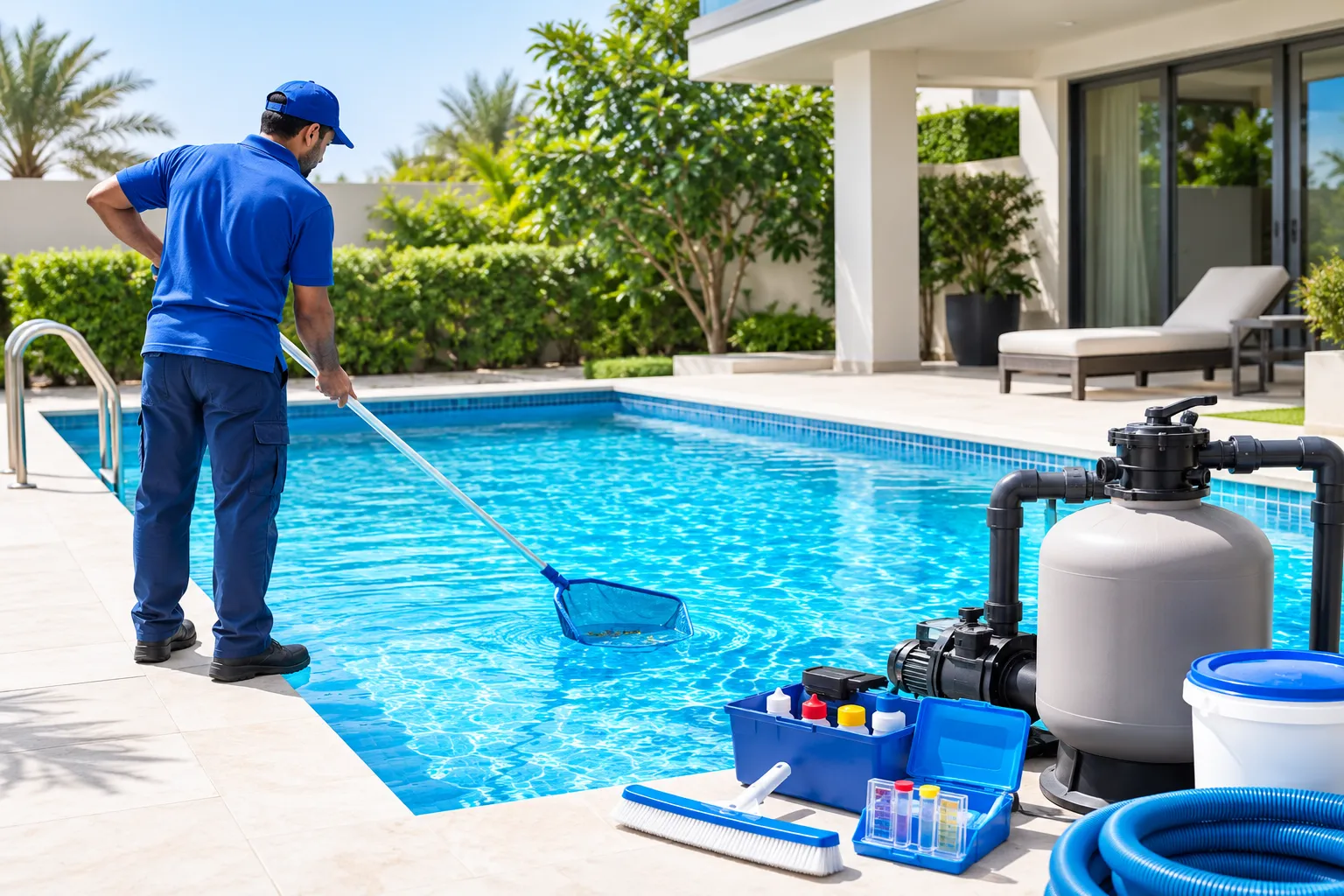

Low water pressure can be a frustrating pool problem. You may notice weak jets, slow water movement, or a return line that does not seem to push water as strongly as it used to. Sometimes the cause is easy to fix, while other cases point to a problem deeper inside the circulation system. Regular residential pool maintenance can help catch these changes early, before a small flow problem turns into a costly repair.
Start With the Pool Water Level
Before checking the equipment, look at the water level. If the pool water is too low, the skimmer may not receive enough water for the circulation system to work properly.
Water can disappear faster than expected during hot weather. In the UAE, high temperatures and strong sunlight can increase evaporation, so pool owners may need to keep a closer eye on the level.
If the water is low, bring it back to the recommended level and see whether the pressure improves. If the level keeps falling unusually fast, there could be a leak that needs attention.
Check the Skimmer Basket
A blocked skimmer basket is another simple culprit. Leaves, insects, grass, and other debris can collect inside and restrict the flow of water.
Switch off the pump before opening the basket. Empty it and rinse away any dirt. It is a small job, but a surprisingly clogged basket can make the whole system feel sluggish.
While you are there, check whether the basket is cracked or sitting incorrectly. A damaged basket may need replacing.
Inspect the Pump Basket
The pump basket can collect debris even when the skimmer looks clean. If too much material gathers inside, less water reaches the pump.
Turn the equipment off before opening the pump basket. Remove leaves and other debris, then rinse the basket properly. Check the lid and its seal as well. If the lid is not closing tightly, air may enter the system and affect water movement.
A pump that repeatedly struggles to maintain normal flow should not be left running without finding the reason.
Look at the Pool Filter
The filter is one of the first pieces of equipment worth checking when pressure changes. Dirt builds up as the filter does its job, and eventually water may have difficulty passing through.
The cleaning method depends on the type of filter installed. Cartridge filters, sand filters, and other systems have different care requirements, so follow the manufacturer's instructions.
If the filter becomes dirty unusually quickly, do not keep cleaning it without looking for the underlying cause. Heavy debris, poor water quality, or another circulation problem may be involved.
Check the Return Jets
Take a quick look at the return jets inside the pool. If water is coming back weakly from one jet but normally from another, the issue may be local to that line.
If all the returns feel weak, the problem may be closer to the pump, filter, or main circulation system.
Also check whether anything is blocking a return fitting. Avoid poking objects into the plumbing because a simple blockage can become a much bigger headache if something gets pushed further inside.
Look for Air in the System
Air can cause strange behaviour in a pool circulation system. You might see bubbles coming through the return jets or notice that the pump sounds different from normal.
Possible causes include a loose pump lid, worn seal, or a problem on the suction side. These issues are not always easy to spot from outside.
If the pump keeps losing its prime or large amounts of air are visible, it is better to have the system checked by a pool professional rather than repeatedly restarting it.
Common Reasons for Low Pool Pressure
Several things can reduce normal water flow. The most common ones include:
- Dirty skimmer or pump baskets
- A clogged or dirty filter
- Low pool water level
- Air entering the circulation system
- A blocked return fitting
- A weak or damaged pump
- A leak in the plumbing
- A valve that is not positioned correctly
Knowing the possible causes makes troubleshooting less of a guessing game.
When Should You Call a Professional?
If basic cleaning does not improve the pressure, the issue may be inside the pump or plumbing. Leaks, damaged pipes, worn pump parts, and valve problems can require proper inspection.
Do not keep forcing the equipment to run if it is making unusual noises, overheating, or repeatedly losing water flow. Continuing to operate faulty equipment may cause further damage.
Regular residential pool maintenance makes it easier to notice changes in pressure before they become serious. Keep the baskets clean, maintain the filter, watch the water level, and pay attention to changes in the way water moves through the pool. A weak flow is not something to ignore, especially when it continues for several days.
1. Why does my pool have weak water flow?
A dirty basket, blocked filter, low water level, air leak, or equipment problem can reduce water flow. Start with the simple checks first.
2. Can low pool water cause low pressure?
Yes. When the water level drops too low, the skimmer may not receive enough water, which can affect circulation.
3. When should I call a pool service professional?
If cleaning the baskets and filter does not help, or the pump makes unusual sounds or keeps losing flow, professional inspection is a good idea.






















Sign in to leave a comment.