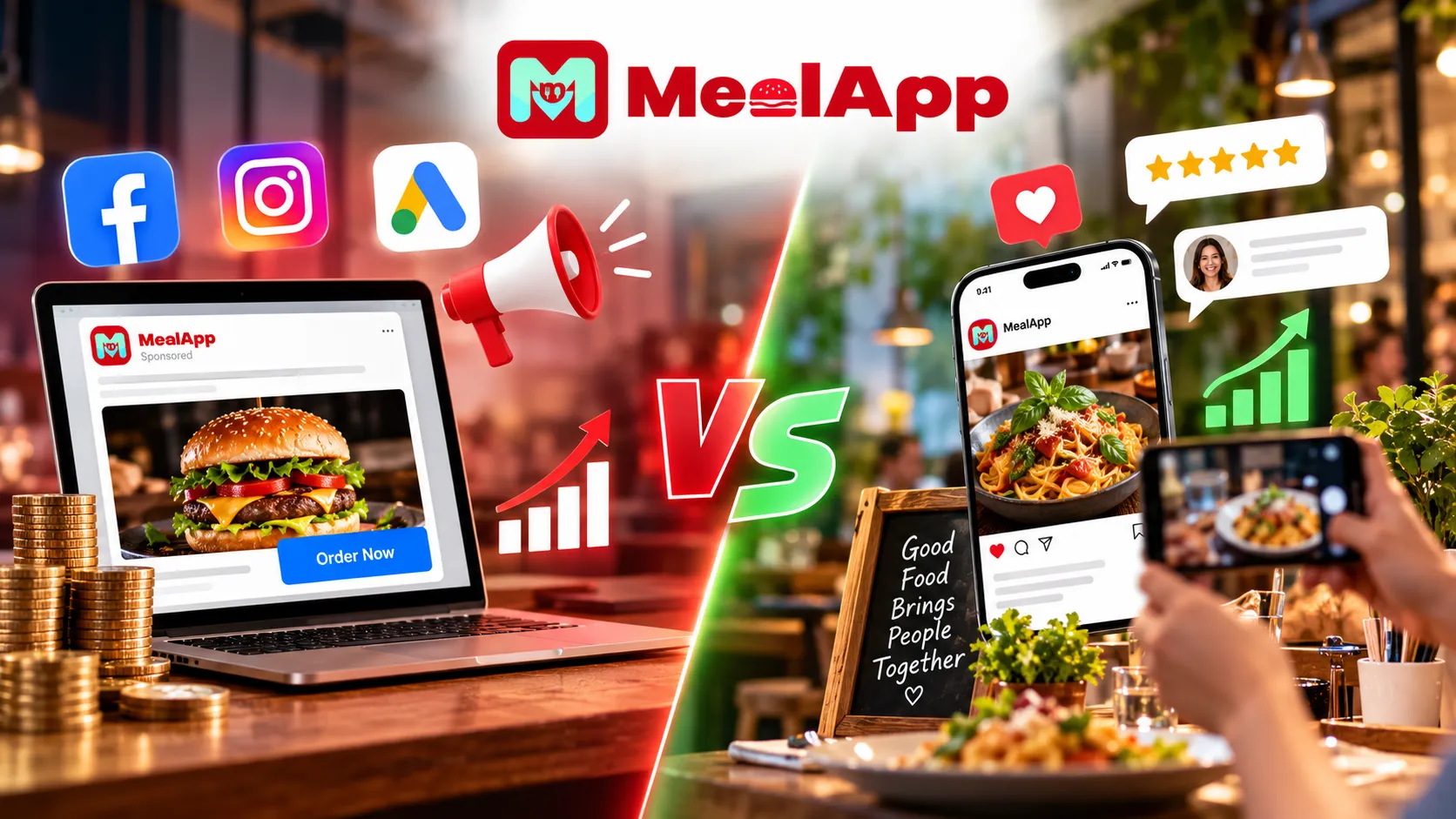

The hospitality industry operates on notoriously thin margins, making every euro spent on customer acquisition a critical investment. When operators look to fill their dining rooms or boost their takeaway volume, they inevitably face the primary marketing dilemma: should they invest in paid advertising for immediate results, or focus on organic marketing for long-term growth?
Both strategies offer distinct advantages, but relying exclusively on one often leaves a business vulnerable. Understanding the mechanics, costs, and returns of each approach is essential for building a sustainable restaurant brand.
The Case for Paid Restaurant Advertising
Paid advertising—which includes Google Ads, sponsored social media posts, and promoted listings on third-party platforms—is fundamentally about speed and precision.
The primary advantage of a paid campaign is immediate visibility. If a restaurant launches a new lunch menu on a Tuesday, a targeted Instagram ad can guarantee that thousands of local office workers see it by Wednesday morning. Paid platforms offer incredibly granular targeting; operators can display their ads specifically to users within a three-kilometer radius who have previously expressed interest in vegan cuisine, craft beer, or fine dining.
Paid advertising is highly effective for:
- New Openings: Generating immediate foot traffic before word-of-mouth has time to spread.
- Time-Sensitive Promotions: Pushing Valentine’s Day set menus or weekend event bookings.
- Retargeting: Serving ads to users who visited the restaurant's website but left without making a reservation.
However, the drawback of paid advertising is its linear cost structure. The moment you stop funding the campaign, the visibility disappears. Furthermore, as digital advertising becomes more saturated, the cost-per-click (CPC) continues to rise, requiring restaurants to constantly optimize their campaigns just to maintain the same return on investment.
The Value of Organic Marketing
Organic marketing encompasses everything a restaurant does to attract customers without paying directly for ad placement. This includes maintaining a highly optimized Google Business Profile, consistently posting engaging content on social media, utilizing search engine optimization (SEO) on the restaurant’s website, and cultivating genuine word-of-mouth.
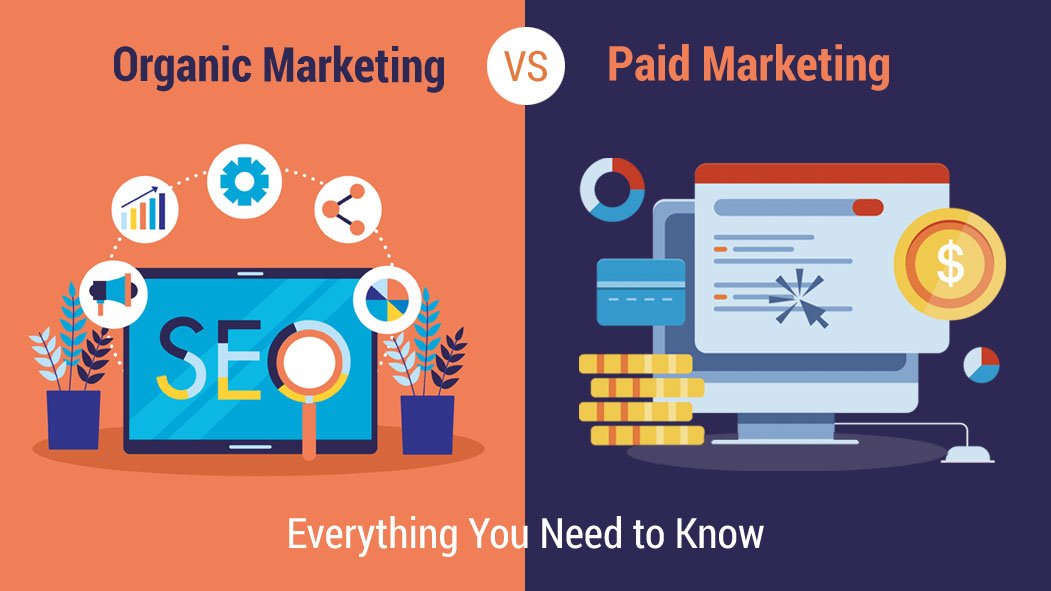
The strength of organic marketing lies in trust and compounding value. Consumers are inherently skeptical of sponsored posts, but they heavily trust peer reviews, user-generated content, and organic search results. When a restaurant shares behind-the-scenes footage of their kitchen prep or highlights local ingredient sourcing on social media, it builds an authentic community narrative that paid ads struggle to replicate.
Organic marketing excels at:
- Building Brand Loyalty: Creating a personality that guests want to engage with repeatedly.
- Long-Term Cost Efficiency: A well-optimized website ranking organically for local search terms will drive free traffic for years.
Social Proof: Encouraging user-generated content (like customers tagging the restaurant in their stories) acts as a highly persuasive, free endorsement.
The challenge with organic marketing is time. It can take months of consistent posting and SEO work to see a tangible increase in reservations or orders. It requires patience and a deep understanding of what local diners actually want to see.
The Intersection of Discovery in Antwerp
In competitive urban markets like Antwerp, the line between organic and paid marketing frequently blurs on digital platforms. Modern diners rarely differentiate between a sponsored listing and an organic result when they are hungry; they prioritize convenience and visual appeal.
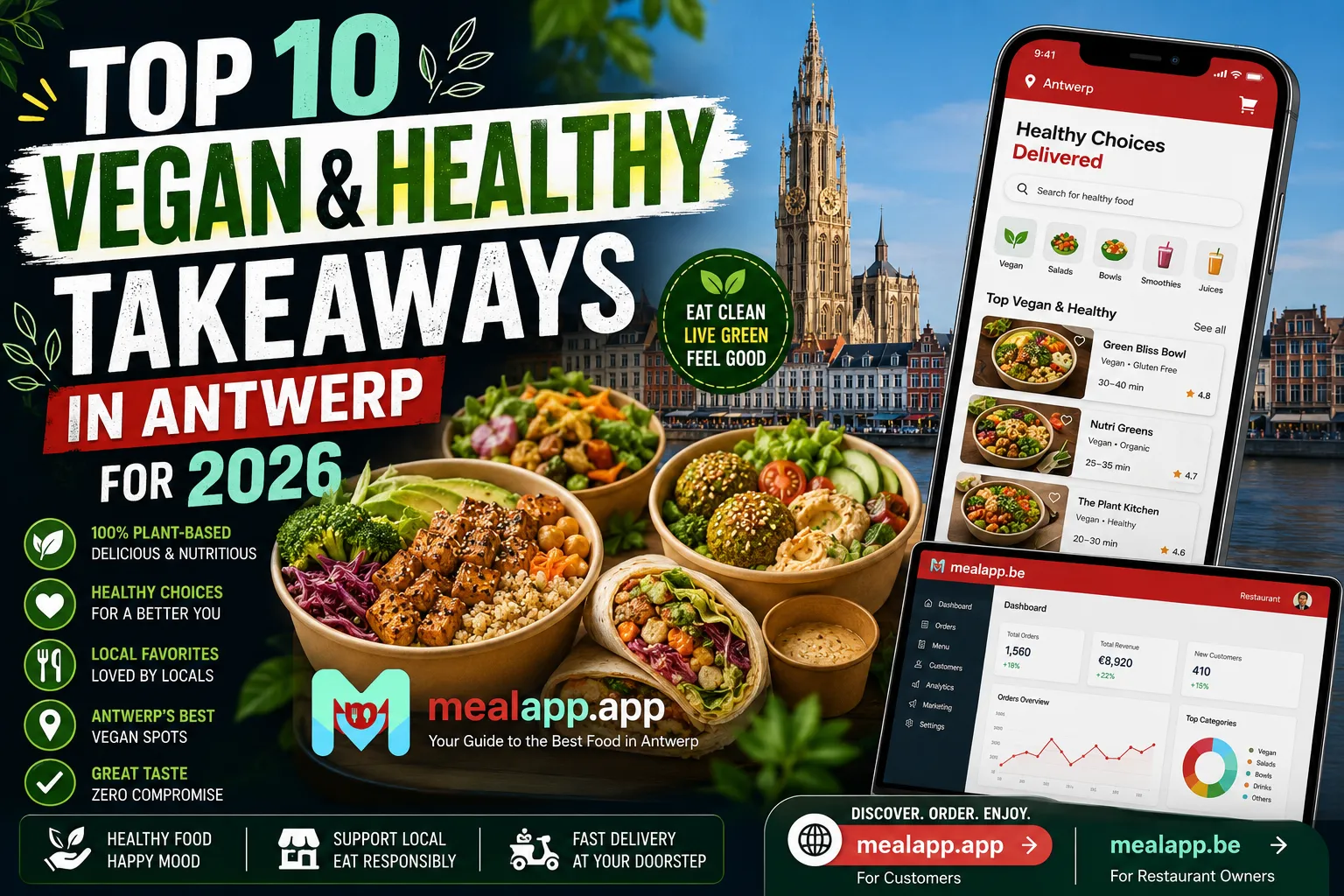
When a resident is searching for a reliable Food delivery App in Antwerpen, they are looking for a curated selection of local kitchens. Being present on these localized platforms functions as a powerful form of organic discovery. Diners scrolling through categories like "Healthy" or "Middle Eastern" will organically discover your menu based on relevance and proximity, without you having to pay per click.
The Hybrid Approach: Combining Both Strategies
The most successful restaurants do not choose between paid and organic marketing; they integrate them. Organic marketing should serve as the foundation, while paid advertising acts as an amplifier.
If a restaurant posts a high-quality video of a chef preparing a signature dish and it generates strong organic engagement, the smartest move is to put a small advertising budget behind that specific post to push it to a wider local audience. Because the content has already proven its organic appeal, the paid reach will be far more cost-effective than running a generic, text-heavy promotional ad.
Operational Readiness: The Ultimate Metric
Marketing, regardless of how it is executed, is merely a tool to drive demand. The ultimate success of a campaign depends entirely on the restaurant's operational capacity to handle that demand.
If a brilliant advertising campaign brings in a sudden surge of fifty digital orders on a Friday night, the kitchen must be prepared. Without the proper digital infrastructure, this surge leads to delayed tickets, cold food, and negative reviews—effectively destroying the investment made in acquiring those customers.
To prevent this, modern kitchens utilize integrated restaurant operations management softwares to automatically route digital orders to the kitchen display system (KDS) and pace incoming tickets. By automating the backend, operators ensure that the quality of the food and service matches the promise made in their marketing materials.
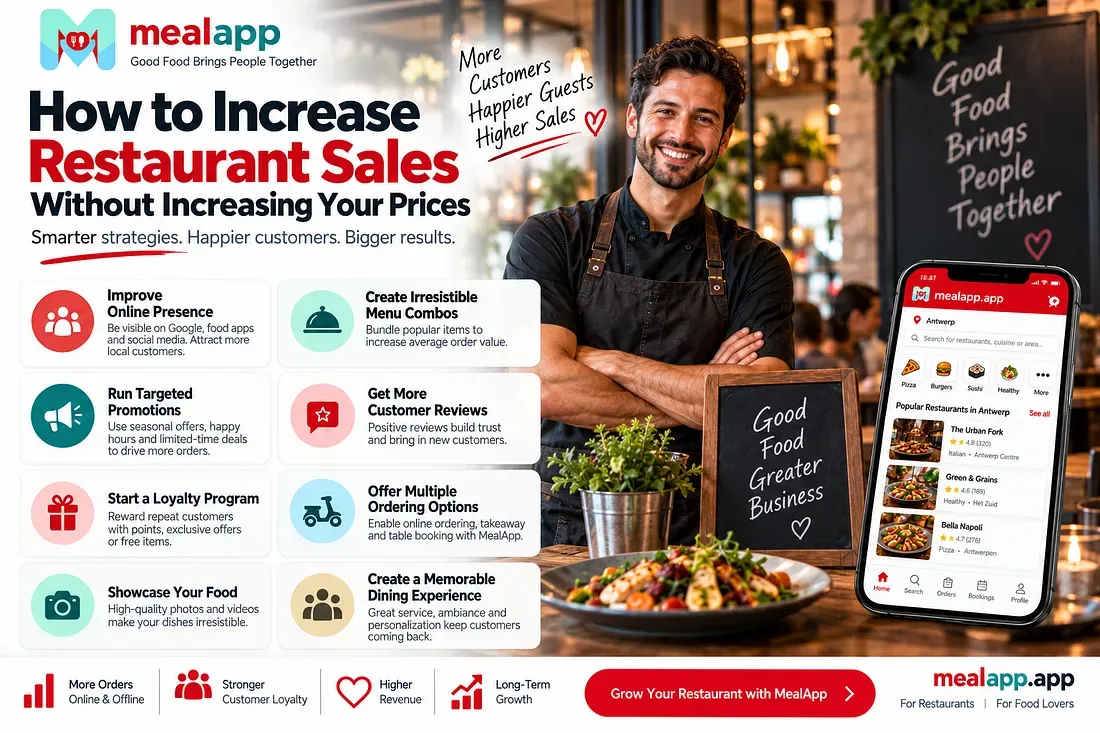
Furthermore, operators seeking to maximize their marketing returns must direct that newly acquired traffic to profitable channels. Rather than sending hard-earned digital traffic to third-party aggregators that take a massive commission, operators can choose to list your Restaurants on MealApp to capture direct orders. This strategy ensures that the revenue generated from your marketing budget stays within your business, allowing you to capture customer data and market to them organically in the future.
Finding the Balance
There is no definitive winner between paid advertising and organic marketing. A robust digital presence requires the authenticity of organic content to build trust, paired with the strategic use of paid advertising to scale reach. By balancing these two approaches and backing them up with flawless kitchen operations, restaurants can build a resilient, profitable brand that consistently fills both tables and takeaway bags.
Sources
- Sprout Social — Organic vs. Paid Social Media: How to Integrate Both — https://sproutsocial.com/insights/organic-vs-paid-social-media/
- Toast POS — Restaurant Marketing Plan and Strategies — https://pos.toasttab.com/blog/on-the-line/restaurant-marketing-plan
- Search Engine Journal — Organic vs. Paid Search: What’s the Difference? — https://www.searchenginejournal.com/organic-vs-paid-search/


















Sign in to leave a comment.