Can Modern 4K Scanning Save Very Old, Faded Home Movies?


When families finally decide to digitize their grandparents' old film reels, they often do a quick visual check. They hold a strip of the vintage film up to a lightbulb, squint through the tiny frames, and their heart sinks. Instead of vibrant green grass and bright blue skies, the entire reel looks heavily tinted pink, magenta, or entirely washed out.
At the LIFETIME HERITAGE FILMS INC studio, clients frequently hand us these discolored reels with a worried expression, asking: "Is this completely ruined? Can modern 4k film scanning actually save this, or am I just going to get a high-resolution video of pink people?"
It is a very common and completely valid fear. Fortunately, the discoloration you are seeing with your naked eye is rarely the end of the story. Understanding why film fades—and how modern high-resolution scanning technology reaches past the fading—can give you hope for your family archives.
Why Do Old Home Movies Turn Pink or Lose Color?
To understand the solution, you first have to understand the problem. The color in your vintage 8mm or 16mm film is not created by a single layer of ink. It is made up of three distinct chemical dye layers: cyan (blue/green), yellow, and magenta (red/pink).
Over the course of fifty years, these chemical dyes react differently to age, heat, and humidity. The cyan and yellow dyes are notoriously unstable. They break down and fade away much faster than the magenta dye.
When the blue and yellow information begins to vanish from the celluloid, the heavy magenta dye is the only thing left dominating the picture. This chemical imbalance is exactly why your childhood memories suddenly look like they were filmed through a heavy red filter.
The Difference Between Simply "Scanning" and "Restoring"
If you take a faded, pink film reel and run it through a cheap consumer-grade film converter you bought online, the machine will do exactly what it is programmed to do: it will take a picture of a pink frame. You will end up with a digital file that looks just as discolored as the physical reel.
This is because cheap scanners have poor "dynamic range" and low bit-depth. They cannot see past the dominant magenta dye.
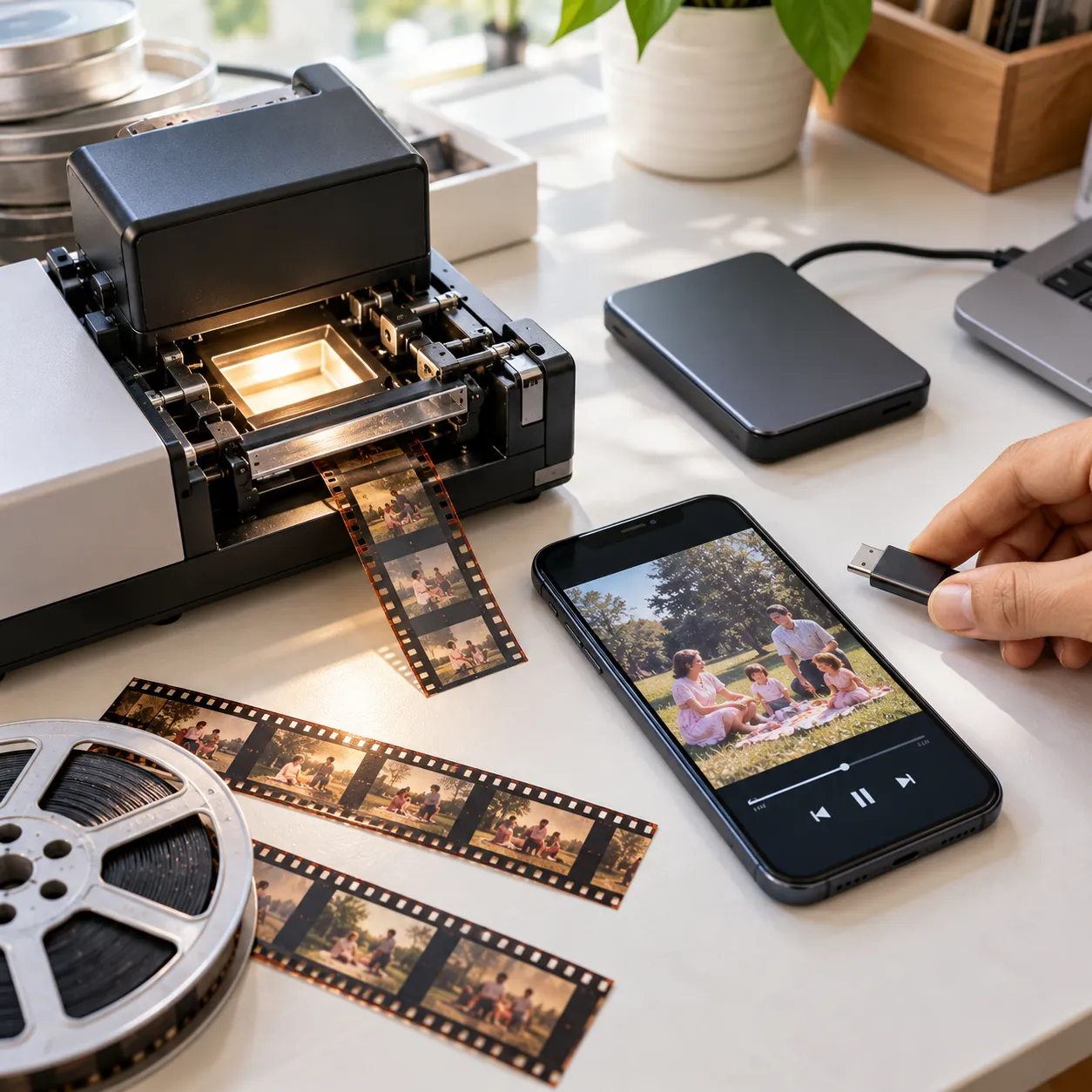
However, professional 4k film scanning operates on an entirely different level. At LIFETIME HERITAGE FILMS INC, our goal is not just to digitize the damage; our goal is to recover the original memory hidden beneath it.

How 4K Technology Actually Recovers Faded Colors
When we talk about 4K scanning, most people immediately think about "sharpness" and "pixels." But the true superpower of a professional 4K cinema scanner is its color depth.
Our high-end scanning sensors capture billions of color variations in a 10-bit or 12-bit digital space. Even if the cyan and yellow dyes have faded by 90%, that remaining 10% is still physically sitting there in the emulsion. You cannot see it with your naked eye, but our 4K sensor captures that microscopic, surviving color data.
Once that massive amount of raw color data is pulled into our system, our professional colorists use advanced grading software to isolate the overpowering magenta and digitally amplify the surviving blues and greens. By rebalancing these colors frame by frame, we can often pull natural skin tones, green trees, and blue skies back out of seemingly "ruined" film.
Will the Footage Look Exactly Like It Did 50 Years Ago?
We always believe in setting honest expectations. While modern digital color recovery is incredibly powerful, it is not magic. If a dye layer has 100% chemically evaporated, we cannot recover what is no longer there.
However, in the vast majority of cases, the transformation is stunning. The heavy red tint is neutralized, shadows are restored, and the footage regains a beautiful, natural warmth that brings the people on screen back to life. It will still have that charming, vintage aesthetic of analog film, but without the distracting chemical decay.
Don't Wait for the Remaining Colors to Disappear
While technology can perform incredible recoveries today, those fragile dye layers are continuing to fade every single day they sit in storage.
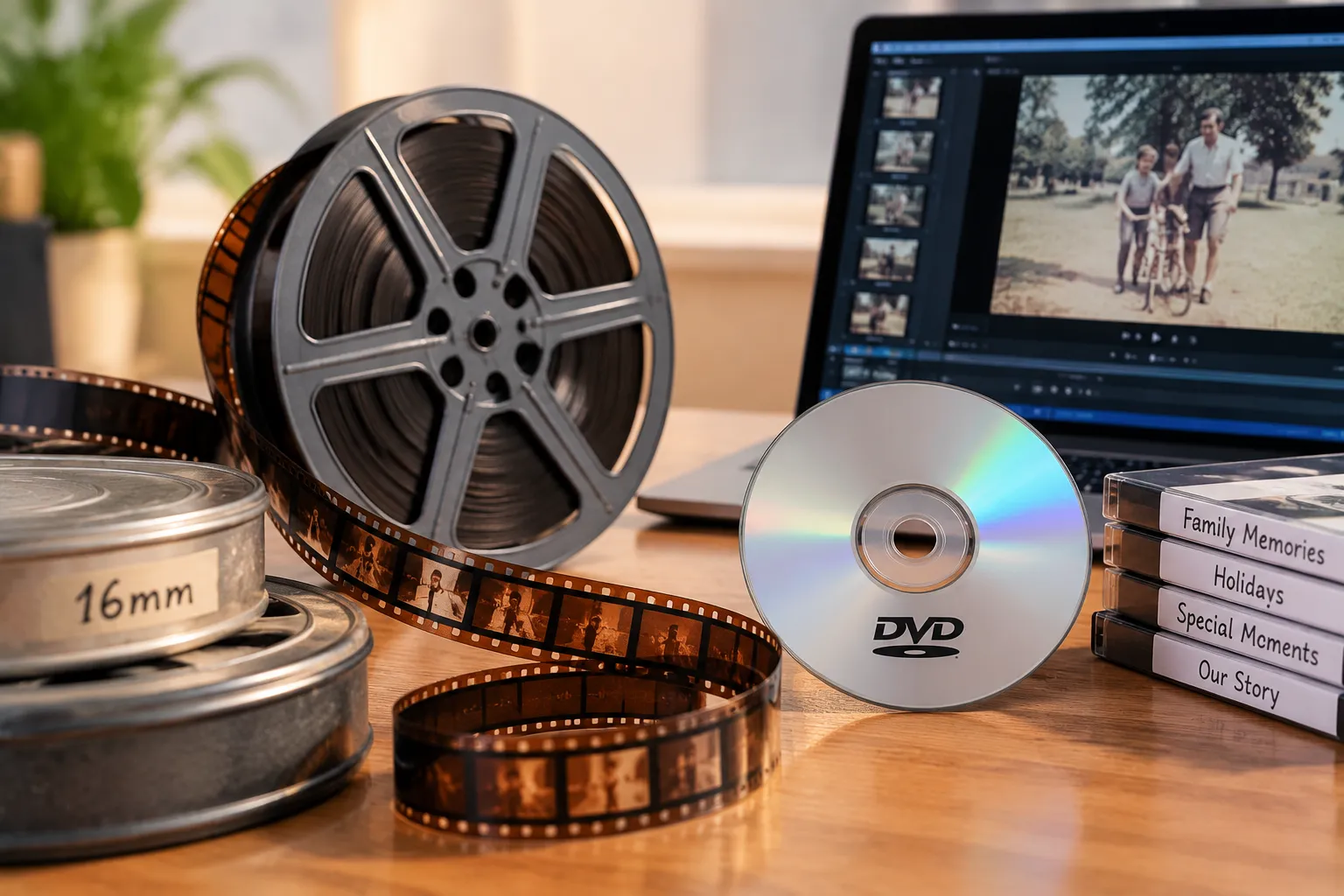
Whether you want to create a massive digital archive in the cloud or you are looking to format a 16mm Film to DVD for your older relatives to easily watch on their television, the first step is capturing the data before it vanishes. Bring your faded, pink, or discolored reels to LIFETIME HERITAGE FILMS INC, and let our scanning experts pull the true colors of your history back into the light.




Sign in to leave a comment.