
Strategic Trends and Commercial Opportunities in the Global Rib Fracture Fixation Plate Market
1. Market Landscape and Core Challenges
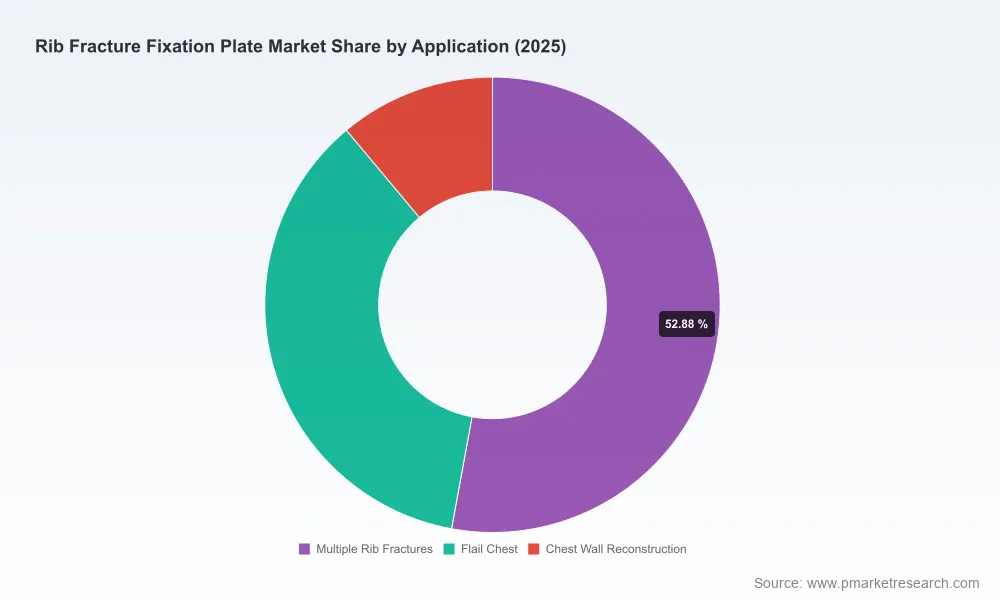
The worldwide rib fracture fixation plate market has entered a phase of structural maturation, with the total addressable market expanding from approximately $398.5 million in 2020 to $568.45 million in 2025. This growth trajectory reflects a compound annual growth rate of 7.42 percent, positioning the segment to reach nearly $938.19 million by 2032. Such expansion is not merely a function of demographic aging or rising trauma volumes. It signals a deliberate clinical shift toward surgical stabilization of thoracic injuries that were historically managed through conservative ventilation and pain management protocols. The market has crossed a threshold where internal fixation is increasingly viewed as a standard of care for complex rib injuries, particularly when respiratory compromise, prolonged recovery, or chronic pain are at stake.
Despite this favorable momentum, the industry faces several structural challenges that will dictate how value is captured over the next decade. First, reimbursement architecture remains fragmented and highly procedural. Coverage for open rib fixation varies significantly across payers and geographies, and coding structures continue to evolve as physicians refine patient selection criteria. This creates uneven adoption curves and introduces financial uncertainty for hospitals evaluating capital expenditure and inventory commitments. Second, the clinical evidence base, while strengthening, still requires robust, multi-center data to substantiate long-term outcomes tied to plate design, material selection, and minimally invasive delivery. Surgeons are increasingly demanding comparative data on complication rates, hardware prominence, and functional recovery, which places pressure on manufacturers to generate real-world evidence alongside regulatory submissions.
A third challenge lies in balancing implant performance, surgeon ergonomics, and supply chain resilience. Titanium-dominated fixation systems offer superior biocompatibility and mechanical strength, yet they carry higher procurement costs and can present handling challenges during complex thoracoplasty procedures. Meanwhile, the growing interest in absorbable and hybrid material platforms introduces new manufacturing complexity and sterilization considerations. Companies that fail to align material innovation with practical operating room workflows risk slower adoption, even when clinical indications are well-defined. The market is therefore at an inflection point where commercial success depends less on simply expanding the product portfolio and more on demonstrating procedural efficiency, economic viability, and durable patient outcomes.
2. Key Demand Drivers
Technological Innovation and Surgical Workflow Evolution
The most immediate driver of market growth is the convergence of implant design innovation and minimally invasive surgical techniques. Contemporary fixation systems are increasingly engineered around precontoured geometries, low-profile profiles, and locking mechanisms that reduce soft tissue disruption while improving construct stability. Intrathoracic and less invasive delivery approaches are reshaping procedural planning, enabling stabilization with smaller incisions and shorter operative times. These advances are particularly relevant for flail chest and severe polytrauma cases where rapid stabilization can improve pulmonary mechanics and reduce intensive care dependency. Hardware that simplifies screw placement, accommodates variable rib curvature, and minimizes palpable hardware prominence is gaining traction because it directly addresses surgeon fatigue and patient comfort. The trend points toward a market where procedural efficiency, not just implant availability, becomes the primary differentiator.
Regulatory Pathways and Coding Dynamics Influence Adoption
Regulatory and reimbursement frameworks are actively shaping demand. In the United States, rib fixation plates and associated systems are classified under bone fixation plate categories and require 510(k) clearance, a pathway that has enabled multiple recent product introductions. The recent clearance activity around rib-specific fixation technologies demonstrates how FDA pathways continue to open entry points for innovators seeking to address unmet thoracic trauma needs. At the same time, coding structures have matured to accommodate open rib fracture treatment with internal fixation, with procedure codes differentiated by the number of ribs addressed and incorporating thoracoscopic visualization when performed. These coding refinements help standardize billing and improve payer transparency, but reimbursement policies remain dynamic. Hospitals and ambulatory surgical centers are evaluating fixation programs through the lens of case volume, length-of-stay reduction, and downstream cost avoidance, making regulatory clarity and coding consistency critical enablers of broader adoption.
Demand-Side Shifts Toward Early Stabilization and Functional Recovery
Clinicians and surgical centers are increasingly favoring early stabilization for patients with multiple rib fractures or flail segments, driven by growing awareness of the relationship between unstable chest walls and respiratory complications. Conservative management still has a role, but the threshold for surgical intervention is lowering in centers where fixation infrastructure and trained teams are available. This demand-side shift is reinforced by patient expectations for faster mobilization, reduced chronic pain, and a quicker return to normal function. As surgical teams accumulate experience and outcomes data, fixation is being integrated into broader thoracic trauma pathways that emphasize multidisciplinary care, early mobilization, and structured rehabilitation. The implication for implant suppliers is clear: products that support decision-to-surgery speed, intraoperative adaptability, and postoperative comfort are aligned with the evolving clinical priority set.
Supply Chain and Cost Structure Pressures Reshape Sourcing
Cost structures and supply reliability remain important constraints. Titanium-based systems continue to dominate revenue share because of their established track record and mechanical performance, yet their pricing sensitivity is pronounced in cost-contained hospital environments. Manufacturers are responding with product line rationalization, improved inventory forecasting, and regionalized production strategies designed to mitigate disruption. There is also increasing attention on material and design optimization that can reduce per-procedure cost without compromising fixation integrity. In this context, cost is not being pursued in isolation; rather, the market is rewarding solutions that combine predictable supply, clinically reliable performance, and total cost-of-care efficiency. Companies that can demonstrate robust quality systems, consistent lead times, and transparent pricing will be better positioned to secure long-term procurement commitments.
3. Competitive Landscape and Leading Strategies
The competitive field is concentrated yet dynamic, with a handful of established players accounting for a substantial portion of revenue and several emerging participants expanding their footprint through regulatory milestones and differentiated product architectures. Zimmer Biomet has built a broad chest wall fixation presence with offerings that span traditional plate and screw systems as well as less invasive intrathoracic options, reflecting a strategy oriented around procedural versatility and surgeon preference. DePuy Synthes, operating within Johnson & Johnson MedTech, has emphasized precontoured low-profile titanium plates, locking screw technology, and intramedullary splints designed for both normal and osteoporotic rib fixation, aligning its portfolio with minimally invasive techniques and anatomically complex cases. Acumed has positioned the RibLoc platform around patented U-shaped plate geometry with anterior and posterior locking screws, distinguishing its approach through fixation stability and targeted chest wall application. KLS Martin has focused on the L1 Rib system with technology that provides rigid, semi-rigid, and malleable plate options tailored to the complex geometry of fractured ribs, appealing to surgeons who require intraoperative adaptability. Able Medical Devices and Chest Wall Innovations have advanced the commercial pipeline through FDA 510(k) clearances, highlighting the role of regulatory validation as a launch enabler and a signal of product maturity.
Recent regulatory activity underscores how the market is being shaped at the point of entry. Clearance for the PC Fix Rib Fixation System and separate clearance for a link-based fixation system incorporating plates, rods, and screws illustrate that product development remains active and that new anatomically specific technologies continue to reach commercialization. These introductions are not merely incremental; they reflect a broader push toward systems that combine fixation strength with implant flexibility, reduced profile, and surgeon-friendly instrumentation. The presence of multiple recently cleared platforms also signals that the market is not saturated in a functional sense. Instead, differentiation is increasingly tied to delivery approach, material engineering, and integration with thoracic surgical workflows.
PW Consulting
Market structure suggests a blend of consolidation pressure and targeted fragmentation. Incumbents with comprehensive trauma portfolios and established surgeon relationships benefit from cross-selling opportunities, training infrastructure, and institutional familiarity. At the same time, newer entrants can capture share by solving specific pain points, such as intraoperative contouring burden, hardware palpability, or minimally invasive instrument complexity. The competitive trend is therefore moving toward a dual dynamic: larger players are strengthening system-level value propositions while smaller innovators are carving out niches through specialized designs and focused indications. Over the forecast horizon, expect continued movement in both directions, with acquisition interest likely for platforms that demonstrate strong early adoption, clear reimbursement alignment, and compelling materials or delivery advantages. Companies that excel will be those that manage to connect product performance with procedural economics rather than competing solely on specifications.
4. Future Trends Outlook
Over the next three to five years, three interconnected trends are likely to define how value is created and contested in this market. First, fixation systems will increasingly be evaluated as procedural platforms rather than isolated implants. Expect greater emphasis on instrumentation sets, precontouring accuracy, and delivery mechanisms that support both open and minimally invasive techniques. The commercial opportunity lies in packaging implants with workflow solutions that reduce setup time, simplify screw selection, and accommodate variable thoracic anatomy. Manufacturers that can shorten learning curves and make fixation accessible to broader surgical teams will be positioned to expand adoption beyond high-volume trauma centers.
Second, evidence generation and outcomes transparency will become more central to purchasing decisions. As hospitals face continued cost scrutiny, the ability to demonstrate reduced length of stay, lower complication rates, and improved functional recovery will influence formulary inclusion and vendor selection. Platforms that support data capture, contribute to registry participation, and articulate a clear clinical value proposition will strengthen their competitive standing. This creates an opportunity for companies to differentiate through clinical education, real-world evidence programs, and surgeon engagement models that translate product performance into institutional confidence.
CMTS/QAM Market
Third, regional and material segmentation will become more nuanced. Titanium will remain the backbone of high-performance fixation, but absorbable and hybrid materials will continue to be explored for selective applications where resorption profiles and biological response offer advantages. At the same time, regional adoption patterns will diverge based on reimbursement environments, trauma care infrastructure, and surgical training availability. The opportunity is to align product positioning with local care pathways, ensuring that pricing, supply continuity, and clinical support match the maturity of each market. The primary risk is that adoption could decelerate if reimbursement remains inconsistent, clinical evidence stays uneven, or cost pressures force excessive commoditization. Businesses must therefore plan for variability in payer policy and maintain flexibility in portfolio and pricing strategy.
5. Strategic Actions for Decision Makers
For manufacturers, the immediate priority is to convert technological capability into procedural value. Investment should be directed toward instrumentation that reduces intraoperative complexity, materials and geometries that lower revision risk, and evidence programs that support reimbursement conversations. Commercial teams should align product messaging with hospital economics, emphasizing total case efficiency and predictable supply performance rather than hardware features alone. Portfolio decisions should also account for the likelihood of continued regulatory entry and the need to defend share through differentiation in delivery approach and clinical support.
Worldwide Buruli Ulcer Treatment Market
For investors, the market offers attractive growth, but returns will hinge on identifying platforms with durable differentiation and reimbursement alignment. Diligence should focus on adoption momentum following regulatory clearance, the strength of surgeon relationships, and the durability of the clinical value proposition across multiple rib fracture and flail chest use cases. Exit and consolidation scenarios are plausible for companies that achieve strong initial traction, but selection should emphasize products that solve real workflow and outcomes challenges rather than pursuing broad indications without clear economic rationale.
For procurement and surgical program leaders, the effective approach is to assess fixation systems as part of a broader thoracic trauma strategy, balancing clinical outcomes with supply reliability and cost predictability. Standardized evaluation criteria that include surgeon usability, inventory stability, and total case cost will support more disciplined sourcing decisions. Maintaining access to current segmentation data, regulatory timelines, and competitive movement is essential for avoiding procurement inertia and capturing emerging value. Detailed market intelligence that maps regional demand, material mix, and competitive positioning can accelerate these decisions and reduce execution risk.
As the rib fracture fixation plate market evolves from early adoption to a more competitive, evidence-driven phase, the organizations that succeed will be those that align implant innovation with surgical workflow, economic clarity, and sustained clinical confidence. Keeping pace with regulatory developments, reimbursement shifts, and product differentiation will separate durable growth from temporary momentum.
For detailed analysis of this topic, please visit the official page: Worldwide Rib Fracture Fixation Plate Market
Lacy Lee
Senior Marketing Manager
[email protected]
PW Consulting: www.pmarketresearch.com




























Sign in to leave a comment.