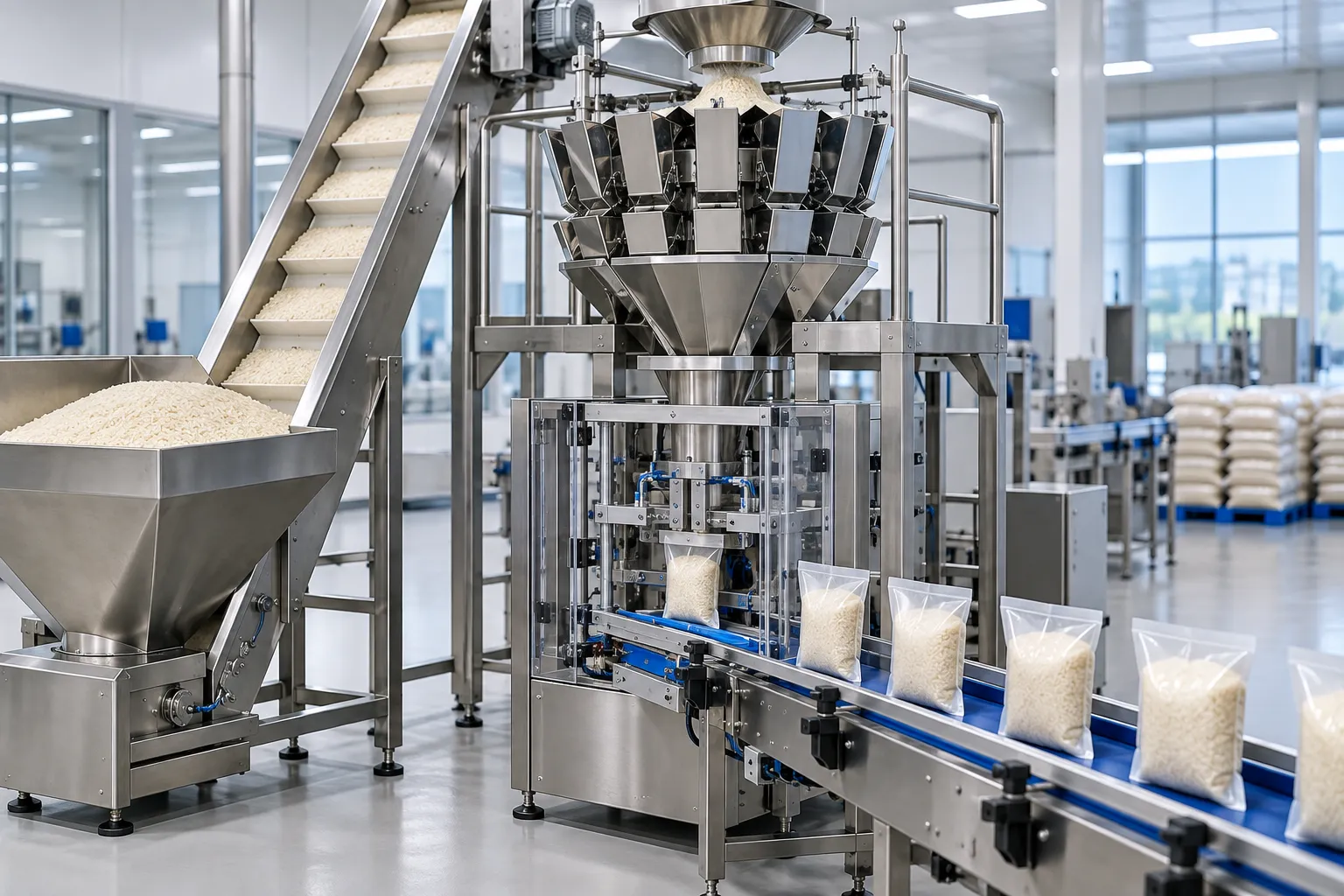

A rice mill running on manual weighing and hand-sealed bags eventually hits a ceiling. Orders grow, but output doesn't, because labor can only move so fast and inconsistent fill weights start costing money on every bag. That's the point most rice processors start looking at a rice packing machine — and where a lot of buyers make an expensive mistake by choosing based on price alone, without understanding what actually determines whether the machine earns its cost back.
Why Manual Packing Stops Working at Scale
Hand-filled rice bags carry weight variance that regulators and retailers notice. Give away even a few grams per bag across thousands of units and the losses compound fast. Manual sealing is also inconsistent — a poorly sealed bag lets in moisture and pests, which for rice means spoilage, weevils, and returned stock. Beyond the quality issue, manual packing simply can't match the output an automatic line delivers, so as order volume grows, labor cost per bag actually goes up rather than down.
Weighing Accuracy Is the First Thing to Check
Before anything else, ask how the machine weighs product — is it a multi-head weigher, an auger filler, or a simple volumetric system? For rice specifically, weight accuracy directly affects both compliance and margin. A machine with poor weighing consistency either overfills, giving away product, or underfills, risking complaints and regulatory issues on packaged food. This is the single specification that affects profitability most directly, and it is the one buyers most often skip past in favor of comparing sticker price.
Bag Type and Sealing Method Matter More Than Buyers Expect
Rice is packed in everything from small retail pouches to 25–50 kg bulk sacks, and not every machine handles the full range. Confirm the machine supports the bag sizes and materials actually used — woven sacks, laminated pouches, or vacuum-sealed bags each need different handling. Sealing quality is equally important: a weak seal is the leading cause of moisture damage and pest entry during storage and transport, which for rice exporters or bulk sellers can mean rejected shipments.
Semi-Automatic vs. Fully Automatic
Mills just scaling past manual operations often start with semi-automatic machines — lower upfront cost, simpler to operate, and still a major jump in speed and consistency over hand-packing. Once volume justifies it, fully automatic lines reduce labor dependency further and hold tighter consistency across long production runs. The right choice depends less on budget alone and more on current order volume and where the business expects to be in two to three years — buying under-capacity means re-investing sooner than planned.
Local Support Isn't a Nice-to-Have
Rice packing runs on tight seasonal schedules, especially around harvest. A breakdown during peak season is expensive in ways that go beyond the repair cost. Machines sourced from manufacturers without local presence often mean weeks of waiting on imported spare parts. A manufacturer with a facility in Pakistan and after-sales support on hand keeps that downtime to days, not weeks — which matters more over a machine's lifetime than a slightly lower purchase price.
Built for Local Operating Conditions
Power fluctuations and humidity are a daily reality in many mills, and equipment not designed for them tends to fail earlier than expected. A machine built and tested under these conditions holds up longer in real operating environments than one designed purely for controlled facilities abroad.
Making the Decision
The cheapest rice packing machine on paper isn't always the cheapest one over three years of operation. Weighing accuracy, seal quality, bag compatibility, and local support all affect the real cost per bag far more than the upfront price tag does.
Burhani Engineering manufactures filling and sealing machines suited to rice and other food and FMCG products, built and supported from its Karachi facility. Get in touch to discuss your production volume and packaging requirements.



























Sign in to leave a comment.