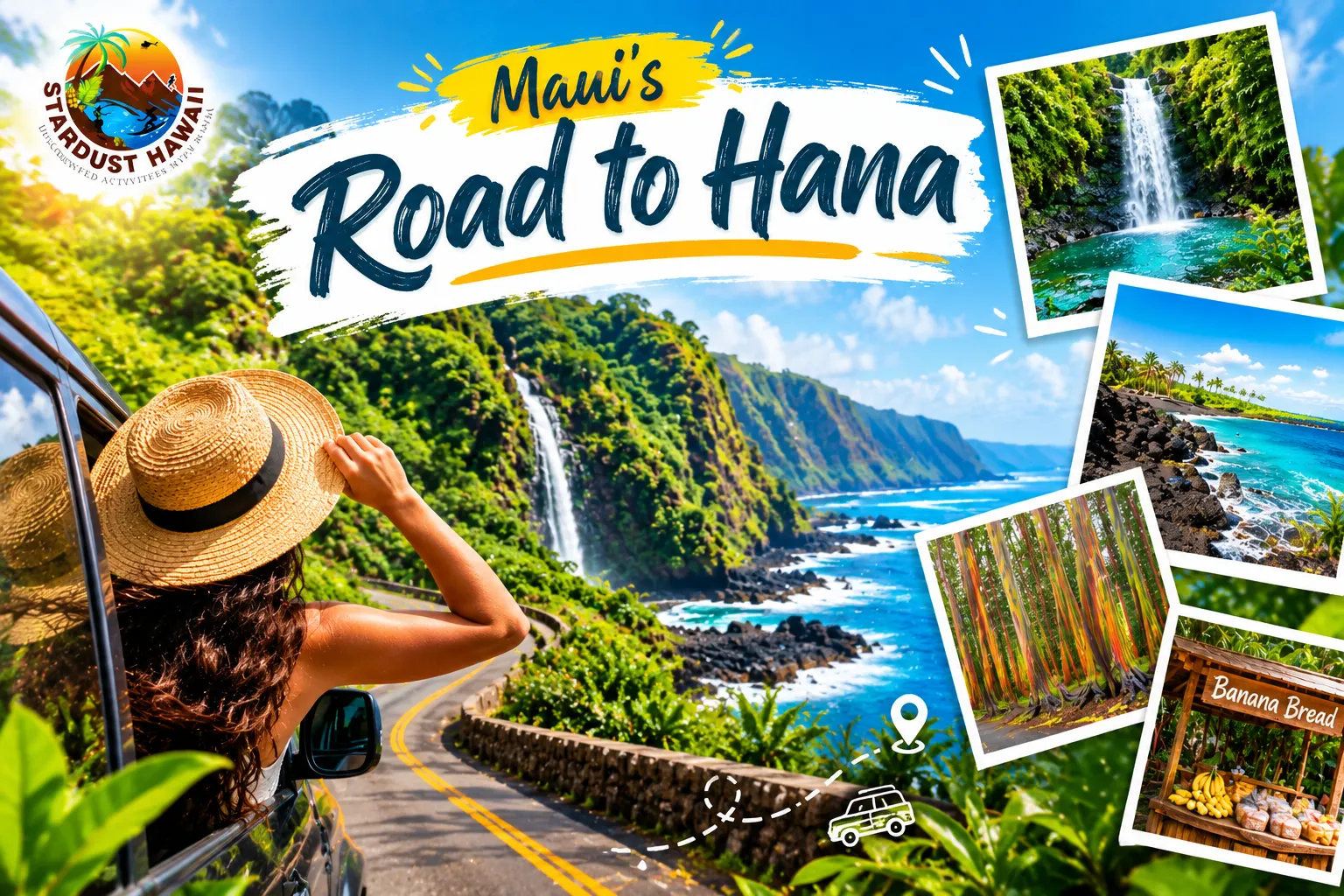

Planning a Road to Hana booking? Here's the one thing most guides skip: the 46 one-lane bridges are where trips go sideways, literally. Get the etiquette wrong, and you'll spend your Maui road trip stuck behind an angry local truck on a blind curve. Get it right, and those bridges become one of the most memorable parts of the drive.
This guide covers exactly what to do at every bridge, why the rules exist, and how to plan your Road to Hana booking so the crossings feel easy instead of stressful.
Why Bridge Etiquette Matters More Than You Think
The Hana Highway has 59 bridges total. Forty-six of them are single-lane. That's not a quirky detail; it's the defining feature of the drive.
These bridges were built decades ago, long before rental car traffic multiplied. Widening them isn't on the table either. Longtime Keanae families have pushed back on that idea for years, worried it would only invite faster driving and heavier traffic through a coastline that's still mostly rural.
So, the bridges stay narrow, and drivers share them the old-fashioned way: by paying attention and taking turns.
The Actual Rule (It's Simpler Than You'd Guess)
Here's the rule, stripped of confusion: whoever reaches the bridge first goes first. If a car is already crossing toward you, you wait. If the bridge is clear when you arrive, you go.
Most bridges have a small yellow yield sign facing one direction. That sign tells you who has the right of way if two cars show up at the same time. Watch for it as you approach.
A few extra habits make this go smoothly:
- Slow down well before the bridge, not at the last second.
- Let three or four cars cross together if you're behind a small group heading the same way. It keeps traffic moving instead of ping-ponging one car at a time.
- If you're unsure whose turn it is, a friendly wave to the other driver settles it instantly. Locals do this constantly, and most will wave back.
None of this requires confidence behind the wheel. It just requires patience, which is honestly the whole spirit of a Maui road trip.
The Mistake That Causes Most of the Trouble
Tour guides and longtime residents point to the same issue over and over: the "conga line" problem. One car follows the car ahead onto a bridge without actually checking for oncoming traffic. Suddenly there are two vehicles stuck nose to nose in the middle of a narrow span, and nobody can back up safely.
This is where things get genuinely stressful, not just awkward. Locals commute this road daily for work, school runs, and doctor's appointments. When a rental car blocks a bridge because someone wasn't paying attention, that backup delays real errands, not just sightseeing.
The fix is simple: never follow unthinkingly. Check the bridge yourself, every single time, even if the car ahead of you just crossed.
Let Locals Pass; It Changes the Whole Vibe of the Drive
Beyond the bridges themselves, one habit will make your entire trip smoother: pulling over for local traffic.
Plenty of residents drive this stretch every day for work. They're not out sightseeing; they're commuting. If you notice a car behind you, especially one moving with purpose, find a safe pullout and let them by. A quick shaka wave out the window is the customary send-off, and you'll usually get one back.
This single habit does more for your stress level than any amount of route planning. Once you stop worrying about the cars behind you, the drive actually feels like a vacation again.
Parking Rules You Can't Ignore
Since 2021, Maui County has cracked down hard on illegal roadside parking along the highway, installing dozens of no-parking signs near the most popular stops. Rangers do ticket vehicles parked on private property, blind curves, or restricted shoulders.
Before your Road to Hana booking, look up which waterfalls have designated lots. Twin Falls, Wailua Valley Lookout, and the Kīpahulu district inside Haleakalā National Park all have marked parking areas. Use them. It protects the land, keeps the road clear for other drivers, and keeps you from coming back to a citation on your windshield.
Where the Best Waterfalls on Road to Hana Actually Are
Since the bridges and pullouts are all tied to specific stops, it helps to know which waterfalls are worth the stop in the first place.
Twin Falls, near mile marker 2, is the easiest and most crowded, a good warm-up stop early in the day. Wailua Falls, closer to Hana town, drops dramatically right next to the road; no hike required. For something quieter, the Pipiwai Trail inside Kīpahulu leads to Waimoku Falls, a 400-foot cascade at the end of a bamboo-forest hike.
These aren't just scenic detours. They're also where traffic bunches up the most, so approach each one expecting slower bridge crossings and fuller pullouts nearby.
Weather and Flash Flood Awareness
One safety point that doesn't get repeated enough: stream crossings can change in minutes. A dry streambed at your feet can turn into a fast-moving flow from rain falling miles upslope, out of sight and completely unrelated to the weather where you're standing.
If the water near a swimming hole starts turning muddy, or you spot branches floating past, leave immediately. Don't wait to see if it gets worse. This applies to nearly every waterfall stop along the highway, not just the well-known ones.
Should You Drive It Yourself or Book a Tour?
Suppose the idea of narrow bridges and cliffside curves sounds like more stress than fun; a guided Road to Hana Tour solves that instantly. A local driver already knows every bridge, every pullout, and every waterfall worth stopping at, and you actually get to look at the scenery instead of gripping the wheel.
Self-driving still works well if you follow the etiquette above and build extra time into your schedule. Either way, this stretch rewards patience over speed.
Planning Your Trip
A smart Road to Hana booking starts with picking a slower travel day, since weekday and weekend traffic patterns shift the crowd levels significantly. Many locals point to midweek mornings as the calmer window, with fewer tour vans on the road at once.
Whether you're driving solo or joining a Road to Hana Tour, the bridges are non-negotiable. Learn the etiquette, respect the locals sharing the road with you, and build your stops around the best waterfalls on Road to Hana rather than rushing to reach the town itself.
Do that, and your Road to Hana booking turns from a logistics headache into the best day of your Maui road trip.
















Sign in to leave a comment.