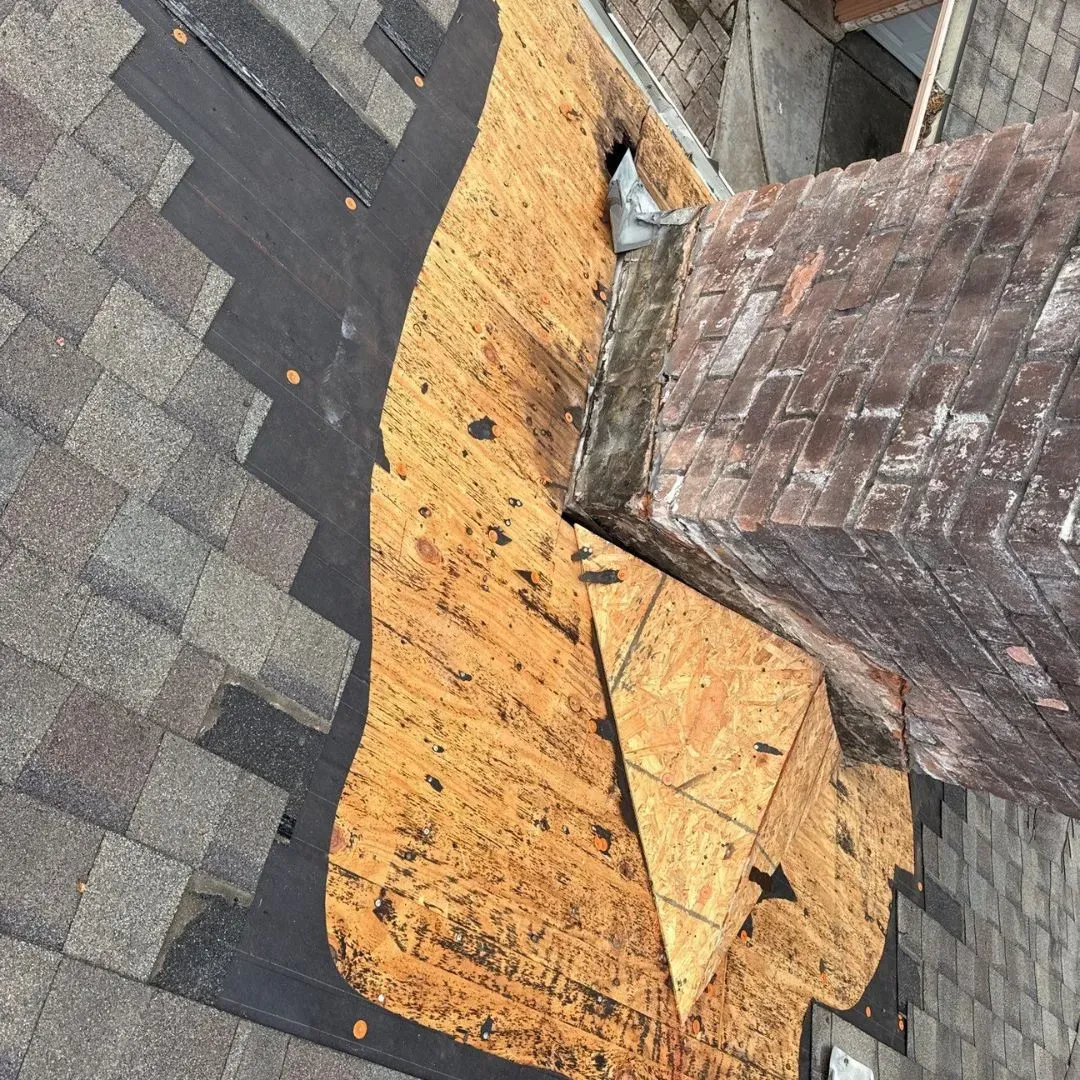

The trees are part of what makes The Woodlands feel like The Woodlands. But all that greenery can also create a few problems for your roof.
Branches, leaves, pine needles, and other debris don't necessarily cause an obvious problem right away. Instead, they can collect in valleys, around roof penetrations, or along drainage paths. Over time, those areas can hold moisture, interfere with runoff, or hide damage that would otherwise be easy to spot.
For homeowners, the key is knowing what to watch for.
Why Tree Cover Matters to Your Roof
A roof underneath heavy tree cover has different maintenance needs than one that sits completely exposed.
Branches can scrape against shingles during windy weather. Falling limbs can cause direct impact damage. Smaller debris can accumulate in areas where rainwater is supposed to flow away from the roof.
Pine needles can be especially noticeable in heavily wooded neighborhoods. When they collect in roof valleys or around gutters, they can create areas where water doesn't drain as freely.
That doesn't mean trees automatically damage a roof. It means homeowners should pay attention to how much debris is accumulating and whether water is moving normally after rainfall.
Check Roof Valleys for Debris
Roof valleys are designed to direct water toward the drainage system. They're also natural collection points for leaves and needles.
If debris repeatedly builds up in a valley, look for signs such as:
- Wet or matted piles of leaves
- Pine needles packed between roofing materials
- Dirt or organic material accumulating in the same area
- Water that appears to linger after rainfall
- Damaged or displaced shingles nearby
Don't climb onto a roof simply to investigate a questionable area. A ground-level inspection can identify obvious accumulation, while a professional can safely assess areas that aren't accessible from below.
Don't Ignore Branches Touching the Roof
A branch that lightly touches the roof might not seem like an emergency, but repeated movement can wear against roofing materials.
Wind can cause branches to rub against shingles again and again. Larger limbs can also fall during severe weather and damage shingles, flashing, vents, or other components.
If a tree has grown close enough that branches regularly contact the roof, trimming may help reduce the risk. For larger trees or difficult locations, professional tree service may be safer than attempting the work yourself.
Gutters Are Part of the Same System
Roof drainage doesn't stop at the edge of the shingles.
Leaves and needles can collect in gutters and downspouts, reducing their ability to move rainwater away from the house. When water backs up, it can create additional moisture around the roof edge and fascia.
That's why roof maintenance and gutter maintenance often go hand in hand.
After periods of heavy rain or seasonal debris, check whether water is flowing normally through the gutters and downspouts. Overflowing gutters, persistent dampness, or visible sagging deserve attention.
Look for Small Signs Before They Become Leaks
Tree-related roof problems aren't always dramatic.
You might first notice a small ceiling stain, a damaged shingle, loose flashing, or water appearing somewhere it normally doesn't.
A roof leak can also be deceptive. Water doesn't always enter directly above the spot where you eventually see a stain indoors. It can travel along the roof deck before becoming visible inside the home.
That makes repeated patching without identifying the source a poor long-term approach.
When a Roof Repair Makes Sense
Not every tree-related problem calls for major roofing work.
A localized issue such as a damaged shingle, isolated flashing problem, or small leak may be suitable for repair. The important question is whether the damage is isolated or part of a broader deterioration problem.
An inspection can help establish that difference. Achilles Roofing & Exterior describes roof inspections as a way to document the condition of the roof system and determine whether repair, replacement, or no immediate work is appropriate.
For homeowners looking into roof repair services in The Woodlands, the first step doesn't have to be deciding what work you need. It can simply be finding out what's actually happening on the roof.
A Simple Tree-and-Roof Checklist
If your home sits under heavy tree cover, periodically check for:
- Branches touching or hanging over the roof
- Pine needles collecting in valleys
- Leaves building up around roof drainage areas
- Gutters overflowing during rain
- Missing, cracked, or displaced shingles
- Damaged flashing around roof penetrations
- New ceiling stains or unexplained moisture
- Areas where water seems to remain after rainfall
If something looks unusual, document it with photos from the ground and keep an eye on whether the condition changes.
For a homeowner who needs The Woodlands roof repair, understanding the source of the problem is just as important as fixing the visible damage.
A roof surrounded by trees doesn't have to be a constant headache. Regular observation, sensible debris management, and timely attention to small problems can help keep minor roof issues from becoming much larger ones.



























Sign in to leave a comment.