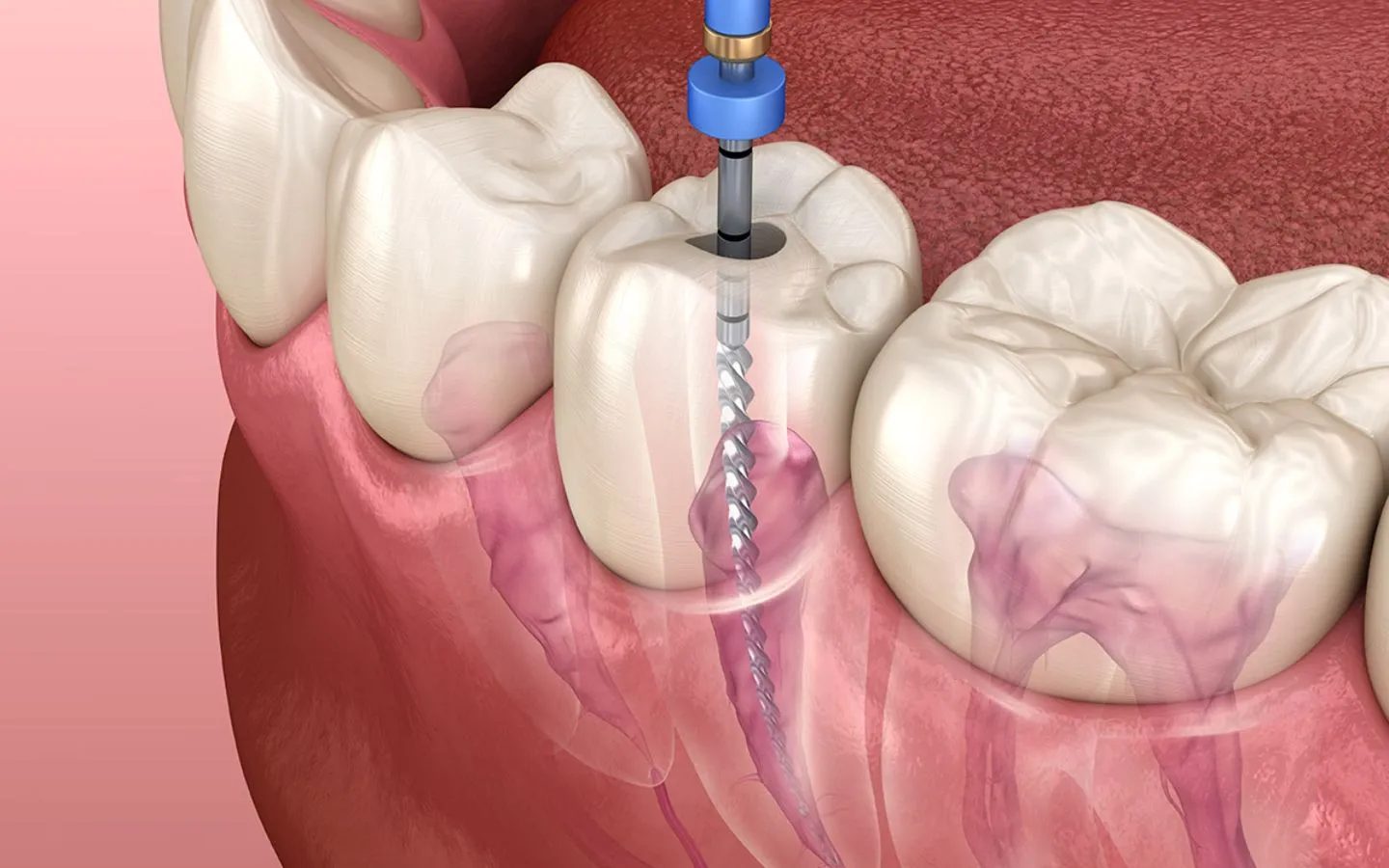

Root canal treatment, commonly called RCT, is a dental procedure used to treat a tooth when infection or inflammation has reached the inner pulp. The goal is to remove the infected tissue, clean and disinfect the root canals, seal the tooth and preserve the natural tooth instead of extracting it.
Many patients delay treatment because they are worried about pain or the root canal treatment cost in India. In reality, delaying treatment can allow an infection to become more complicated and may eventually make saving the tooth more difficult.
This guide explains when a root canal may be needed, what happens during the procedure, how much it can cost and what you can expect afterward.
What Is Root Canal Treatment?
Inside every tooth is a soft tissue called the dental pulp, which contains nerves and blood vessels. When deep decay, cracks, trauma or other damage allows bacteria to reach this area, the pulp can become inflamed or infected.
Root canal treatment removes the affected pulp from inside the tooth. The canals are then cleaned, shaped and sealed to help prevent further infection.
The objective is to save the natural tooth, rather than remove it. Dent Ally describes RCT as a treatment for severely decayed or infected teeth and uses specialist-led treatment and modern technology for root canal procedures.
When Do You Need a Root Canal?
Not every toothache requires a root canal. A dentist needs to examine the tooth and, when appropriate, use dental imaging to determine the cause of the problem.
Some common signs that may indicate a need for root canal treatment include:
Persistent Tooth Pain
Pain that continues or occurs without an obvious trigger can be a warning sign of deeper dental infection or inflammation.
Prolonged Sensitivity to Hot or Cold
If a tooth remains sensitive for some time after exposure to hot or cold foods or drinks, the pulp may be affected. Dent Ally lists prolonged hot and cold sensitivity among symptoms that can indicate the need for RCT.
Pain While Biting or Chewing
Pain when putting pressure on a particular tooth can sometimes indicate inflammation or infection involving the tooth's inner structures.
Swollen or Tender Gums
Infection around the root can cause swelling or tenderness in the surrounding gum.
A Pimple or Abscess on the Gum
A recurring small bump or pimple on the gum near a tooth can sometimes indicate an underlying dental infection.
Tooth Discolouration
A darkened or discoloured tooth, particularly following trauma, can indicate damage to the pulp and requires professional assessment.
Importantly, a tooth can sometimes require root canal treatment even when it does not hurt. A dentist may identify deep decay or pulp infection through examination and X-rays.
Root Canal vs Dental Filling: What's the Difference?
A dental filling and root canal treatment address different levels of tooth damage.
A filling is generally used when decay has not progressed deeply enough to require removal of the infected pulp. The damaged tooth structure is removed and the resulting cavity is restored.
A root canal is needed when the infection or damage has reached the pulp inside the tooth.
In simple terms, a filling repairs a tooth affected by decay, while root canal treatment is used to treat an infected or damaged pulp and preserve the tooth.
What Happens During Root Canal Treatment?
The exact procedure can vary according to the tooth and complexity of the case, but a typical root canal involves several stages.
1. Examination and Diagnosis
The dentist examines the tooth and may take digital X-rays or other imaging to understand the root structure and identify infection.
At Dent Ally, digital imaging is used to assess the affected tooth before treatment.
2. Local Anaesthesia
Local anaesthesia is administered to numb the area around the affected tooth.
Modern techniques are designed to make the procedure comfortable. Dent Ally states that its root canal treatments use modern anaesthesia and technology to minimise discomfort.
3. Accessing the Pulp
The dentist creates a small opening in the tooth to access the pulp chamber and root canals.
4. Cleaning and Shaping the Canals
The infected or damaged pulp is removed. The root canals are then cleaned, disinfected and shaped so they can be properly sealed.
Dent Ally describes the use of modern instrumentation and cleaning protocols in its root canal treatment approach.
5. Sealing the Tooth
Once the canals have been cleaned and disinfected, they are filled and sealed to reduce the risk of reinfection.
6. Restoring the Tooth
A root-canal-treated tooth may require a permanent restoration such as a crown, particularly when a significant amount of tooth structure has been lost or the tooth is at higher risk of fracture.
Dent Ally specifically notes that a crown may be recommended after RCT to protect and restore the tooth's chewing function.
Is Root Canal Treatment Painful?
This is one of the biggest concerns patients have about RCT.
With modern local anaesthesia and contemporary dental techniques, root canal treatment can generally be performed with little or no significant pain during the procedure. Some soreness or sensitivity can occur afterward, particularly when biting on the treated tooth.
Dent Ally describes its modern root canal procedures as comfortable and virtually pain-free, although individual experiences can vary.
If you are experiencing significant pain after treatment, contact your dentist rather than assuming that it is normal.
How Long Does a Root Canal Take?
The treatment time depends on the tooth, infection and complexity of the root canal system.
Some straightforward cases can be completed in a single appointment. Dent Ally states that many of its RCT cases are completed in approximately 45–60 minutes, while complex cases may require two visits.
Single-visit RCT is not appropriate for every patient or every tooth. Your dentist should determine the treatment approach based on the clinical condition.
What Is the Root Canal Treatment Cost in India?
The root canal treatment cost in India varies according to several factors, including the tooth being treated, complexity, dentist's expertise, clinic location, materials and technology used.
Dent Ally's published cost guide lists an approximate average of ₹6,000 for root canal treatment, while another Dent Ally guide gives broader ranges of approximately ₹3,000–₹6,000 for front teeth, ₹4,000–₹8,000 for premolars and ₹5,000–₹12,000 for molars. Premium clinics in metropolitan areas can charge more depending on the specialist and treatment complexity.
These figures are indicative and should not be treated as a fixed quote. A personalised examination is required to determine the actual treatment cost.
What Factors Affect Root Canal Cost?
Several factors can influence the final price.
Type of Tooth
Front teeth generally have fewer and simpler canals than molars. Molars can have multiple canals and more complex anatomy, which may require more time and specialised treatment.
Complexity of the Infection
A straightforward infection may be easier to treat than a tooth with complicated canal anatomy, extensive infection or previous failed root canal treatment.
Dentist or Endodontist Expertise
Specialist treatment may cost more because of the additional training and experience involved in managing complex root canal cases.
Technology and Equipment
Digital imaging, rotary instruments, magnification and other modern equipment can contribute to treatment costs. These technologies can also help the dentist diagnose and treat complex root canal anatomy more precisely.
Crown or Final Restoration
The RCT itself may not be the complete cost of restoring the tooth. Depending on the tooth and amount of remaining structure, a dental crown may be recommended afterward.
Dent Ally's cost information notes that crowns can represent an additional expense after RCT.
Why Is a Crown Often Recommended After Root Canal?
A root-canal-treated tooth can become more vulnerable to fracture, particularly when substantial tooth structure has already been lost because of decay or previous restoration.
A crown can help protect the remaining tooth structure and restore its function.
However, whether a crown is needed depends on factors such as the tooth's location, remaining structure and the restoration required. Your dentist should recommend the appropriate restoration after assessing the tooth.
Can Root Canal Treatment Save a Natural Tooth?
Yes. One of the main purposes of RCT is to preserve a natural tooth that might otherwise need extraction.
Removing the infected pulp and sealing the root canals allows the remaining tooth structure to be retained. Preserving a natural tooth can also help maintain normal chewing and avoid the need for tooth replacement.
Dent Ally describes RCT as a procedure intended to save an infected tooth from extraction.
What Happens After Root Canal Treatment?
Some tenderness may occur after treatment and usually improves as the surrounding tissues settle.
Until your dentist confirms that the tooth is adequately restored, avoid putting excessive pressure on it. Maintain regular brushing and flossing, and follow the specific aftercare instructions provided by your dental team.
If a crown has been recommended, it is important to complete the final restoration within the timeframe advised by your dentist.
What Happens If You Delay a Root Canal?
Ignoring symptoms does not necessarily mean that the infection will resolve on its own.
If bacteria continue to affect the pulp, infection can spread beyond the tooth into the surrounding tissues. In some cases, a tooth that could previously have been saved may become more difficult to treat.
That is why persistent tooth pain, swelling, prolonged sensitivity or a gum abscess should be evaluated by a dentist.
Frequently Asked Questions
What is the root canal treatment cost in India?
The cost varies depending on the tooth, complexity, dentist, location and treatment technology. Dent Ally publishes an approximate average of ₹6,000, while broader published ranges can extend from ₹3,000 to ₹12,000 depending on the type of tooth.
Is root canal treatment painful?
Modern root canal treatment is performed under local anaesthesia and can be completed with minimal discomfort. Some soreness may occur after treatment.
How do I know if I need a root canal?
Persistent tooth pain, prolonged hot or cold sensitivity, pain while chewing, swelling, gum pimples, tooth discolouration or deep decay can be warning signs. Only a dental examination and appropriate imaging can confirm whether RCT is necessary.
Can a root canal be completed in one sitting?
Some cases can be completed in a single appointment, but not every case is suitable for single-visit RCT. Dent Ally states that many of its RCT procedures are completed in one sitting, while complex cases may require two visits.
Do I need a crown after root canal treatment?
A crown is often recommended when the treated tooth has lost significant structure or is at greater risk of fracture. Your dentist can determine whether a crown or another restoration is appropriate.
Is it better to extract a tooth instead of getting a root canal?
Not necessarily. When a natural tooth can be predictably restored, preserving it through root canal treatment can avoid extraction and the need for tooth replacement. The appropriate option depends on the condition of the tooth.
Final Thoughts
Root canal treatment is designed to remove infection, relieve symptoms and preserve the natural tooth. It may be recommended when deep decay, trauma or infection has affected the pulp.
The root canal treatment cost in India depends on the tooth, complexity, specialist expertise, technology and any restoration required afterward. Rather than choosing a clinic based only on price, consider the quality of diagnosis, treatment planning, infection control, technology and follow-up care.
If you have persistent tooth pain, sensitivity, swelling or pain while chewing, getting the tooth examined early can help determine whether you need a filling, root canal or another treatment. Dent Ally provides specialist root canal treatment in Delhi and Gurugram using modern diagnostic and treatment techniques.































Sign in to leave a comment.