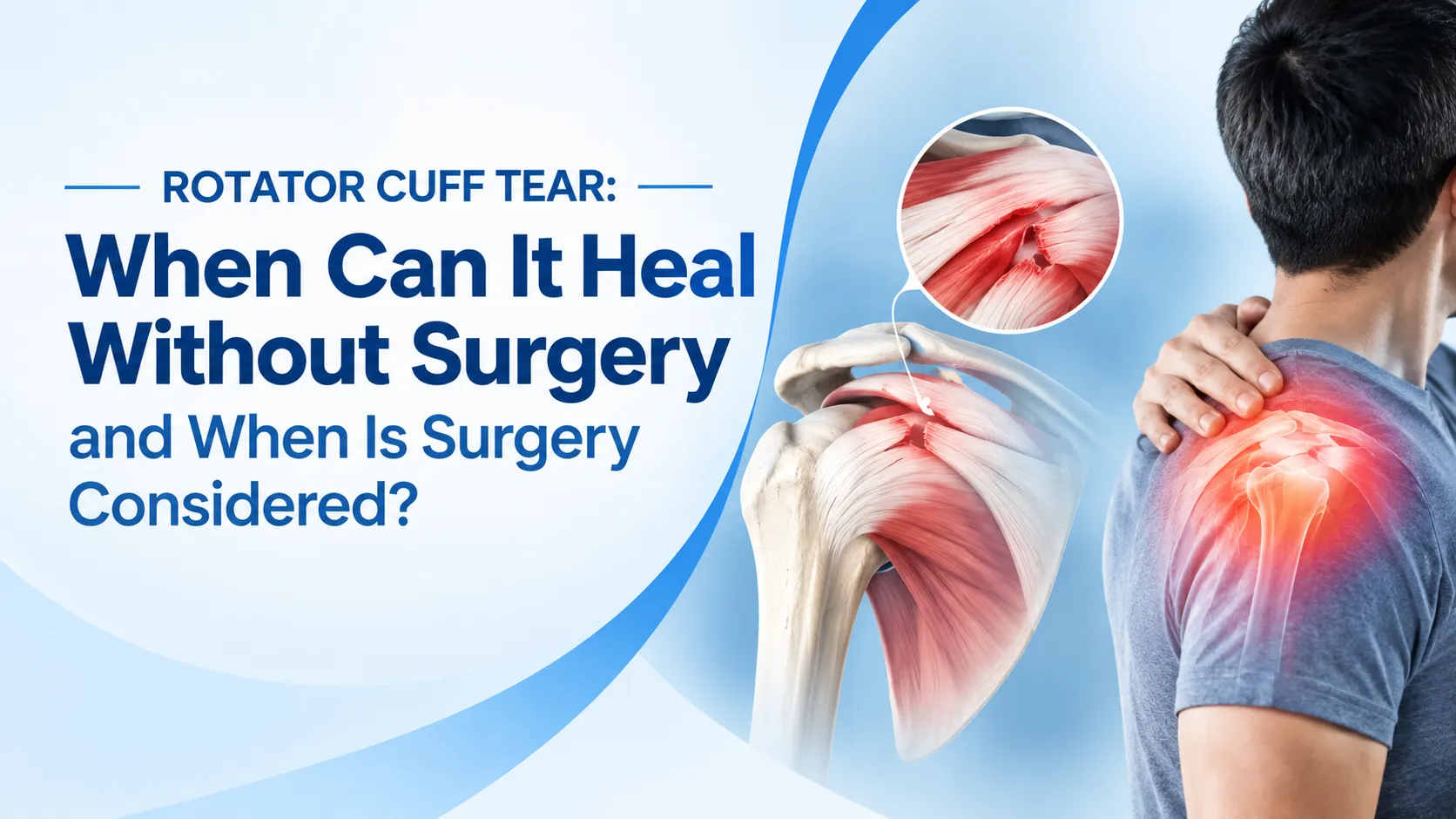


A rotator cuff tear does not automatically mean that surgery is necessary. Some people with rotator cuff tears can manage their symptoms with physiotherapy, activity modification and other non-surgical treatments. The right approach depends on the type and size of the tear, symptoms, activity level and how the shoulder responds to treatment.
Can a rotator cuff tear heal without surgery?
It depends on what we mean by “heal.”
Some patients can experience significant improvement in pain, strength and shoulder function without surgery. Physiotherapy can help strengthen the muscles around the shoulder and improve how the joint functions.
However, a torn tendon does not necessarily return to its original structure simply because symptoms improve.
This is why treatment decisions should consider both the tear itself and how much it is affecting the person's daily life.
When is non-surgical treatment considered?
Non-surgical treatment may be considered when symptoms are manageable and the shoulder is still functioning reasonably well.
Depending on the individual situation, treatment may include:
- Physiotherapy and strengthening exercises
- Activity modification
- Pain-management strategies
- Gradual return to activities
The goal is to reduce symptoms and improve shoulder function without immediately moving to surgery.
When might surgery be considered?
Surgery may be discussed when significant symptoms continue despite appropriate non-surgical treatment.
It may also be considered in certain situations involving a large or acute tear, significant weakness, loss of function, or a patient whose activities require substantial shoulder strength.
The decision isn't based on the MRI alone. Symptoms, physical examination, imaging findings, age, activity level and personal goals all need to be considered together.
Does every rotator cuff tear get worse?
Not necessarily.
Some tears remain relatively stable, while others can progress over time. This is one reason monitoring and appropriate follow-up can be important, particularly when symptoms persist or function changes.
Having a tear on an MRI also doesn't automatically explain every shoulder symptom. Imaging findings need to be interpreted alongside the clinical picture.
What should patients do if physiotherapy isn't helping?
If symptoms aren't improving after a reasonable period of appropriate rehabilitation, it may be worth returning to the treating doctor for reassessment.
The next step might be adjusting the rehabilitation programme, investigating another potential source of pain, or discussing whether a surgical opinion is appropriate.
The Bottom Line
A rotator cuff tear does not automatically mean surgery. Many patients can improve their pain and shoulder function with appropriate non-surgical treatment.
At the same time, persistent pain, significant weakness or loss of function may warrant further evaluation and a discussion about surgical options.
The important question isn't simply “Do I have a rotator cuff tear?” but rather “How is the tear affecting my shoulder, and what treatment is most appropriate for me?”
Need an Evaluation for a Rotator Cuff Tear?
If you have persistent shoulder pain, weakness, or difficulty using your arm after physiotherapy, a clinical evaluation can help determine whether the symptoms are related to a rotator cuff tear and what treatment options may be appropriate.
Dr. Abhinandan Punit, orthopedic and sports injury specialist in Bangalore, evaluates shoulder conditions and provides treatment based on the tear, symptoms, shoulder function, activity level and individual recovery goals.
If you would like to discuss your shoulder symptoms, you can contact Dr. Abhinandan Punit for an evaluation.




























Sign in to leave a comment.