
Introduction
On January 1, 2026, a significant change happened that was largely ignored by the product teams. The thing is, when CMS finalised the 2026 Physician Fee Schedule, it changed not only billable items for the clinics but also the requirements for the software supporting remote treatment. As a result, the billing rules dictate the capabilities that the app should have, while the roadmap of most companies hasn't caught up with that yet.
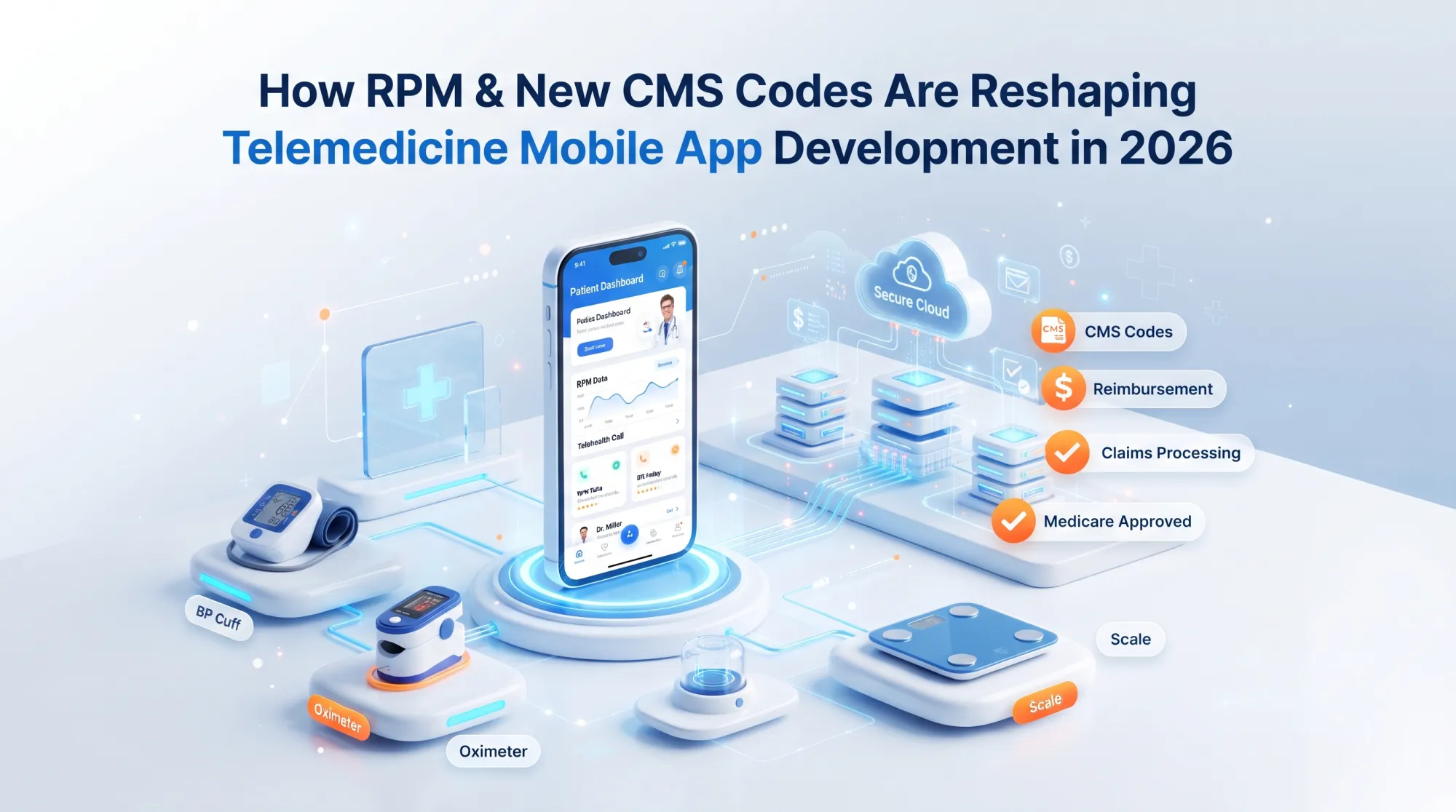
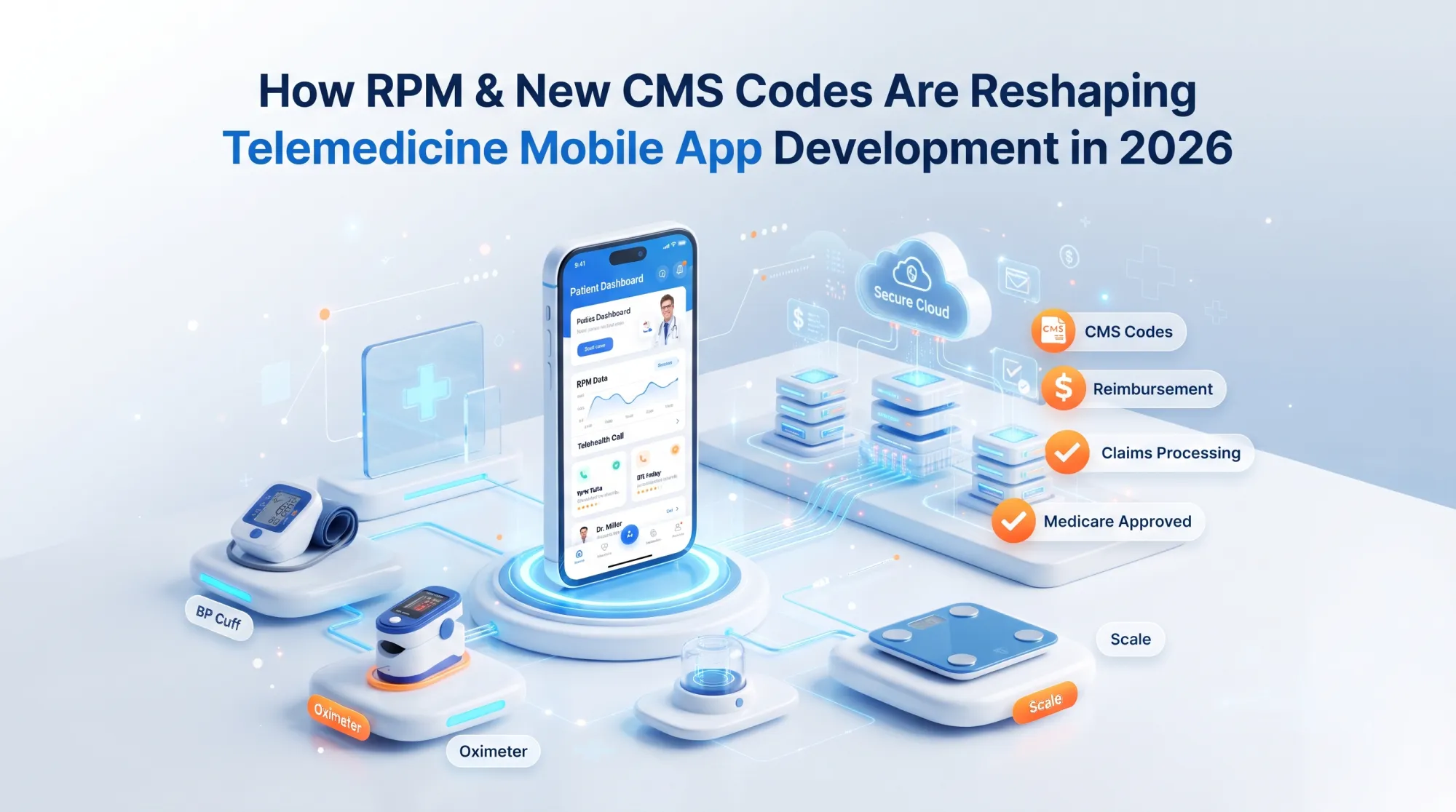
The problem is that almost every guide explains what codes billers should use, not what codes are available for builders. This article will offer you the code-to-feature roadmap and illustrate how RPM and New CMS Codes Are Reshaping the platforms that developers create. With correct implementation, telemedicine mobile app development in 2026 will become the key to success rather than a burden, and that is why the most clever teams started considering telemedicine app development a revenue choice along with the design one.
What Changed in 2026: New CMS Reimbursement Codes for RPM
There are three changes in the 2026 rule that should go to the backlog, not just billing guide. Together, they extend RPM reimbursable scope and indicate what data should be gathered by the application to qualify.
Firstly, new code 99445 allows reimbursement of short-term monitoring with just 2-15 days of data gathering, eliminating the previous requirement of 16 days minimum that made episodic and post-discharge care unbillable. Secondly, code 99470 reimburses the first 10-19 minutes of monthly management time, at roughly half the rate of the full 20-minute code. Finally, CMS stated it will adopt CPT language allowing audio-only and asynchronous communication to count toward billable service time. As detailed in this 2026 RPM and RTM reimbursement analysis, these updates apply to services on or after January 1, 2026.
Every code stands for a minor specification change, but taken together they show how RPM and new CMS codes are reshaping the way you build.
How the New RPM Codes Reshape Telemedicine Mobile App Development
This is how the strategy comes into connection with the codebase. The telemedicine definition is now shifting on the level of features due to the emergence of the RPM model and CMS reimbursement codes, and hence the success of the project depends on the few decisions that should be made on the level of coding. When everything is done right, every consultation will become a payable bill for you.
Mapping CMS Reimbursement Codes to App Features
This code indicates a capability that is required for your application something that you may not realize when looking at the billing guidelines. For example, code 99445 requires a roadmap that allows configurable monitoring windows down to two days, rather than the usual 30 days, to support billing for post-discharge episodes. Code 99470, on the other hand, requires the ability to track management time billed for the first 10 minutes of the month. This means that your system should be able to provide clear data from the devices associated with each patient, demonstrating how RPM and New CMS Codes Are Reshaping the feature requirements of modern telemedicine platforms.

Data Day Tracking and Compliant Time Logging
Verification of billing is another requirement that comes with coding. The telemedicine software that you develop needs to track data-days and monitor all clinical minutes in a traceable manner. Spreadsheets may not be able to survive the Medicare audit, but automated tracking would do just fine. This guarantees that your client doesn’t lose out on revenue, while lowering compliance risks. Additionally, it makes negotiation for partnership easier, since the same mechanism works for yearly updates to codes.
Async Messaging and Audio Only Communication as Billable Features
Chatting that comes with the system was previously considered additional, but starting from 2026, the same will be used as a means of making money. According to CMS, both asynchronous messaging and audio visits will be calculated within the period of service delivery, which means that secure messaging should be treated as part of the infrastructure that is to be billed. The plan of your development should recognise chat, voice visits, and logging as essential ones for billing purposes.
Building 2026 Ready Remote Patient Monitoring Software
The work is not done after programming; it is all about the architecture. RPM and CMS updates make modifications in the software layer, and the way you code today will determine your billing in the future. Modern telemedicine mobile applications must be fully integrated with devices (Bluetooth cuffs, glucose meters, pulse oximeter) to obtain accurate information that can be documented. Utilise interoperability standards like FHIR and HL7 for transferring the data to EHRs and use HIPAA architecture to avoid any data leakage. Even CMS demanded payment for software as a service.
Build vs. Buy Planning Your Healthcare Mobile App Development Roadmap
Rebuild or update? It all depends on the number of features mentioned above that your telemedicine app possesses. If your existing software lacks functionality to log data days and minutes per session, then a focused update will do. If your platform is outdated and rigid, then go for the full-blown rebuild. Either way, make sure to assess the cost of developing a telemedicine app in terms of reimbursement, not price.
Conclusion
In 2026, the billing code and the product spec will be one and the same discourse. RPM and New CMS Codes Are Reshaping the telemedicine industry, as RPM technology, along with the new CMS codes is changing the landscape of telemedicine, and companies that adapt their apps in accordance with the new criteria first will reap the benefits that the rest of the market will leave behind. Before Q4, review the codes through the audit of your product and fix any shortcomings. If you're ready to turn your compliance into profit, work with a team who will help you develop a revenue-ready telemedicine mobile application.























Sign in to leave a comment.