

Financial markets have traditionally followed fixed operating hours. Stock exchanges open and close according to regional schedules, while bond and private asset transactions can involve even longer settlement periods. Real-world asset tokenization introduces a different possibility. When ownership rights are represented through blockchain-based tokens, asset markets may continue operating outside the hours followed by conventional exchanges.
This does not simply mean that investors can buy or sell tokens at midnight. The bigger question concerns what parts of an asset market can actually function around the clock. Trading, settlement, compliance checks, custody, pricing, investor verification, and asset servicing all have different requirements. RWA tokenization development is therefore moving the discussion beyond token creation toward the wider operating model of digital asset markets.
An RWA tokenization platform development project may include trading interfaces, smart contracts, investor accounts, compliance controls, payment systems, custody connections, and market data services. Together, these components could support activity across different time zones. However, continuous availability does not automatically mean continuous liquidity or unrestricted trading.
Why Traditional Markets Have Fixed Trading Hours
Traditional financial markets operate within defined schedules for several practical reasons. Exchanges need coordinated operating procedures, clearing arrangements, settlement systems, broker participation, regulatory supervision, and banking connections. Market participants also need common periods when orders can be processed and matched.
For example, an investor may submit an order after an exchange has closed, but the transaction may not execute until the market opens again. Settlement can involve additional systems that operate according to banking and clearing schedules. This creates a gap between the investor's intention and the completion of the transaction.
The method used by RWA tokenization development is different in several respects. A blockchain network can process transactions at any time, depending on the network architecture and operating rules. Smart contracts do not need to follow a traditional exchange calendar. This creates the technical possibility of 24-hour asset transfers.
Yet the blockchain is only one part of the transaction. If a token represents a property, private credit instrument, fund interest, or other regulated asset, legal and financial systems still influence when and how ownership can change.
How On-Chain Markets Could Operate Around the Clock
The first method involves separating blockchain availability from market availability. A blockchain network can remain active continuously, while the asset marketplace decides when investors can submit or settle transactions.
An RWA tokenization company could design a marketplace where eligible investors can place orders at any hour. Smart contracts could record transaction instructions, verify wallet permissions, and process eligible transfers based on predefined rules.
The second method involves automated settlement. Once the conditions for a transaction are satisfied, the smart contract can coordinate the movement of tokens and corresponding digital payment assets. This could reduce dependence on manual processing during certain stages of a transaction.
The third method involves continuous investor access. An investor in Asia does not necessarily need to wait for a European or American market to open before viewing holdings, checking asset information, or preparing a transaction. A properly designed RWA tokenization platform development company can provide access across different time zones while applying the same investor and compliance requirements.
Trading 24/7 Does Not Mean Liquidity 24/7
One of the biggest misunderstandings about round-the-clock token markets is the assumption that continuous access guarantees continuous trading activity.
A marketplace may technically accept orders at 2 a.m., but there may be very few buyers or sellers available at that time. This becomes particularly relevant for tokenized real estate, private credit, infrastructure projects, collectibles, and other assets that do not naturally trade as frequently as major cryptocurrencies.
Liquidity depends on the number of active participants, market makers, available inventory, pricing information, investor demand, and transfer restrictions. RWA tokenization development therefore needs to consider market participation alongside blockchain functionality.
A tokenized asset market could remain open continuously while still experiencing periods of low activity. In such cases, investors may face wider differences between buying and selling prices or may need to wait for another participant to take the opposite side of a transaction.
The Role of Smart Contracts in After-Hours Transactions
Smart contracts can play an important role in continuous markets. They can contain rules governing who can hold a token, who can transfer it, what conditions must be satisfied, and how certain transaction processes should occur.
For example, a token representing a regulated investment could be restricted to verified investors. If a wallet has not passed the required verification process, the smart contract can reject the transfer. Similar rules could apply to geographic restrictions, holding limits, transfer periods, or investor categories.
This approach allows some transaction controls to remain active regardless of the hour. However, smart contracts cannot independently determine whether every off-chain condition has been satisfied. External information may still be needed for valuation, legal status, asset performance, payment confirmation, or corporate actions.
A Real-world asset tokenization company therefore needs to consider both blockchain logic and external systems when designing continuous trading functionality.
How Compliance Could Work Outside Market Hours
Compliance is one of the biggest challenges for 24-hour tokenized markets. Traditional institutions often have teams and service providers responsible for investor checks, transaction monitoring, reporting, and other controls.
If a token market operates continuously, those controls cannot simply disappear after normal office hours.
One method is to place certain compliance rules directly into the platform and smart contracts. Investor eligibility can be checked before an account receives permission to hold or transfer specific tokens. Transfer restrictions can then remain active regardless of the time.
Another method is automated transaction monitoring. Transactions can be checked against predefined rules before completion. Suspicious or unusual activity can be placed into a review process rather than being processed immediately.
For more complex cases, human review may still be required. This means an RWA tokenization development company may need to create different transaction states, such as approved, pending review, rejected, and completed.
The result is not necessarily a completely automatic market. Instead, some processes can continue continuously while exceptions move into a human review queue.
Settlement Could Become More Flexible
Traditional asset settlement often involves several parties. Brokers, custodians, clearing organizations, banks, and other financial institutions may each perform part of the process.
Tokenization can bring ownership records and transaction logic onto blockchain infrastructure. When payment and asset delivery are coordinated through compatible systems, settlement may occur closer to the time of trade.
This could be useful for investors operating across different regions. Instead of waiting for a common business day, certain transactions may be completed whenever all required conditions are satisfied.
However, settlement still depends on the payment asset. If a tokenized security is available around the clock but the corresponding payment process depends on banking hours, the transaction may still face delays.
For this reason, RWA token development often considers digital payment mechanisms alongside asset tokens. The objective is to create a transaction flow where both sides of the exchange can function within compatible operating periods.
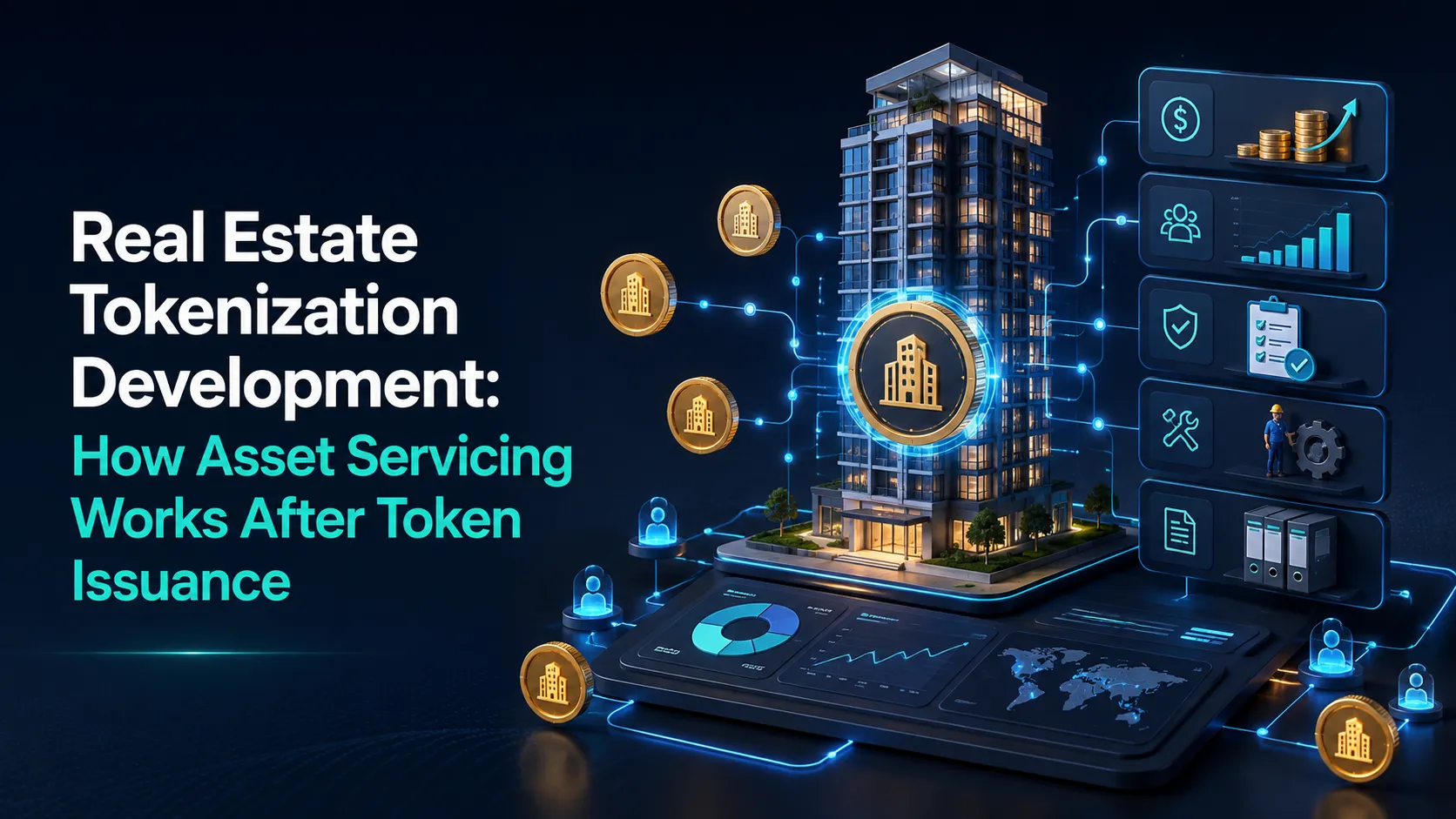
What Happens to Tokenized Real Estate After Hours?
Real estate provides an interesting example because property markets traditionally operate at a much slower pace.
A token may represent an economic interest in an income-producing property, development project, property fund, or special purpose vehicle. Investors could potentially view the token, check pricing information, review distributions, or submit transfer requests outside traditional business hours.
However, the underlying property itself does not change simply because its token trades at night.
Rental income, maintenance, insurance, property management, legal documentation, and valuation processes continue according to their own schedules. This means the token market may operate continuously while asset servicing follows a different timetable.
An RWA tokenization platform development company needs to account for this difference. The platform can provide continuous access while clearly distinguishing between blockchain transactions and activities that depend on property managers, legal entities, banks, appraisers, or other service providers.
Pricing Becomes Important in Continuous Markets
Another challenge concerns asset valuation. Public stocks may have frequent market prices because thousands or millions of participants trade them regularly. Many real-world assets do not have such frequent price discovery.
A private credit instrument, commercial property, artwork, or infrastructure project may have a valuation that changes less frequently. If its token trades continuously, investors may question whether the token price accurately reflects the latest value of the underlying asset.
Platforms may therefore use valuation feeds, periodic appraisals, financial reports, market data, or other reference information. The frequency of those updates depends on the asset.
This creates an important distinction between token trading and asset valuation. A token can change hands every hour, while the reference valuation may be updated weekly, monthly, or according to another schedule.
Investors need access to this information before making decisions. A Real-world asset tokenization company may therefore include valuation history, data timestamps, asset reports, and other information within the investor interface.
Can Global Investors Trade the Same Asset at Any Time?
One potential benefit of continuous markets is access across geographical regions. Investors in India, Singapore, Europe, the Middle East, and North America operate within different working hours. A digital marketplace can remain available to all of them.
This can reduce the importance of geographical trading windows. An investor does not necessarily have to wait for a specific regional exchange to open before interacting with the platform.
However, global access does not remove jurisdictional requirements. Some investors may be permitted to hold a particular asset while others may not. Local securities regulations, tax requirements, investor classifications, and transfer restrictions can affect participation.
Therefore, an RWA tokenization company must treat global availability and global eligibility as two separate issues.
The Importance of Market Design
A 24-hour token market needs rules governing how transactions occur. Simply keeping a marketplace online is not enough.
The platform may use continuous order matching, periodic matching windows, peer-to-peer transfers, automated market mechanisms, or direct issuer-to-investor transactions. Each approach produces different results for liquidity and pricing.
For less liquid assets, periodic matching may sometimes be more practical than continuous order matching. Investors can submit orders throughout the day, while the platform processes matching according to defined rules.
Another model could allow approved participants to provide liquidity. This can give investors more opportunities to trade without depending entirely on another retail investor being online at the same moment.
The appropriate model depends on the asset category, investor base, legal structure, and expected trading activity.
Risks of Trading Outside Traditional Hours
Continuous markets also introduce risks. A major concern is price movement during periods of low participation. If only a few investors are active, a small order may have a noticeable effect on the quoted price.
Information gaps can create another issue. An important event involving the underlying asset may occur while some investors are offline. Those who react first may gain an advantage over others.
Operational risks also matter. Wallet systems, smart contracts, payment services, compliance systems, and external data feeds must remain available. A failure in one component can affect transactions even when the blockchain itself is functioning.
Cybersecurity also becomes important because there is no natural closing period during which every participant stops interacting with the system. RWA token development therefore requires monitoring and operational controls that account for continuous activity.
What a 24-Hour RWA Platform Could Look Like
A future RWA platform could provide an investor dashboard that remains available throughout the day. Investors might view holdings, check asset information, review transaction history, submit eligible orders, and receive distribution information without waiting for conventional market hours.
Behind the interface, smart contracts could verify transfer conditions. Identity systems could confirm investor eligibility. Payment systems could process transactions where supported. Compliance tools could monitor activity, while external data providers could supply asset information.
Some transactions could complete immediately. Others could remain pending until a required valuation update, banking confirmation, legal approval, or human review becomes available.
This model creates a hybrid market rather than a completely independent financial system. Blockchain infrastructure can operate continuously, while traditional financial and legal processes can remain part of the overall transaction cycle.
How RWA Tokenization Development May Evolve
The future of RWA tokenization development may focus less on simply putting asset ownership on a blockchain and more on coordinating every stage of the asset lifecycle.
An RWA tokenization platform development company may need to consider investor onboarding, token issuance, custody, trading, settlement, distributions, reporting, compliance, valuation, and asset servicing within one connected operating model.
The most practical approach may not be to make every process fully continuous. Instead, platforms can identify which activities benefit from 24-hour availability and which activities still require scheduled processing.
For example, token transfers between eligible wallets could happen at any hour, while property valuations may occur monthly. Distribution calculations could run according to a fixed schedule, while investors can view their expected payments at any time.
This distinction could help create realistic operating models for tokenized asset markets.
What Investors Should Consider Before Using 24-Hour Token Markets
Investors should first understand what the token represents. Owning a token does not automatically mean owning the underlying physical asset directly. The legal structure determines the rights attached to the token.
They should also check whether the token can actually be traded at any time or whether after-hours transactions are only accepted for later processing.
Liquidity is another consideration. A platform may remain open continuously, but an investor may still have difficulty selling a position at a desired price.
Investors should also review fees, transfer restrictions, valuation methods, custody arrangements, redemption conditions, and the rules governing distributions. These factors can matter more than the ability to trade outside normal market hours.
Conclusion
RWA tokenization could make certain asset markets available beyond traditional trading hours, but continuous blockchain activity does not automatically create continuous liquidity, settlement, or asset servicing. The practical model is likely to combine always-available digital infrastructure with scheduled processes for valuation, banking, legal review, and underlying asset management. Smart contracts can manage many predefined transaction rules, while compliance systems, payment networks, data providers, custodians, and asset managers remain important parts of the market. As RWA tokenization develops, platforms may give investors access across time zones while maintaining restrictions based on asset type and investor eligibility. Businesses considering this model need to examine the full asset lifecycle rather than focusing only on token issuance. Blockchain App Factory provides RWA tokenization development services for businesses planning blockchain-based asset platforms and related digital asset solutions.
FAQs
1. Can RWA tokens be traded 24/7?
Technically, some tokenized assets can support transactions at any hour. Whether trading is actually available 24/7 depends on the platform, asset structure, regulations, liquidity, and settlement arrangements.
2. Does 24/7 trading mean 24/7 liquidity?
No. A marketplace can remain available continuously while having limited buyers and sellers during certain periods. Liquidity depends on market participation and the asset itself.
3. How can smart contracts support after-hours transactions?
Smart contracts can check predefined rules such as wallet eligibility, transfer permissions, holding limits, and transaction conditions. They can process eligible transactions without requiring manual action for every step.
4. Can compliance operate outside traditional business hours?
Some compliance checks can be automated and operate continuously. Transactions requiring additional investigation or human judgment may remain pending until the responsible team reviews them.
5. Will tokenized real estate trade around the clock?
A platform may allow token transfers or trading at any time, but the underlying property activities, valuations, banking processes, and legal procedures may follow separate schedules.
6. Why is liquidity important for RWA tokenization?
Liquidity affects how easily investors can buy or sell tokens. An asset with limited market participation may remain difficult to trade even when its marketplace operates continuously.
7. What is the role of an RWA tokenization development company?
An RWA tokenization development company can work on components such as token contracts, investor interfaces, compliance controls, trading systems, wallets, payment integrations, asset data connections, and related platform infrastructure.
8. Can investors from different countries use the same RWA platform?
Potentially, but access depends on the asset, jurisdiction, investor classification, regulatory requirements, and platform rules. Global availability does not mean every investor is automatically eligible.
9. What happens when an RWA token trades faster than its underlying asset is valued?
The token may continue trading while its reference valuation remains unchanged until new information becomes available. Platforms should present valuation dates and relevant asset information so investors understand this difference.
10. Is RWA tokenization the same as cryptocurrency trading?
No. RWA tokenization generally represents rights connected to real-world assets or financial interests. The legal rights, compliance requirements, transfer rules, and valuation processes can differ significantly from cryptocurrency markets.




















Sign in to leave a comment.