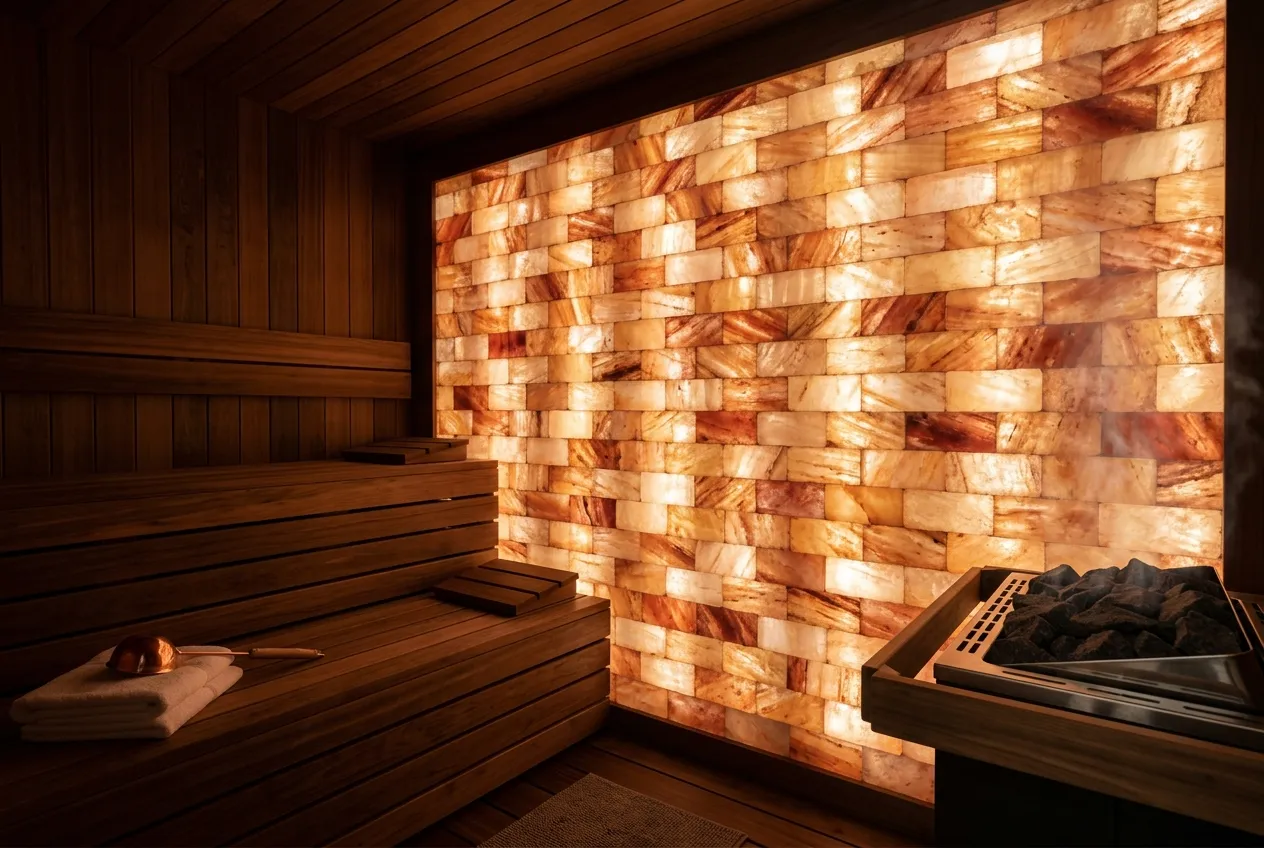

If you've ever stepped into a sauna with a softly glowing salt wall behind the heater, you know the effect is hard to forget. The light seems to come from inside the stone. The room feels warmer, calmer, almost alive. That's the pull of salt bricks for sauna builds — and it's why so many spa owners, contractors, and homeowners are asking about them right now.
I've spent years sourcing and installing Himalayan salt in wellness spaces, and I'll tell you straight: not every salt brick on the market is built for sauna heat. Some crack. Some fade. Some just look cheap after six months. This guide walks you through what actually holds up, how to plan the wall, and what questions to ask before you buy.
What Are Salt Bricks for Sauna Walls, Exactly?
Salt bricks are solid blocks cut from natural Himalayan rock salt, usually mined in Pakistan's Khewra region. They're denser than the small salt lamps you see in gift shops. A proper sauna-grade brick is cut thick enough to handle repeated heating and cooling cycles without splitting.
Most bricks range from 8x4x3 inches up to larger custom sizes for feature walls. They come in shades from pale pink to deep amber-red, depending on the mineral content of the salt. No two bricks look identical, which is actually the point — a salt wall should look like it was carved from the earth, not stamped out of a mold.
How They Differ From Himalayan Salt Wall Panels and Tiles
You'll see three product types used interchangeably online, but they're not the same thing:
- Salt bricks — thick, load-bearing or semi-structural blocks, often backlit
- Himalayan salt wall panels — thinner sheets, usually mounted on a backing board
- Himalayan salt tiles / pink salt tiles — flat, uniform pieces meant for smooth accent walls
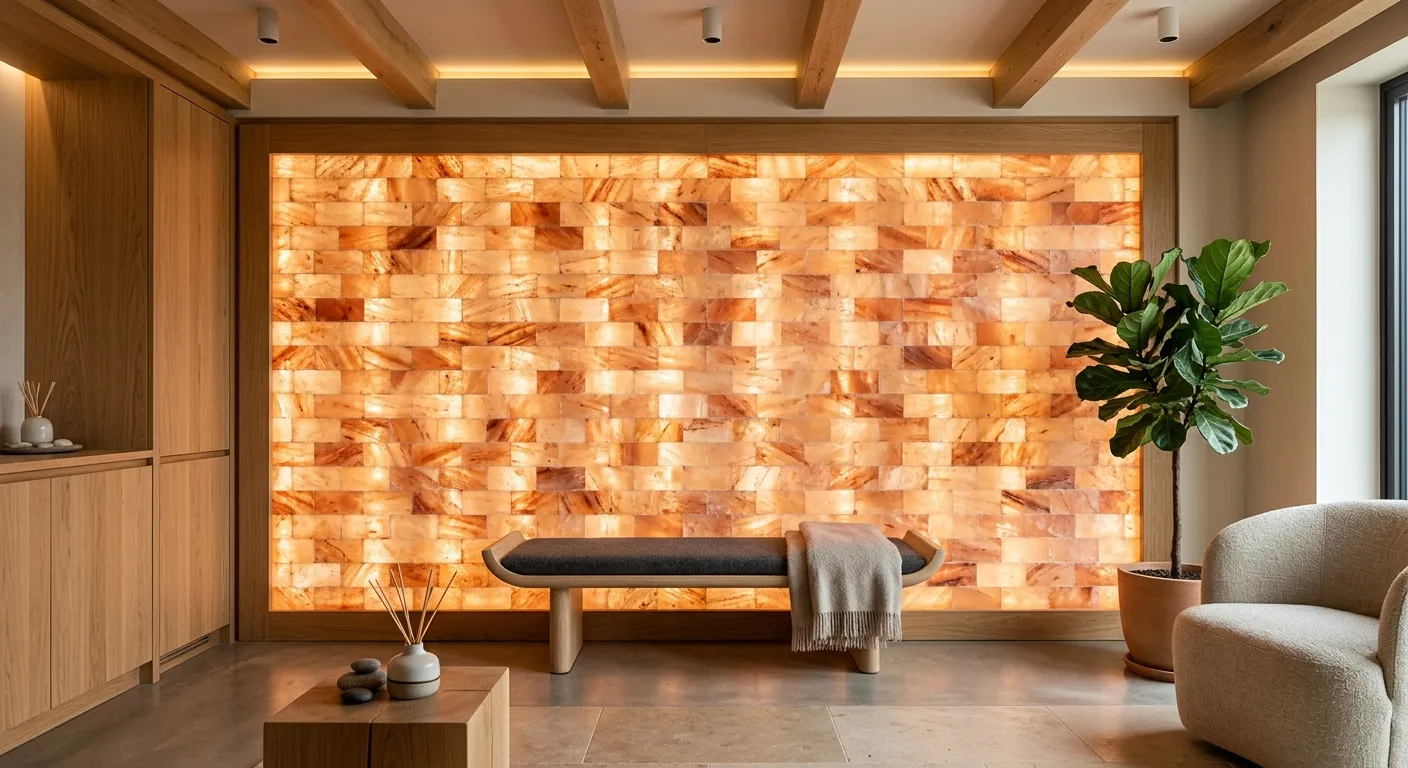
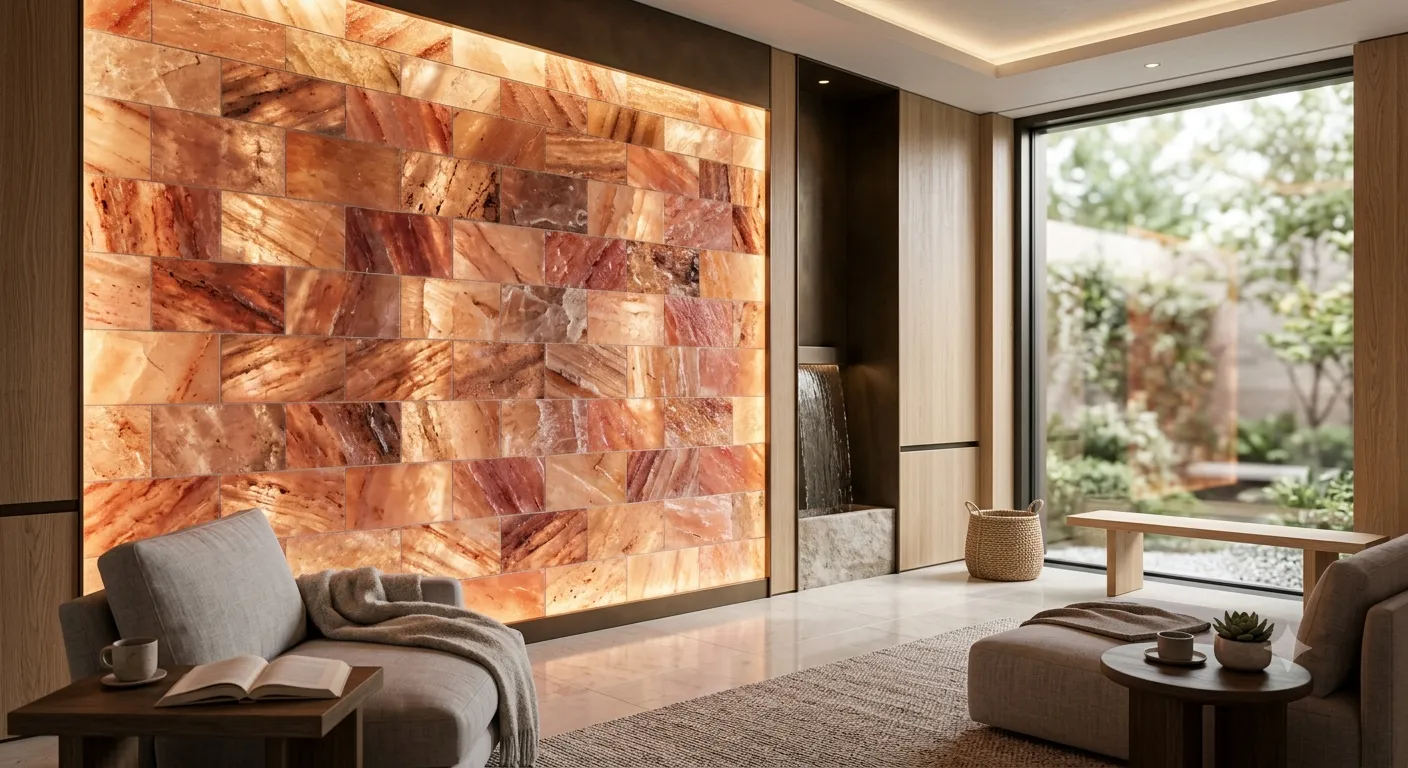
Bricks give you texture and depth. Tiles give you a cleaner, more modern look. Panels split the difference. Your choice depends on the vibe you're going for and how much wall space you're covering.
Why Salt Walls Work So Well in Saunas
Here's the thing — saunas already run hot and dry, which happens to be the exact environment salt performs best in. Excess moisture is salt's enemy, so a sauna's low humidity actually protects the material instead of degrading it.
When the wall heats up, the salt gives off a warm, ambient light if you backlight it with LED strips. It's not a heat-generating effect — the glow comes from the light source, not the salt itself. Some sellers claim salt walls "purify the air" or "release negative ions." I won't make that claim here, because the evidence for measurable health benefits in a home sauna setting is thin at best. What I can tell you, from watching hundreds of installs, is that people love the atmosphere. That's a real, valuable thing on its own — no exaggeration needed.
Comparison Table: Salt Bricks vs. Panels vs. Tiles
| Feature | Salt Bricks | Salt Wall Panels | Salt Tiles |
| Thickness | 2–4 inches | 0.5–1.5 inches | 0.5–1 inch |
| Best For | Feature walls, backlit walls | Full wall coverage, budget builds | Smooth accent walls, ceilings |
| Install Difficulty | Moderate to hard (mortar or frame) | Easy (panel mounting system) | Moderate (adhesive + grout) |
| Visual Style | Rustic, chunky, natural | Uniform, glowing sheet | Sleek, modern |
| Typical Lifespan (sauna use) | 8–15 years | 5–10 years | 6–12 years |
| Price Range (per sq ft) | $ - $$ | $$ |
Prices swing a lot based on grade and supplier, so treat this as a rough guide, not a quote.
How to Choose the Right Salt Bricks for Your Sauna Project
1. Check the Salt Grade
Ask your supplier directly: is this food-grade or lower-grade industrial salt? Sauna walls should use higher-grade, denser salt with fewer impurities. Lower grades absorb moisture faster and break down sooner under heat cycling.
2. Confirm the Cut and Finish
Hand-cut bricks tend to have more natural texture and slight irregularities — that's normal, not a defect. Machine-cut bricks look more uniform. Neither is "better," but you should know which one you're paying for so the finished wall matches your design plan.
3. Ask About Sourcing
Reputable suppliers can tell you which region their salt comes from and how it's processed. If a seller can't answer basic sourcing questions, that's a red flag. This matters more than people think — inconsistent sourcing means inconsistent brick density, and that's what leads to cracking.
4. Plan for Heat Zone Placement
Don't install bricks directly touching the heater or heating rocks. Leave the manufacturer-recommended clearance — usually a minimum of a few inches, but always confirm with your heater's spec sheet. Direct contact with extreme heat sources can cause thermal shock, even in dense salt.
5. Decide on Backlighting Early
If you want that glowing effect, plan your LED wiring before the wall goes up, not after. Retrofitting lights behind a finished salt wall is a real headache. Use low-voltage, heat-rated LED strips rated for sauna-adjacent humidity and temperature.
Installation Basics: What Contractors Should Know
Most professional installs follow a similar process:
- Build a moisture-resistant backing frame, usually cedar or another sauna-safe wood.
- Mount a mesh or aluminum support grid if the bricks will be backlit, to allow airflow and wiring space.
- Set bricks using heat-safe mortar or mechanical clips — regular construction adhesive can fail at sauna temperatures.
- Leave small expansion gaps between bricks, since salt expands slightly with heat.
- Seal the base to prevent moisture wicking up from the sauna floor.
A typical 4x6 foot feature wall takes an experienced two-person crew about a full day, sometimes longer if backlighting is involved. DIYers should budget extra time — this isn't a weekend-afternoon project if you're doing it right.
Maintenance: Keeping Your Salt Wall Looking Good for Years
Salt walls are low-maintenance, but "low" doesn't mean "zero."
- Wipe down with a dry or barely damp cloth — never soak the surface.
- Run a dehumidifier in the sauna room between sessions if your climate is naturally humid.
- Check grout lines or seams once a year for any moisture buildup.
- Avoid direct water splashing, even though the sauna itself runs dry heat.
Do this, and a well-installed wall of pink salt tiles or bricks can genuinely last a decade or more without needing replacement.
Buying Tips for Spa Owners, Distributors, and Retailers
If you're buying in bulk for a spa chain or retail line, a few things will save you headaches down the road:
- Order a sample batch first. Color and texture vary by mining lot — don't commit to a full order sight unseen.
- Ask about return policy on cracked shipments. Salt is heavy and fragile in transit; breakage happens even with careful packing.
- Request density specs, not just weight. Two bricks can weigh the same but perform very differently under heat.
- Buy from suppliers who stock consistently, not one-off importers, if you're running an ongoing retail or installation business.
Is a Salt Wall Worth It for Your Sauna?
Honestly? If you want a sauna that feels like a design statement — not just a hot box with cedar benches — a Himalayan salt wall panel or brick feature delivers that in a way few other materials can. It's not the cheapest option, and it's not a health cure-all. It's a beautiful, durable, natural material that does exactly what it promises: it glows, it lasts, and it makes the room feel special.
4. FAQ Section
Do salt bricks melt or dissolve in a sauna? No, not under normal sauna conditions. Saunas use dry heat with very low humidity, and salt only dissolves when exposed to standing water or high moisture. Wipe-downs and dry heat won't damage a properly installed wall.
How much do salt bricks for a sauna wall cost? Pricing varies widely by grade, size, and supplier, but expect a noticeable range between budget tiles and premium hand-cut bricks. Get quotes from at least two or three suppliers before committing to a large order.
Can I install salt bricks myself, or do I need a contractor? Smaller accent walls are doable for an experienced DIYer with basic tiling or masonry skills. Larger, backlit, or structural walls are best left to a contractor familiar with sauna-specific materials and heat-rated wiring.
Do salt walls actually improve air quality or health? There isn't strong, verified evidence that home salt walls provide measurable health benefits like air purification. What they reliably offer is ambiance and a distinctive design feature — which is reason enough for a lot of buyers.
What's the difference between pink salt tiles and salt bricks? Pink salt tiles are thinner, more uniform pieces meant for a smooth, modern look. Salt bricks are thicker and chunkier, better suited for textured, rustic-style feature walls, especially when backlit.



















Sign in to leave a comment.