Salt Spray Chamber: Testing Corrosion Resistance for Reliable Product Performance


Corrosion is a common challenge for industries that use metal components, protective coatings, and surface-treated materials. Exposure to moisture, salts, and environmental conditions can gradually damage surfaces and affect product performance. To evaluate how materials and coatings withstand corrosive environments, manufacturers use specialised testing equipment known as a salt spray chamber.
A salt spray chamber helps simulate a controlled salt-laden environment, allowing quality control teams to assess corrosion behaviour under specified testing conditions. From automotive components to fasteners and coated metal products, this equipment supports material evaluation and quality assurance across various industries.
What Is a Salt Spray Chamber?
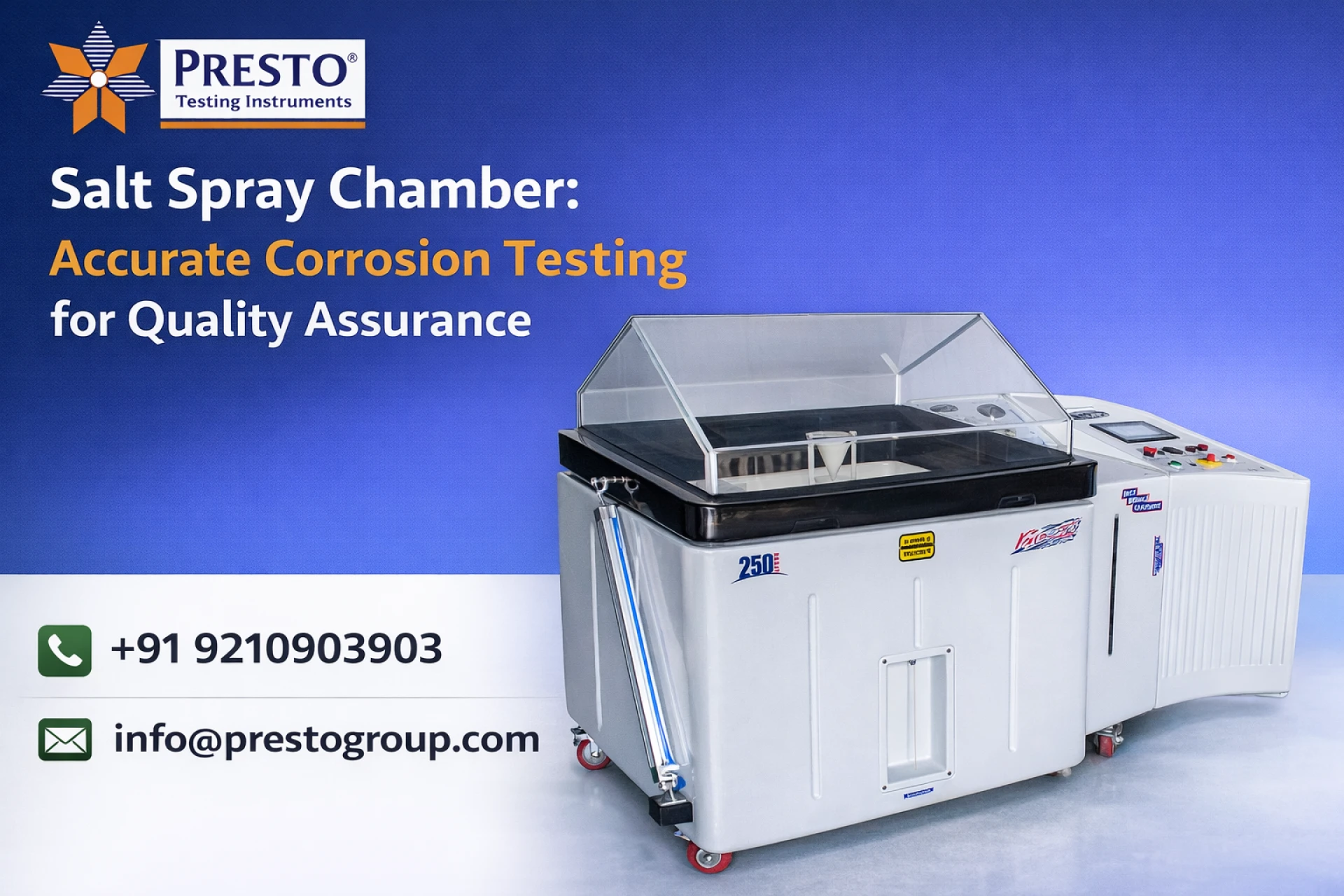
A salt spray chamber is a laboratory testing instrument designed to expose material samples to a controlled salt mist or salt fog environment. The test helps evaluate the corrosion resistance of metals, coatings, and surface treatments over a specified period.
During testing, a prepared salt solution is atomised to create a fine mist inside the chamber. Test specimens are placed in the designated testing area and exposed to the required conditions according to the selected test method.
The resulting observations help quality control teams identify corrosion, coating deterioration, rust formation, and other visible changes. Test results depend on the material, coating system, test duration, and conditions specified by the applicable standard.
How Does a Salt Spray Chamber Work?
A salt spray chamber operates by maintaining controlled conditions that allow salt fog to reach the test specimens consistently. Although the exact design may vary between models, the testing process generally involves the following steps.
1. Sample preparation: Test specimens are cleaned and prepared according to the applicable testing procedure. Their initial condition is recorded before testing begins.
2. Salt solution preparation: A specified salt solution is prepared according to the selected test standard and application requirements.
3. Chamber setup: The specimens are positioned inside the chamber using suitable supports. The required operating conditions are then configured.
4. Salt fog generation: The system atomises the salt solution and distributes the resulting mist within the chamber.
5. Controlled exposure: The specimens remain exposed for the prescribed test duration, with operating conditions monitored as required.
6. Inspection and evaluation: After testing, specimens are examined for visible corrosion and coating changes using the evaluation criteria defined by the relevant procedure.
This process helps laboratories compare material performance under controlled conditions. However, salt spray testing does not always predict the exact service life of a product in real-world environments.
Key Applications of Salt Spray Chambers
Salt spray chambers are used across several industries where corrosion resistance is important for product quality and reliability.
Automotive Industry
Automotive manufacturers and component suppliers use corrosion testing to evaluate metal parts, coated components, fasteners, and surface-treated materials. Testing can help identify weaknesses in protective coatings before products enter service.
Paint and Coating Industry
Paint and coating manufacturers use salt spray testing to assess the corrosion protection provided by different coating systems. The results can support product development, quality checks, and coating performance comparisons.
Metal Manufacturing
Metal manufacturers test components such as sheets, brackets, screws, bolts, and other fabricated products. These evaluations help determine whether surface treatments provide the required level of corrosion resistance under specified test conditions.
Electrical and Electronics Industry
Certain electrical enclosures, connectors, hardware, and metal components may require corrosion testing to evaluate their suitability for environments where salt exposure is a concern.
Hardware and Fastener Manufacturing
Fasteners and hardware products often rely on protective surface finishes. Salt spray testing helps manufacturers evaluate visible corrosion and coating performance against relevant specifications.
Important Features to Consider When Selecting a Salt Spray Chamber
Choosing the right equipment requires an understanding of your testing requirements and the types of samples you handle.
- Chamber capacity: Select a chamber size that accommodates your specimens without overcrowding.
- Temperature control: Check whether the equipment can maintain the conditions required by your chosen test method.
- Salt fog generation: Evaluate the system's ability to produce and distribute the required salt mist consistently.
- Material compatibility: Consider the construction materials used in the chamber and their suitability for corrosive testing environments.
- Controls and monitoring: Digital controls and monitoring features can make it easier to operate the equipment and track test conditions.
- Testing standards: Confirm that the chamber configuration supports the applicable method, such as ASTM B117 or ISO 9227, where relevant.
- Maintenance and support: Review cleaning requirements, availability of spare parts, technical assistance, and after-sales service.
Evaluating these features helps businesses select equipment that suits their laboratory procedures and quality control objectives.
Choosing a Reliable Salt Spray Chamber Manufacturer
Selecting an appropriate salt spray chamber manufacturer is an important part of establishing a dependable corrosion testing process. The manufacturer should provide clear technical specifications and help buyers understand which configuration suits their applications.
Before purchasing, review the chamber's capacity, operating range, salt fog generation system, control features, and compatibility with your required test methods. It is also useful to discuss sample dimensions, testing duration, operating conditions, and laboratory requirements with the supplier.
Installation guidance, operating documentation, maintenance support, and access to technical assistance should also be considered. Comparing these factors alongside the equipment's price can help businesses make a practical long-term investment.
Why Consider Presto Stantest Pvt. Ltd.?
Presto Stantest Pvt. Ltd. offers testing equipment for industrial quality control and material evaluation. Businesses exploring corrosion testing solutions can review the available product information and discuss their application requirements before selecting a suitable configuration.
When evaluating a salt spray chamber, buyers should clearly communicate their sample types, applicable test standards, chamber capacity requirements, and expected testing procedures. This helps the supplier recommend equipment based on the intended application.
Visit the official Presto website to explore testing equipment and obtain further product information.
Conclusion
A salt spray chamber plays an important role in evaluating the corrosion resistance of metals, coatings, and surface-treated components. By exposing specimens to a controlled salt fog environment, it helps manufacturers assess visible corrosion and support consistent quality control.
Selecting the right equipment involves considering chamber capacity, temperature control, salt fog generation, testing standards, and technical support. Working with a suitable salt spray chamber manufacturer can help businesses identify equipment that meets their testing requirements.
For companies focused on product reliability and corrosion evaluation, choosing the correct testing setup is a practical step towards maintaining quality and making informed material selection decisions.




Sign in to leave a comment.