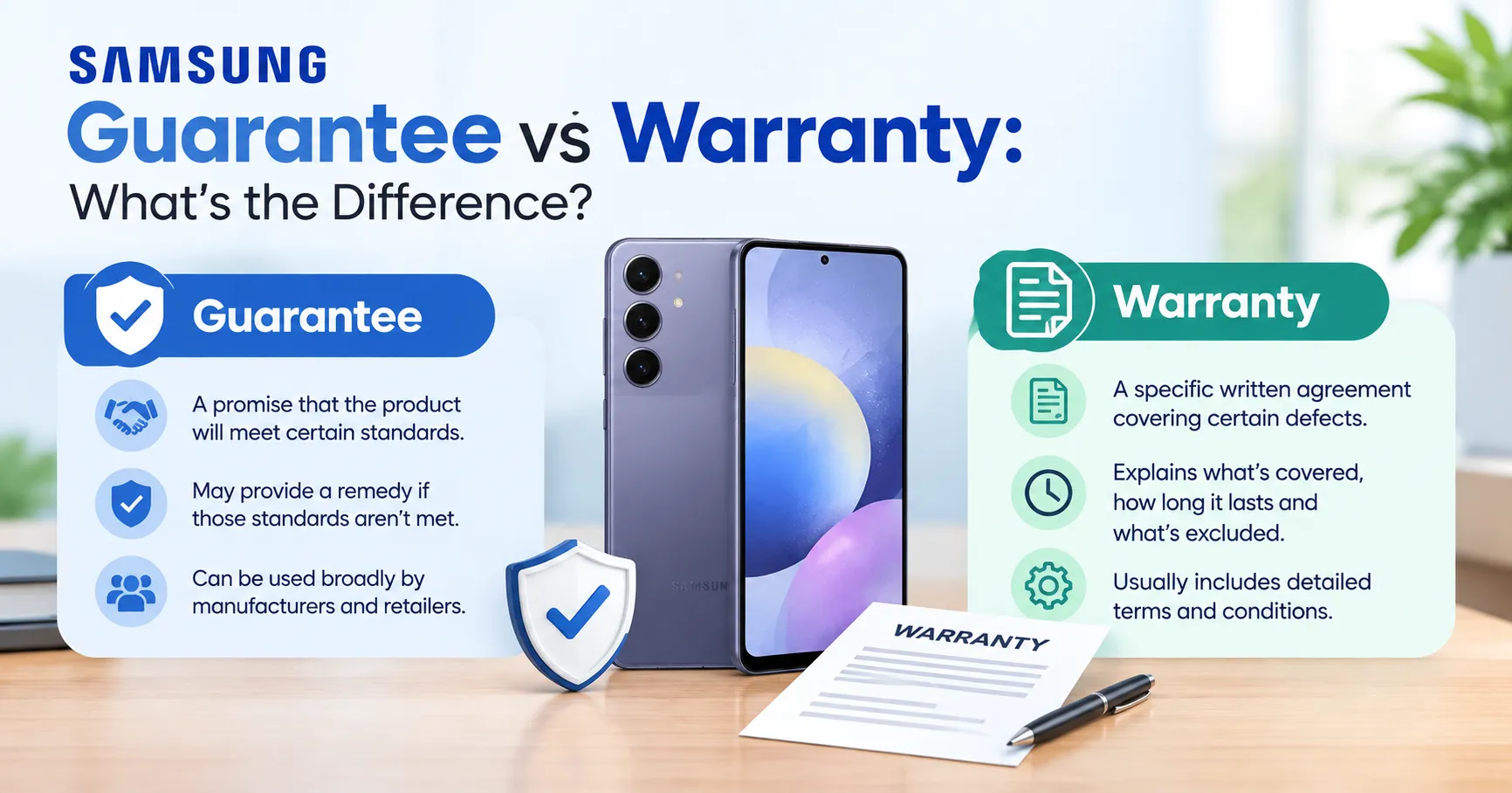

Buying a Samsung phone, tablet or other device often comes with some form of protection, but the terms can be confusing. Samsung Guarantee and warranty are sometimes used interchangeably, even though they can refer to different types of protection. Understanding the difference can help you know what to expect if your device develops a fault, needs a repair or stops working properly.
Whether you are buying a new Samsung device or considering a used or refurbished model, it is worth checking exactly what protection is included before making a purchase.
What Is a Samsung Guarantee?
A guarantee is generally a promise from a manufacturer or seller that a product will meet certain standards and perform as expected for a specified period.When people search for a Samsung Guarantee, they are often referring to Samsung's manufacturer's warranty or the protection provided with a Samsung product. The exact terms can depend on the product, country, purchase date and type of fault.
A guarantee may give you rights to have a faulty product repaired, replaced or otherwise resolved when the problem falls within the applicable terms.The important point is that a guarantee is not necessarily an unlimited promise. Conditions and exclusions can apply.
What Is a Samsung Warranty?
A warranty is a formal commitment covering particular faults or defects for a stated period.
For Samsung devices, warranty coverage can provide protection when a product develops a manufacturing or material defect under normal use. Depending on the situation and the applicable warranty terms, Samsung or an authorised service provider may inspect the device and determine whether it qualifies for repair or another remedy.
Warranty coverage normally has conditions. Damage caused by accidents, liquid, unauthorised repairs or misuse may not be covered.The warranty period can also vary depending on the product and market, so it is important to check the documentation that applies to your particular device.
Samsung Guarantee vs Warranty: The Main Difference
| Guarantee | Warranty |
| Generally a promise that a product will meet certain standards. | Usually a specific written agreement covering certain defects or problems. |
| The seller or manufacturer may provide a remedy if the product does not meet the promised standards. | Explains what defects are covered and how long the protection lasts. |
| Can be used broadly by manufacturers and retailers. | Usually includes detailed terms, conditions and exclusions. |
| The meaning can vary depending on the seller or manufacturer. | The exact coverage is normally defined in the warranty terms. |
| The name alone does not explain the full level of protection. | The terms and conditions should be checked to understand the coverage. |
What Does a Samsung Warranty Usually Cover?
Coverage depends on the specific Samsung product and applicable warranty terms, but manufacturer warranty protection commonly focuses on defects that occur during normal use.
Potentially covered problems may include:
- Manufacturing defects
- Certain hardware failures
- Problems with internal components
- Faults that occur without accidental damage
- Other issues specifically listed in the applicable warranty terms
For example, if a Samsung phone suddenly develops a hardware fault despite being properly used and there is no obvious physical or liquid damage, it may qualify for warranty assessment.
However, warranty coverage is not automatic just because a device stops working. Samsung or an authorised service provider may need to inspect the device before deciding whether the problem is covered.
What Is Usually Not Covered?
Understanding exclusions is just as important as understanding coverage.
Depending on the applicable warranty terms, some problems may not qualify for manufacturer warranty service. These can include:
- Accidental drops
- Cracked screens caused by impact
- Liquid damage
- Cosmetic damage that does not affect functionality
- Damage caused by misuse
- Unauthorised repairs or modifications
- Normal wear and tear
- Damage caused by unsuitable accessories or external factors
For instance, if you drop a Galaxy phone and crack the display, the manufacturer's warranty may not cover the repair simply because the phone is still within its warranty period.
This is why checking the warranty conditions before buying a device can prevent unpleasant surprises later.
Does Samsung Guarantee Cover Battery Problems?
Battery coverage can be another area of confusion.
Smartphone batteries naturally lose capacity over time. This is considered normal battery ageing rather than necessarily being a manufacturing defect.
A battery that has gradually reduced capacity after extended use may therefore be treated differently from a battery that develops an unusual fault.
If you notice rapid battery drain, unexpected shutdowns, overheating or another unusual problem, it is worth having the device assessed. The final decision about coverage depends on the applicable warranty conditions and inspection.
Samsung Guarantee for Used and Refurbished Phones
Buying a used or refurbished Samsung phone can be a good way to reduce the upfront cost, but the warranty situation may be different from buying a new device.
A used phone could still have remaining manufacturer warranty coverage, but this should not be assumed. You should check the original purchase information, warranty status and applicable terms.
Refurbished phones may also come with protection from the refurbisher or retailer rather than directly from Samsung.
This distinction is important. A seller may offer its own warranty even when the original Samsung warranty has expired.
Before purchasing a refurbished Samsung phone, ask:
- What warranty is included?
- How long does the warranty last?
- Who handles repairs?
- Are replacement parts covered?
- Is accidental damage excluded?
- Is battery performance covered?
- What happens if the device needs to be returned?
- Is the warranty provided by Samsung or the seller?
Getting clear answers before buying is much easier than dealing with an unexpected repair later.
Do You Need Proof of Purchase?
Proof of purchase can be important when making a warranty claim.
A receipt, invoice or other purchase record may help establish where and when the device was purchased. It can also help confirm that the product falls within the relevant warranty period.
If you are buying a used Samsung phone, ask the seller whether they have the original receipt or purchase information when appropriate.You should also keep your own purchase documentation for as long as it may be useful.
Samsung Guarantee and Australian Consumer Rights
For Australian buyers, manufacturer warranty protection is only part of the picture.Australian Consumer Law provides consumer guarantees for products sold to consumers. These rights can apply separately from a manufacturer's voluntary warranty.
Consumer guarantees can cover areas such as acceptable quality, safety and whether a product is fit for its intended purpose.This means you should not assume that your rights are limited only to whatever appears in a manufacturer's warranty document.
If you have a problem with a Samsung product, consider both the manufacturer's warranty terms and your rights under Australian Consumer Law.For complicated or disputed cases, checking information from an appropriate Australian consumer protection authority can help you understand your options.
How to Check Samsung Guarantee or Warranty Coverage
Before buying or making a claim, it is useful to confirm the exact status of your device.
Start by identifying the model and serial information. On smartphones, the IMEI can also be useful for identifying the device.You can then check the purchase documentation and any warranty information supplied with the product.
If you are buying second-hand, ask the seller for details about the device's original purchase and any remaining warranty.
It is also a good idea to check whether the phone has previously been repaired. Unauthorised repairs or replacement components may affect manufacturer warranty coverage depending on the circumstances.
Guarantee vs Warranty: What Should Buyers Look For?
Instead of focusing only on whether a seller says "guarantee" or "warranty," look at the actual protection being offered.
A useful checklist includes:
Coverage period: Find out when protection starts and ends.
Covered faults: Check which problems qualify for repair or replacement.
Exclusions: Look for information about accidental, liquid and cosmetic damage.
Repair process: Find out who handles the repair and where the device must be sent.
Parts: Check whether replacement components are covered.
Battery: Look for specific battery-related conditions.
Proof of purchase: Confirm what documents are required.
Seller protection: For refurbished or used phones, understand whether the seller provides its own warranty.
These details can make a significant difference if something goes wrong.
Final Thoughts
The difference between a guarantee and a warranty can seem small, but the terms can determine what happens when your Samsung device develops a problem. A warranty usually sets out specific coverage, time limits and exclusions, while a guarantee is generally a promise about the product or the remedy available when something goes wrong.
When buying a new, used or refurbished Samsung device, always check the actual warranty or guarantee terms rather than relying on the label alone. If you are also selling or upgrading an older phone, Mobile Trade can be another option to consider when planning your next device purchase.

























Sign in to leave a comment.