

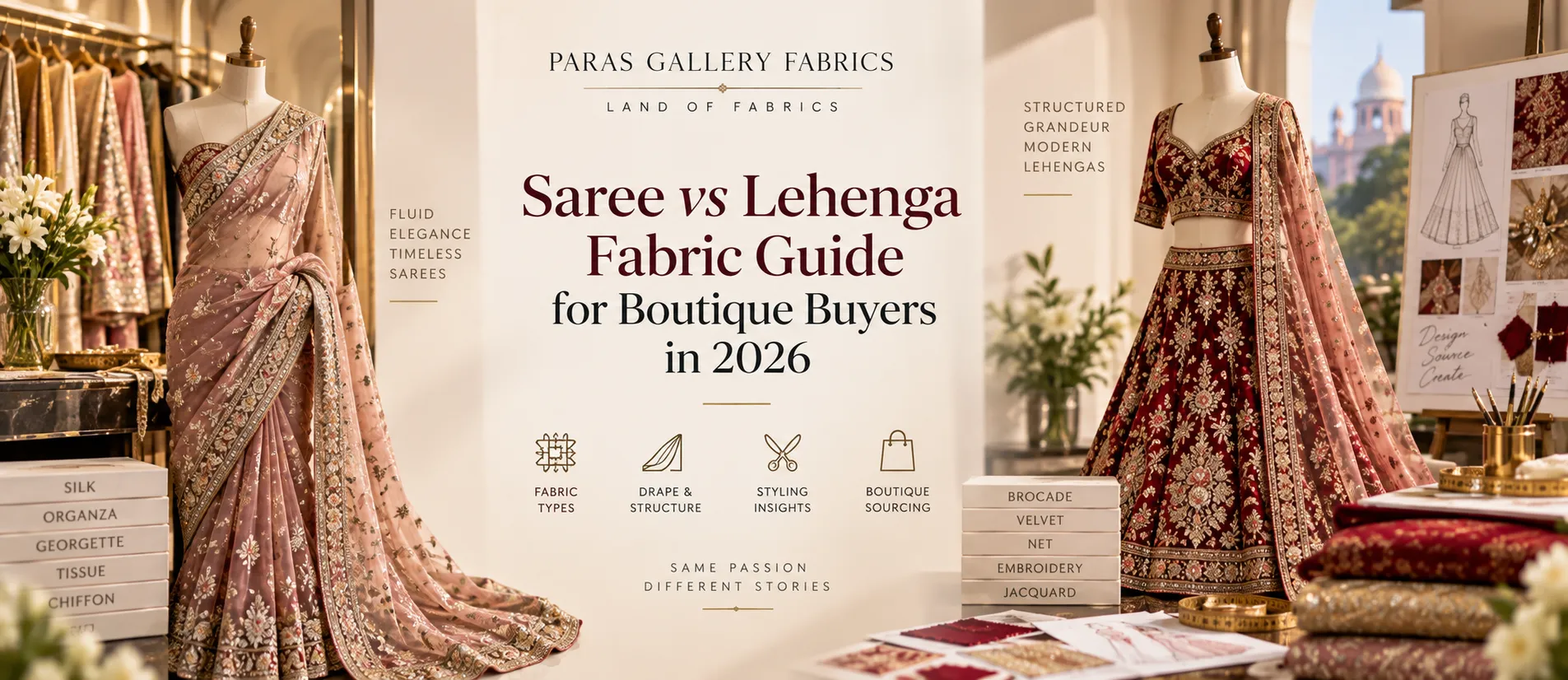
https://parasgalleryfabrics.com/For boutique owners, choosing between fabrics for sarees and lehengas is not simply a matter of colour or surface appearance. The right fabric affects the garment's drape, structure, comfort, fall, stitching process, and overall customer experience.
In 2026, boutique buyers are increasingly looking for fabrics that combine visual appeal with practical performance. Understanding how a fabric behaves in a saree compared with a lehenga can help buyers make more informed sourcing decisions.
Saree Fabric: Focus on Drape and Fall
A saree depends heavily on how the fabric falls around the body. Fabrics such as georgette, chiffon, tissue, silk, organza, and selected blends can create very different silhouettes.
When sourcing saree fabric, boutique buyers should examine:
- Drape and fluidity
- Fabric weight
- Surface texture
- Width
- Opacity
- Border placement
- Embroidery and embellishment
- Ease of pleating
A lightweight fabric may create an elegant flowing saree, while a structured or embellished material can create a more formal bridal or occasionwear appearance.
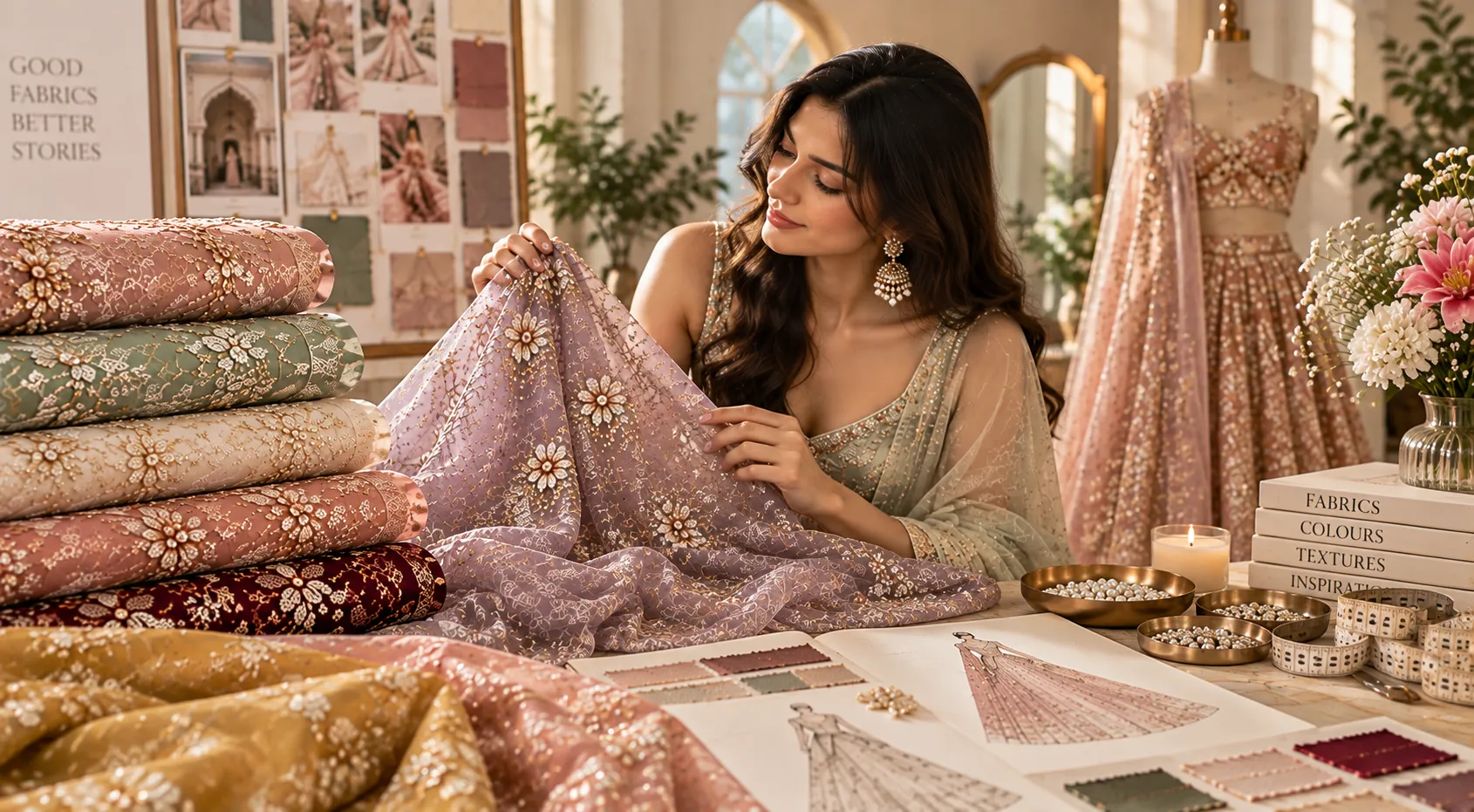
For boutique collections, it is useful to physically open the fabric rather than evaluating it only on a folded roll. This makes it easier to understand how the material actually moves.
Lehenga Fabric: Focus on Structure
Lehengas have different fabric requirements because the garment often needs volume and structure.
Depending on the design, buyers may consider fabrics such as:
- Brocade
- Silk
- Organza
- Velvet
- Embroidered net
- Tissue
- Jacquard
- Decorative blends
The important factors include body, weight, movement, layering capability, and compatibility with embroidery.
A fabric that works beautifully for a flowing saree may not necessarily create the desired lehenga silhouette.
Saree vs Lehenga: What Should Boutique Buyers Check?
| Factor | Saree | Lehenga |
|---|---|---|
| Primary requirement | Drape | Structure and volume |
| Fabric movement | Usually fluid | Depends on silhouette |
| Important consideration | Fall and pleating | Shape and layering |
| Embellishment | Border/pallu/body | Skirt, blouse and dupatta |
| Fabric width | Important | Important for cutting |
| Comfort | Important for draping | Important for wearing |
| Wastage | Depends on design | Can increase with motifs and panels |
Embroidery Changes Fabric Selection
Embellishment can significantly change how a fabric behaves.
Heavy embroidery, sequins, beads, zari, or other decorative elements can add weight to the material. Boutique buyers should therefore evaluate the base fabric and embellishment together.
For example, a delicate base fabric carrying heavy embroidery may require additional support or lining during garment construction.
When buying embroidered fabric, inspect the surface for:
- Loose threads
- Missing embellishments
- Uneven embroidery
- Damaged areas
- Inconsistent motif placement
- Variations between rolls
These checks become particularly important when purchasing fabric for multiple garments.
Colour Consistency Matters for Boutique Collections
A boutique may use the same colour across a saree, blouse, dupatta, or lehenga collection. Small differences between fabric lots can become noticeable once the garments are placed together.
For repeat orders, buyers should maintain an approved physical swatch wherever possible.
Digital photographs can be useful for initial selection, but lighting, screens, and photography can affect how colour appears.
Don't Ignore Fabric Width
Price per metre does not tell the complete story.
Two fabrics with the same price may have different usable widths, affecting garment consumption and overall costing.
Before placing a bulk order, boutique buyers should record:
Fabric type + width + usable area + required quantity + expected wastage.
This is especially important for fabrics with borders, directional motifs, or large embroidered patterns.
How Paras Gallery Fabrics Helps Boutique Buyers
Paras Gallery Fabrics, based in Lajpat Nagar, New Delhi, offers a range of fabrics for bridal, festive, and occasionwear requirements.
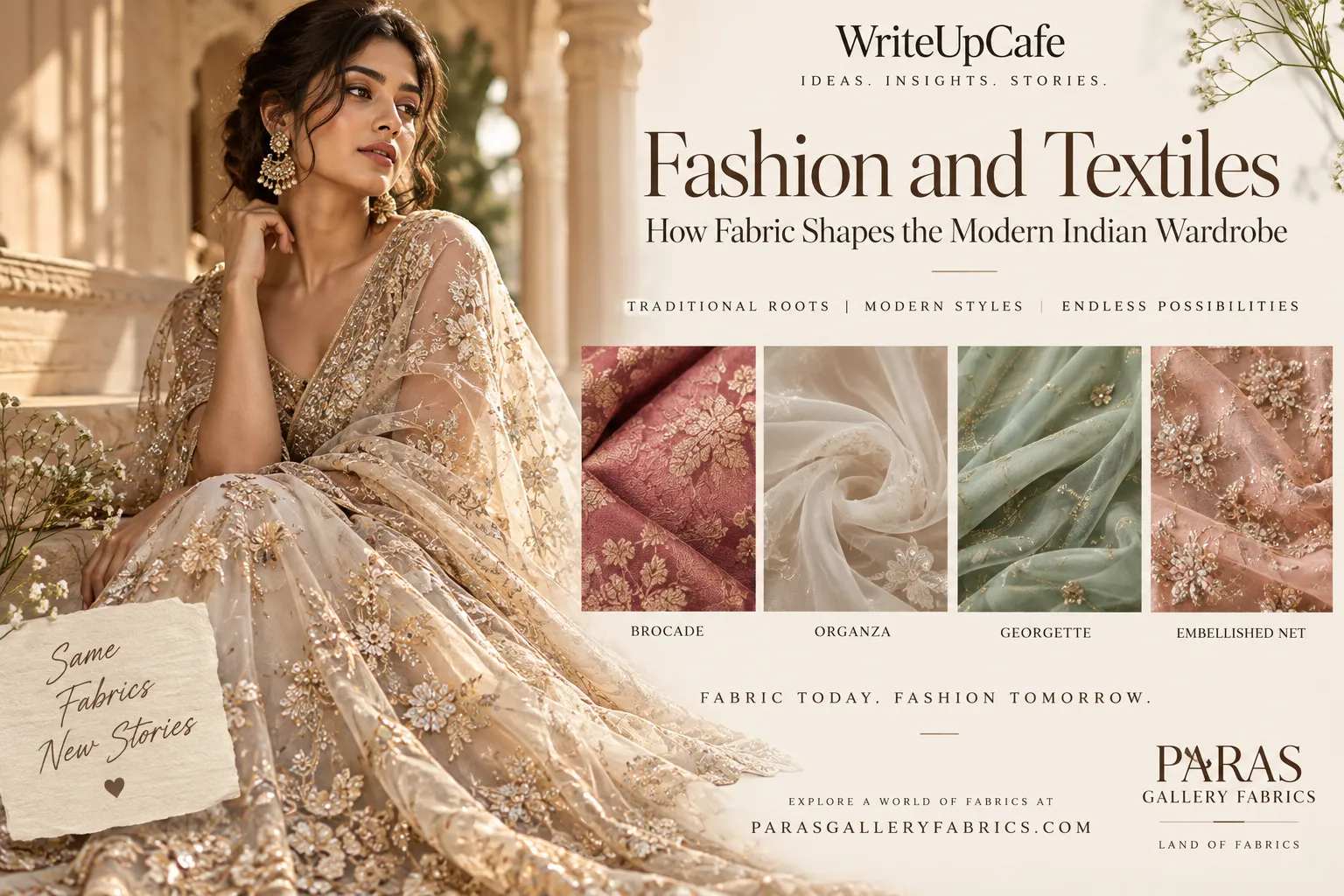
Its selection includes materials such as net, georgette, organza, brocade, tissue, silk varieties, and embroidered fabrics. For boutique buyers, the advantage of sourcing fabrics physically is the ability to examine texture, drape, colour, embellishment, and finish before making a purchasing decision.
For larger requirements, buyers can also evaluate fabric availability and consistency before confirming their order.
A Simple Buying Checklist for Boutique Owners
Before purchasing fabric, ask:
1. What garment is this fabric intended for?
Sarees, lehengas, blouses, and dupattas have different requirements.
2. How does the fabric drape or hold structure?
Always inspect the fabric in an open state.
3. What is the usable width?
This affects consumption and costing.
4. How consistent is the colour?
Check samples against the available bulk quantity.
5. How much embroidery or embellishment does it carry?
Consider the additional weight and stitching requirements.
6. How much wastage should be expected?
Borders and directional motifs can increase cutting waste.
7. Is the required quantity available?
Availability becomes particularly important for boutique collections and repeat orders.
Final Takeaway
There is no single fabric that is automatically better for every saree or lehenga. The right choice depends on the garment's silhouette, occasion, design, embellishment, comfort requirements, and production process.
For boutique buyers in 2026, the most useful approach is to evaluate fabric as a complete garment input rather than simply as a beautiful textile.
When the fabric's drape, structure, width, colour, embellishment, quality, and quantity are considered together, boutique owners can make more predictable sourcing and costing decisions.























Sign in to leave a comment.