
Manufacturing companies face increasing pressure to improve productivity, reduce operating costs, maintain product quality, and respond to changing customer demands. As businesses expand, managing production complexity, supply chain disruptions, workforce challenges, and outdated processes becomes increasingly difficult. Partnering with the best manufacturing consultants can help organizations overcome these challenges and build a foundation for sustainable growth.
Manufacturing consulting combines strategic planning, operational expertise, process improvement, and performance measurement to help businesses achieve measurable results. For mid-market manufacturers, the right consulting partner can bridge the gap between business strategy and shop-floor execution.
What Are Manufacturing Consultants?
Manufacturing consultants are experienced professionals who evaluate production systems, identify operational inefficiencies, and recommend practical improvements. They work with leadership teams and frontline employees to improve manufacturing performance while aligning operations with business objectives.
Their services commonly include:
Manufacturing strategy and operational planning
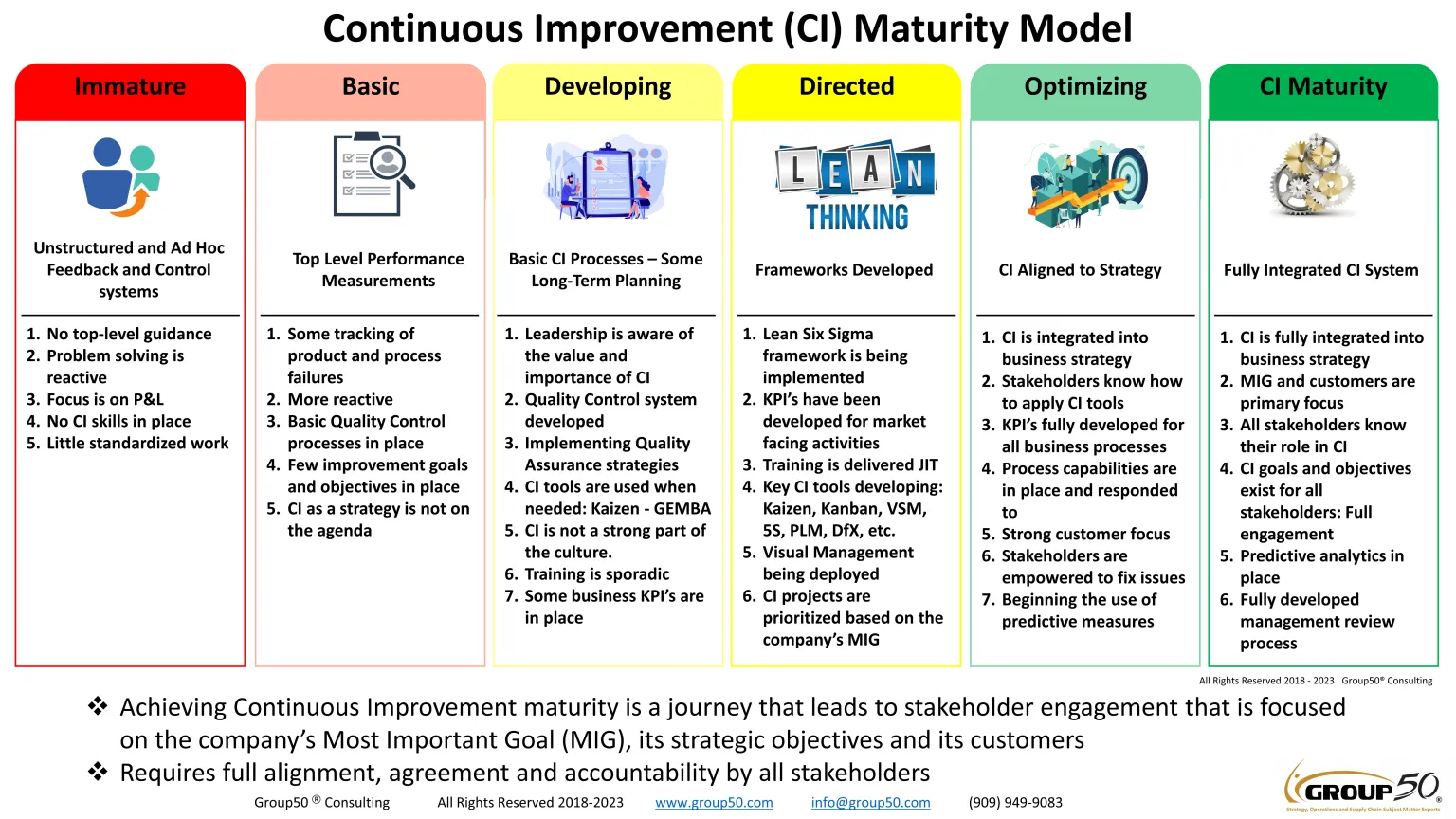
Lean manufacturing and continuous improvement
Value stream mapping and process optimization
Supply chain and inventory management
Organizational development and workforce alignment
Cost reduction and productivity improvement
Performance measurement and implementation support
The best manufacturing consultants do more than identify problems. They help organizations implement solutions, establish accountability, and sustain improvements over time.
Why Manufacturing Companies Need Expert Consulting
Growing manufacturers often encounter operational challenges that cannot be solved through isolated improvements. A production bottleneck may originate in purchasing, scheduling, inventory management, or communication between departments.
Manufacturing consultants examine the broader business system to understand how these issues interact.
1. Improve Operational Efficiency
Inefficient workflows, excessive material movement, machine downtime, and inconsistent production schedules can reduce output and increase costs.
Consultants assess manufacturing processes to identify waste, delays, and underutilized resources. Through lean manufacturing principles and process redesign, companies can streamline workflows, improve equipment utilization, and increase throughput.
2. Reduce Manufacturing Costs
Rising labor, material, energy, and transportation costs put pressure on manufacturing margins. However, cutting costs without understanding their operational impact can create quality problems and disrupt production.
Manufacturing consultants identify the underlying causes of unnecessary expenditure. They help businesses reduce scrap, minimize rework, improve inventory management, and optimize resource allocation without compromising product quality.
3. Strengthen Quality and Consistency
Inconsistent processes lead to defects, customer complaints, and costly rework. Consultants help establish standardized procedures, identify root causes, and implement corrective actions.
By integrating quality management with continuous improvement, manufacturers can reduce process variation and build more reliable production systems.
4. Support Business Growth and Scalability
A manufacturing process that works for a small operation may not support higher production volumes or additional facilities. Scaling without the right systems can lead to capacity constraints, inconsistent quality, and rising costs.
Consultants help businesses evaluate production capacity, workforce requirements, technology investments, and operational priorities before expanding. This creates a more structured approach to growth.
How the Best Manufacturing Consultants Drive Operational Excellence
Operational excellence requires more than short-term cost savings. It involves creating an organization that consistently delivers quality products, meets customer expectations, and improves performance.
Step 1: Assess Current Manufacturing Performance
The first step is understanding how the business operates today. Consultants examine production workflows, equipment utilization, inventory levels, lead times, quality metrics, and labor productivity.
A structured assessment establishes a baseline and highlights the gaps between current performance and business objectives.
Step 2: Map Processes and Identify Waste
Value stream mapping helps manufacturers visualize the flow of materials and information from the beginning of a process to the delivery of a finished product.
This analysis can reveal unnecessary steps, waiting time, excess inventory, bottlenecks, and communication breakdowns. By addressing these issues systematically, businesses can improve flow and shorten production lead times.
Step 3: Develop a Practical Improvement Strategy
Consultants prioritize improvement opportunities based on business impact, implementation effort, risk, and available resources.
Rather than launching numerous disconnected initiatives, manufacturers can focus on a manageable set of priorities that support measurable outcomes.
Step 4: Align Employees and Leadership
Operational improvements depend on people as much as processes. Employees need to understand the objectives, their responsibilities, and how success will be measured.
Effective consultants engage leadership and frontline teams, clarify ownership, and establish regular performance reviews. This alignment helps turn recommendations into everyday operating practices.
Step 5: Measure Results and Sustain Improvements
Performance indicators such as overall equipment effectiveness (OEE), first-pass yield, on-time delivery, inventory turnover, scrap rates, and manufacturing cost per unit can help track progress.
Regular reviews allow teams to identify performance gaps, correct problems, and maintain accountability. Continuous improvement becomes part of the operating culture rather than a temporary project.
How to Choose the Best Manufacturing Consultants
Selecting the right consulting partner is an important business decision. Manufacturers should evaluate potential partners against several criteria.
Industry and operational experience: Look for consultants who understand manufacturing environments, production constraints, and the realities of implementing change.
A practical implementation approach: Recommendations should translate into specific actions, clear ownership, and realistic timelines.
Measurable business outcomes: The consulting engagement should establish baseline metrics and define how progress will be evaluated.
Cross-functional expertise: Manufacturing performance depends on strategy, supply chain, finance, technology, and people. A consultant should understand these connections.
Knowledge transfer: The objective should be to strengthen the internal team's ability to sustain improvements rather than create permanent dependence on external support.
Leadership alignment: The consulting partner should connect operational projects to the company's broader strategy and most important business goals.
Why Group50 Is a Manufacturing Consulting Partner to Consider
Group50® Consulting works with manufacturing and distribution companies to improve business performance, strengthen operational execution, and support sustainable growth.
Its consulting approach connects strategy with operations, helping organizations understand how their business systems work together and where focused improvements can deliver meaningful value.
Through services that include manufacturing consulting, value stream mapping, continuous improvement, supply chain management, and organizational development, Group50 helps businesses address operational challenges from the shop floor to the boardroom.
Its Strategy 5.0 framework emphasizes strategic alignment, clear priorities, and execution. This perspective is valuable for manufacturers that need to ensure improvement initiatives support broader business objectives rather than operate as isolated projects.
Explore Group50's manufacturing consulting services to learn how a structured approach can help identify opportunities for operational improvement.
Common Mistakes to Avoid When Hiring Manufacturing Consultants
Even a capable consulting partner cannot guarantee results without organizational commitment. Manufacturers should avoid several common mistakes:
Choosing on price alone: The lowest-cost proposal may not provide the expertise or implementation support required.
Focusing only on short-term savings: Sustainable operational excellence requires improvements in quality, delivery, productivity, and cost.
Ignoring employee involvement: Frontline employees often understand process problems best and should participate in developing solutions.
Launching too many initiatives: Excessive priorities can overwhelm teams and dilute results.
Failing to measure performance: Without clear metrics and regular reviews, organizations cannot reliably determine whether improvements are working.
A successful consulting engagement combines external expertise with internal ownership, disciplined execution, and continuous measurement.
Conclusion
Scaling success in manufacturing requires a coordinated approach to strategy, people, processes, and performance. The best manufacturing consultants help companies identify operational weaknesses, eliminate waste, improve productivity, and build systems that support long-term growth.
For manufacturers seeking operational excellence, the priority should be finding a consulting partner that combines practical manufacturing experience with strategic thinking and implementation discipline. When leadership and employees work together around measurable objectives, consulting can become a catalyst for lasting business improvement.
Frequently Asked Questions (FAQs)
What do manufacturing consultants do?
Manufacturing consultants evaluate production processes, identify inefficiencies, and recommend improvements in productivity, quality, cost management, supply chain performance, and operational execution.
How can manufacturing consultants improve operational excellence?
They use operational assessments, lean manufacturing, value stream mapping, process standardization, and performance measurement to reduce waste, improve production flow, and strengthen business performance.
When should a company hire manufacturing consultants?
A company may benefit from consulting when production costs are rising, delivery performance is declining, quality problems persist, capacity is constrained, or growth requires more efficient operating systems.
How do businesses choose the best manufacturing consulting firm?
Businesses should assess industry experience, implementation capabilities, measurable results, cross-functional expertise, communication, and the consultant's ability to transfer knowledge to internal teams.
Are manufacturing consultants suitable for mid-market companies?
Yes. Mid-market manufacturers can use consulting to strengthen processes, establish management systems, improve resource utilization, and prepare operations for growth without relying solely on internal capacity.
What is the difference between manufacturing consulting and lean consulting?
Manufacturing consulting can cover strategy, production, supply chain, organization, technology, and cost management. Lean consulting focuses more specifically on reducing waste, improving process flow, and increasing customer value. The two approaches often complement each other.



















Sign in to leave a comment.