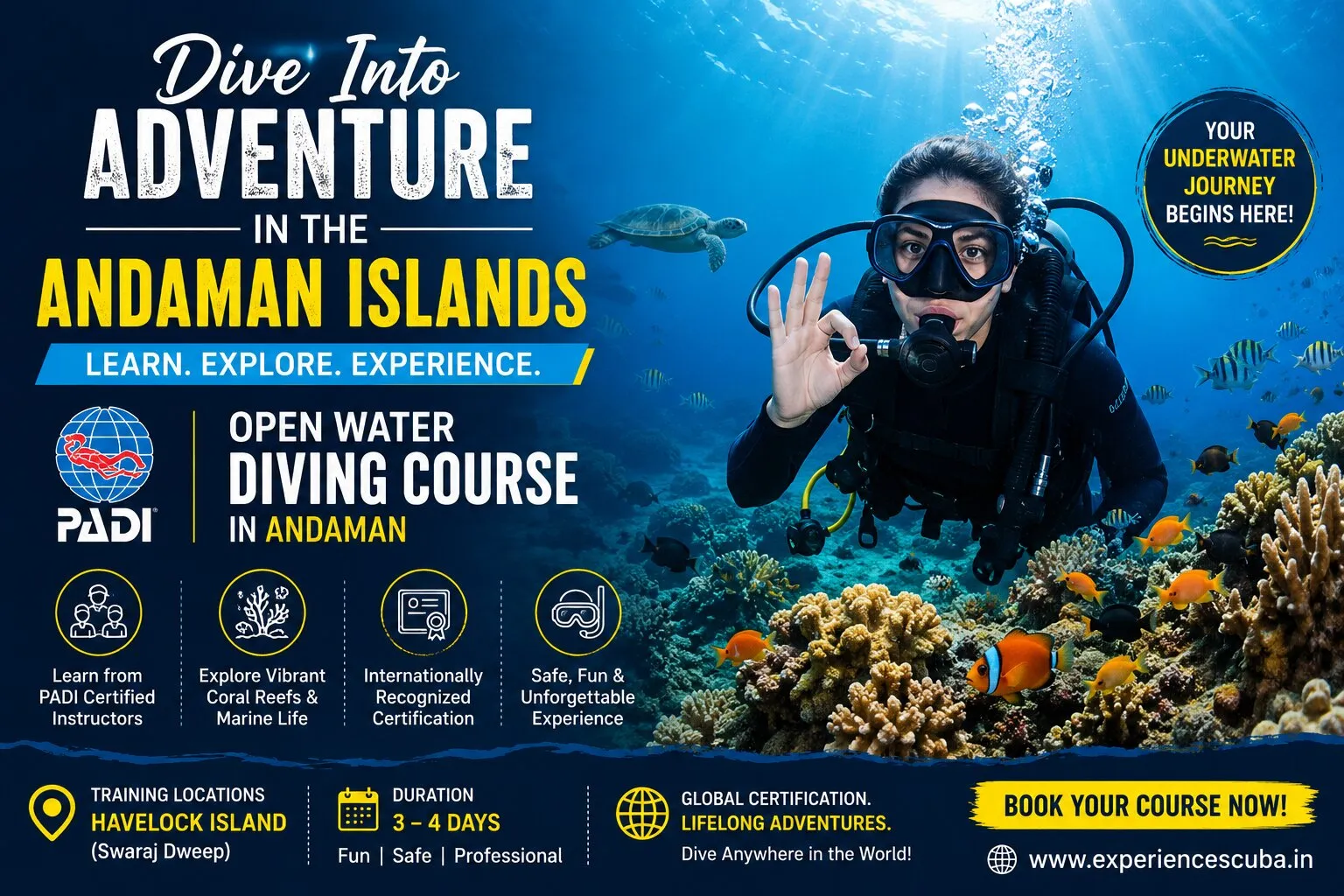

Planning an underwater adventure in the Andaman Islands? Discover how to choose a suitable diving experience, understand beginner options, and enjoy Havelock Island without rushing your holiday.
The Andaman Islands offer something that many beach destinations cannot: the opportunity to enjoy beautiful tropical scenery above the water and discover a completely different environment beneath it.
Scuba diving is one of the experiences that makes this possible.
Imagine spending the morning beside a quiet beach, getting familiar with underwater breathing, and then seeing reef fish moving through clear tropical water. For someone who has never tried scuba before, even a short introductory experience can become a memorable part of the holiday.
However, a little preparation makes a big difference.
Not every dive is designed for the same traveller. Some experiences are created for complete beginners, while others require previous training and certification.
Understanding these differences helps you choose a suitable experience instead of booking something simply because it looks impressive in photographs.
Why Scuba Diving in Andaman Appeals to Different Travellers
Andaman is not exclusively a destination for experienced scuba enthusiasts.
The islands offer opportunities for travellers who want to try diving for the first time, along with experiences for those who already hold recognised scuba qualifications.
For beginners, the attraction is discovering what it feels like to breathe underwater.
Certified divers may be more interested in different reef environments, underwater landscapes, or developing their diving skills.
This variety makes scuba an interesting addition to an Andaman holiday.
You do not need to plan your entire trip around diving. Even one carefully chosen experience can fit naturally between beaches, sightseeing, and other island activities.
What Makes Havelock Island a Popular Diving Destination?
Swaraj Dweep, commonly known as Havelock Island, is one of the main destinations for marine activities in the Andaman Islands.
Its combination of beaches, island accommodation, and diving facilities makes it convenient for travellers planning their first underwater experience.
Visitors researching Scuba diving in Havelock can explore different introductory programmes and experiences for certified divers.
One of the recognised beginner diving areas is Nemo Reef, where shore-based introductory experiences are available.
Other programmes may involve boat transfers to selected dive locations.
The right experience depends on your comfort level, previous training, health requirements, and the conditions on the day.
What Should You Expect During Your First Scuba Dive?
The first dive normally begins before you enter the water.
A professional instructor explains the equipment, introduces basic breathing techniques, and demonstrates important underwater hand signals.
You are also taught how to communicate discomfort and equalise pressure in your ears.
These instructions are especially important for first-time participants.
Breathing through a regulator can feel unusual initially. Your body needs a little time to become comfortable with the experience.
Once your breathing becomes steady, the underwater surroundings usually become easier to appreciate.
You begin noticing small fish, coral structures, and the movement of light beneath the surface.
For many beginners, this gradual change from nervousness to curiosity becomes one of the most interesting parts of the activity.
Can Non-Swimmers Participate in Scuba Diving?
Some supervised introductory diving programmes may accept people who do not have strong swimming skills.
This does not mean every scuba activity has identical requirements.
A beginner experience conducted under close professional supervision differs from a formal certification course.
The PADI Open Water Diver programme, for example, requires students to demonstrate specific swimming and water-comfort skills.
According to the official PADI certification FAQ, students must complete a continuous swimming assessment and demonstrate their ability to remain afloat for ten minutes.
Before booking any activity, explain your swimming ability honestly and confirm the programme's requirements.
Personal comfort and medical suitability should always be considered.
Shore Diving or Boat Diving: What Should You Choose?
Both options can offer enjoyable underwater experiences, but they involve different arrangements.
Shore diving
Shore diving begins directly from the coastline.
Participants normally prepare near the beach and enter the water according to the instructor's guidance.
For some first-time divers, entering gradually from the shore may feel less intimidating.
Havelock's Nemo Reef is associated with this type of beginner-oriented experience.
Boat diving
Boat diving involves travelling to a selected location before entering the water.
The experience may include additional travel time and different entry procedures.
Depending on the location and programme, boat diving can provide access to underwater areas farther from shore.
Neither format is automatically better.
The important thing is selecting the option appropriate for your ability and the day's conditions.
How to Find the Best Scuba Diving in Andaman
The word "best" can mean different things to different travellers.
A complete beginner may value clear instructions and close supervision.
An experienced diver may prioritise dive-site variety, marine environments, or particular types of underwater exploration.
Instead of choosing by popularity alone, consider the following factors:
- Experience level: Does the programme accept complete beginners or require certification?
- Professional guidance: What supervision is provided?
- Equipment: Is the necessary diving equipment included?
- Activity duration: How much time is spent preparing and underwater?
- Local conditions: Can the activity be adjusted if the sea becomes unsuitable?
- Medical requirements: Is screening required before participation?
These practical details help identify an experience that matches your expectations.
A highly advertised dive is not necessarily the most appropriate choice for every visitor.
What Makes the Best Scuba Diving in Havelock Different for Every Traveller?
Havelock attracts people with different travel interests.
Some visitors want to enjoy their first underwater experience before returning to the beach.
Others are already certified and want to explore marine environments within their training limits.
For beginners, depth should not become the main measure of success.
A comfortable dive in which you can breathe calmly and observe your surroundings may be far more satisfying than trying to reach a greater depth.
Experienced divers should consider the requirements of their certification, recent diving experience, and prevailing marine conditions.
Choosing the right programme helps make the activity more enjoyable and responsibly managed.
When Should You Plan Your Scuba Experience?
Seasonal travel planning is important because diving takes place in a natural marine environment.
Weather, sea conditions, underwater visibility, and dive-site accessibility can change.
Although the popular Andaman tourism season generally begins around October, individual diving conditions still need to be assessed locally.
Avoid assuming that a particular month guarantees perfect conditions.
If scuba diving is an important part of your trip, keeping some flexibility in your itinerary is useful.
You can plan sightseeing or a relaxed beach visit around your diving schedule instead of filling every available hour.
Why Your Flight Schedule Matters
One practical consideration is often overlooked by first-time divers: the interval between scuba diving and flying.
After diving, the body needs sufficient time to eliminate excess dissolved nitrogen.
Flying too soon can increase the risk of decompression sickness.
The Divers Alert Network's flying-after-diving guidance recommends a minimum interval of 12 hours after a single no-decompression dive and 18 hours after multiple dives or diving over several days, for the situations covered by its guidance.
Longer intervals provide additional protection.
Many travellers therefore plan approximately 24 hours between their final recreational dive and their flight as a conservative approach.
Always follow the guidance appropriate to your actual dive profile and instructor's assessment.
This makes a strong case for avoiding an underwater activity immediately before your departure.
Respect the Underwater Environment
Scuba diving also creates an opportunity to appreciate marine ecosystems.
Coral reefs provide habitats for many forms of underwater life, but they can be damaged by careless contact.
Avoid touching coral, collecting marine organisms, or disturbing fish for photographs.
Beginners should concentrate on their instructor's guidance and avoid unnecessary movement near reef structures.
Responsible underwater behaviour protects the environment that makes marine tourism possible.
Five Things to Confirm Before Booking
Before finalising your scuba experience, make sure you understand the practical arrangements.
- Programme suitability: Is the experience intended for beginners or certified divers?
- Included services: Does the booking include equipment, guidance, photographs, or transfers?
- Health requirements: Is a medical questionnaire or additional clearance necessary?
- Reporting time: When and where should you arrive?
- Rescheduling policy: What happens if weather or sea conditions interrupt the activity?
These simple questions can prevent confusion after reaching the island.
Frequently Asked Questions
Is scuba diving available for first-time visitors in Andaman?
Yes. Introductory scuba programmes are available for travellers without previous diving experience, subject to programme-specific eligibility.
Where can beginners try scuba diving in Havelock?
Nemo Reef is among the locations associated with introductory shore diving. Other beginner experiences may use different locations according to the programme and marine conditions.
Is scuba diving suitable for non-swimmers?
Certain closely supervised introductory experiences may accommodate non-swimmers. Formal certification courses have different requirements.
Is shore diving better than boat diving?
Neither is universally better. The choice depends on experience, personal comfort, dive-site conditions, and the type of programme.
Can I take photographs underwater?
Many operators offer underwater photography or video services. Check the inclusions before booking and avoid disturbing marine life for photographs.
How early should I book?
It depends on your travel dates and available slots. During busy holiday periods, confirming arrangements before arrival can help with itinerary planning.
Final Thoughts
Scuba diving gives travellers an opportunity to discover a side of Andaman that cannot be experienced from the beach.
But the most memorable dive is not necessarily the deepest or longest one.
It is the experience that allows you to feel comfortable, follow proper guidance, and appreciate the underwater surroundings.
Whether you are planning your first supervised dive or returning to Havelock with previous diving experience, take time to understand the available options.
Choose a programme that matches your skills.
Plan your travel schedule carefully.
Respect the marine environment.
And allow yourself enough time to enjoy the experience rather than rushing through it.
The islands are beautiful above the surface, but exploring the underwater world can add a completely different memory to your Andaman holiday.




















Sign in to leave a comment.