

Planning your first underwater adventure? Explore beginner-friendly diving, Havelock's marine life, practical preparation tips, and how to choose an experience that suits your holiday.
The Andaman Islands are often associated with white sandy beaches, tropical forests, and peaceful island holidays. However, beyond their beautiful coastline lies another attraction that deserves attention: the underwater world.
From small reef fish swimming around coral formations to the unusual experience of breathing underwater, scuba diving introduces visitors to a completely different side of island travel.
You do not have to be an experienced diver to explore this environment. Depending on your chosen programme, beginner-friendly experiences can introduce you to the fundamentals of diving under professional supervision.
If you are planning an Andaman holiday, understanding the available diving options can help you choose an experience that matches your interests, comfort, and travel schedule.
Why Scuba Diving Deserves a Place in Your Andaman Itinerary
Most visitors arrive in Andaman with a list of beaches and sightseeing attractions.
A scuba experience can add something different to that itinerary.
Unlike snorkeling, where you observe the underwater environment from the surface, scuba equipment allows you to explore beneath the water under the conditions and limits of your programme.
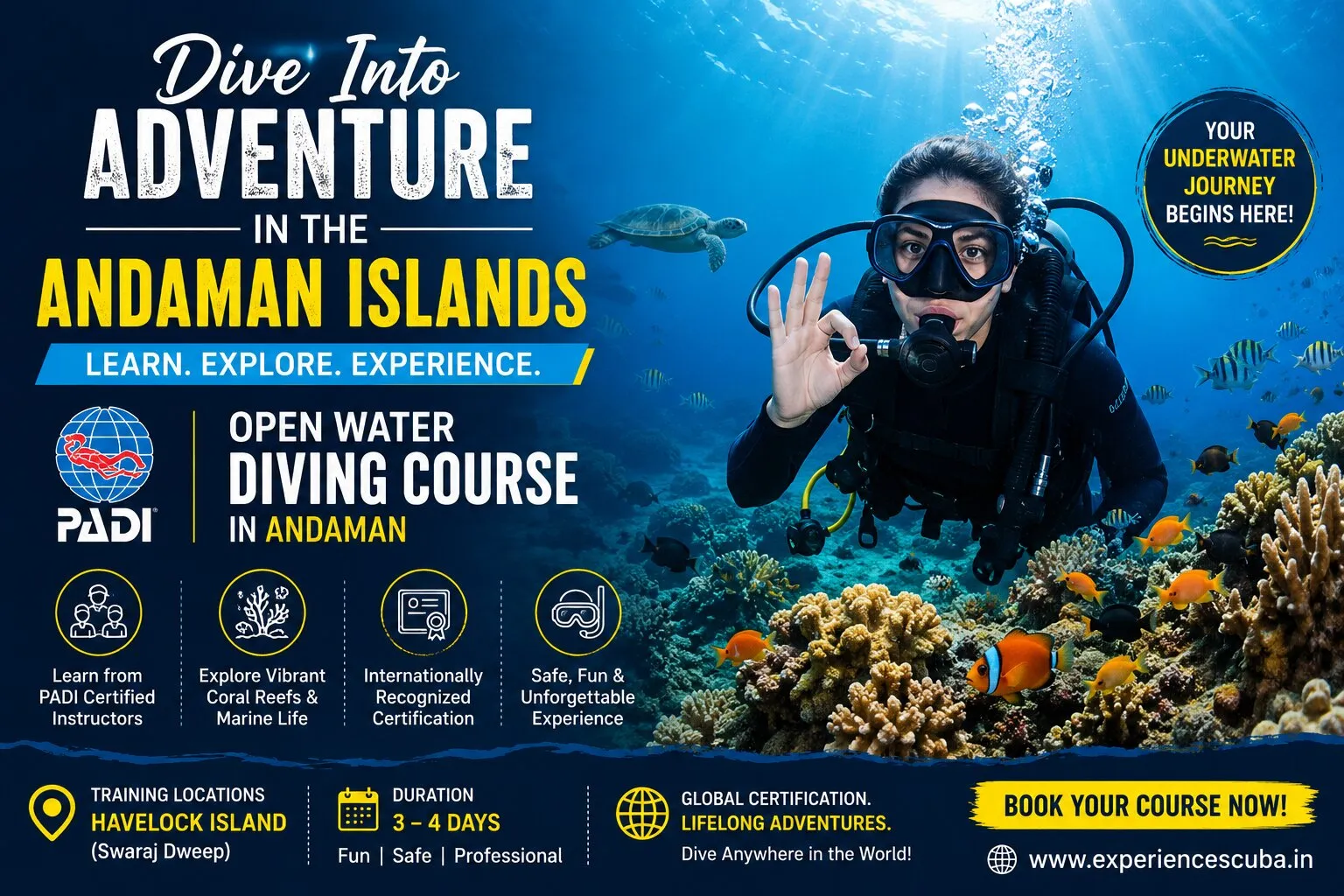
Travellers researching Scuba diving in Andaman can explore introductory experiences, recreational diving, and structured training opportunities.
The experience is not only about spotting fish.
It is also about understanding a different environment, becoming familiar with underwater movement, and discovering how marine life exists beneath the surface.
For some visitors, one introductory dive is enough to create a memorable holiday experience. Others develop an interest in learning more.
Havelock Island: A Popular Destination for Underwater Adventures
Swaraj Dweep, commonly known as Havelock Island, is among the recognised destinations for diving and marine tourism in Andaman.
The island combines tropical beaches with access to different underwater activities.
One advantage is that visitors can plan diving alongside the rest of their holiday.
You might spend one morning enjoying a supervised diving experience and another day exploring beaches or relaxing near the coastline.
For travellers interested in Scuba diving in Havelock, several factors should influence their choice of programme.
These include previous experience, water confidence, available time, and the type of dive they would like to try.
The right experience is not necessarily the one that takes you deepest.
It is the one that allows you to enjoy the underwater environment comfortably and responsibly.
What Makes a First Scuba Experience Different?
A first dive normally begins with preparation.
Before entering the sea, participants receive instructions about scuba equipment, breathing through a regulator, underwater communication, and basic safety procedures.
This preparation helps beginners understand what will happen during the activity.
Breathing underwater may feel unusual initially.
Your face is beneath the surface, but the regulator allows you to breathe from the scuba equipment.
It takes time to become familiar with this sensation.
The important thing is to follow the instructor, communicate clearly, and avoid rushing.
Once you feel comfortable, you can begin paying more attention to the marine environment around you.
Exploring Nemo Reef Around Havelock
Nemo Reef is one of Havelock's recognised introductory diving locations.
The area is associated with shore-based diving, where participants can enter the water directly from the coastline.
For certain beginner programmes, this gradual entry method can be appealing.
The reef is also associated with clownfish and other tropical marine life, although underwater sightings depend on actual conditions.
A visit to Nemo Reef should not be treated as a guarantee of seeing a particular species.
Instead, approach it as an opportunity to observe the underwater environment naturally.
Different fish, reef structures, and changing light conditions can make each experience unique.
Understanding Shore Diving and Boat Diving
Before booking, it is useful to understand the difference between the two common diving formats.
Shore diving
Shore diving begins from the beach or coastline.
Participants usually receive their briefing before entering the water and proceed according to their instructor's directions.
This format can be suitable for particular introductory programmes.
Boat diving
Boat diving involves travelling to a selected dive location before entering the sea.
The programme may include a boat journey, briefing, and specific water-entry procedures.
Some boat-based sites are suitable for introductory experiences, while others require appropriate certification or previous diving experience.
Neither format is automatically better.
Your choice should depend on individual suitability, instructor guidance, and local conditions.
Can You Try Scuba Without Knowing How to Swim?
This is a common concern among first-time travellers.
Certain closely supervised introductory scuba experiences may accommodate non-swimmers.
However, that does not mean swimming ability is unnecessary for every diving programme.
Formal scuba certification courses have different training requirements.
For example, PADI Open Water Diver certification requires participants to demonstrate swimming ability and water comfort.
If you are unsure about your eligibility, discuss your swimming experience and medical history with the dive operator before booking.
Choosing an appropriate programme is more important than trying to meet someone else's expectations.
How to Choose a Suitable Dive Operator
An underwater experience should be selected carefully.
Before confirming your booking, ask practical questions about the programme.
Find out whether the activity includes a complete safety briefing, correctly fitted equipment, and professional supervision.
Understand the difference between the total activity duration and actual underwater time.
Also check whether photography, transfers, and other services are included.
It is worth asking how the operator handles unsuitable weather or changing sea conditions.
A well-explained programme helps participants understand what they are booking before arriving at the dive centre.
When Should You Plan Your Andaman Diving Holiday?
Seasonal conditions play an important role in marine activities.
October through May is generally considered a favourable travel window for many Andaman activities, with the period from October to March attracting substantial tourism interest.
However, scuba diving conditions cannot be guaranteed simply because you are travelling during a popular month.
Local weather, sea conditions, underwater visibility, and dive-site accessibility can change.
If diving is an important part of your holiday, leave some flexibility in your schedule.
Avoid arranging every transfer and activity so tightly that a minor change affects the entire trip.
What Should You Bring for Your Diving Day?
Most introductory programmes provide the necessary scuba equipment, but participants should confirm the inclusions before arriving.
Comfortable swimwear and a towel are generally useful.
Carry drinking water, appropriate sun protection for time spent above water, and any identification requested by the operator.
If you have a relevant medical condition, ask whether additional medical clearance is needed.
Try to arrive at the reporting location without rushing.
Being relaxed and attentive during the briefing helps you understand the procedures before entering the water.
Respecting Marine Life During Your Dive
Coral reefs are living ecosystems.
They provide shelter and habitat for different marine organisms, but careless contact can damage them.
Avoid touching coral, collecting marine life, or disturbing animals for photographs.
Follow your instructor's directions about movement and position.
For new divers, learning to remain controlled around underwater structures is an important part of developing responsible habits.
A memorable experience should not come at the expense of the environment that makes it possible.
A Simple Way to Include Scuba in Your Havelock Trip
Suppose you are visiting Havelock for several days.
Instead of scheduling every hour, keep one part of the trip focused on your chosen diving experience.
Arrange the activity at a time that allows enough room for preparation and any necessary schedule adjustments.
Spend the remaining time enjoying the island's beaches and other attractions.
Also consider your return flight.
Diving requires appropriate intervals before flying because of decompression-related risks. Follow the guidance applicable to your actual diving profile.
A relaxed itinerary gives you more freedom to enjoy the island without unnecessary travel pressure.
Frequently Asked Questions
Is Andaman suitable for first-time scuba divers?
Yes. Introductory diving programmes are available for people with no previous scuba experience, subject to individual and programme requirements.
Where can beginners try scuba diving in Havelock?
Nemo Reef is one of the recognised locations associated with introductory shore-diving experiences. Other options depend on the operator and current conditions.
Do I need certification for a first dive?
Not for every introductory experience. Certification is required for certain recreational diving activities, while supervised beginner programmes may have different eligibility requirements.
Is shore diving suitable for nervous beginners?
A shore-entry programme may feel more comfortable for some participants because entry can be gradual. Suitability still depends on the person, programme, and conditions.
Can I see coral reefs during a dive?
Some diving locations offer opportunities to observe coral formations and reef fish. Actual visibility and marine-life encounters vary naturally.
Should I choose a dive only by its price?
No. Consider professional supervision, equipment, safety briefing, programme eligibility, and the complete experience before comparing prices.
Final Thoughts
Scuba diving provides an opportunity to experience Andaman from a perspective that is impossible to appreciate fully from the beach.
Your first underwater experience does not need to involve great depth or an ambitious training goal.
It can simply be an opportunity to become familiar with underwater breathing and observe marine life under professional supervision.
For a more enjoyable holiday, choose a programme suited to your skills, understand the safety requirements, and give yourself enough time to explore Havelock without rushing.
The Andaman Islands offer memorable experiences above the water.
With thoughtful preparation, the world beneath the surface can become an equally meaningful part of your journey.























Sign in to leave a comment.