
Businesses located in mixed-use buildings often share their surroundings with residential apartments, retail stores, restaurants, offices, or other commercial spaces. This arrangement can be convenient and cost-effective, but it also creates security considerations that are different from those of a standalone business premises.
A company may have its own office, equipment, documents, and employees, while people from other businesses or residential areas are moving through nearby common spaces. A practical security strategy therefore needs to consider not only what happens inside the business but also how people and activity move around the building.

Understand the Shared Areas
The first step is identifying which areas are controlled by the business and which are shared.
Entrances, elevators, staircases, parking areas, reception zones, corridors, and service entrances may be accessible to many different people. Employees may become accustomed to regular activity and stop noticing unfamiliar individuals.
Businesses should map these shared areas and determine where additional monitoring or access controls may be useful. This creates a clearer picture of where security responsibilities begin and end.
Separate Public and Restricted Spaces
Not every part of a commercial property needs the same level of access.
Reception areas may need to remain accessible to customers, while storage rooms, server rooms, offices containing sensitive documents, and employee-only spaces should have tighter controls.
Clearly separating public, employee, and restricted areas can reduce unnecessary movement through sensitive parts of the premises. Access permissions should also be reviewed when employees change roles or leave the organization.
Pay Attention to Unusual Movement
Mixed-use buildings naturally have a high level of activity, so security teams need to distinguish normal movement from activity that deserves attention.
For example, repeated movement near a restricted door, someone entering an employee-only area without authorization, or unusual activity outside business hours may warrant investigation.
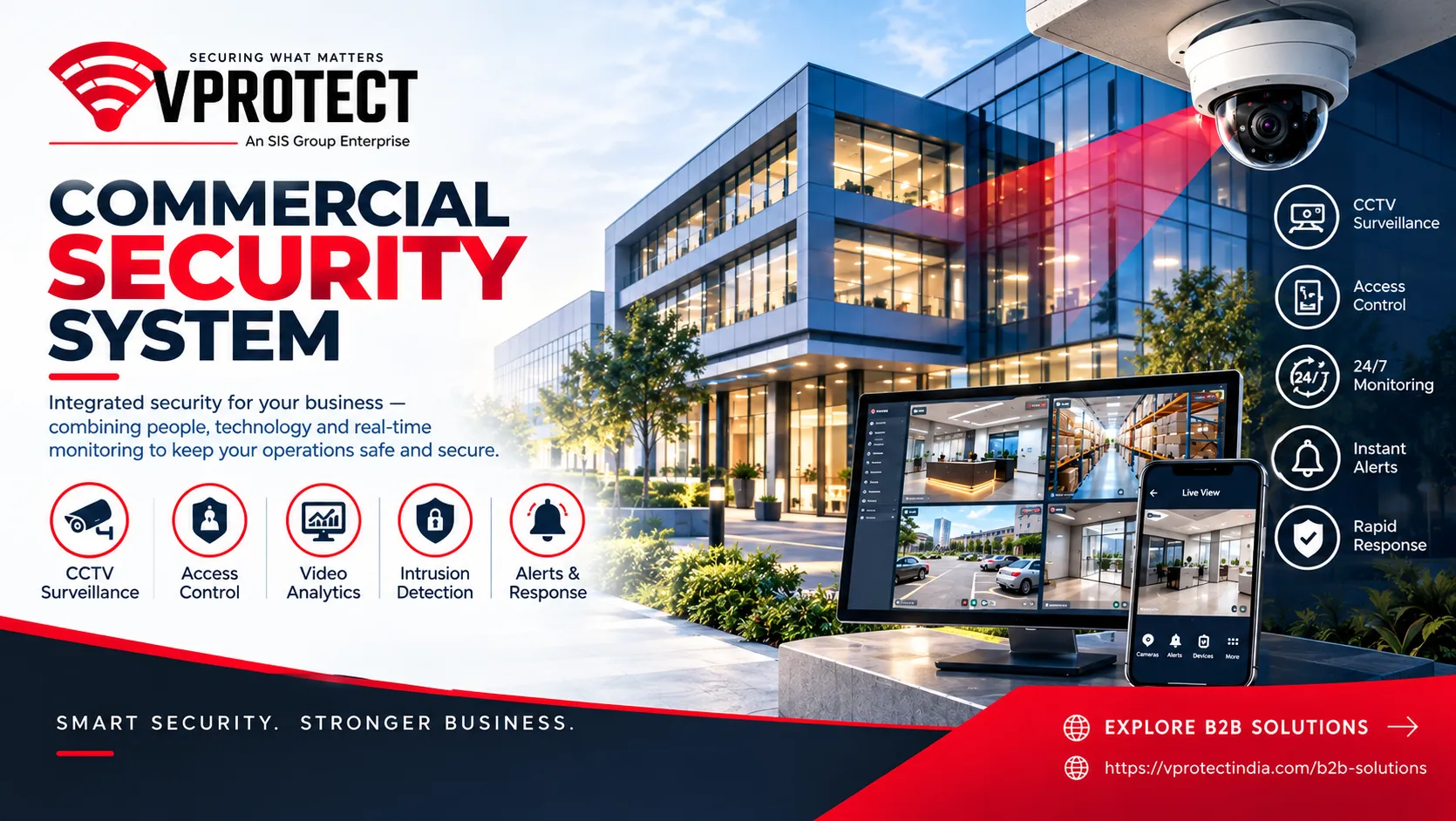
Security monitoring can help businesses identify such events without requiring employees to manually observe every area throughout the day. A Commercial Security System can combine cameras, sensors, access controls, and alerts to provide a more structured approach to monitoring business premises.
Secure Business-Specific Entry Points
Even when a building has a common entrance, businesses may have additional doors leading directly into their offices or operational areas.
These doors should be assessed separately. Access credentials should be issued only to authorized personnel, while doors that do not need regular use can remain secured.
If the business receives visitors, delivery personnel, or contractors, procedures should also make it clear which entrances they should use and which areas they are permitted to access.
Consider Security Outside Business Hours
A mixed-use building may remain active long after one particular business has closed.
Employees may leave in the evening while residents, cleaning staff, security personnel, or neighboring businesses continue using the building. This means a business cannot always rely on the assumption that there will be no one around after closing time.
Businesses should establish clear closing procedures, including checking restricted areas, securing doors and windows, confirming that unnecessary access points are locked, and ensuring that monitoring systems remain active.
Protect Sensitive Business Areas
Security planning should give particular attention to areas containing valuable or sensitive assets.
These could include:
- Server and networking rooms
- Financial records
- Customer information
- Inventory storage
- Expensive equipment
- Administrative offices
- Backup systems
- Confidential documents
Physical protection for these areas should complement digital security and internal access policies. Limiting access to authorized personnel can make it easier to identify and investigate unusual activity.
Coordinate With Building Management
Businesses operating in shared buildings can benefit from maintaining communication with property management or building security teams.
This can help clarify procedures for emergencies, maintenance work, temporary access, visitor management, and common-area incidents.
Businesses should know who to contact if an issue occurs in a shared space and understand which security measures are managed by the building versus those controlled by the individual company.
Review Security After Changes
Security arrangements should not remain unchanged indefinitely.
A business may add employees, change its operating hours, increase inventory, install new equipment, or redesign its workspace. Each change can create new access points or security requirements.
A periodic review can help identify gaps before they become significant problems. Walking through the premises at different times of day can also reveal activity patterns that may not be obvious during normal office hours.
Build a Security Plan Around the Business
There is no single security setup that works equally well for every company in a mixed-use building. The right approach depends on the property layout, business operations, number of employees, access requirements, valuable assets, and activity around the premises.
Rather than relying on one security measure, businesses can consider a combination of controlled access, monitoring, sensors, cameras, clear visitor procedures, and appropriate response processes.
A well-planned approach allows businesses to operate within shared environments while maintaining greater control over the areas and assets that matter most.
























Sign in to leave a comment.