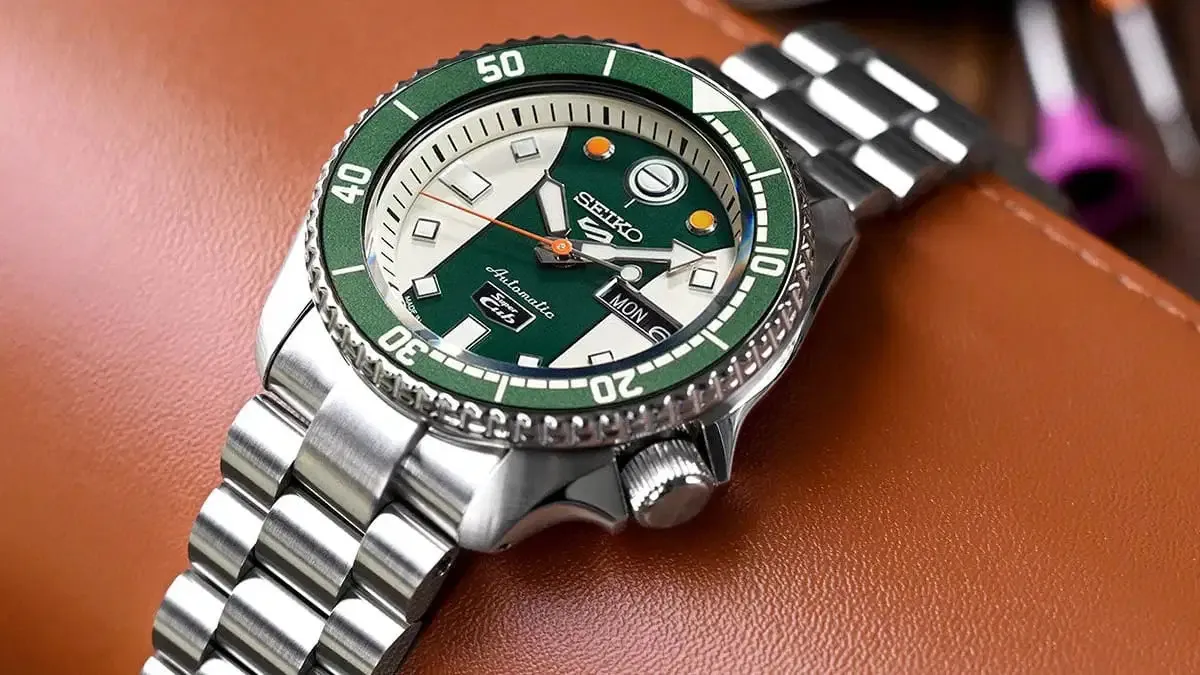

Quick Answer: Seiko diving watches span solar references like the Prospex SNJ025P1 and automatics such as the Turtle SRPD21, both at 200m with ISO 6425 certification testing legibility, shock resistance, and bezel function beyond a depth rating. Solar keeps the case permanently sealed by removing battery replacement, while automatic offers mechanical character at the cost of drift and servicing.
Seiko's diving watches earned genuine credibility over decades of producing tools rather than dive-styled fashion watches. The current range spans solar and automatic movements across several case shapes, and knowing how they differ helps buyers choose one matched to how they will actually use it.
What Certification Actually Requires
A genuine dive watch meets ISO 6425, which tests water resistance under pressure, legibility in darkness, resistance to magnetism and shock, reliable strap attachment, bezel function, and thermal shock resistance. A depth rating alone does not confirm this testing occurred, which is the distinction that matters most for anyone intending real diving.
The Solar Dive Option
Solar offers a specific advantage for dive watches. It removes battery replacement, which is exactly the operation most likely to compromise water resistance, keeping the case sealed across years. The Seiko Prospex Solar Diver's SNJ025P1 delivers 200m with light-powered charging.
The Automatic Dive Option
Automatic references offer genuine mechanical self-winding with no battery at all. The Seiko Prospex Turtle Save The Ocean SRPD21 offers 200m in the distinctive Turtle case with a thematic dial treatment.
Choosing Between Solar and Automatic
Both carry the same dive capability where certified, so the choice is about ownership rather than performance. Solar gives quartz accuracy, no battery replacement, and a permanently sealed case. Automatic gives mechanical character and a sweeping seconds hand but drifts, stops when unworn, and needs periodic servicing. Neither is better in absolute terms.
The Case Shape Question
Seiko dive watches come in several distinctive case shapes, including the cushion-shaped Turtle and the angular Samurai. These wear quite differently despite similar specifications, so case geometry rather than capability often drives the decision. Lug-to-lug measurement matters more than diameter for judging how each will sit.
The Unidirectional Bezel
Genuine dive watches use a unidirectional rotating bezel with a 60-minute scale. Counterclockwise-only rotation means an accidental knock can only under-report remaining dive time, never over-report it, which is a real safety feature. The bezel should turn with defined clicks and minimal play rather than rotating freely.
Legibility and LumiBrite
Underwater legibility is a safety consideration, which is why Seiko applies strong LumiBrite to hands, markers, and bezel pip. This luminosity is tested under ISO certification rather than being decorative. High-contrast dials with large markers serve the same purpose, prioritising instant readability over decorative detail.
Water Resistance Beyond Recreational Need
Recreational diving occurs well within 200m, so that rating provides substantial margin. Deeper ratings reflect engineering capability rather than practical necessity for most owners. Buyers should decide whether higher ratings represent capability they will use or reassurance they simply appreciate having on the wrist.
Maintaining the Rating
Water resistance depends on intact gaskets, which degrade gradually regardless of build quality. The rating describes the watch when properly sealed rather than permanently. Buyers intending genuine dive use should budget for periodic gasket replacement and pressure testing, which is part of responsible ownership rather than optional.
Strap and Bracelet Flexibility
Seiko dive watches use common lug widths, making strap changes straightforward. Rubber suits genuine water use, NATO adds security since the watch stays attached if one spring bar fails, and bracelets read dressier. Many owners keep two options and switch by occasion, extending one watch across more contexts inexpensively.
Common Mistakes to Avoid
The most serious error is treating a depth rating as equivalent to ISO certification. The second is not checking lug-to-lug on a large dive case. The third is assuming water resistance is permanent without gasket maintenance. The fourth is choosing on case shape appearance without trying how the geometry actually sits on your wrist.
Trying Shapes Before Committing
Seiko's dive cases wear so differently that photographs are a poor guide. A Turtle and a Samurai of similar stated diameter sit quite differently on the wrist because of how the lugs are shaped. Where possible, trying them on resolves the question definitively. Where that is not possible, comparing lug-to-lug figures rather than diameters is the most reliable substitute available.
Servicing a Dive Watch
Dive watches need more attention than everyday watches if genuinely used in water, since gaskets degrade and water resistance must be maintained rather than assumed. Budgeting for periodic pressure testing is part of responsible ownership. Owners who only wear a dive watch on land can be considerably more relaxed, but should still avoid assuming the rating holds indefinitely without any checks.
Why Seiko Divers Hold Their Following
Seiko dive watches maintain enthusiast standing because the value proposition has stayed consistent for decades: genuine capability, strong lume, robust construction, and accessible pricing. Few categories deliver such a clear relationship between what you pay and what you get. This consistency is why recommendations persist across generations of buyers rather than shifting with each new release, and why discontinued references retain demand long after production ends.
Getting the Bracelet Right
Bracelet sizing matters more on a heavy dive watch than on a light dress watch, since a loose bracelet lets the weight shift and the watch slide around the wrist. Having links removed properly rather than accepting an approximate fit makes a substantial difference to comfort. Many owners also find a rubber strap more comfortable for extended wear, particularly in warm conditions where a metal bracelet becomes noticeable.
The Bottom Line
Seiko diving watches deliver genuine certified capability at prices that made serious dive watches broadly accessible. Confirm ISO certification if you actually dive, choose solar for a permanently sealed case or automatic for mechanical character, and check lug-to-lug given the substantial cases. Browse the Seiko Prospex range.
Frequently Asked Questions
What makes a Seiko dive watch genuine?
ISO 6425 certification, testing water resistance under pressure, legibility in darkness, magnetic and shock resistance, strap attachment, and bezel function, beyond a simple depth rating.
Should I choose solar or automatic?
Solar gives quartz accuracy, no battery replacement, and a permanently sealed case. Automatic gives mechanical character but drifts, stops when unworn, and needs servicing.
Why does solar suit dive watches particularly?
It removes battery replacement, which is the operation most likely to compromise water resistance, keeping the case sealed across years of ownership.
What is the Turtle case?
A distinctive cushion-shaped Seiko dive case, one of several shapes including the angular Samurai, which wear quite differently despite similar specifications.
Why is the bezel unidirectional?
Counterclockwise-only rotation means an accidental knock can only under-report remaining dive time, never over-report it, a genuine safety feature.
Do I need more than 200m?
Not for recreational diving, which occurs well within that depth. Deeper ratings reflect engineering capability rather than practical necessity for most owners.
Does the water resistance rating last forever?
No. Gaskets degrade gradually, so periodic replacement and pressure testing are needed to maintain the rating for genuine dive use.
Verdict
Seiko diving watches offer genuine certified capability at accessible prices. Confirm ISO certification rather than assuming a depth rating implies it, then choose solar for a permanently sealed low-maintenance case or automatic for mechanical character. Check lug-to-lug given the substantial case shapes, and maintain gaskets if you dive. Browse the Seiko Prospex range.





















Sign in to leave a comment.