
Self-defense training comes up often in conversations about recovery from domestic violence, usually without much detail about what it should involve. Taught carelessly, it repeats the experience it is meant to help with. Taught well, it reaches something specific that abuse damages and that talk-based recovery does not always touch.
What Domestic Violence Does to Your Relationship With Your Body
Domestic violence does something specific to a person’s relationship with their own body. The immediate harm is only part of it. The lasting part is the after-effect, the way your body stops feeling like a reliable ally. People who have been through it often describe a kind of disconnect: flinching at movements that used to be normal, feeling unsafe in situations that objectively are safe, not trusting their own reactions anymore because those reactions were overridden and punished for so long.
Self-Defense Is Part of Recovery, Not All of It
Recovery from that is not a straight line, and it is not one thing. Therapy matters. Legal protection matters. A support system that believes you without needing convincing matters. Self-defense training fits into that picture, but it does not replace any of it, and any program that markets itself as the whole answer is overselling what physical technique can do.
Safety gets rebuilt in layers: legal, financial, emotional, physical. No single layer substitutes for the others, which is why safety planning treats them together rather than one at a time.
What Trauma-Informed Training Looks Like
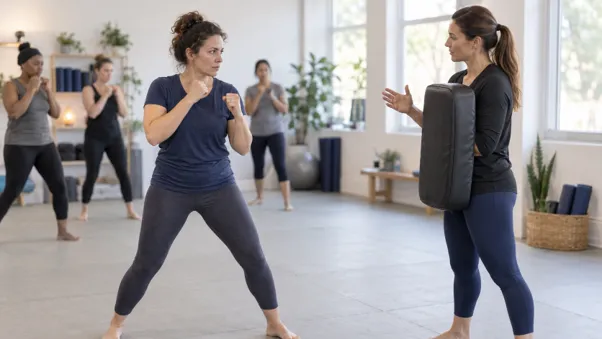
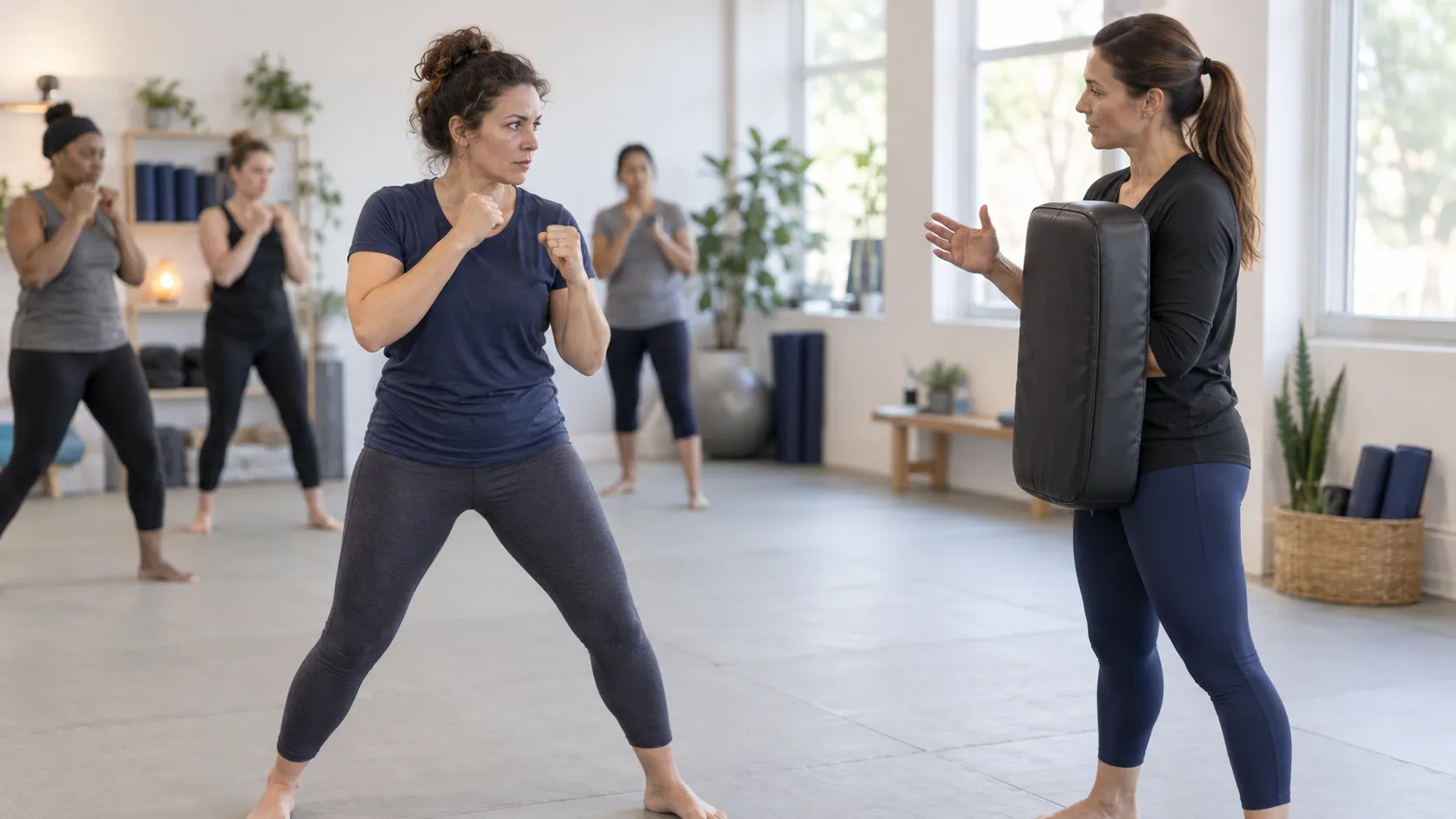
What it can do is give someone back a working relationship with their own body, on their own terms and at their own pace. That is a different goal from learning to fight, and it changes how the training should be run. A trauma-informed self-defense class does not grab, surprise, or physically correct someone without asking first. Every drill involving contact should be optional, with an easy way to opt out that does not require an explanation. Pacing should follow the person rather than a curriculum built for someone who has never had their consent overridden.
When it is taught that way, the physical part starts to matter less than what it represents. Throwing a strike that lands, or getting out of a hold that used to feel inescapable, is not really about the technique. It is proof, delivered by your own body, that you are not as fixed in place as the experience convinced you that you were. A lot of survivors describe that specific moment, not the class itself but that moment, as the first time in a long time they felt like they were back inside their own body instead of just occupying it.
There is no universally right time to start, either. Some survivors want to begin within weeks of leaving. Others need years before their body feels like a safe enough place to do this kind of work at all. Both are normal. The class should adjust to that timeline, not the other way around.
Finding an Instructor Who Gets It
None of this works without the instructor understanding what they are teaching into. A class run by someone who does not grasp why a sudden grab from behind might land very differently for a survivor than for someone else is not trauma-informed just because it says so on a flyer. Programs like the self-defense classes for women in NYC at Krav Maga Experts have leaned into instructors who ask before they touch, explain before they demonstrate, and treat “I don’t want to do that drill today” as a complete sentence rather than a problem to solve.
Getting Help
If you or someone you know is dealing with domestic violence, the National Domestic Violence Hotline (1-800-799-7233) is available 24 hours a day, and it is a good place to start regardless of where someone is in figuring out what they need next. Self-defense training can be part of getting there. It is rarely the first step, and it does not have to be, but for a lot of survivors it ends up being one of the most concrete ones.






















Sign in to leave a comment.