
Every Delhi traveller eventually faces the same question: should I book a cab with a driver, or rent a car and drive myself? Both options get you there. Which one costs less depends on the shape of your trip, not just the headline rate.
This guide breaks down both models, shows a worked example with clearly stated assumptions, and explains when each option makes more sense.
How each option is priced
Chauffeur-driven cabs are usually priced in one of two ways:
- Per-km outstation fares. You pay a rate per kilometre, typically with a daily minimum distance. Fuel, tolls and parking are often included in the quote, though not always.
- Local packages. City use is commonly sold as a block, such as 8 hours and 80 km, with extra hours and kilometres charged on top.
On multi-day trips, driver charges per day can appear as a driver allowance, and a night-halt charge applies for each night the driver stays with you. Ask whether these are inside the quote.
Car rental without a driver is priced as a daily (or hourly, weekly, monthly) rental with a kilometre allowance. You then pay for fuel, tolls and parking yourself. A refundable security deposit is held during the rental, and extra kilometres beyond the allowance are charged per km.
The key difference: a cab bundles the driver, fuel and tolls into one number, while a self-drive rental unbundles everything. Neither is automatically cheaper. You have to add up the full trip.
A worked example: Delhi to Jaipur and back
The numbers below are illustrative and rates change often, so verify current prices before you book. For reference, one operator's published 2026 fare chart lists a Delhi to Jaipur sedan at roughly ₹3,500 to ₹4,000 one way, or ₹5,000 to ₹6,000 round trip, with fuel, tolls and driver allowance included (see the fare guide).
Now estimate a self-drive hatchback for the same 2-day, roughly 560 km round trip. These are working assumptions, not quotes:
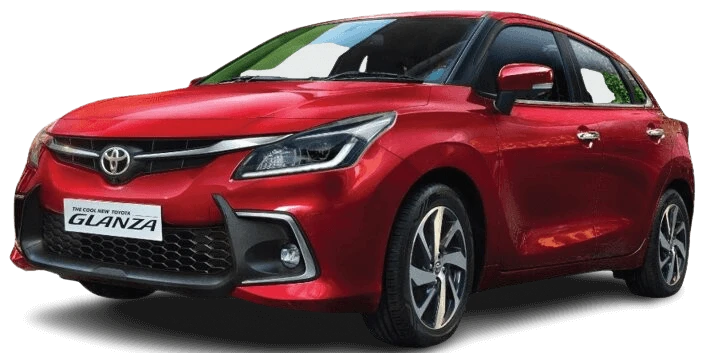
- Rental: about ₹1,500 to ₹2,500 per day for a hatchback, so ₹3,000 to ₹5,000 for two days
- Fuel: at about 18 km per litre, roughly 31 litres, which is around ₹3,000
- Tolls: roughly ₹800 to ₹1,000 across the round trip
That puts the self-drive total around ₹6,800 to ₹9,000, against ₹5,000 to ₹6,000 for the cab.
For a simple, point-to-point round trip where you park the car and stay put, the cab can win. It is better to say that plainly than to pretend otherwise.
When self-drive starts to win
The picture changes when your trip is not a straight line.
1. Many short hops across several days. If you plan to explore Jaipur, drive out to Amer, return, and head to a nearby town, a per-km cab with daily minimums and night-halt charges adds up. Self-drive charges you for the car and the fuel you actually burn.
2. Flexible timing. With your own rental you can leave at 5 a.m. or return at midnight without negotiating a driver's schedule or overtime.
3. Group privacy. A family or friend group often prefers having the car to themselves with no one else listening to conversations or controlling the music.
4. Longer rentals. Weekly and monthly rental rates usually drop per day, while chauffeur-driven costs scale more directly with days and kilometres.
5. Local use in Delhi NCR. For people who need a car across several days for meetings and errands, a car rental without driver gives you the vehicle on your terms. Hourly self-drive options also help when you only need the car for an afternoon.
When a cab is the better pick
- Airport transfers and one-way trips, where parking and return logistics make self-drive pointless.
- Long single-day journeys where you want to rest, work or sleep in the back seat.
- Unfamiliar roads or mountain driving, if you are not confident behind the wheel.
- Late arrivals after a tiring flight.
A good rule: if the main value of the trip is getting from A to B, book a cab. If the main value is moving freely between many points, self-drive is worth a serious look.
Hidden costs to check on both sides
Cab:
- Is the toll inside the fare or billed separately?
- Are night-halt and driver allowances included?
- What is the minimum km per day, and what happens if you drive less?
Self-drive:
- What is the km limit and the per-km charge beyond it?
- What is the fuel policy (usually return with the same level)?
- What does the deposit cover, and when is it released?
- What does the insurance exclude, and what is your excess if something happens?
If any answer is vague, ask for it in writing.
Quick decision guide
| Situation | Likely better value |
| One-way or airport transfer | Cab |
| 1-day long trip, one destination | Often cab |
| 3+ days, many stops | Often self-drive |
| Late-night or early-morning flexibility | Self-drive |
| Weekly or monthly need in Delhi NCR | Self-drive |
| Tired, unfamiliar roads, hills at night | Cab |
Final thoughts
There is no universal winner in the self drive vs cab debate. A cab buys you a driver and a bundled price. A rental buys you freedom and costs you the work of driving and the responsibility for fuel, tolls and the car. Add up your own trip line by line before deciding. If your plans are flexible, it is worth pricing a self-drive option from Veekay Cabs alongside your cab quotes, since a side-by-side total makes the choice obvious. And if you decide to rent, look at what a Delhi operator offers for short and long rentals before you lock in dates.

















Sign in to leave a comment.