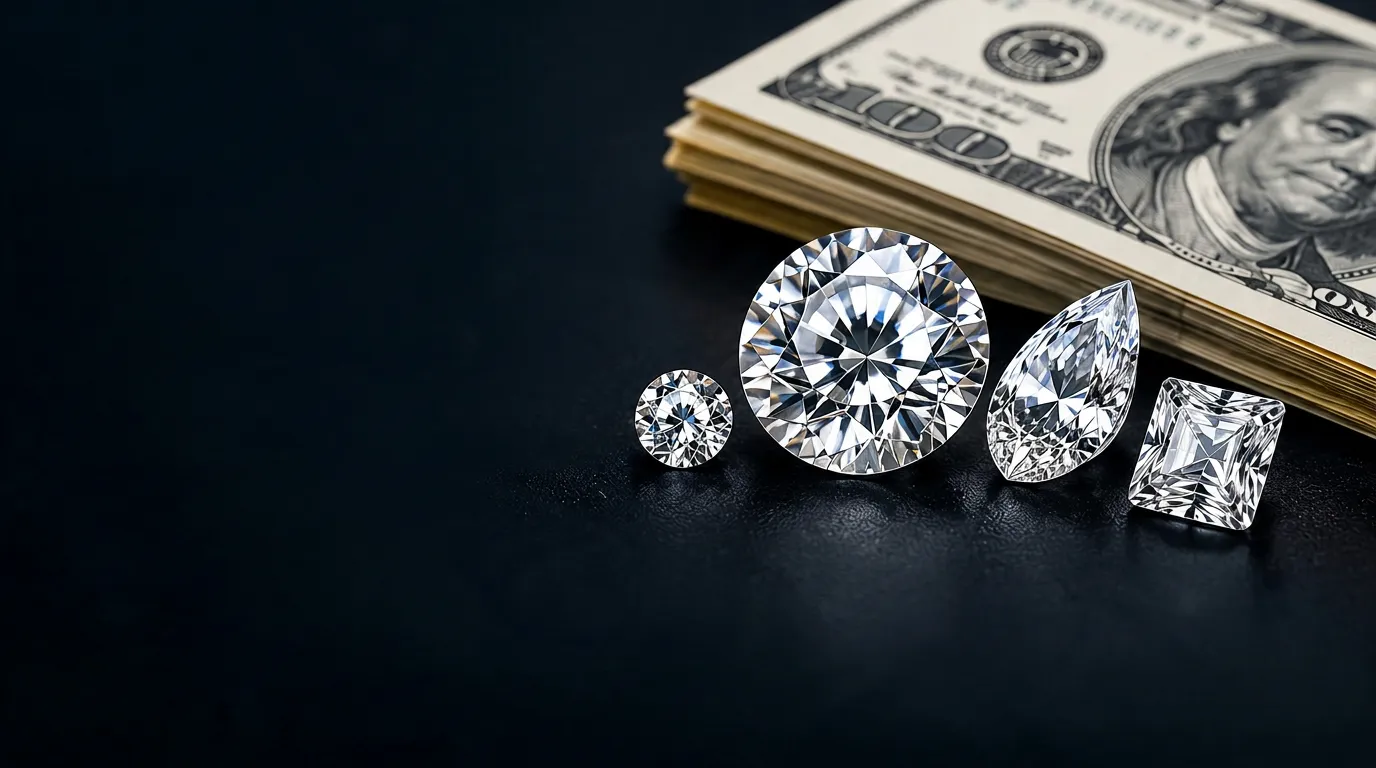

A diamond in a drawer is easy to forget. Maybe it is an inherited ring, an anniversary gift that no longer suits your life, or a handful of loose stones from a jewelry box you are finally clearing out. Whatever the story, diamonds hold real value, and that value depends on details many owners never learn. Before you make any decision, it helps to understand what gives a diamond its worth and how to choose a buyer who will treat you fairly.
What Determines a Diamond's Value
Jewelers evaluate stones using the well-known "four Cs." Each one shapes the final price in a different way.
Carat and Cut
Carat measures weight, but cut determines how well a stone catches light. A well-cut diamond looks brighter and usually commands a better price than a heavier stone with poor proportions. That is why two diamonds of the same size can be valued very differently.
Color and Clarity
Color ranges from colorless to light yellow, and colorless stones are generally more valuable. Clarity describes the tiny natural marks found inside or on a diamond. Most are invisible to the naked eye, but they still influence price, which is why a trained evaluation matters.
Why the Setting and Paperwork Matter
A diamond rarely stands alone. Gold or platinum mountings carry their own metal value, and signed designer pieces can attract extra interest. If you still have a grading report, receipt or earlier appraisal, keep it with the piece. Paperwork helps a buyer confirm details faster, although an experienced buyer can also evaluate an uncertified stone in person.
How Timing and Market Conditions Play a Role
Diamond prices are not as visible day to day as gold or silver, but demand, the size and quality of the stone, and the current market for pre-owned jewelry all influence what a buyer can offer. Loose stones and finished pieces may also be valued differently. Because of this, an offer made in one week may not match an offer made in another. Asking a buyer how they factor in current demand helps you judge whether a number is grounded in real conditions.
Steps to Take Before You Sell
A little preparation keeps you in control of the process. Start with these steps:
- Locate any certificates, receipts or appraisal documents.
- Leave the stone in its setting unless a professional advises otherwise.
- Clean it gently with mild soap, water and a soft brush, and avoid harsh chemicals.
- Photograph the piece and note any engravings or inscriptions.
- Decide in advance what you would consider a fair outcome.
- Think about whether you want to sell the whole piece or keep a sentimental setting for yourself.
When you are ready to sell diamonds for cash, the goal should be a clear, honest transaction rather than a rushed one. A trustworthy buyer examines the stone in front of you, explains how they reached their number, and gives you time to think it over.
Finding a Buyer You Can Trust
Many people begin with a quick search for cash for diamonds near me, and that is a sensible place to start. Just remember that a nearby address is not the same as a good reputation. Look for a business with a physical shop, clear contact details and consistent, detailed customer reviews. Being able to walk in, ask questions and watch the evaluation happen makes the whole experience more comfortable.
Questions Worth Asking
Before agreeing to anything, consider asking:
- How do you arrive at your offer, and can you walk me through it?
- Do you value the stone and the setting separately?
- Is there any obligation if I decide not to sell?
- How and when will I be paid?
Honest buyers welcome these questions. If answers feel vague or rushed, that is a sign to pause.
Common Mistakes to Avoid
Even careful sellers can slip up. Watch out for these:
- Accepting the first offer. Speaking with two or three buyers shows you what a fair range looks like.
- Over-cleaning or repairing the piece. Harsh polishing or DIY fixes can cause damage that lowers value.
- Treating online estimates as final. Photos and calculators cannot show cut quality, hidden flaws or true color.
- Ignoring smaller stones. Clusters and accent diamonds add up, so have every stone evaluated.
- Skipping the paperwork. Always ask for a written receipt that lists the items and the amount paid.
A Simple Illustration
Consider a hypothetical example. Someone inherits a ring and a pair of earrings and assumes they are costume jewelry. After a professional look, they learn the stones are genuine and the settings are solid gold. This is only an illustration, not a real customer story, but it shows why an expert opinion is worth more than a guess.
Final Thoughts
Selling a diamond is often personal as well as financial, so take the time to do it well. Learn what drives value, gather your paperwork, compare more than one opinion, and choose a buyer who is open about how they price things. If you are in the Cape Cod area, Eagle Coins Gold and Silver Buying in Harwich, MA is one local option worth speaking with. Wherever you choose to go, ask questions, stay patient, and let clear information guide your decision.





















Sign in to leave a comment.