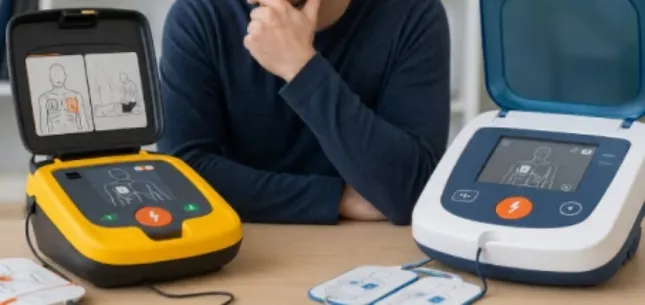

A semi automatic defibrillator is one of the most important life-saving devices available for workplaces, schools, sports clubs, public buildings, and community organisations. Designed to assist anyone during a sudden cardiac arrest (SCA), this device analyses the victim's heart rhythm and instructs the rescuer when to deliver a shock. Unlike manual defibrillators that require advanced medical knowledge, a semi automatic defibrillator provides clear voice and visual prompts, making it suitable for trained first aiders and even members of the public.
At Edwin O'Sullivan Training Solutions, we believe that every workplace should have access to a reliable Automated External Defibrillator (AED) and ensure staff receive the appropriate training to use it confidently. Having a semi automatic defibrillator on-site can dramatically improve survival rates when used quickly alongside CPR.
What Is a Semi Automatic Defibrillator?
A semi automatic defibrillator is an Automated External Defibrillator (AED) that assesses the casualty's heart rhythm and determines whether a shock is required. If a shockable rhythm is detected, the device instructs the user to press the shock button. This extra confirmation step allows the rescuer to ensure everyone is clear before delivering the shock.
The AED continuously guides the user with step-by-step voice instructions, reducing stress and making the rescue process straightforward. Modern devices also provide CPR coaching to help maintain effective chest compressions between rhythm analyses.
How Does a Semi Automatic Defibrillator Work?
Using a semi automatic defibrillator is designed to be simple and safe.
The process generally includes:
- Turn on the AED.
- Follow the voice prompts.
- Remove clothing from the patient's chest.
- Attach the electrode pads as illustrated.
- Allow the AED to analyse the heart rhythm.
- If advised, ensure everyone is clear of the casualty.
- Press the flashing shock button.
- Continue CPR as instructed until emergency services arrive.
The device will never advise a shock unless it detects a rhythm that can benefit from defibrillation, making it extremely safe to use.
Semi Automatic vs Fully Automatic Defibrillator
Many organisations wonder whether they should choose a semi automatic or fully automatic AED.
Semi Automatic Defibrillator
- User presses the shock button.
- Gives the rescuer control before shock delivery.
- Widely used in workplaces.
- Popular with trained first aid responders.
- Generally preferred by businesses with regular safety training.
Fully Automatic Defibrillator
- Delivers the shock automatically.
- No button press required.
- Ideal where users may have little or no training.
- Suitable for public access locations with many visitors.
Both types offer excellent protection and use identical heart rhythm analysis technology. The primary difference is whether the user confirms shock delivery.
Why Every Workplace Should Have a Semi Automatic Defibrillator
Sudden cardiac arrest can occur without warning and affects people of every age. Survival decreases significantly with every minute that passes without CPR and defibrillation.
Installing a semi automatic defibrillator provides many benefits:
- Faster emergency response.
- Improved workplace safety.
- Increased survival chances.
- Greater employee confidence.
- Compliance with health and safety risk assessments.
- Enhanced corporate responsibility.
- Protection for visitors and customers.
Many Irish businesses now include AEDs as part of their overall emergency preparedness strategy.
Industries That Benefit
A semi automatic defibrillator is suitable for almost every workplace, including:
- Offices
- Manufacturing facilities
- Construction sites
- Warehouses
- Schools and colleges
- Retail stores
- Hotels
- Gyms and leisure centres
- Sports clubs
- Healthcare facilities
- Community centres
- Agricultural businesses
Any environment where people gather can benefit from immediate access to an AED.
Key Features to Look For
When purchasing a semi automatic defibrillator, consider features such as:
- Clear voice prompts.
- Visual rescue instructions.
- CPR feedback technology.
- Fast rhythm analysis.
- Long-life battery.
- Durable design.
- Automatic self-testing.
- Child mode or paediatric pads.
- High IP rating for dust and water resistance.
- Easy maintenance.
Choosing a high-quality AED ensures reliability when every second counts.
Training Is Essential
Although a semi automatic defibrillator is designed for ease of use, formal training helps users respond more confidently during emergencies.
Training typically covers:
- Recognising sudden cardiac arrest.
- Performing effective CPR.
- Safe AED operation.
- Recovery position.
- Emergency communication.
- Team response procedures.
At Edwin O'Sullivan Training Solutions, we provide professional first aid and AED training to help businesses prepare employees for real-life emergencies. Practical instruction builds confidence and improves response times during critical incidents.
Maintaining Your Semi Automatic Defibrillator
Regular maintenance ensures your AED is always rescue-ready.
Maintenance includes:
- Checking battery status.
- Inspecting electrode pad expiry dates.
- Confirming self-test indicators.
- Keeping the device clean.
- Ensuring it remains easily accessible.
- Recording inspection dates.
- Replacing accessories before expiry.
Routine checks only take a few minutes but are essential for reliable performance.
Common Myths
Only doctors can use a defibrillator.
False. AEDs are specifically designed for public use with clear voice instructions.
The AED might shock someone unnecessarily.
False. The device only advises a shock when medically appropriate.
Training is mandatory.
While training is highly recommended, anyone can safely use a semi automatic defibrillator by following the prompts.
Cardiac arrest only affects older people.
Sudden cardiac arrest can occur in adults, teenagers, athletes, and even children due to underlying heart conditions or unexpected medical events.
Choosing the Right Semi Automatic Defibrillator
When selecting an AED, consider:
- Ease of use.
- Reliability.
- Battery life.
- Warranty.
- Availability of replacement pads.
- Cost of ownership.
- Manufacturer support.
- CPR guidance features.
- Environmental durability.
A reputable supplier can help you choose the right model based on your workplace and level of risk.
Why Choose Edwin O'Sullivan Training Solutions?
Edwin O'Sullivan Training Solutions is committed to improving workplace safety across Ireland by supplying high-quality AED solutions and professional health and safety training. We help organisations select the right semi automatic defibrillator for their needs while providing expert guidance on installation, maintenance, and emergency preparedness.
Whether you operate a small office, a construction company, a school, or a large industrial facility, our experienced team can recommend dependable defibrillator solutions and deliver practical training that builds confidence and saves lives.
Conclusion
A semi automatic defibrillator is a valuable investment for any organisation committed to protecting employees, customers, and visitors. By combining rapid defibrillation with CPR and proper emergency procedures, businesses can significantly improve survival outcomes during sudden cardiac arrest.
Equipping your workplace with a reliable AED and ensuring staff receive quality training demonstrates a strong commitment to health, safety, and preparedness. Edwin O'Sullivan Training Solutions is proud to support businesses throughout Cork and Ireland with trusted AED products, expert advice, and comprehensive first aid and safety training, helping create safer workplaces and more confident emergency responders.





















Sign in to leave a comment.