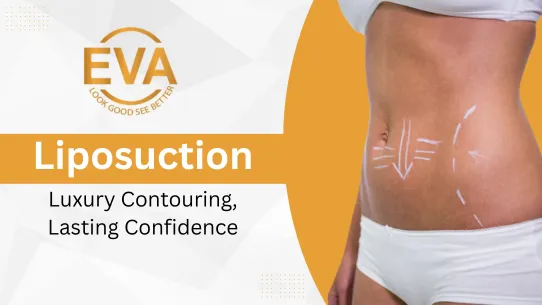

When people think about body contouring, the first thing that usually comes to mind is stubborn fat. A person may look at their abdomen, waist, thighs or flanks and think, “If this fat disappears, my body will finally look the way I want.”
But body contouring is rarely that simple.
Two people can have almost the same body weight and still require completely different approaches. One may have good skin elasticity with small areas of stubborn fat. Another may have loose abdominal skin after pregnancy or significant weight loss. Someone else may have both excess fat and hanging skin, while another person may have abdominal muscle laxity that changes the entire shape of the stomach.
This is why modern body contouring should not begin with the question, “Which procedure is best?”
A better starting point is:
What is actually affecting my body shape—fat, skin, structure, or a combination of all three?
For people considering liposuction surgery in Delhi or tummy tuck surgery in Delhi, understanding this distinction can make the consultation much more meaningful.
At Eterna Vision & Aesthetics, Dr. Hiranmayi Jha, MBBS, MS Surgery, MCh – Plastic Surgery, AIIMS Alumni and Ex-Associate Consultant in Max Saket, approaches cosmetic surgery by looking beyond a single problem area. The aim of body contouring is not simply to remove something from the body. It is to create a more balanced relationship between shape, skin and underlying structure.
Why Body Contouring Is Not Simply About Removing Fat
Liposuction has become one of the most recognised body-contouring procedures because it can reduce localised fat deposits that remain resistant to diet and exercise.
However, removing fat does not automatically create a flatter or tighter abdomen.
Imagine a balloon.
If a balloon has a firm outer surface and you remove some of its contents, the surface can adapt reasonably well. But if the balloon has become loose and stretched, removing more contents does not necessarily make the surface tight.
The abdomen can behave in a somewhat similar way.
If someone has:
Localised fat with relatively good skin elasticity
Loose or hanging skin
Abdominal wall laxity
Muscle separation
Stretch marks associated with stretched skin
A combination of excess fat and excess skin
the treatment plan may be completely different.
This is why searching only for the best liposuction in Delhi may not answer the most important question.
The more useful question is:
Is liposuction actually addressing the main reason my abdomen looks the way it does?
The Three-Part Assessment: Shape, Skin and Structure
Before choosing body contouring surgery, it helps to understand three major factors.
1. Shape
Shape refers to the distribution of volume across the body.
It includes:
Where fat is stored
Waist definition
Abdominal projection
Flank fullness
Hip-to-waist proportion
Upper and lower abdominal contours
Symmetry between the two sides
Liposuction is primarily a contouring procedure. It can selectively reduce fat from areas where deposits create unwanted fullness.
2. Skin
Skin determines how the body's outer envelope responds after volume changes.
Important factors include:
Elasticity
Excess skin
Skin quality
Stretch marks
Previous pregnancy
Major weight loss
Age-related changes
Previous surgery
Good skin recoil may allow the skin to adapt after fat reduction.
Significant loose skin may require a different strategy.
3. Structure
Structure refers to what lies underneath the fat and skin.
This can include:
Abdominal muscles
Abdominal wall
Muscle separation
Hernia or abdominal wall concerns
Rib cage and pelvic anatomy
Natural body proportions
Previous surgical changes
A person may have relatively little fat but still have a protruding abdomen because the underlying anatomy or abdominal wall contributes to the appearance.
Understanding these three layers helps explain why there is no universal body-contouring procedure.
1. Shape: Where Is the Volume Coming From?
The first question is often the easiest:
Where is the unwanted fullness located?
Some people notice fullness primarily around the lower abdomen.
Others may have:
Upper abdominal fullness
Flanks or “love handles”
Back fat
Waistline fullness
Hip-area deposits
Thigh fat
Multiple small areas that affect overall proportions
When these deposits are localised and the skin has reasonable elasticity, liposuction may be considered as a contouring option.
The goal is not to remove every gram of fat.
In fact, excessive fat removal can create contour irregularities or an unnatural appearance.
A skilled body-contouring plan focuses on proportion.
For example, reducing abdominal fullness while completely ignoring the flanks may sometimes leave the waist looking less defined than expected. In another person, treating only the front of the abdomen may not produce the desired overall silhouette.
This is why body contouring is often about sculpting relationships between areas, rather than treating one isolated spot.
Liposuction Is About Contour, Not Weight Loss
One of the most important misconceptions surrounding liposuction in Delhi is that it is a weight-loss procedure.
It is not.
Liposuction is designed primarily for removing selected areas of excess fat and improving body contours.
A person who is significantly overweight may first benefit from weight management and lifestyle changes. Liposuction is generally not a substitute for these approaches.
Instead, it may be considered when certain areas remain disproportionately full despite reasonable weight stability.
Common areas can include:
Abdomen
Flanks
Hips
Thighs
Arms
Back
Chin and neck in selected patients
The objective is better contour—not a particular number on the weighing scale.
2. Skin: The Part People Often Forget
Fat gets most of the attention.
Skin often gets overlooked.
Yet skin quality can strongly influence the final appearance after body contouring.
Suppose two patients have a similar amount of abdominal fat.
Patient A has relatively firm skin.
Patient B has significant loose skin after pregnancy or major weight loss.
Removing fat from both patients would not necessarily create the same result.
The second patient may still have hanging or excess skin even after the fat component has been reduced.
This is where the distinction between liposuction and tummy tuck becomes particularly important.
How Skin Elasticity Changes the Treatment Discussion
Skin elasticity is influenced by several factors, including:
Age
Genetics
Pregnancy
Weight fluctuations
Sun exposure
Smoking
Skin quality
The degree to which the skin has been stretched
Younger skin is not automatically perfect, and older skin is not automatically poor.
Individual variation is significant.
A consultation helps determine how much the skin is likely to adapt to changes in underlying volume.
This is one reason an online photograph or a simple description cannot reliably determine whether someone needs liposuction, tummy tuck surgery, or another approach.
When Loose Skin Becomes the Main Problem
A person may lose a substantial amount of weight and feel healthier but still be unhappy with their abdominal appearance.
Why?
Because weight loss reduces volume, but it does not always remove stretched skin.
The result can include:
Lower abdominal overhang
Loose skin
Folds
Stretch marks
A less defined waist
Difficulty fitting comfortably into certain clothes
In such situations, simply removing more fat may not solve the primary concern.
A tummy tuck, medically known as abdominoplasty, is designed to address excess abdominal skin and, where appropriate, aspects of the abdominal wall.
This makes it fundamentally different from liposuction.
3. Structure: What Is Happening Beneath the Surface?
The third factor is structure.
This is where body-contouring discussions become more individualised.
A person's abdomen is not simply a layer of fat covered by skin.
It has:
Skin
Subcutaneous fat
Fascia
Muscles
Abdominal wall
Internal structures
Pregnancy, significant weight changes and other factors can alter the appearance and function of the abdominal wall.
Some patients have abdominal muscle separation, commonly called diastasis recti. In appropriate cases, an abdominoplasty may include surgical management of abdominal wall laxity.
However, not every abdominal bulge is caused by muscle separation.
That is why proper clinical evaluation matters.
Liposuction vs Tummy Tuck: They Solve Different Problems
A simple comparison can make the distinction clearer.
Concern Liposuction Tummy Tuck
Localised excess fat Yes May be combined with liposuction
Significant loose skin Limited role Major focus
Hanging lower abdominal skin No Yes
Skin removal No Yes
Abdominal contouring Yes Yes
Abdominal wall laxity Not the primary purpose May be addressed when appropriate
Stretch marks Not directly treated Some lower abdominal skin containing stretch marks may be removed
Weight-loss procedure No No
These procedures are not necessarily competitors.
In selected patients, they can be complementary.
What Does Liposuction Actually Change?
Liposuction changes the amount and distribution of subcutaneous fat.
It may help create:
A smoother waistline
Reduced abdominal fullness
Better flank definition
More visible natural contours
Improved transition between the abdomen and waist
The exact result depends on anatomy, skin quality, fat distribution and surgical technique.
A realistic goal is improved contour, not perfection.
What Does a Tummy Tuck Actually Change?
A tummy tuck focuses primarily on excess abdominal skin and, depending on the patient's anatomy and surgical plan, abdominal wall laxity.
It may be considered for patients who have:
Significant loose abdominal skin
Lower abdominal overhang
Post-pregnancy skin changes
Skin excess after major weight loss
Certain forms of abdominal wall laxity
The operation involves removing selected excess skin and reshaping the abdominal area.
Because it involves an incision and skin removal, scarring is an important part of the consultation.
Patients should understand the location, expected appearance and healing process of the scar before proceeding.
Pregnancy Can Change All Three: Shape, Skin and Structure
Pregnancy is one of the clearest examples of why body contouring requires an individual assessment.
After pregnancy, a woman's abdomen may change in several ways simultaneously.
Shape may change
There may be persistent fat around the abdomen or flanks.
Skin may change
The skin may become stretched, loose or marked with stretch marks.
Structure may change
The abdominal wall may become lax or the muscles may separate.
Therefore, asking only:
“Do I need liposuction?”
may be too narrow.
A better consultation considers the complete post-pregnancy abdominal picture.
Women planning future pregnancies should also discuss their plans with their plastic surgeon because pregnancy after body-contouring surgery can affect the result.
What Happens After Major Weight Loss?
Significant weight loss can produce an interesting situation.
The person may successfully achieve a healthier weight but be left with excess skin.
The abdomen may appear flatter underneath the skin, but the outer skin envelope may remain loose.
Other areas may also be affected, including:
Arms
Thighs
Breasts
Abdomen
Flanks
In these cases, body-contouring surgery is often less about removing fat and more about managing the consequences of tissue stretching.
This is another reason why tummy tuck surgery in Delhi is often discussed in the context of post-weight-loss body contouring.
Why More Liposuction Is Not Always the Answer
There is a common assumption:
If some fat removal helps, removing more must create an even better result.
That is not necessarily true.
The body needs enough soft-tissue support to maintain a natural contour.
Aggressive or inappropriate fat removal can potentially contribute to:
Uneven contours
Skin irregularities
Hollow areas
Asymmetry
An unnatural appearance
The objective of good liposuction is not simply maximum removal.
It is controlled contour improvement while respecting anatomy.
Can Liposuction Tighten Skin?
This is another question frequently asked by people researching liposuction cost in Delhi or comparing treatment options.
Liposuction itself primarily removes fat.
Some patients may experience a degree of skin contraction after fat removal, depending on skin elasticity and individual healing.
However, significant loose skin cannot be reliably corrected simply by removing additional fat.
When the skin envelope is substantially excessive, a skin-removing procedure such as tummy tuck may be more appropriate.
The distinction is important because expectations influence satisfaction.
Can Tummy Tuck Replace Liposuction?
Not always.
A tummy tuck removes excess skin and can reshape the abdominal area, but it is not primarily designed as a whole-body fat-removal procedure.
Some patients have both:
Excess abdominal fat
Excess abdominal skin
In selected cases, liposuction may be incorporated into a broader surgical plan.
The precise combination depends on individual anatomy and safety considerations.
The Importance of Body Proportion
A successful body-contouring result should not be judged only by the abdomen.
Look at the whole silhouette.
For example:
A flatter abdomen with disproportionately full flanks may not create the desired waistline.
Likewise, aggressive waist reduction without considering the hips and natural skeletal structure may produce a less balanced appearance.
This is why experienced plastic surgeons consider:
Waist width
Hip width
Rib cage
Pelvic anatomy
Fat distribution
Skin quality
Existing asymmetry
The goal is not to make every body look identical.
The goal is to improve the relationship between different body areas.
Why Your Natural Anatomy Matters
No two bodies have exactly the same architecture.
The rib cage, pelvis, muscle attachments, fat distribution and skin characteristics vary.
This means that an image of someone else's body should not automatically become your treatment target.
Social media can create unrealistic expectations because photographs may involve:
Posing
Lighting
Clothing
Camera angles
Editing
Temporary swelling reduction
Selective presentation
A surgical consultation should focus on your anatomy rather than somebody else's photograph.
Choosing Between Liposuction and Tummy Tuck
A simplified decision framework can help.
You may be more likely to discuss liposuction if:
Your main concern is localised fat
Your weight is relatively stable
You have reasonably good skin elasticity
There is limited loose skin
You want contour refinement rather than major weight reduction
You may be more likely to discuss tummy tuck if:
You have significant loose abdominal skin
There is a lower abdominal overhang
You have substantial post-pregnancy skin laxity
You have excess skin after major weight loss
Abdominal wall laxity is part of the concern
You may need a combined discussion if:
You have both excess fat and loose skin
Your abdomen requires contouring in multiple dimensions
Flank fullness contributes to the overall shape
Your surgeon believes more than one technique may be appropriate
This framework is educational rather than diagnostic. The final recommendation should come after a clinical examination.
What Factors Can Influence Liposuction Surgery Cost in Delhi?
Searching for liposuction surgery cost in Delhi can give you a general starting point, but there is no single price that applies to every patient.
The final cost can vary depending on:
Number of areas treated
Amount and distribution of fat
Surgical technique
Complexity of contouring
Anaesthesia
Facility charges
Investigations
Compression garments
Post-operative care
Follow-up requirements
Whether additional procedures are performed
For example, treating one small area is different from contouring the abdomen, flanks and other regions.
Therefore, a quote should ideally be based on an individual assessment rather than an advertised one-size-fits-all figure.
What Determines Tummy Tuck Cost in Delhi?
Similarly, tummy tuck cost in Delhi can vary considerably.
Factors may include:
Type of abdominoplasty
Amount of excess skin
Abdominal wall laxity
Surgical complexity
Anaesthesia
Hospital or surgical facility
Investigations
Post-operative garments
Follow-up
Additional contouring procedures
A mini tummy tuck and a more extensive abdominoplasty are not identical operations.
Therefore, patients should ask exactly what is included in the quoted cost.
Questions to Ask Before Choosing a Body-Contouring Procedure
A good consultation should be a conversation rather than a sales pitch.
Consider asking:
“What is the main reason my abdomen looks prominent?”
Is it primarily fat, skin, muscle structure or a combination?
“Would removing fat alone address my concern?”
If not, why?
“How elastic is my skin?”
This helps set expectations after fat removal.
“Do I have significant loose skin?”
If yes, what procedure is designed to address it?
“Is abdominal wall laxity contributing to my appearance?”
This may be relevant after pregnancy or significant weight change.
“Where will the scars be?”
Patients should understand scar placement before surgery.
“What happens during recovery?”
Ask about mobility, compression garments, work, exercise and follow-up.
“What risks apply specifically to me?”
Every surgery has potential risks, and individual medical history matters.
“What happens if I gain or lose weight afterward?”
Weight stability can influence long-term contour.
Recovery: The Procedure Is Only One Part of the Journey
Body contouring does not end when surgery is completed.
Recovery is an important component of the process.
The exact recovery period depends on the procedure, extent of surgery, individual healing and whether multiple procedures are performed.
Patients may experience:
Swelling
Bruising
Tightness
Temporary numbness
Discomfort
Reduced activity during the early recovery period
Following post-operative instructions carefully is important.
Patients should not rush back into strenuous exercise simply because they feel better.
The body needs time to heal.
Scars Should Be Discussed Honestly
Any procedure involving an incision can leave a scar.
This is especially important with tummy tuck surgery because the procedure involves a relatively long abdominal incision.
The final scar can depend on:
Individual healing
Genetics
Skin characteristics
Surgical technique
Incision placement
Post-operative care
Scars usually evolve over time.
Patients should not expect a fresh surgical scar to look like its final appearance immediately after surgery.
A responsible consultation should include a realistic discussion about scarring rather than promising an invisible scar.
What About Combining Liposuction and Tummy Tuck?
Some patients have both excess fat and excess skin.
For selected patients, combining procedures may create a more comprehensive contouring result.
However, combining procedures also means:
More extensive surgery
Potentially longer operating time
More recovery considerations
Additional safety planning
Therefore, combination surgery should not be viewed as automatically better.
The question should be:
Is combining procedures appropriate and safe for this particular patient?
That decision belongs in an individual surgical assessment.
Why Weight Stability Matters
Body-contouring procedures are generally best considered when a person's weight is reasonably stable.
Why?
Because major weight changes after surgery can alter the result.
If someone is actively losing a large amount of weight, it may make more sense to discuss timing with their surgeon rather than rushing into surgery.
Similarly, someone planning pregnancy may want to discuss timing before undergoing major abdominal contouring.
The best time for surgery is not determined by a calendar alone.
It depends on health, weight stability, goals and future plans.
Healthy Expectations Matter More Than Perfect Expectations
Cosmetic surgery can improve specific concerns, but it cannot completely redesign the human body.
A realistic goal might be:
“I want a smoother abdominal contour.”
“I want less fullness around my waist.”
“I want to address loose skin after pregnancy.”
“I want my clothes to fit differently.”
“I want my abdomen to look more proportionate.”
An unrealistic goal might be expecting surgery to guarantee a particular body shape regardless of anatomy.
The best outcomes usually begin with realistic expectations.
The Role of Dr. Hiranmayi Jha and Eterna Vision & Aesthetics
Body contouring requires more than choosing a procedure from a list.
At Eterna Vision & Aesthetics, Dr. Hiranmayi Jha, MBBS, MS Surgery, MCh – Plastic Surgery, AIIMS Alumni and Ex-Associate Consultant in Max Saket, focuses on evaluating the patient's individual anatomy, concerns and aesthetic goals before developing a treatment plan.
For someone considering liposuction in Delhi or tummy tuck surgery in Delhi, this type of assessment can help clarify whether the primary issue is excess fat, loose skin, abdominal structure or a combination.
The purpose of consultation is not simply to decide whether surgery should be performed.
It is also to determine:
What surgery can realistically improve
What it cannot change
Which technique may be appropriate
What recovery may involve
What risks need to be considered
Whether the timing is suitable
What About Actors and Celebrities Who Have Had Plastic Surgery?
Celebrity transformations often influence how people think about cosmetic surgery.
Public figures may discuss procedures such as liposuction, breast surgery, rhinoplasty, eyelid surgery or other aesthetic treatments. However, not every dramatic transformation reported online is proof that a particular actor underwent a specific procedure.
This distinction matters.
Celebrity photographs can be useful for understanding general aesthetic concepts, but they should not be used as a medical blueprint.
A celebrity's:
Genetics
Body proportions
Skin quality
Fitness routine
Weight
Lifestyle
Surgical history
may be completely different from yours.
Therefore, the better question is not:
“Can I get the same body as this actor?”
It is:
“What improvement is realistically possible for my own anatomy?”
The Biggest Mistake: Choosing the Procedure Before Understanding the Problem
People often begin their research with a procedure name.
They search:
“Liposuction surgery in Delhi.”
Then:
“Best liposuction in Delhi.”
Then:
“Liposuction cost in Delhi.”
Or they may search:
“Tummy tuck surgery in Delhi.”
This is understandable.
But the better sequence is:
Problem → Assessment → Options → Procedure → Recovery → Cost
not:
Procedure → Price → Appointment
Understanding the problem first can make the rest of the decision much clearer.
A Simple Three-Question Test
Before booking body-contouring surgery, ask yourself three questions.
Question 1: Is my main concern volume?
If yes, localised fat may be contributing significantly to the problem.
Question 2: Is my main concern excess skin?
If yes, simply removing fat may not solve the issue.
Question 3: Is my abdominal structure contributing to the appearance?
If yes, a deeper assessment may be necessary.
And sometimes the honest answer is:
All three.
That is precisely why personalised consultation matters.
Frequently Asked Questions
Is liposuction suitable for everyone with belly fat?
No. Liposuction is primarily a contouring procedure for selected areas of localised fat. Suitability depends on factors such as health, weight stability, skin quality, fat distribution and individual anatomy.
Is tummy tuck surgery a weight-loss procedure?
No. Tummy tuck surgery is primarily designed to address excess abdominal skin and reshape the abdominal area. It should not be considered a replacement for weight-loss treatment.
Can liposuction remove loose skin?
Liposuction removes fat, not large amounts of excess skin. Patients with substantial skin laxity may need to discuss a skin-removing procedure such as abdominoplasty.
Can liposuction and tummy tuck be performed together?
In selected patients, these procedures may be combined. However, the decision depends on individual anatomy, goals and safety considerations.
How much does liposuction cost in Delhi?
There is no universal price. Liposuction cost in Delhi can vary according to the number of areas treated, technique, complexity, anaesthesia, facility, investigations and aftercare.
How much does tummy tuck surgery cost in Delhi?
Tummy tuck cost in Delhi varies according to the type and extent of surgery, skin excess, abdominal wall concerns, facility, anaesthesia, investigations and post-operative care.
Will tummy tuck remove all stretch marks?
Not necessarily. Some stretch-marked skin may be removed along with excess lower abdominal skin, but stretch marks outside the area of skin removal generally remain.
How long do body-contouring results last?
Results can be long-lasting when patients maintain a relatively stable weight and healthy lifestyle. However, ageing, pregnancy and significant weight changes can alter body contours over time.
Is body contouring suitable after pregnancy?
Some women consider body contouring after completing pregnancies. Suitability and timing should be discussed with a qualified plastic surgeon, particularly if future pregnancy is planned.
Is liposuction better than tummy tuck?
Neither procedure is universally “better.” They address different problems. Liposuction primarily targets localised fat, while tummy tuck focuses on excess abdominal skin and may address abdominal wall laxity in appropriate cases.
Final Thought: Start With Your Body, Not the Procedure Name
Body contouring becomes much easier to understand when you stop looking at the abdomen as one problem.
Think of it as three connected layers:
Shape. Skin. Structure.
Shape asks where excess volume is located.
Skin asks whether the outer envelope is firm, stretched or loose.
Structure asks what is happening underneath the surface.
Once these three factors are understood, the discussion about liposuction, tummy tuck or a combination becomes much more logical.
For someone researching liposuction surgery in Delhi, the right treatment may be focused fat reduction and contour refinement.
For someone with significant loose abdominal skin, tummy tuck surgery in Delhi may deserve greater consideration.
For another patient, the best plan may involve a combination of techniques—or potentially no surgery at all until weight, health or timing is more appropriate.
That is the real value of personalised body contouring.
It is not about chasing the smallest waist, the lowest number on the scale or someone else's photograph.
It is about understanding your shape, your skin and your structure, then choosing an approach that respects all three.
At Eterna Vision & Aesthetics, a consultation with Dr. Hiranmayi Jha can help patients explore their individual body-contouring concerns, understand realistic options and make an informed decision about whether liposuction, tummy tuck or another approach is appropriate.























Sign in to leave a comment.