
Navigating the Next Wave: Strategic Trends and Commercial Opportunities in the Ships Turbocharger Market
The ships turbocharger market is entering a phase of steady, structurally driven expansion, underpinned by a global revenue trajectory that has grown from approximately $730 million in 2020 to nearly $940 million in 2025, with a projected compound annual growth rate of 5.3 percent through 2032. This growth is not cyclical noise; it reflects a convergence of fleet modernization, tightening emissions frameworks, and incremental engineering gains that are reshaping how marine diesel and gas engines are specified, operated, and maintained. For decision-makers evaluating exposure to marine propulsion auxiliaries, the market offers a clear signal: turbocharger demand is becoming a function of compliance readiness, service economics, and application-specific performance rather than pure horsepower replacement. The following analysis maps the current market reality, the forces moving it, the competitive architecture, and the strategic moves that will separate value creators from passive participants over the next five years.
Market Snapshot and Core Challenges
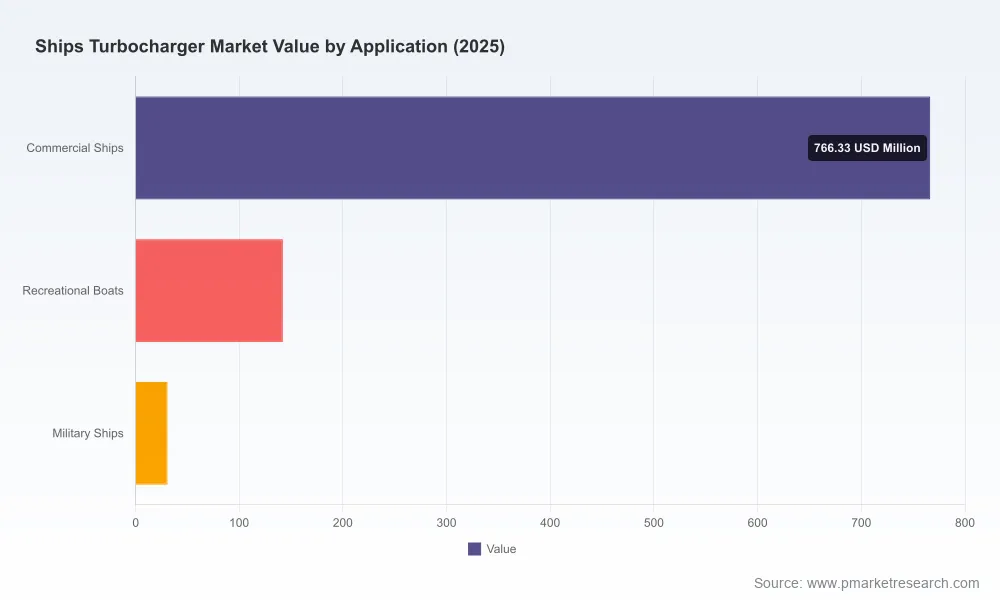
The market’s expansion has been consistent rather than explosive, with annual revenue climbing through the post-pandemic recovery period and gaining additional momentum as shipowners accelerated engine retrofits and newbuild selections aligned with tighter environmental standards. By 2025, the addressable revenue base crossed the $900 million threshold, and the forward path points toward a mid-$1.3 billion endpoint by 2032. This trajectory is broad-based across geographies, with mature shipbuilding and operatorship clusters in North America and Europe representing substantial share, while Asia Pacific continues to contribute the largest regional value pool, reflecting both active vessel construction and a large in-service fleet requiring ongoing auxiliaries support. The type mix remains anchored by axial designs, which dominate volume share, complemented by radial configurations and a smaller remainder of specialized variants. On the application side, commercial ships account for the overwhelming majority of demand, with recreational boats and military vessels forming smaller but strategically distinct segments that influence product configurations and service models.
Despite the orderly growth profile, the market faces three structural challenges that will define competitiveness in the near term.
- Regulatory integration as a design constraint. Emissions rules are no longer a compliance checkbox; they are becoming integral to turbocharger architecture. Engine-makers and ship integrators must align turbocharger selection with after-treatment pathways, especially in Emission Control Areas, where NOx control strategies affect backpressure, air delivery, and thermal management. This raises the barrier for commoditized offerings and rewards designs that are pre-validated for specific emission pathways.
- Service criticality and uptime economics. Marine operations are highly sensitive to downtime, and turbocharger performance directly influences fuel efficiency, exhaust temperatures, and engine reliability. The challenge is shifting from initial equipment sales to lifecycle value: customers increasingly evaluate rebuildability, part commonality, remote diagnostics, and service response times as primary procurement criteria, which compresses the advantage of entrants that lack field service depth.
- Regional fleet heterogeneity and approval complexity. Because vessel types, operating profiles, and regulatory regimes vary widely across regions, a single platform strategy rarely fits all. Manufacturers must navigate multiple type-approval frameworks and tailor solutions to low-, medium-, and high-speed engine ecosystems, while shipowners and builders demand proven compatibility with specific engine families and auxiliary layouts.
For executives, the practical implication is that the market rewards suppliers that can combine emissions-ready engineering with verifiable service economics, and it penalizes those that compete only on unit price without lifecycle support.
Key Drivers Reshaping Demand and Value Creation
Technology Innovation and Breakthroughs
Turbocharger design is increasingly optimized around efficiency, responsiveness, and maintainability rather than raw airflow alone. Recent product milestones illustrate this shift: a low- and medium-speed auxiliary engine turbocharger series has surpassed 10,000 orders, signaling that repeatable, service-oriented architectures are gaining traction in commercial operations. The same supplier has introduced a low-speed model now ready for market and secured approval for a medium-speed variant on a major auxiliary engine platform, reinforcing a strategy of engine-specific validation rather than generic compatibility claims. These developments matter because turbochargers are becoming more tightly coupled with engine control strategies, exhaust after-treatment, and fuel flexibility. Designs that reduce maintenance complexity and improve part interchangeability lower total cost of ownership, which is increasingly decisive for operators managing thin margins and strict voyage schedules.
For businesses, the technology signal is clear: differentiation is migrating from pure performance specifications to integrated serviceability, faster turnaround on overhauls, and compatibility with engine platforms that dominate commercial fleets.
Policy and Regulatory Environment
Environmental regulations continue to be the most persistent demand shaper. Under the International Maritime Organization’s framework, marine diesel engines above 130 kW operating in Emission Control Areas must incorporate after-treatment-compatible turbocharger configurations to meet NOx limits, making turbocharger selection a compliance enabler rather than a standalone component decision. Broader amendments to sulfur oxide limits and NOx technical requirements have long influenced exhaust system design, and these requirements continue to guide turbocharger geometry, material choices, and integration approaches. In parallel, U.S. regulations align marine diesel engine standards with international norms, requiring type approval for turbochargers on U.S.-flagged vessels, while the EU Marine Equipment Directive mandates type approval for marine equipment to ensure safety and environmental compliance. U.S. Coast Guard requirements further reinforce type approval expectations for safety and environmental standards across vessel categories.
PW Consulting
The regulatory environment creates two practical effects. First, it raises the value of pre-certified, engine-validated turbochargers because re-validation cycles are expensive and time-consuming. Second, it encourages suppliers to build modular platforms that can be adapted across emission pathways without redesigning the entire air-charge system. For procurement teams and engineering leaders, this means approval readiness and documentation quality are now as important as performance curves.
Demand-Side Shifts in Consumer and Enterprise Behavior
Shipowners and operators are increasingly prioritizing fuel efficiency, emissions compliance, and operational flexibility over lowest upfront cost. Commercial ships dominate demand, which means bulk carriers, container vessels, tankers, and other working fleets are the primary adoption engine. These operators face pressure to reduce fuel consumption and extend maintenance intervals, especially as voyages become more cost-sensitive and port state controls become more rigorous. At the same time, recreational boats and military vessels represent smaller but distinct demand pockets that influence product breadth: recreational applications often favor compact, lower-maintenance solutions, while military programs emphasize reliability and mission-specific integration. The broader demand shift also includes growing attention to future fuel readiness, with some suppliers signaling investment in e-fuel market development and energy transition planning, indicating that turbocharger portfolios are being evaluated not only for today’s diesel and gas engines but also for adaptability to alternative fuel pathways.
Worldwide Diesel Engine Turbocharger Market
The practical takeaway is that demand is becoming more selective and more lifecycle-oriented. Buyers are willing to pay for solutions that reduce operating risk, simplify service logistics, and support compliance across multiple jurisdictions.
Supply Chain and Cost Structure Dynamics
The cost structure of turbocharger supply is being influenced by the need for precision manufacturing, high-quality materials, and rigorous testing to meet marine approval standards. At the same time, localized production arrangements and licensing agreements are becoming more relevant, allowing regional support, shorter lead times, and better alignment with local engine ecosystems. This is visible in the presence of suppliers that combine global engineering with licensing models that enable local production and marine equipment integration. The result is a market where scale, repeatability, and service proximity matter more than ever. Companies that can maintain disciplined manufacturing quality while expanding service coverage are better positioned to protect margins in a market where price competition remains intense but lifecycle value is increasingly rewarded.
For operators and investors, the supply-side lesson is that cost leadership without service depth is fragile, while integrated manufacturing and service networks create more durable pricing power.
Competitive Landscape and Leading Strategies
The competitive field is moderately concentrated, with a handful of established players holding meaningful share and a broader set of engine-makers and specialists competing in specific speed classes and application niches. The leaders tend to bundle engineering validation, engine-platform compatibility, and service agreements into their value proposition, rather than competing solely on component specifications. Several strategic positions stand out.
- Service-first differentiation. One Swiss-based supplier has built momentum around low- and medium-speed marine turbochargers, including platform approvals for major auxiliary engines and a growing order base for service-friendly designs. Recent activity includes approvals from a major auxiliary engine builder, an order milestone for a core low-speed series, market release of a new low-speed model, and the signing of a multi-year service agreement. This pattern indicates a strategy that ties product selection to long-term service relationships, which can stabilize revenue and deepen customer lock-in.
- Engine-platform alignment and licensing. Japanese and European players continue to emphasize compatibility with two-stroke and auxiliary diesel engines, with licensing arrangements that support local production and regional service coverage. This approach reduces logistics friction and improves responsiveness for shipowners and builders operating in specific maritime clusters.
- Broad engine coverage across speed classes. Some suppliers position across low-, medium-, and high-speed diesel and gas engines, serving both marine propulsion and power generation applications. This breadth can be advantageous for integrators and owners who prefer a single supplier relationship for multiple engine types, provided the supplier can maintain consistent quality and approval readiness across platforms.
- Integrated propulsion and genset solutions. U.S.-based engine and power systems providers offer turbochargers integrated with marine diesel engines and gensets for propulsion and auxiliary power, reflecting a trend toward bundled solutions that simplify specification and reduce integration risk for shipbuilders and operators.
The market structure is evolving in ways that favor consolidation of service value and platform economics. Entrants without established approval portfolios, engine-specific validation, or field service networks face a steep climb, while incumbents with steady product cadence and service agreements are reinforcing their positions. At the same time, regional dynamics and regulatory fragmentation create room for specialization: suppliers that can deliver compliant, engine-matched solutions with localized support can carve out defensible niches even in a concentrated market. The most likely trajectory is not a single dominant player capturing the entire market, but a layered landscape where global platform leaders coexist with regional specialists and engine-maker ecosystems, each winning on a combination of compliance readiness, service reliability, and integration convenience.
Future Trends and Commercial Opportunities
Looking ahead three to five years, three trends are likely to shape where value accrues.
- Lifecycle service models will become a primary battleground. As order books mature and installed bases expand, the revenue mix will shift further toward rebuilds, upgrades, remote monitoring, and service contracts. Suppliers that can standardize overhaul procedures, improve parts commonality, and offer predictive maintenance insights will capture more recurring value and reduce competitive vulnerability. The commercial opportunity lies in packaging service agreements that lower operators’ total cost of ownership while providing suppliers with more predictable cash flows.
- Emissions-ready platforms will separate leaders from followers. Regulatory requirements will continue to push turbocharger design toward tighter integration with after-treatment and engine control systems. Products that are pre-validated for specific emission pathways and engine families will gain preference because they shorten approval cycles and reduce integration risk. The opportunity here is for suppliers to invest in modular architectures that can adapt to evolving compliance demands without full redesigns, and for buyers to prioritize platforms that simplify multi-jurisdiction operations.
- Regionalization of support and localized production will matter more. Lead-time sensitivity, service responsiveness, and alignment with local engine ecosystems will increasingly influence procurement decisions. Licensing and local production arrangements can improve coverage and reduce logistical risk, especially in regions with active shipbuilding and large in-service fleets. For investors and manufacturers, this suggests that geographic footprint and service density will be as strategically important as product performance.
These trends carry uncertainty. Fuel transition pathways remain dynamic, and the pace at which alternative fuels and related engine technologies adopt could alter turbocharger demand patterns over time. Regulatory detail can also shift, particularly around NOx control expectations and equipment approval processes, which may require redesign or re-certification for some platforms. Supply chain constraints on precision components and materials can affect lead times and costs, while pricing pressure in commoditizing segments may compress margins for suppliers that lack service differentiation. The most resilient businesses will be those that treat these uncertainties as design inputs: building flexibility into platforms, diversifying service revenue, and maintaining strong approval and validation capabilities.
Actionable Recommendations for Decision-Makers
For manufacturers and suppliers, the priority is to convert product momentum into lifecycle value. That means aligning new launches with engine-platform approvals, expanding service-friendly design features that reduce overhaul complexity, and developing service agreements that tie turbocharger performance to measurable operating outcomes. It also means investing in modular platform strategies that can accommodate shifting emission requirements without sacrificing core architecture efficiency. Companies that can demonstrate reliable uptime, fast service response, and clear compliance readiness will be better positioned to defend share and expand into higher-value segments.
For investors, the market signals durable but selective opportunity. Growth is anchored by commercial ships and supported by regulatory-driven retrofit and newbuild demand, but the value capture increasingly depends on service depth, approval portfolios, and regional support capabilities. Diligence should focus less on headline revenue growth and more on installed-base momentum, service contract penetration, engine-platform relationships, and the ability to scale support without sacrificing quality. Exposure to suppliers with clear service economics and emissions-ready platforms is likely to offer more resilient upside than exposure to undifferentiated component pricing.
Turbocharger Market
For procurement teams and ship operators, the strategic task is to evaluate turbochargers as part of a total operating solution rather than as a standalone specification item. Key evaluation criteria should include engine compatibility, approval status across relevant jurisdictions, rebuildability, parts commonality, remote diagnostics capability, and the supplier’s ability to deliver service within operational windows. Choosing platforms with proven approvals and structured service support can reduce compliance risk, simplify maintenance planning, and improve fuel efficiency consistency over the vessel’s life.
Given the pace of regulatory refinement, product launches, and service-model evolution, detailed segmentation data, company-level order dynamics, and region-specific approval pathways can materially improve procurement timing, investment screening, and product planning. For organizations that need granular splits by region, type, and application, along with updated competitor moves and regulatory mapping, the full study provides the deeper reference set required to turn these strategic trends into operational decisions.
For detailed analysis of this topic, please visit the official page: Ships Turbocharger Market
Lacy Lee
Senior Marketing Manager
[email protected]
PW Consulting: www.pmarketresearch.com




























Sign in to leave a comment.