Shop Front Awnings Sydney: A Retailer’s Guide to Shade and Sales


Watch any Sydney shopping strip at 1 pm in January. Pedestrians drift to the shaded side of the street. They slow down outside the shop with the awning, even when they hadn’t planned to stop. Shade is a quiet kind of invitation, and most retailers underuse it.
If you run a café, boutique, salon or takeaway, your shopfront does more work than you might think. It’s your signage, your weather barrier and your welcome mat in one. A well-chosen awning improves all three.
This guide covers what we’ve learned fitting shop front awnings Sydney businesses depend on, so you can choose with confidence instead of guesswork.
What Are Shop Front Awnings, Exactly?
A shop front awning is a fabric canopy fixed above your entrance or display windows. It shields customers, stock and staff from sun and light rain, and it gives your frontage a finished look.
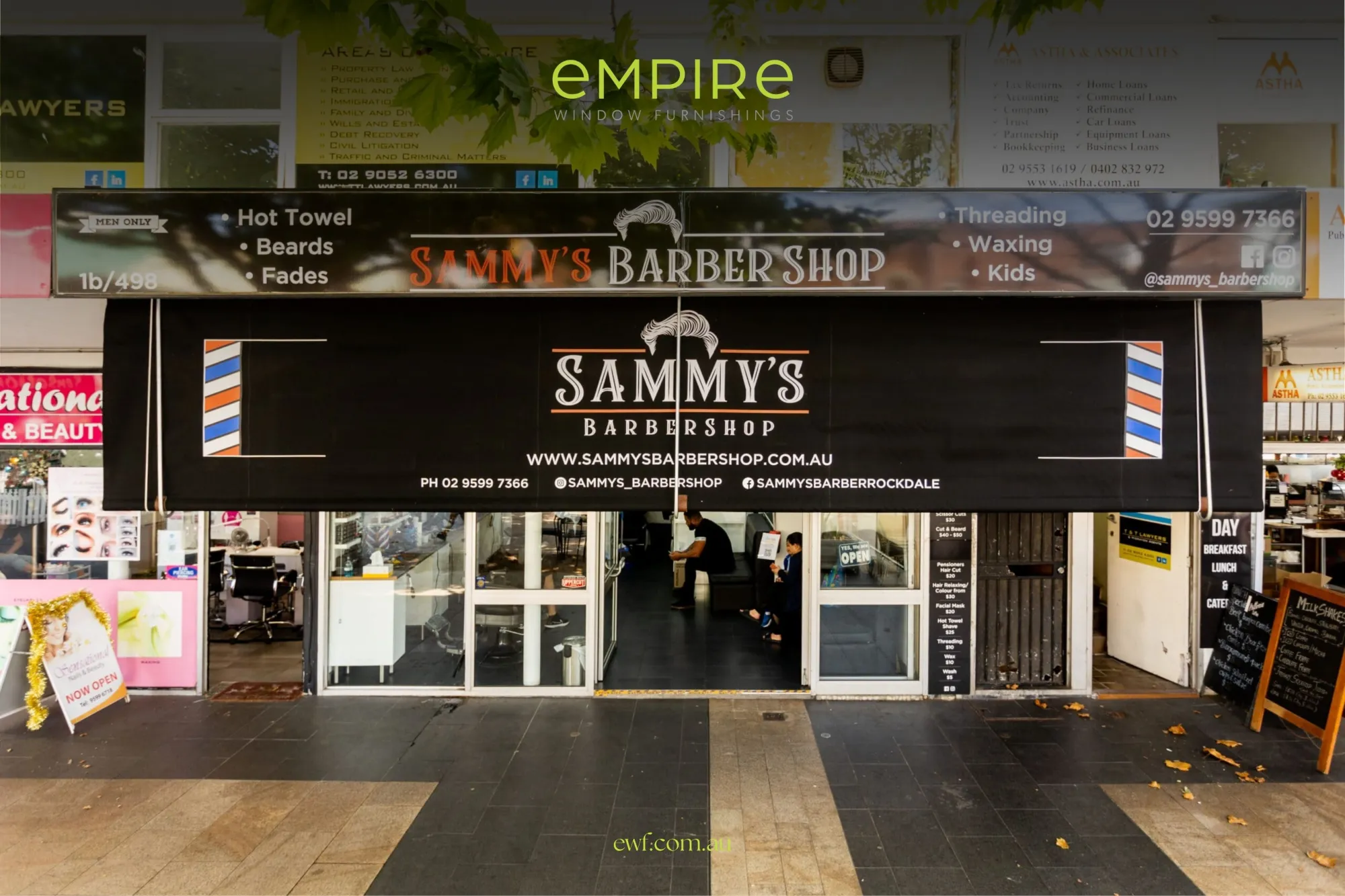
The style we install most for commercial frontages is essentially a verandah blind with the addition of J-hooks. A simple rope-and-pulley system lets you lower, secure and raise it by hand, so there’s no complicated mechanism to maintain. It can also be motorised if you’d rather press a button than pull a rope.
Compared with a fixed metal canopy, fabric is lighter, more flexible and far easier to brand. You can print it, colour-match it to your signage and change the whole look of the street frontage without rebuilding anything.
Why Retailers Choose Shop Front Awnings: Five Practical Returns
Aesthetics sell the idea, but these benefits justify the spend.
- Customers linger. People will browse a window in the shade far longer than one in glare. Longer browsing means more walk-ins.
- Stock stays protected. UV fades fabric, paper, packaging and printed displays surprisingly fast. An awning slows that damage.
- Staff are more comfortable. If your team works near the entrance or serves outdoor tables, shade makes a noticeable difference to the working day.
- Interiors stay cooler. Blocking direct sun before it hits the glass reduces heat load, which can ease the pressure on your air conditioning.
- Your brand gets bigger. An awning is a wide, eye-level billboard that works from the footpath and from across the road.
Australia has some of the highest UV levels in the world, so protecting people and products isn’t a luxury here. It’s good business sense.
Which Awning Style Suits Your Shopfront?
This is where many owners go wrong. They fall for a look without checking whether it suits the building. Here’s how the main options compare.
Shop front (J-hook) awnings suit flat frontages and entrances where you want a clean, tailored look with simple operation. For most traditional retail strips, this is the natural fit.
Folding arm awnings have no vertical supports, so they leave the footpath and any outdoor seating completely clear. They’re a strong choice for cafés and restaurants that need a wide, unobstructed projection.
Straight drop awnings work well where headroom is limited and you want to block low-angle sun from a particular direction, such as a west-facing window that gets hammered every afternoon.
Cable guide and pivot arm awnings each solve specific problems, from tighter side coverage to adjustable angles. If your frontage has quirks, they’re worth asking about.
The right choice depends on your building’s orientation, the projection you need and how much light you actually want to keep. We’d rather measure your shopfront than guess from a photo.
Fabric, Colour and Print: Where Branding Meets UV
You’ll spend more time on fabric than on anything else, and it’s worth it. Fabric determines how your awning looks in year one and in year five.
Think about these points before you pick a swatch:
- UV stability. Cheap fabric fades unevenly and quickly. Ask about colourfastness and how the fabric is dyed.
- Water resistance. Sydney storms arrive fast. A properly rated fabric sheds rain rather than sagging under it.
- Colour psychology. Warm tones feel welcoming for food and hospitality. Deep, muted colours suit professional services and boutique retail.
- Contrast with signage. An awning that clashes with your logo works against you. Match it, or choose a deliberate complement.
- Custom printing. A printed business name or logo turns the awning into permanent advertising. Keep the design simple so it reads from a distance.
We offer an extensive range of fabrics and can print on them, so your frontage can match your brand rather than the other way around. If supporting local manufacturing matters to you, ask us about our Australian-made awnings.
Manual or Automatic: Which One Will You Actually Use?
Here’s an honest observation from years in this trade. An awning that’s awkward to operate often stays rolled up when it’s needed most.
Manual operation is simple, reliable and cost-effective. It suits owner-operators who open and close the shop themselves and don’t mind a quick rope adjustment.
Automatic operation makes sense when several staff open the shop, when the awning is large or high, or when you want it to respond to conditions without anyone remembering. In 2026, we’re seeing more business owners choose motorisation, and many pair it with sun and wind sensors so the awning retracts itself when a southerly gust arrives.
If you’re undecided, think about who will use it daily. Choose the option that person will actually use.
What to Check Before You Order
A little homework up front saves expensive surprises later.
- Council approval. Awnings projecting over a public footpath often need consent, and requirements differ between councils. Check with your local council or the NSW Planning Portal before you commit.
- Landlord or strata consent. If you lease the premises or share a building, get written permission first.
- Orientation and sun path. A north-facing frontage and a west-facing one need very different projections.
- Wind exposure. Corner shops and exposed strips need robust fixings, and you should wind the awning in during strong gusts.
- Clearances. Allow for signage, street trees, power lines and pedestrian headroom.
- Maintenance. Hose down fabric periodically to remove dust, pollen and bird droppings. Our guide on how to clean awnings walks through it.
Four Mistakes We See Again and Again
Choosing on price alone. The cheapest quote often uses lighter fabric or lighter fixings. Compare what’s included, not only the number.
Ignoring the building. An awning has to be fixed to something solid. Brickwork, timber and rendered facades all need different approaches.
Measuring wrongly. Even small errors create gaps, sagging edges or awkward overlaps. A professional measure removes the risk.
Forgetting the warranty. Ask what’s covered and for how long. Our shop front awnings come with a 5-year warranty*, so check the terms and conditions for details.
How It Works With Empire Window Furnishings
With more than ten years in the industry and over 1,600 Google reviews at a 4.7 rating, Empire Window Furnishings has fitted a wide mix of frontages across Greater Sydney, the Central Coast, the Illawarra and the Shoalhaven.
The process is straightforward:
- Free measure and quote. A consultant visits your premises, checks the frontage and recommends a suitable style.
- Fabric and design selection. You see real samples, not just a screen.
- Professional installation. Our team fits the awning and tidies up afterwards.
- Payment options. If cash flow is tight, interest-free payment plans are available through zip money.
You can also browse options in person at our showrooms in Beverly Hills, Hunters Hill, Dee Why and Wollongong.
Make Your Shopfront Work Harder in 2026
A good awning pays for itself quietly. It keeps customers comfortable, protects your stock and gives your business a presence people notice from the other side of the road.
If you’re weighing up shop front awnings Sydney retailers trust, the best next step is a conversation. Call us on 131 950, visit ewf.com.au, or book your free measure and quote and we’ll show you what will suit your shopfront.




Sign in to leave a comment.