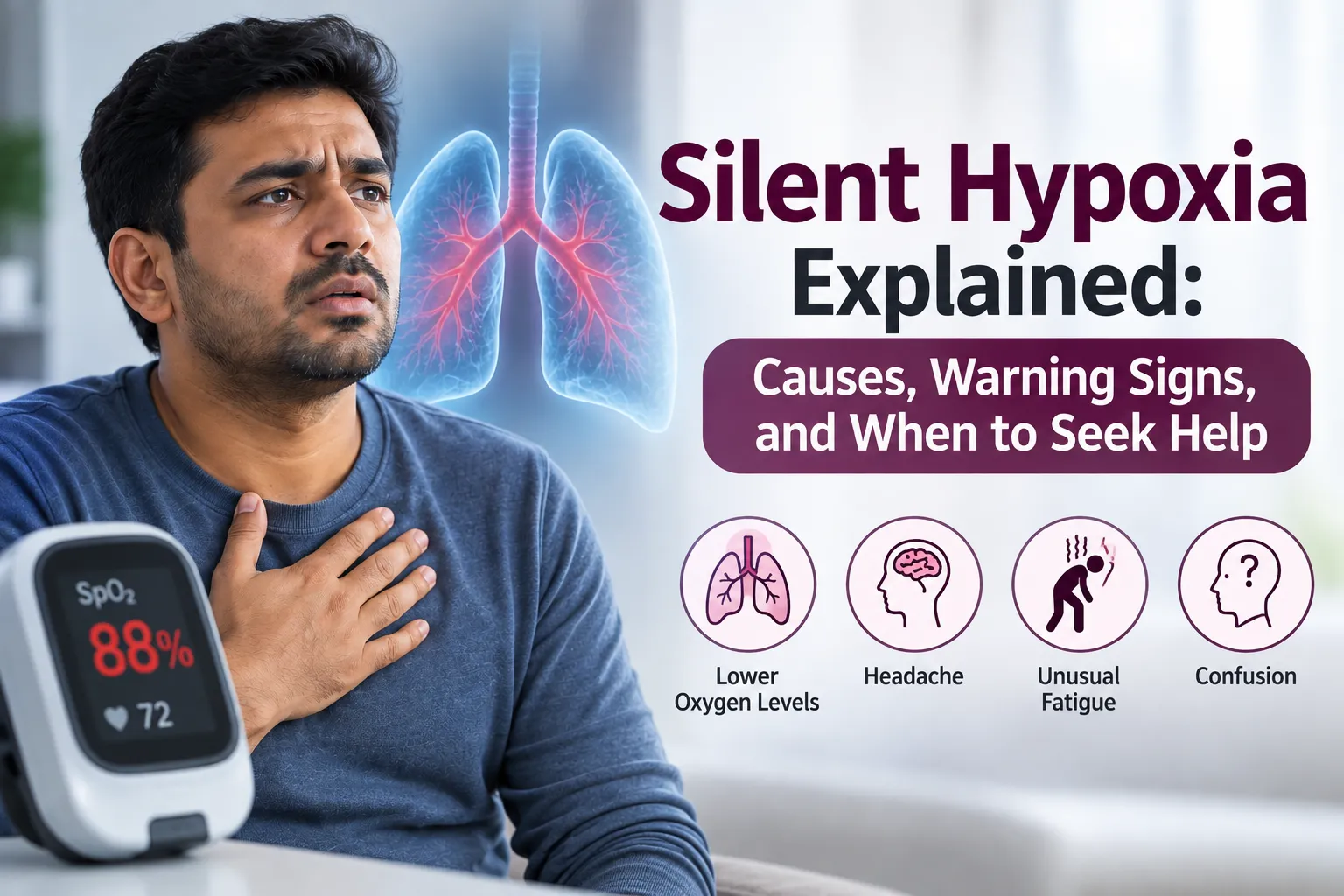

When oxygen levels in the blood drop, many people expect to feel obvious breathing difficulty. But that isn't always the case. Some people can have significantly reduced oxygen levels without feeling severely short of breath.
This situation is commonly referred to as silent hypoxia. Because the symptoms may be subtle, understanding its causes and warning signs can help people recognise when medical attention may be necessary.
What Is Silent Hypoxia?
Hypoxia occurs when the body's tissues do not receive enough oxygen. In many cases, low oxygen levels are accompanied by symptoms such as breathlessness, rapid breathing, fatigue, or confusion.
With silent hypoxia, oxygen saturation may become low while the person does not experience the expected level of breathing discomfort.
A person may still be able to talk, walk around, or perform everyday activities despite having low oxygen levels. This can sometimes create a false sense that everything is normal.
Low oxygen should not be ignored, however, because prolonged oxygen deficiency can affect vital organs such as the brain and heart.
What Causes Silent Hypoxia?
Silent hypoxia is not a disease by itself. It can occur because of an underlying condition that affects how oxygen enters the blood or how efficiently the lungs exchange gases.
Possible causes include:
- Pneumonia and other serious respiratory infections
- COPD
- Severe asthma
- Interstitial lung diseases
- Certain heart conditions
- Conditions affecting the pulmonary circulation
- Other illnesses that interfere with normal oxygen exchange
The underlying cause determines how the condition should be treated. If you have persistent respiratory symptoms, consulting a pulmonologist in Hyderabad can help identify the reason behind them.
Why Doesn't Low Oxygen Always Feel Like Breathlessness?
Breathlessness is a complex sensation. It isn't controlled by oxygen levels alone.
The body's breathing response is influenced by oxygen, carbon dioxide, breathing effort, lung function, and signals processed by the brain. Because these factors can vary between individuals, someone may have low oxygen without experiencing severe breathlessness.
This is one reason symptoms alone may not always provide a complete picture of a person's respiratory health.
What Are the Warning Signs?
Although the term "silent" suggests an absence of symptoms, subtle signs can still occur.
Possible warning signs include:
- Unusual tiredness or weakness
- Faster-than-usual breathing
- Rapid heartbeat
- Difficulty concentrating
- Confusion
- Unusual drowsiness
- Bluish or greyish lips or fingertips
- Restlessness
- Reduced ability to perform normal physical activities
Some people may experience very few noticeable symptoms, which makes awareness particularly important for those who have conditions that can affect oxygen levels.
Can a Pulse Oximeter Detect Low Oxygen?
A pulse oximeter is a small device that estimates blood oxygen saturation and pulse rate. It is usually placed on a fingertip and can provide a quick reading.
For people who are at risk of low oxygen, a pulse oximeter can provide useful information. However, the reading should always be interpreted in context.
Several factors can affect a pulse oximeter reading, including:
- Cold hands or fingers
- Poor circulation
- Movement during measurement
- Nail polish or artificial nails
- Device limitations
- Incorrect placement
If you receive an unexpectedly low reading, repeat the measurement correctly and consider the person's symptoms and medical history. Persistently concerning readings should be discussed with a healthcare professional.
When Should You Seek Medical Help?
Low oxygen can become a medical emergency depending on its severity and the underlying cause.
Seek urgent medical attention if low oxygen is accompanied by:
- Severe or worsening breathing difficulty
- Chest pain
- Confusion
- Difficulty staying awake
- Blue or grey lips or face
- Severe weakness
- Rapid deterioration
- Persistently concerning oxygen readings
There is no single oxygen saturation number that is appropriate for every person. People with certain chronic lung conditions may have different target ranges, so individual medical advice is important.
Who Should Be Particularly Careful?
People who already have chronic respiratory or cardiovascular conditions may need to be more alert to changes in their breathing and oxygen levels.
For example, individuals with COPD, severe asthma, interstitial lung disease, or certain heart conditions may have a higher risk of oxygen-related complications.
Regular medical follow-up can help determine whether oxygen monitoring or additional testing is appropriate.
Why Recognising Silent Hypoxia Matters
The main concern is that a person may not realise that their oxygen level has fallen.
Imagine someone with a respiratory infection who feels tired but can still walk around the house and have a normal conversation. They may assume that the fatigue is simply part of being unwell and delay seeking care.
Paying attention to unusual changes, especially when someone has an underlying lung condition, can help avoid unnecessary delays in evaluation.
For a more detailed explanation of Silent Hypoxia, including its warning signs, causes, and when low oxygen requires medical attention, read this Silent Hypoxia guide.
Protect Your Lung Health
Low oxygen doesn't always announce itself with dramatic breathing difficulty. Subtle symptoms such as unusual fatigue, confusion, rapid breathing, or reduced physical tolerance can sometimes indicate that something is wrong.
If you have an existing lung condition or develop unexplained respiratory symptoms, don't rely solely on how breathless you feel. Appropriate medical evaluation can help identify the underlying problem and determine the right treatment.
Understanding the signs of low oxygen and knowing when to seek professional help can be an important part of taking care of your respiratory health.

























Sign in to leave a comment.