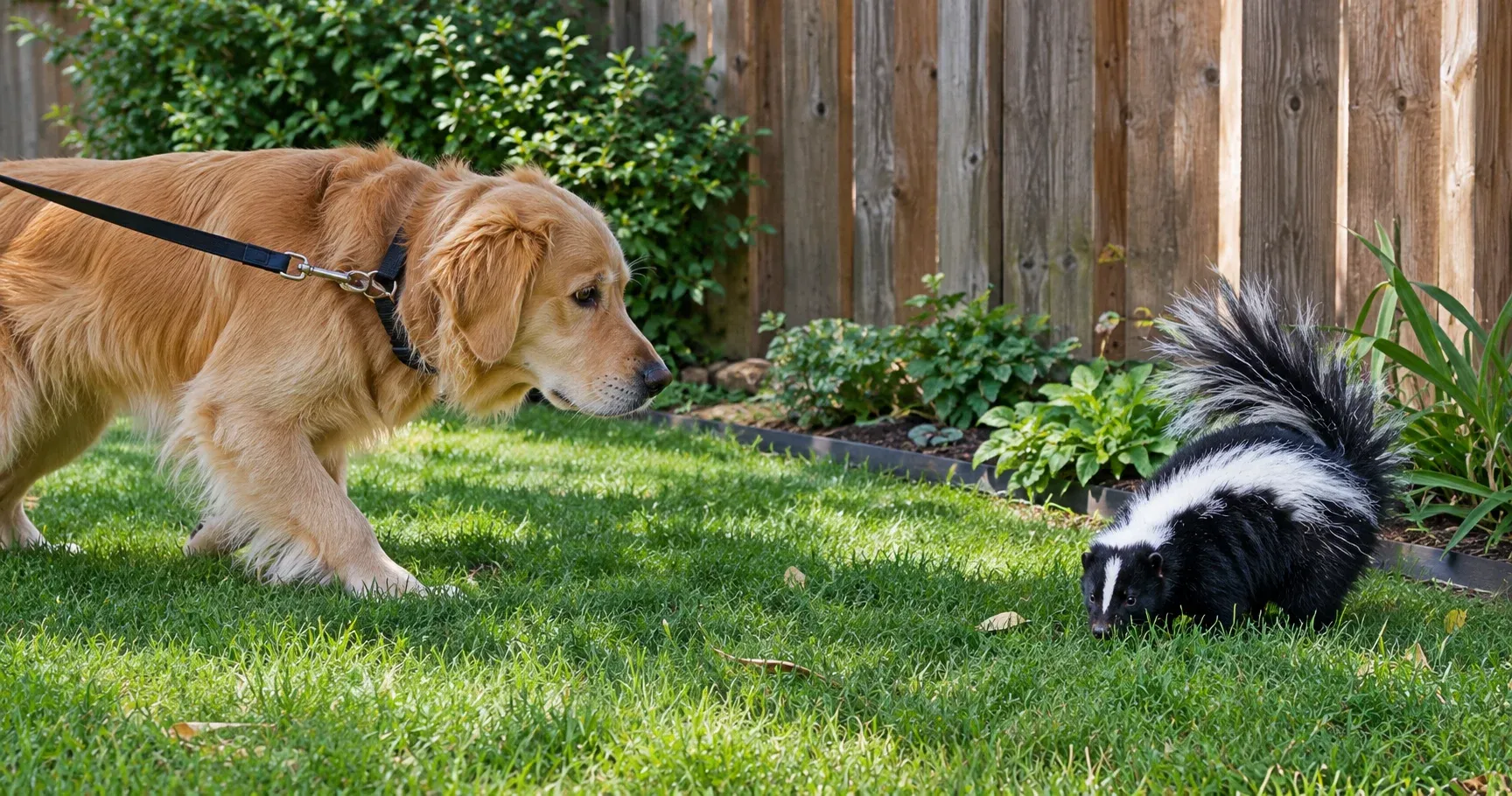

A dog runs into the backyard one evening. It spots a skunk near the fence. The dog moves closer to investigate. Within seconds, a skunk spray hits its face and eyes. This scene plays out in yards across Ontario every year. Skunks may enter a backyard looking for food or shelter. Dogs share the same outdoor space. A dog may not recognize a skunk's defensive behavior until it is too late.
This article simply covers skunk pet safety. It explains why a dog skunk encounter happens. It covers basic skunk spray prevention steps, including leash use. It also explains what to do after a wildlife encounter and when a vet visit makes sense for skunk hazards involving rabies. Only covers skunk pet safety.
Why Dogs and Skunks Come Into Conflict
Residential Yards Bring Them Together
Skunks may enter a yard looking for food. Garbage left outside is one draw. Compost is another. Pet food and birdseed left outdoors add more risk. Insects near the surface can attract them too. Yards also offer shelter. Space beneath decks and porches works well for this. Sheds and other sheltered areas offer the same appeal.
A skunk may spend more time near a home once these conditions are present. This creates more chances for a dog and skunk to cross paths. The two animals often use the same outdoor space without meaning to.
Dogs May Investigate or Chase Skunks
Dogs often investigate new smells. A skunk's scent can draw a fast dog's attention. Some dogs move closer to get a better look. Others may chase the movement instinctively. For more information, see this complete guide to skunks.
This is normal dog behaviour. It is not a sign of a badly behaved pet. Wild animals and dogs simply react differently to each other. A close approach can startle a skunk. This often triggers a defensive response. Spraying is the most common result. Physical contact can happen too, though it is less common than spraying.
What Makes a Skunk Encounter Risky for Dogs?
Skunk Spray Can Cause Irritation
Skunk spray produces a strong, lasting odour. It can also irritate on contact. A dog's eyes are the most sensitive area affected. Direct exposure often leads to redness or discomfort. Dogs may paw at their face after contact. Some rub their face against furniture or grass. This can spread the spray to other areas. Prompt attention to the eyes helps reduce discomfort.
Spray alone rarely causes serious harm. Eye irritation is the main concern in most cases. Still, watching your dog closely after contact is worthwhile. Ontario’s wildlife rabies guidance identifies skunks as a species that can carry rabies, so suspected bites or direct contact should be discussed with a veterinarian.
Bites and Wildlife Disease Need Attention
A bite is a more serious concern than spray. This can happen if a dog gets close enough to touch a skunk. Physical contact carries more risk than spray exposure alone. Any bite or suspected contact should involve a veterinarian. This step matters even if the wound looks minor. A vet can assess the situation properly.
Rabies is a relevant concern in Ontario. Skunks are among the wildlife species that can carry rabies. This does not mean every skunk carries the disease. It means any bite deserves careful follow up with a vet. Ontario law requires dogs, cats and ferrets over three months of age to be vaccinated against rabies.
How Homeowners Can Prevent Skunk Encounters
Prevention works best in three areas. Supervision comes first. Removing attractants comes second. Reducing shelter comes third.
- Supervise dogs during outdoor time
Keep an eye on your dog whenever it is outside. Pay closer attention if skunk activity has been seen nearby. Check the yard before letting your dog out at night. A fenced yard does not fully prevent wildlife encounters, so supervision still matters.
- Prevent dogs from chasing wildlife
Use a leash in areas where wildlife activity is known. Keep distance between your dog and any skunk you see. Do not let your dog approach or investigate. Bring your dog indoors instead of trying to make the skunk leave on its own.
- Remove what attracts skunks
Feed pets indoors rather than leaving food outside. Secure garbage with tight lids. Keep compost covered at all times. Clean up fallen fruit regularly. Avoid leaving birdseed accessible overnight.
- Reduce shelter near the home
Check areas beneath decks and porches for gaps. Clear unnecessary brush and debris from the yard. Manage woodpiles so they don't sit against the house. Inspect sheds for openings that could offer shelter.
Fewer food sources and fewer shelter spots can reduce the reasons a skunk stays close to home. These steps may help discourage repeated activity, though they cannot guarantee a skunk will avoid the property completely.
What Should You Do If Your Dog Encounters a Skunk?
Move Your Dog Away Without Approaching the Skunk
Stay calm if you see your dog near a skunk. Call your dog toward you in a steady voice. Create distance between the dog and the skunk right away. Do not let the dog move closer or chase the animal. Do not approach the skunk yourself.
Do not corner it or try to scare it off. Cornering a skunk often triggers a defensive response. The goal is separation, not confrontation. Give the skunk space to leave on its own. Most skunks move away once the area feels calm again.
If the Skunk Sprays Your Dog
Move your dog away from the skunk first. Try to prevent your dog from rubbing its face on the ground or furniture. Rubbing can spread the spray to other areas.
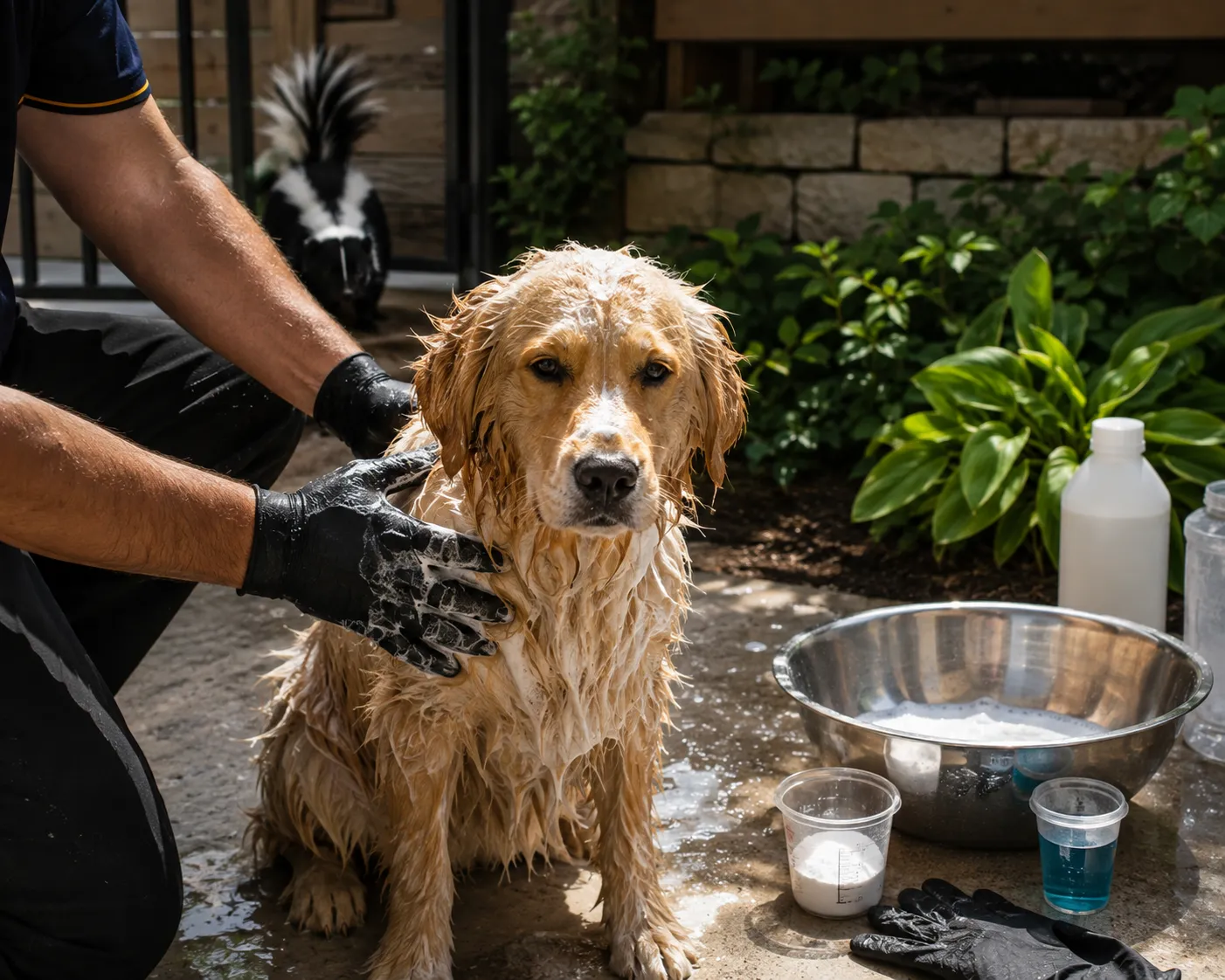
Check your dog's eyes closely. Flush the eyes with cool water if they appear irritated. Keep your dog away from indoor furniture and carpets until the spray is managed. A veterinarian can advise on safely removing the odour from your dog's coat.
If the Dog Is Bitten or Has Direct Contact
A bite calls for more attention than spray alone. Contact a veterinarian as soon as possible. Tell the vet clearly that your dog had contact with a skunk.
Follow the vet's advice on next steps. This may include checking your dog's vaccination status. It may also include monitoring for signs related to possible rabies exposure. Do not try to diagnose the situation yourself. Direct contact does not automatically mean rabies exposure. A veterinarian is the right person to assess the risk.
How to Make Your Property Safer for Dogs
Create a Safer Evening Routine
A simple routine can lower the risk of an encounter.
- Check the yard before letting your dog outside.
- Look for signs of wildlife activity nearby.
- Keep your dog supervised while outdoors.
- Use a leash if wildlife has been active recently.
- Bring your dog indoors right away if a skunk appears.
This routine takes only a few extra minutes each evening. It can make a real difference over time.
Check for Repeat Skunk Activity
Some yards attract skunks more than once. A few signs point to repeated activity. Nighttime sightings that keep happening are one sign. Digging in the lawn is another. Disturbed garbage cans point to the same pattern. Activity around a deck or shed also fits this pattern.
These signs may point to an established den nearby. Homeowners should not try to approach, trap, or seal this space on their own. A professional can assess the situation safely. The focus here stays on dog safety. Keeping dogs away from an active area matters more than removing the skunk yourself.
Keep Dogs and Skunks Apart Before Conflict Starts
Preventing an encounter is easier than managing one after it happens. A few simple habits around supervision and yard upkeep can lower the chances of a conflict. A bite or suspected contact always calls for veterinary advice, regardless of how minor it looks.
Talk to a Local Wildlife Professional
Repeated skunk activity near your home may point to an established den nearby. Pestiseed Pest Control offers wildlife assessment services across Ontario. They can help homeowners understand what steps make sense for their property. Reach out to discuss your situation and find the right next step for your home.
























Sign in to leave a comment.