
Quick Answer
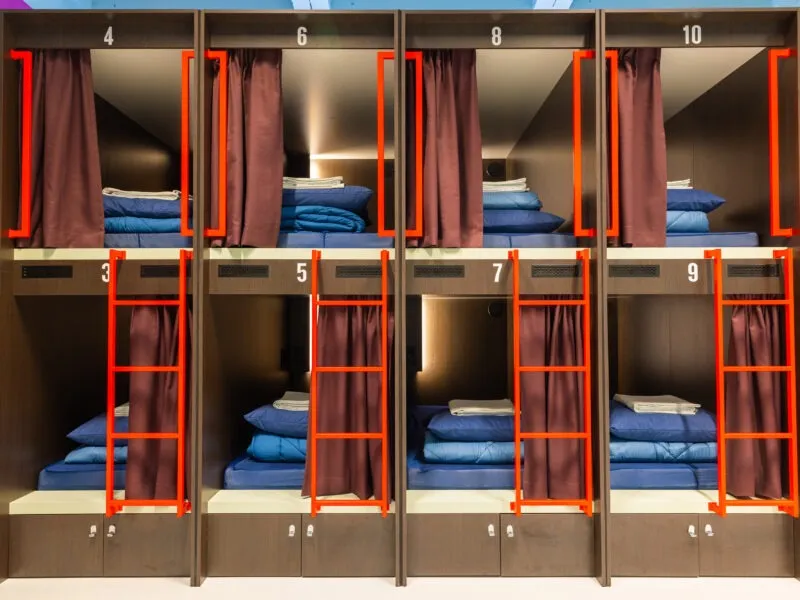
Sleeping pods let hotels and hostels fit more private sleeping space into a limited footprint. Instead of open dormitory bunks, guests get an enclosed personal unit with better privacy, while operators gain a flexible accommodation format suited to budget, boutique, and transit properties alike.
Introduction
Floor space is one of the most limited resources a hotel or hostel owns, and that's why sleeping pods have moved from a niche idea into a real option for hospitality businesses. A pod is a compact, enclosed sleeping unit, often stacked or arranged in rows, giving each guest a private space within a shared room.
This article covers ten practical benefits of pod-style accommodation, then looks at where pod beds work well and what to check before installation.
10 Benefits of Sleeping Pods for Hotels, Hostels
1. Better Use of Available Space
Traditional layouts often leave awkward corners that can't hold a full bed. Pod beds are compact and modular, so they use space a standard room design would otherwise waste useful in older buildings and city-center sites where every square meter costs.
2. Increased Accommodation Capacity
Individual pods take up less floor area than a conventional bed and walkway, so a room can often hold more guests without feeling cramped. This doesn't guarantee higher revenue or occupancy that depends on demand and pricing but it adds flexibility in how many guests a room can serve.
3. Greater Guest Privacy
Shared dormitories have always been the trade-off budget travelers accept for a lower price. Capsule pods change that by giving each guest an enclosed space with a door, curtain, or shutter, plus their own lighting and outlet privacy without a full private room.
4. Improved Guest Experience
A well-designed pod can include personal lighting, charging points, ventilation, and storage small details that shape how comfortable a stay feels. Privacy pods that are thoughtfully lit and ventilated read as considered and modern, not a cut-down hotel room.
5. Flexible Accommodation Options
Pod-style units let a property offer more than one price point under a single roof standard dorm bunks, premium pod beds with extra privacy, and traditional private rooms giving guests a real choice instead of one rate for everyone.
6. Modern and Innovative Hotel Design
Capsule-style layouts have a distinct visual identity, and many properties use them deliberately as part of their brand. A well-executed pod design can signal a contemporary, design-conscious property to guests who research the look of a place before booking.
7. Suitable for Hostels and Budget Accommodation
Hostel accommodation pods address a long-standing tension: keeping prices low while improving privacy. They let a hostel keep a shared-room price while still giving each guest an enclosed personal space, narrowing the gap between hostel and private-room stays.
8. Efficient Solution for Limited Spaces
Because they're modular, pod units can go where a standard bed layout wouldn't suit mezzanines, converted storage areas, oddly shaped rooms. That makes them practical for micro-hotels, airport and transit accommodation, and other space-constrained sites.
9. Appeals to Modern Travelers
Many travelers booking hostels, co-living spaces, or student accommodation weigh privacy, price, and convenience together. Sleep pods that combine an affordable rate with a private, tech-enabled space fit that mindset without requiring a full private room.
10. Flexible Opportunities Across Accommodation Models
From boutique hotels adding a capsule wing to worker accommodation needing dense housing, modular pod units adapt across different business models. The right configuration depends on the property and its guests, but the format is flexible enough to serve budget hostels and design-forward micro-hotels alike.
Are Sleeping Pods Suitable for Every Hotel or Hostel?
Not every property is a good fit for pod-style accommodation. Suitability depends on the property's layout, ceiling height, and structure, as well as the target guest; a family resort has different needs than a city hostel near a transit hub.
Local building codes, fire safety, and accessibility rules all affect what's possible, and these vary by location. Ventilation is another constraint, since enclosed units need proper airflow that isn't always easy to retrofit. Cleaning routines also need rethinking, since individual pods take longer to service than one open dormitory. None of this rules pods out on its own, but it does mean a site assessment should come first.
What Should Hotels Consider Before Installing Sleeping Pods?
Before adding pods, run through a practical checklist:
- Pod dimensions relative to ceiling height and floor plan
- Mattress and bedding quality
- Ventilation and airflow for each enclosed space
- Lighting, including personal controls inside the unit
- Electrical access for charging and built-in features
- Privacy features, such as curtains, doors, or shutters
- Noise management between adjacent units
- Cleaning and maintenance suited to individual pods
- Accessibility for guests with mobility needs
- Local building and fire safety regulations, confirmed with local authorities before purchase
Conclusion
Sleeping pods offer a practical way for hotels, hostels, and other modern accommodation providers to rethink how they use space, price rooms, and design the guest experience. From space efficiency and capacity to privacy and a more contemporary look, the potential benefits are real, but they're not universal.
Whether sleeping pods are right for a specific property comes down to layout, target guests, local regulations, and operational setup. Hospitality businesses considering this format should start with a site assessment, check local fire, safety, and accessibility requirements, and explore accommodation solutions that match their property's actual needs rather than a generic template.
Frequently Asked Questions
What are sleeping pods?
Sleeping pods are compact, enclosed sleeping units that give each guest a private space within a shared room. They typically include a mattress, lighting, and ventilation, sometimes a curtain or door, and are used in hostels, hotels, and other accommodation formats instead of open dormitory beds.
What are the main benefits of sleeping pods for hotels?
More efficient use of floor space, potential for higher room capacity, greater guest privacy than a standard dormitory, a distinct modern design, and the flexibility to offer multiple price points within one property.
Are pod beds suitable for hostels?
Often, yes they combine a shared-room price structure with improved privacy. Suitability still depends on the building, target guests, and local regulations.
Can capsule accommodation save space in hotels?
Pod units are generally more compact than a standard bed and walkway, helping a property use floor space more efficiently. Actual savings depend on room layout and pod design.
Are pod beds comfortable for guests?
Comfort depends on mattress quality, ventilation, lighting, and noise control. A well-designed unit with good airflow and lighting can offer a comfortable, private stay.
What should hotels consider before installing pod-style accommodation?
Pod dimensions, ventilation, lighting, electrical access, privacy features, cleaning routines, accessibility, and local building and fire safety regulations.

























Sign in to leave a comment.