

A burst pipe is loud and obvious. Somebody shuts off the water and calls a crew, and the damage stops growing within the hour. A slow leak works the other way. It drips for weeks behind a dishwasher or under a water heater, and nobody notices until a floor feels soft or a cabinet smells musty.
I work with the drying crews at Blue Spruce Restoration in Denver, and appliance leaks are a regular part of our calls. The story is usually the same: the leak was small, and it ran for a long time.
Why a slow leak does more damage
A small leak does not pool where you can see it. The water soaks into the subfloor, the bottom of the cabinets and the back of the drywall, and those materials stay wet for weeks. Wet wood and paper-faced drywall are what mold and rot need. A burst pipe puts far more water down at once, but someone sees it in minutes, so the structure has little time to stay wet.
The signs show up late. Paint bubbles, a baseboard swells, a stain comes back after you wipe it, or the cabinet under the sink smells musty. By then the water has usually been there for a while. Insulation, subfloor and the wall bottom plate hold it long after the surface looks fine.
Where these leaks hide
- Dishwasher: the supply line under the sink and the seal along the door. Water collects under the unit and runs into the subfloor.
- Refrigerator: the thin ice-maker or water-dispenser line behind it. A pinhole or a loose fitting can drip onto the floor for months.
- Washing machine: the two supply hoses and the drain hose at the back. Rubber hoses harden and bulge with age. Braided hoses are sturdier, but their fittings still wear.
- Water heater: the base of the tank, the drain valve and the pressure-relief pipe. Rust streaks or a damp drain pan mean it is leaking.
A monthly check that takes five minutes
You need a flashlight, a dry paper towel and your hands. Go in this order.
- Open the cabinet under the kitchen sink and shine the light along the pipes. Touch the supply lines, the shutoff valves and the cabinet floor. Look along the front of the dishwasher for drips or water stains.
- Check the floor around the refrigerator. Once or twice a year, slide it out and look at the water line and the floor behind it.
- Run a dry paper towel along the washer hoses and their fittings. A damp towel means tightening the fitting or replacing the hose.
- Look at the base of the water heater. Rust, a white crust of minerals on the fittings or water in the pan are all worth a closer look.
- Press your palm on the floor and the baseboard next to each appliance. A spot that feels soft, cool or lifted at the edge needs a second check.
If nothing shows up but you suspect water is going somewhere, turn off every tap and appliance and watch the dial or leak indicator on your water meter. If it keeps moving, there is a leak in the house.
What to do when you find something
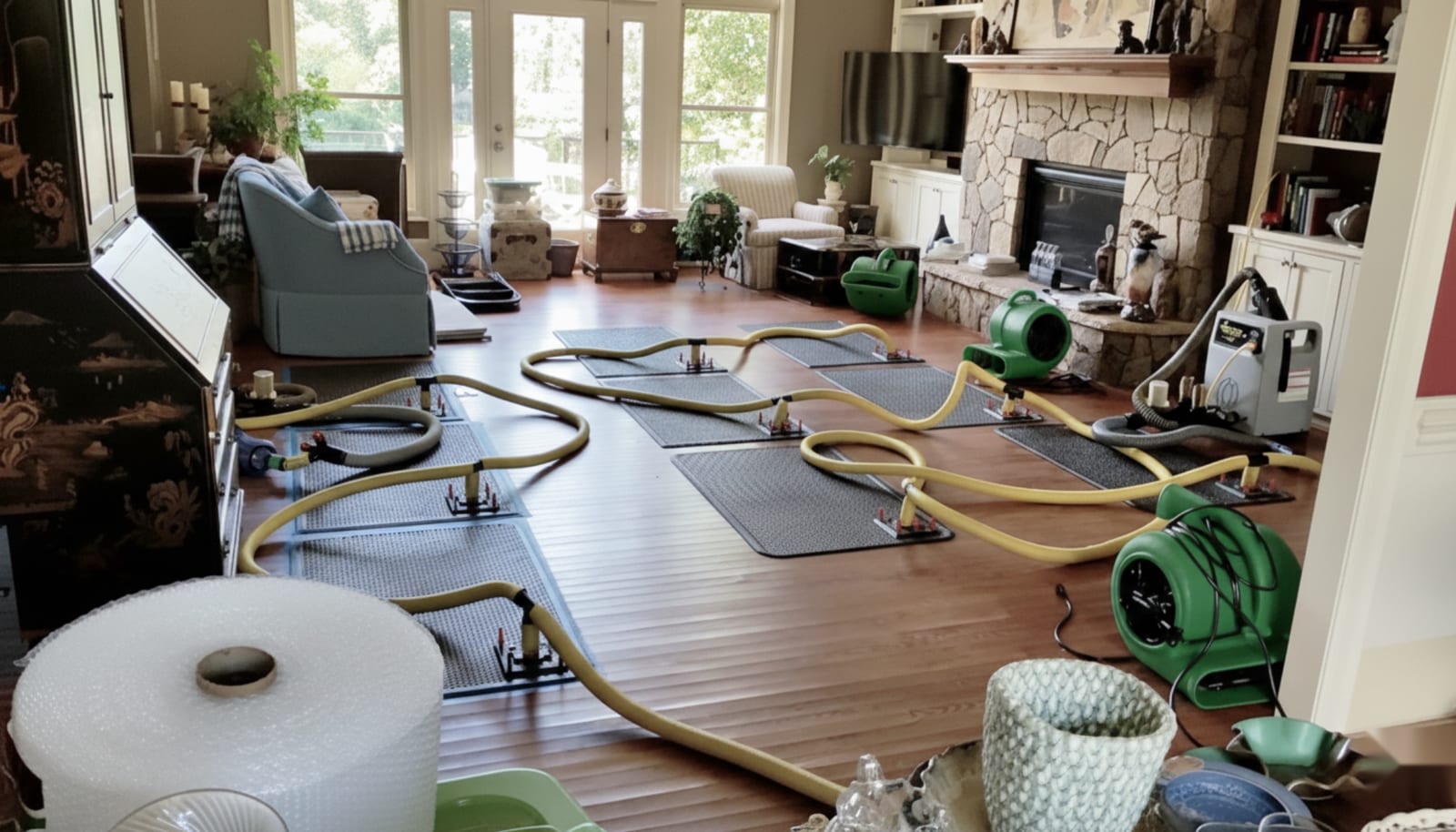
Close the shutoff valve at the appliance, or the main valve if you cannot find it. Mop up the surface water, photograph the area and write down the date. Do not stop at drying the visible wet spot. A damp patch under a dishwasher usually means the subfloor and the cabinet base are wet as well.
Once a floor feels soft or a wall is stained, stop drying it yourself and call a Denver water damage restoration crew. The sooner a crew measures the moisture, the less has to be cut out.
Put a sticky note inside the sink cabinet and write the date of each check on it. When something does turn up, you will know when that spot last looked dry.

























Sign in to leave a comment.