
Stairs that were never a second thought can become a daily obstacle after an injury, a health change or a growing family. Moving house is not always the answer, especially when you like your street, your neighbours and your home.
A small residential lift is one way to keep a multi-level home usable. It moves people between floors in a compact cabin or on a platform, using less space than a full commercial lift. This guide explains how small residential lifts work, which compact home lifts are available, what installation involves, which cost factors to expect and what to ask before you request a quote.
What Is a Small Residential Lift?
A small residential lift is a powered lift designed for use inside or attached to a private home. It carries one or a few people between levels, and some models can take a wheelchair.
It differs from a commercial lift in size, duty and setting. Commercial lifts serve many people all day in public or shared buildings, while a home lift serves a household. Different requirements can apply, so confirm with your provider which Australian Standards and approvals apply to your installation.
Typical uses include:
- Moving between a ground floor and an upper storey
- Reaching a split-level living area
- Accessing a raised entry or deck
- Connecting a garage or basement to the main floor
Whether a lift suits your home depends on the structure, the layout, the number of stops and the people who will use it.
Types of Compact Home Lifts
Compact lifts differ in how they move, how much building work they need and who they suit. Specifications vary by manufacturer and model, so treat the descriptions below as general guidance and confirm details in writing.
Shaftless or Through-Floor Lifts
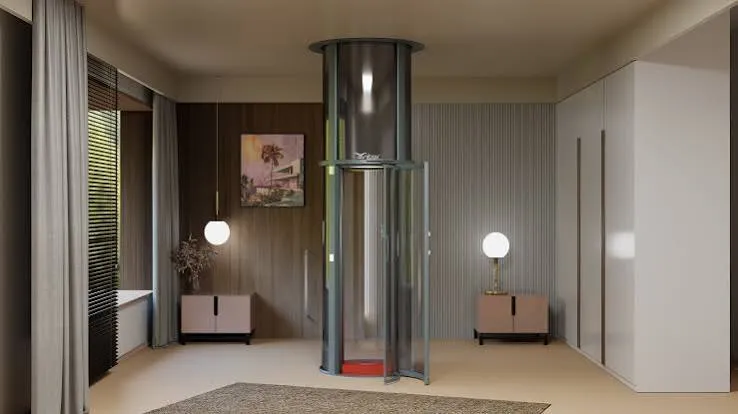
These lifts travel through an opening cut in the floor, usually inside a cabin that stands in a room. They are generally designed to need less building work than a traditional lift shaft.
They can suit existing homes where there is room for a footprint on each level and a suitable floor structure. Ceiling height, the floor opening and the structure above all need checking by a qualified professional.
Platform Lifts for Short Rises
A platform lift raises a flat platform, often with gates or guarding, over a short vertical distance. Australian low-rise platform lifts for wheelchair use are covered by AS 1735.14, so ask your provider which edition applies.
They are common at entrances, decks and small level changes. Maximum travel varies by model, so confirm it against your measured rise.
Other Compact Options
Cable or hydraulic lifts. These drive the cabin with cables or a hydraulic system. Some need a dedicated shaft or machine space, and requirements differ between models.
Vacuum or pneumatic lifts. These use air pressure to move a cylindrical cabin. They are often compact, but cabin size, travel and structural needs vary by manufacturer.
Ask each supplier to explain how their lift is driven, what building work it needs and how it operates during a power failure.
Who Is a Small Residential Lift Suitable For?
People consider a home lift for several reasons.
- Ageing in place: Stairs can become harder over time.
- Mobility limitations: A lift can reduce or remove stair use.
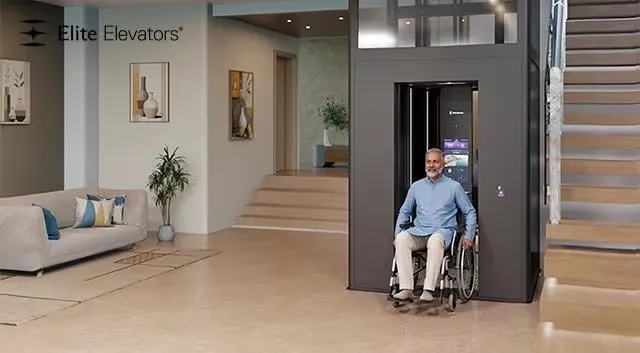
- Wheelchair users: Some lifts carry a wheelchair, subject to size and load.
- Families: Households with children, carers or visitors with different needs.
- Multi-level homes: Split-level and multi-storey layouts that limit access.
Consider a two-storey home with a narrow hallway and a person who finds stairs difficult. A through-floor lift may be possible if the upper floor can take an opening and a footprint, but a platform or stairlift might suit a different layout. This is a hypothetical example, and a qualified provider needs to assess every home individually.
An occupational therapist can also advise on the user's needs and the home modifications that suit them.
How to Choose a Small Residential Lift
Use this list to compare options before you speak to providers.
- Number of floors and travel height. Measure the vertical distance and count the stops you need.
- Footprint and cabin or platform size. Check it against the space on each level and the people who will use it.
- Existing structure, ceilings and floor openings. Ask what building work each option needs.
- Wheelchair and user requirements. Check dimensions, rated load, door or gate width and turning space.
- Power supply and emergency operation. Ask what happens in a power failure and how a person is brought to a landing safely.
- Design and finishes. Consider colour, materials and how the lift suits the room.
- Compliance documentation, warranty and local service support. Ask for the standards the lift is designed to meet, the warranty terms and who services it in your area.
Safety Features to Look For
Safety features differ by model, and not every lift includes every item below. Ask the manufacturer or installer to confirm what is fitted to the specific lift you are considering, in writing.
- Door or gate interlocks: the lift should move only when doors or gates are closed and secured, depending on design.
- Emergency stop: a control that stops the lift quickly.
- Emergency lowering: a way to bring the cabin or platform to a landing during a power failure.
- Alarm or communication: a way to call for help if someone is stuck.
- Obstruction detection: sensors or devices that stop movement if something blocks the path.
- Non-slip flooring: helpful on platforms and in cabins, especially if wet.
- Backup power: a battery or similar provision, where offered.
Installation Requirements
Installation involves more than the lift itself. Requirements vary by state, territory and local council, and by lift type.
- Site assessment. A qualified provider measures the rise, checks the structure and discusses the user's needs.
- Structural work. Some lifts need a floor opening, reinforcement, a base or a dedicated shaft. A builder or engineer may need to confirm the structure.
- Electrical supply. Most powered lifts need a suitable supply. Electrical work should be completed by a licensed electrician in line with AS/NZS 3000, the Wiring Rules.
- Building approvals and council requirements. Check with your local council and your state or territory building and lift authorities, and ask your installer which approvals apply to your property.
- Licensed professionals. A lift is safety-critical equipment. Use an appropriately licensed or registered provider and keep the commissioning and compliance records.
What Affects the Cost of a Small Residential Lift?
I have not included prices, because costs vary widely by model, site and location, and a figure without a verified source would mislead you. The reliable way to learn your cost is to request an itemised written quote for your home.
The main cost factors are:
- Lift type
- Travel height and number of stops
- Cabin or platform size and capacity
- Structural work and site preparation
- Electrical work
- Finishes and design options
- Building approvals and fees
- Installation and commissioning
- Ongoing servicing and maintenance
Ask each provider to separate the lift, building work, electrical work, approvals support, warranty and servicing, so that you compare like with like. Some people may be able to access funding or support through programs such as the NDIS or aged care schemes, depending on their circumstances. Check eligibility with the relevant agency, a support coordinator or an occupational therapist.
Maintenance and Servicing
A lift needs regular servicing to stay reliable and safe. Follow the manufacturer's instructions and any inspection requirements that apply in your state or territory.
Good habits include:
- Booking routine servicing with a qualified technician
- Keeping the service and inspection records
- Keeping the lift area and landings clear
- Testing controls and emergency features as the manufacturer advises
- Noting unusual noises, slow movement or door problems
If the lift develops a fault, stop using it and contact a qualified service provider. Do not attempt to repair safety systems yourself.
Frequently Asked Questions
1. How much space does a small residential lift need?
It depends on the lift type, the cabin or platform size and the structure. Some compact lifts need a floor opening and a small footprint on each level, while others need a dedicated shaft. Ask the manufacturer for the documented dimensions and clearances, then have a qualified provider measure your home before you decide.
2. Can a small residential lift be installed in an existing home?
Often yes, but it is not guaranteed. A provider needs to assess the floor structure, ceiling height, stair or room layout and the power supply. Some homes need structural changes, and some layouts suit one lift type better than another. A site assessment is the only reliable way to confirm what is practical.
3. Do I need council approval for a home lift?
Possibly. It varies by state, territory, local council and lift type. Some installations need building approval, and lifts may also fall under regulator requirements. Check with your local council and your state or territory building and lift authorities, and ask your installer which approvals apply to your property.
4. How long does installation take?
Installation time varies with the lift type, the amount of structural and electrical work, and approvals. Simple installations can be quicker than projects that need a new shaft or floor opening. Ask your provider for a written timeline that separates approvals, preparation, installation and commissioning, and treat it as an estimate.
5. Are small residential lifts suitable for wheelchair users?
Some are, but not all. Check the platform or cabin size, the rated load, the door or gate width and the space to enter, turn and exit at each level. Powered chairs and scooters often need more room than manual chairs, so bring your chair's measurements to the assessment.
6. How often does a home lift need servicing?
Follow the manufacturer's schedule and any requirements in your state or territory. Servicing should be carried out by a qualified technician, who can check safety devices, doors or gates, emergency lowering and general wear. Keep service records, and stop using the lift if you notice a fault until it has been inspected.
7. What is the difference between a home lift and a stairlift?
A home lift carries a person between floors in a cabin or on a platform, and some models take a wheelchair. A stairlift runs along a staircase on a rail and usually carries one seated person, who normally needs to transfer from a wheelchair. Space, budget and user mobility all affect which suits better.
8. Does a lift affect the value of my home?
There is no guarantee. A lift may improve a home's appeal to some buyers and reduce its appeal to others, depending on the design, the market and the buyer. For a reliable view of your property, ask a local licensed real estate agent or a registered valuer rather than relying on general claims.
Final Considerations
Choosing a small residential lift comes down to the home, the user and the rules that apply to your site. Measure the rise, consider who will use the lift, check what space and structure you have, and compare how each lift type handles safety and power failures.
Arrange a site assessment, compare suitable models, confirm compliance and approvals, and request an itemised written quote. If you would like to talk through your home's access needs, a qualified lift provider can assess the site and explain what is practical.















Sign in to leave a comment.