
Modern Data Center Security in Saudi Arabia means protecting servers, networks, people and physical spaces as one connected system. As the Kingdom expands its digital economy, banks, government bodies, telecom operators and cloud providers need facilities that stay secure around the clock. This guide explains the layers involved and how Tektronix helps organizations build them.

Why High-Security Facilities in the Kingdom Need a Layered Approach
Saudi Arabia is investing heavily in cloud services, artificial intelligence, digital government and smart cities under Vision 2030. All of these ambitions depend on data centers that remain available, confidential and trustworthy. A single breach, outage or insider incident can interrupt national services, damage customer trust and trigger regulatory consequences.
High-security facilities face two kinds of risk at once. Physical threats include forced entry, tailgating, sabotage, theft of hardware and misuse by authorized staff. Digital threats include malware, ransomware, credential theft, denial of service and attacks on management networks. These risks overlap, because a person who gains physical access can often bypass software protections, and a remote attacker can disable doors, cameras or alarms through a poorly protected network.
For this reason, security architects design in layers, often described as defence in depth. The outer perimeter, building entrance, data hall, rack row and individual cabinet each receive their own controls, and the digital stack is protected in the same way, from the network edge down to the data itself. If one layer fails, the next one still stands.
Building Blocks of Smart Data Center Security
A smart facility combines connected sensors, identity systems, analytics and monitoring so that security teams see the whole picture in one place. The following building blocks form the core of a well designed program, and each one is explored in the sections below.
Perimeter and Site Protection
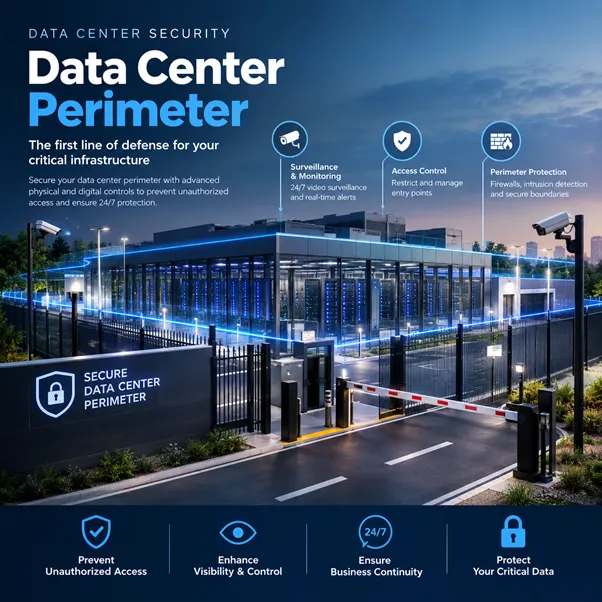
Security starts outside the building. Fencing, vehicle barriers, controlled gates, lighting and standoff distances slow down an intruder and give guards time to respond. Many sites add radar, thermal cameras or fence sensors for early warning. Visitor and delivery areas are separated from critical zones so that vendors and contractors never walk straight into sensitive spaces.
Identity, Authentication and Zoning
Inside the building, access is divided into zones such as lobby, loading bay, network operations center, data hall, cage and cabinet. Each zone has stricter rules than the last. People move inward only when their identity, role and schedule allow it, and every movement is recorded.
Data Center Access Control and Identity Assurance
Strong Data Center Access Control is the foundation of physical protection. It decides who may enter, when, through which doors and with what level of verification. In high-security halls, a single card is rarely enough because cards can be lent, cloned or stolen.
Best practice combines two or more factors. A badge or mobile credential may be paired with a PIN, a fingerprint, or facial authentication that includes liveness checks. Mantraps and interlocking doors prevent tailgating by letting only one person pass at a time. Anti pass back rules stop a credential from being used twice in a row, and dual authorization can require two approved employees to open the most sensitive rooms.
Good systems also manage the lifecycle of access. New staff are enrolled with the right permissions, contractors receive temporary rights that expire automatically, and leavers lose access immediately. Regular access reviews catch permissions that are no longer needed. Tektronix designs these workflows together with the client's security and HR teams so that policy and technology match.
Data Center Surveillance and Video Analytics
Reliable Data Center Surveillance gives security teams eyes on every approach, corridor, data hall and cabinet row. Cameras should cover entrances, exits, blind corners, loading docks and critical equipment with sufficient resolution to identify people and vehicles after an incident. Low light performance, tamper alerts and redundant storage are essential in facilities that never close.
Video becomes far more valuable when analytics are added. Software can detect loitering, line crossing, abandoned objects, unauthorized zone entry and unusual crowding, and it can alert operators in seconds instead of leaving footage to be reviewed after the fact. Linking video with access events lets an operator verify that the person on camera matches the badge that just opened the door.
Recorded footage must itself be protected. Encrypted storage, controlled export rights, retention rules aligned with policy and detailed audit logs ensure that surveillance data supports investigations without creating a new privacy or security weakness.
Cybersecurity for the Data Center Environment
Physical safeguards protect the room, but the value of a facility lies in the systems and information it holds. Effective Cybersecurity for Data Center operations cover network design, endpoint hardening, identity management, patching, monitoring and incident response. They also extend to operational technology such as power, cooling, building management and security devices, which are increasingly connected to IP networks and therefore become targets themselves.
Network segmentation is one of the most effective controls. Management networks, tenant networks, storage networks and building systems are separated so that a compromise in one area cannot spread freely. Privileged accounts are limited, protected with multi factor authentication and monitored. Configuration baselines, vulnerability scanning and timely updates close known weaknesses before attackers exploit them.
Cyber teams and physical security teams work best when they share information. A failed login to a management console at the same time as an unusual door event deserves a joint investigation. Integrated reporting helps leaders see risk as one picture rather than two separate stories.
Encryption of Data at Rest and in Transit
Protecting information itself is the last line of defence. Strong Data Center Encryption practices secure data stored on disks, backups and databases as well as data moving between servers, sites and users. Key management matters as much as the algorithm: keys should be generated, stored, rotated and retired under strict control, ideally using hardware security modules and separation of duties.
Network Firewalls and Segmentation
Properly configured Data Center Firewalls inspect traffic entering, leaving and moving inside the facility. Next generation firewalls combine stateful filtering with application awareness, intrusion prevention and threat intelligence. Rule sets must be reviewed regularly, because outdated rules and forgotten exceptions are a common source of exposure. Placing firewalls between zones, not only at the edge, limits how far an intruder can move.
Monitoring, Detection and Response
Prevention will never be perfect, so detection and response determine how much damage an incident causes. A security operations capability collects logs and alerts from doors, cameras, networks, servers and environmental sensors, correlates them, and presents prioritized events to trained analysts.
Intrusion Detection Across Physical and Digital Layers
Effective Data Center Intrusion Detection covers both worlds. Physical sensors such as door contacts, glass break detectors, motion sensors and vibration sensors warn when someone attempts to breach a space. Network and host based tools watch for suspicious scans, unusual authentication patterns and unexpected changes to systems. Alarms are tuned to reduce false positives so that real events are not lost in noise.
Advanced Threat Detection and Analytics
Modern Data Center Threat Detection uses behaviour analytics and machine learning to spot patterns that rule based tools miss, such as an account that suddenly accesses unusual systems or a person entering a room outside their normal pattern. Combined with threat intelligence and clear response playbooks, these tools shorten the time between first sign of trouble and containment.
Every organization should rehearse its response. Tabletop exercises, drills and post incident reviews turn written plans into practiced habits, and they reveal gaps in communication long before a real emergency.
Resilience: Fire, Power, Cooling and Environmental Safety
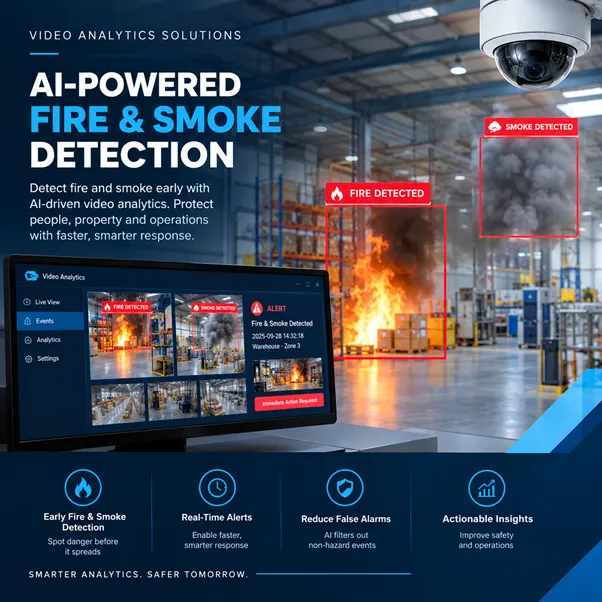
Security and resilience are closely linked. Early smoke detection, gas based fire suppression, leak detection, temperature and humidity monitoring, and redundant power and cooling keep equipment safe from accidental harm as well as deliberate attack. In the Saudi climate, cooling reliability and dust control deserve particular attention. Environmental sensors feed the same monitoring platform as security devices so that operators can respond to any abnormal condition quickly.
Physical construction also matters. Hardened walls, secure cable routes, protected plant rooms, and controlled access to power and cooling infrastructure reduce single points of failure. Tektronix includes these considerations when it reviews a facility, because a secure data hall that depends on an unprotected generator room is not truly secure.
Compliance and Regulation in Saudi Arabia
Data center operators in the Kingdom work within a developing and increasingly rigorous regulatory landscape. Relevant frameworks include the Personal Data Protection Law overseen by SDAIA, the cybersecurity controls issued by the National Cybersecurity Authority, and requirements from the Communications, Space and Technology Commission for cloud and data center services. Many organizations also align with international standards such as ISO 27001 and the facility design guidance of industry bodies.
Because requirements differ by sector and by the classification of the data being hosted, every operator should confirm obligations with its legal and compliance advisers. A knowledgeable integrator supports this work by documenting design decisions, maintaining audit trails, and building systems that can produce evidence on demand.
Local Delivery: Security Solutions Across the Kingdom
Organizations searching for Data Center Security KSA services need partners who understand local regulations, climate, supply chains and project timelines. Engineers who can visit the site, support commissioning and respond quickly after handover make a measurable difference to project success.
The capital is a major focus of investment, and demand for Data Center Security Riyadh projects continues to grow across government, finance, telecom and cloud sectors. A locally present partner can shorten survey, installation and acceptance testing cycles while keeping communication clear with consultants and contractors.
Why Choose Tektronix: Experience, Expertise and Trust
Tektronix is a security and technology systems integrator serving the Gulf region, with a focus on access control, video surveillance, video analytics and perimeter protection. Our teams plan projects around the client's real risk profile instead of offering a generic package, and we work with globally recognized manufacturers and open standards so that systems integrate cleanly and remain supportable for years.
Our delivery approach follows the principles of experience, expertise, authoritativeness and trust. We document designs, test every subsystem before handover, train operators and remain accountable through maintenance and support. Clients who want to explore a project can review Tektronix data center solutions and request a consultation.
A Practical Roadmap for Securing a Facility
Step 1: Assess Risk and Define Requirements
Begin with a structured assessment of threats, assets, existing controls and regulatory duties. The outcome is a prioritized list of gaps and a clear target level of protection for each zone.
Step 2: Design an Integrated Architecture
Design physical and digital controls together so they share identity, events and alarms. Open architecture reduces dependence on a single vendor and makes future upgrades easier.
Step 3: Deploy, Test and Train
Install in phases that protect live operations, test every control against realistic scenarios, and train both administrators and everyday users. Well trained people are one of the strongest security controls any facility can have.
Step 4: Monitor, Maintain and Improve
Security is an ongoing program. Regular maintenance, firmware updates, access reviews, audits and exercises keep protection aligned with new threats and new business needs. For design support, speak with the team behind our smart data center security solutions.
Conclusion
Saudi enterprises that depend on uptime and confidentiality should invest in Data Center Security KSA solutions designed around local regulation and climate. Operators planning Data Center Security Riyadh projects gain speed and accountability when they choose a partner with regional engineering presence. A disciplined Data Center Access Control policy keeps every zone, credential and visitor under verified control. Reliable Data Center Surveillance turns every corridor and cabinet row into evidence that supports investigation and compliance. Contact Tektronix to build resilient Data Center Security that protects your people, systems and reputation.





















Sign in to leave a comment.