
Introduction
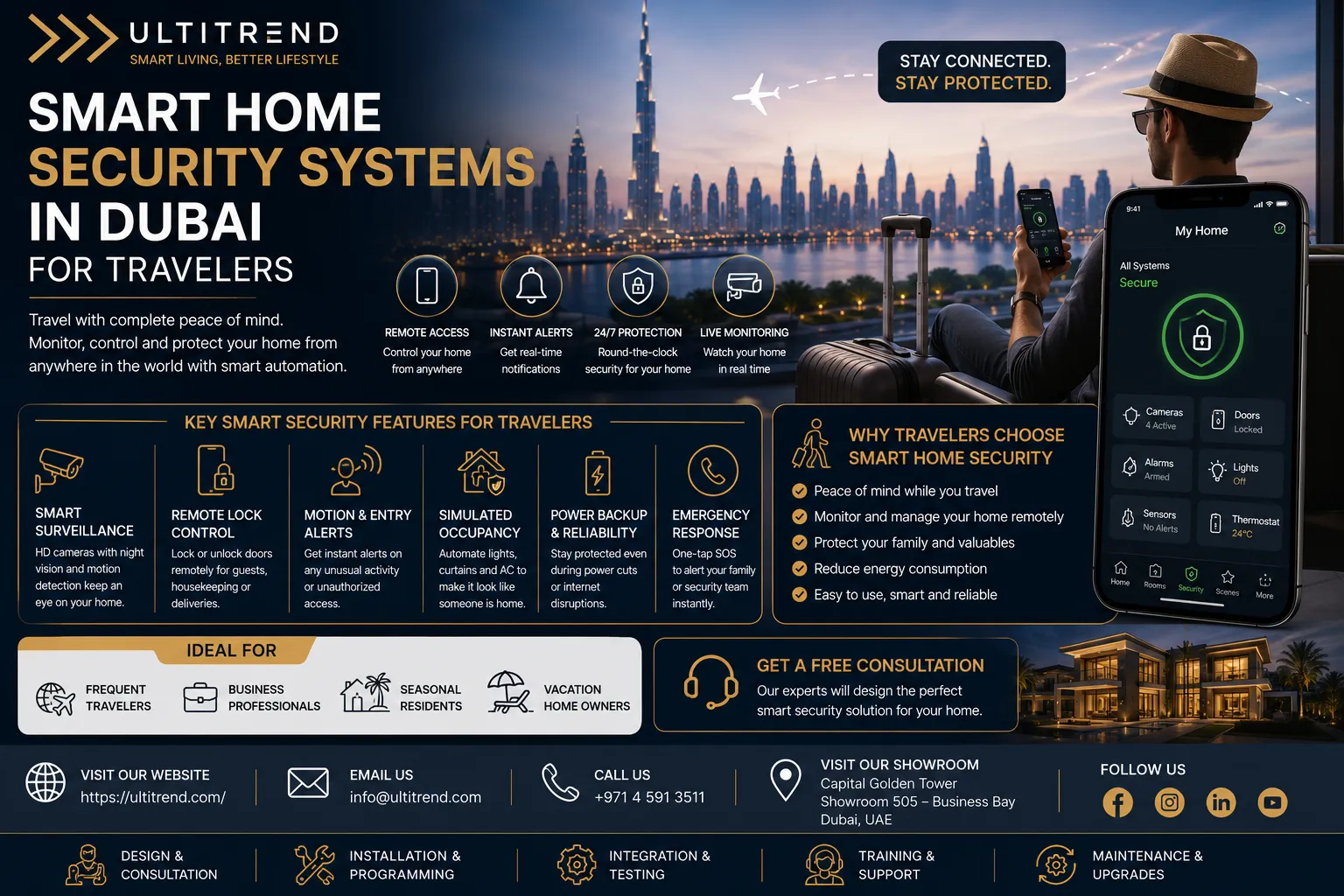
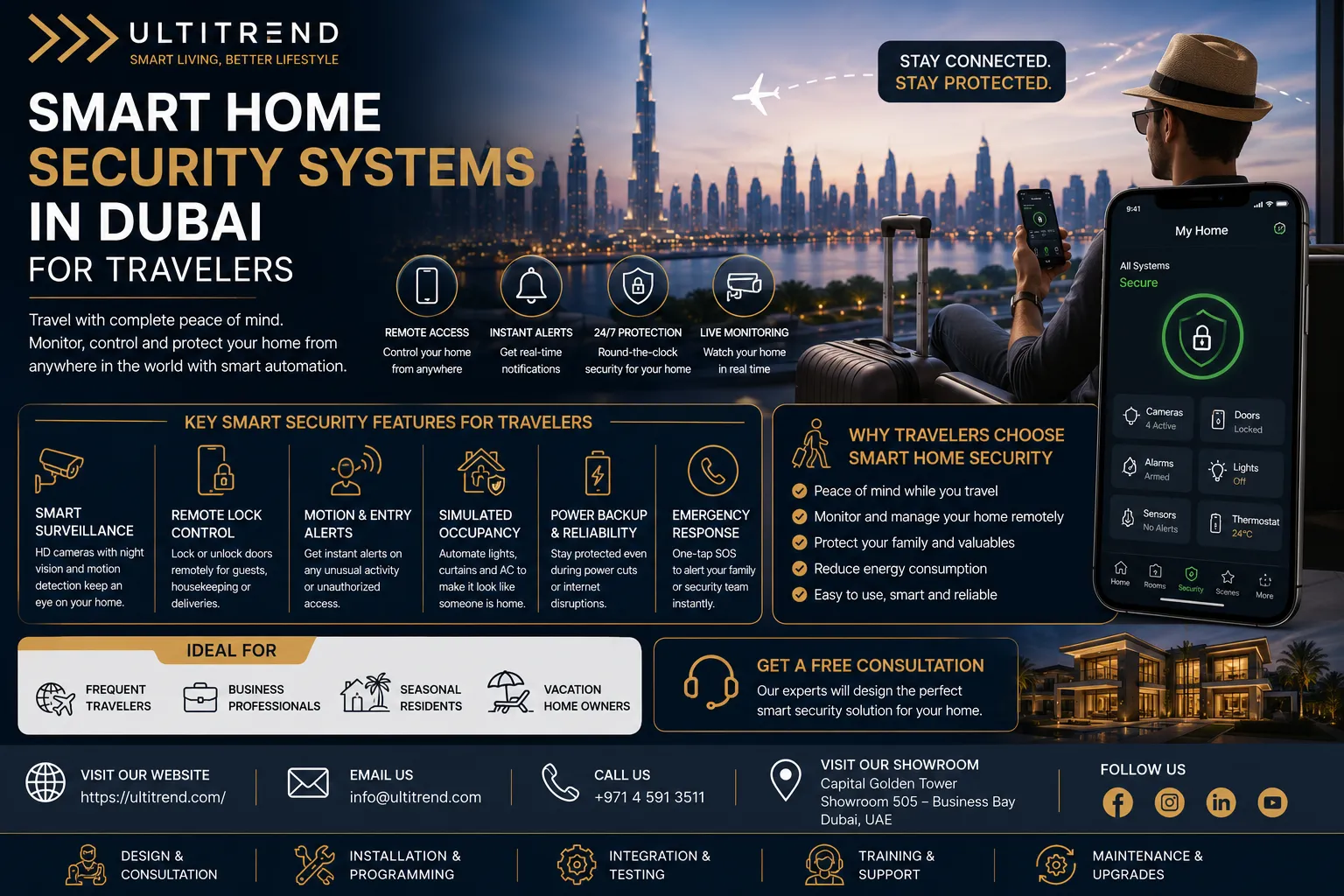
If you have ever sat at an airport gate mentally replaying whether you actually locked the side door, you are far from alone. This exact worry is one of the biggest reasons smart home security systems in Dubai have become so popular among residents, since so many households here split their time between the UAE and other countries or simply travel often for work and long holidays.
Dubai's lifestyle makes this concern more relevant than in many other cities. Villas can sit empty for weeks during summer travel, apartments often house residents who are away on business for extended stretches, and domestic staff frequently need scheduled access even when the homeowner is thousands of miles away.
This article looks at what actually helps in that situation, based on how these systems perform in real travel scenarios rather than generic advice that assumes someone is always nearby to handle things manually.
Why Travel Changes What Your Home Actually Needs
A home that is occupied daily has a very different risk profile than one sitting empty for two or three weeks. Mail piles up, lights stay off at the same time every night, and there is no one around to notice small issues before they become bigger ones, like a water leak or an unexpected visitor lingering near the property.
Traditional security measures, like asking a neighbor to check in occasionally, were never really built for how often people travel now. They rely on someone else's schedule, memory, and availability, none of which are guaranteed.
This is really where smart home automation in Dubai earns its practical value beyond convenience. It replaces uncertain, informal arrangements with something you can actually verify yourself, from anywhere, at any time.
Remote Monitoring That Actually Works While Traveling
The core benefit while traveling comes down to one thing: knowing what is happening at home without needing to be there.
Live and Recorded Camera Access
A good camera setup lets you check in on your property in real time, but recorded footage matters just as much, since you are not going to be watching a live feed constantly from another time zone. Being able to scroll back through the last 24 hours to confirm nothing unusual happened is often more useful than live viewing alone.
Motion and Entry Alerts
Rather than relying on you to actively check an app, a well-set-up system should notify you the moment something happens, whether that is a door opening, a motion sensor triggering in an unexpected area, or a window being disturbed.
Setting Realistic Alert Rules
One mistake many travelers make is leaving default sensitivity settings, which can result in constant notifications for pets, moving curtains, or passing cars. Adjusting sensor zones and alert rules before you leave saves you from either ignoring notifications altogether or feeling anxious every time your phone buzzes.
Managing Access Without Being Physically Present
This is where smart locks and access control genuinely shine during travel, since physical keys become a real liability the moment you are not around to manage them.
A few practical approaches that work well for extended travel:
- Time-limited codes for staff, so a cleaner or gardener has access only during agreed hours, automatically expiring afterward.
- Single-use codes for deliveries or maintenance visits, avoiding the need to share a permanent code with someone you may only need access to once.
- Instant revocation, allowing you to cancel anyone's access immediately if plans change or a code is no longer needed.
- Activity logs, so you can confirm exactly when the door was used and by which method, even while you are away.
This level of control is simply not possible with traditional keys, and it is one of the clearest, most practical reasons travelers specifically benefit from investing in proper access control.
Automating Your Home to Look and Feel Occupied
An empty-looking home is more noticeable than most people realize, and automation can help reduce that visibility without requiring anyone to physically be there.
- Randomized lighting schedules that mimic normal usage patterns, rather than lights turning on and off at identical times every single day.
- Scheduled blind or curtain movement, adding another layer of normal daily activity to the property's appearance from outside.
- Voice or audio simulation, in some setups, to create the impression of activity inside the home during evening hours.
None of these features guarantee anything on their own, but combined with proper locks and monitoring, they meaningfully reduce how obvious an empty property appears from the outside.
Handling the Unexpected While You Are Away
Even with a solid system in place, it helps to think through what happens if something does go wrong while you are traveling, since a plan beforehand is far more useful than scrambling from another country.
Who Gets Notified First
Deciding in advance whether alerts go only to you, or also to a trusted local contact or a professional monitoring service, avoids delays in response if you happen to be unreachable due to time zones or travel restrictions.
Coordinating With a Trusted Local Contact
Even with excellent smart home security systems in Dubai, having one trusted person nearby who can physically check the property if something serious is flagged remains genuinely valuable. Technology handles detection and monitoring extremely well, but a physical presence is sometimes still necessary to resolve an issue directly.
Documenting Access for Service Providers
If contractors, cleaners, or maintenance staff need entry while you are away, keeping a simple record of who was given access and when makes it far easier to review activity later if anything seems off.
Combining Security With Broader Home Automation While Traveling
Security performs best during travel when it is not managed in isolation from the rest of the home's systems.
Linking security with wider smart home automation in Dubai allows for a single "away" mode that arms alarms, locks all doors, adjusts climate settings to conserve energy, and activates lighting schedules simultaneously, rather than manually configuring each system separately before every trip.
This kind of integration also reduces the chance of human error, such as forgetting to arm the alarm or leaving a smart plug running unnecessarily, since one action handles multiple systems at once.
If you travel frequently and currently manage several separate apps or devices, it is worth having a professional review your setup to see whether consolidating everything into a single automated "away" routine would make your trips considerably less stressful.
A Simple Pre-Travel Security Checklist
Before heading to the airport, running through a short checklist tends to catch the small details that get overlooked in the rush of packing.
- Confirm all cameras and sensors are online and functioning correctly.
- Set or update temporary access codes for anyone needing entry while you are away.
- Adjust lighting and blind schedules to reflect normal, varied activity.
- Activate an "away" automation scene if your system supports one.
- Confirm who receives alerts and ensure contact details are current.
- Share access details, if necessary, with one trusted local contact.
Running through this before every extended trip takes only a few minutes but meaningfully reduces the chances of an unpleasant surprise upon your return.
Conclusion
Travel is one of the clearest, most practical reasons homeowners in Dubai invest in smart home security systems in Dubai in the first place. Being able to monitor, lock, and manage a property remotely removes a significant amount of uncertainty that used to rely entirely on hoping nothing went wrong while you were away.
The technology itself has become quite reliable at this point, but getting real value from it depends on setting it up properly before you travel, not scrambling to figure it out mid-trip. A little preparation beforehand tends to make the difference between genuine peace of mind and constant, low-level worry throughout your time away.
Travel With Confidence, Not Worry
If you frequently travel and want a home security setup you can genuinely rely on while you are away, our team can help you build a system tailored to your travel habits and property layout. From remote monitoring to automated access control, we can walk you through exactly what would work best for your home. Reach out to start planning your setup.
Frequently Asked Questions
Can I monitor my home security system from another country? Yes, most modern systems offer full remote access through a mobile app, allowing you to view cameras, receive alerts, and control locks from anywhere with an internet connection.
What happens to my smart home security system if the internet goes down while I am away? This depends on the system. Many devices continue basic local functions, but remote monitoring and alerts typically require an active internet connection to work properly.
How can I give a cleaner or staff member access without sharing my main door code? Most smart locks support time-limited or single-use codes, which can be set to work only during specific hours and expire automatically afterwards.
Is it safe to leave a home empty for weeks with only a smart security system? A well-configured system significantly reduces risk, but combining it with a trusted local contact for physical check-ins adds a layer of reliability during extended absences.
Can lighting be automated to make a home look occupied while travelling? Yes, randomised or varied lighting schedules, along with automated blinds, can help create the appearance of normal activity rather than an obviously empty property.
Should I use self-monitoring or professional monitoring while travelling frequently? Professional monitoring tends to suit frequent travellers well, since it ensures alerts are addressed even if you are unreachable due to time zones or limited connectivity.
























Sign in to leave a comment.