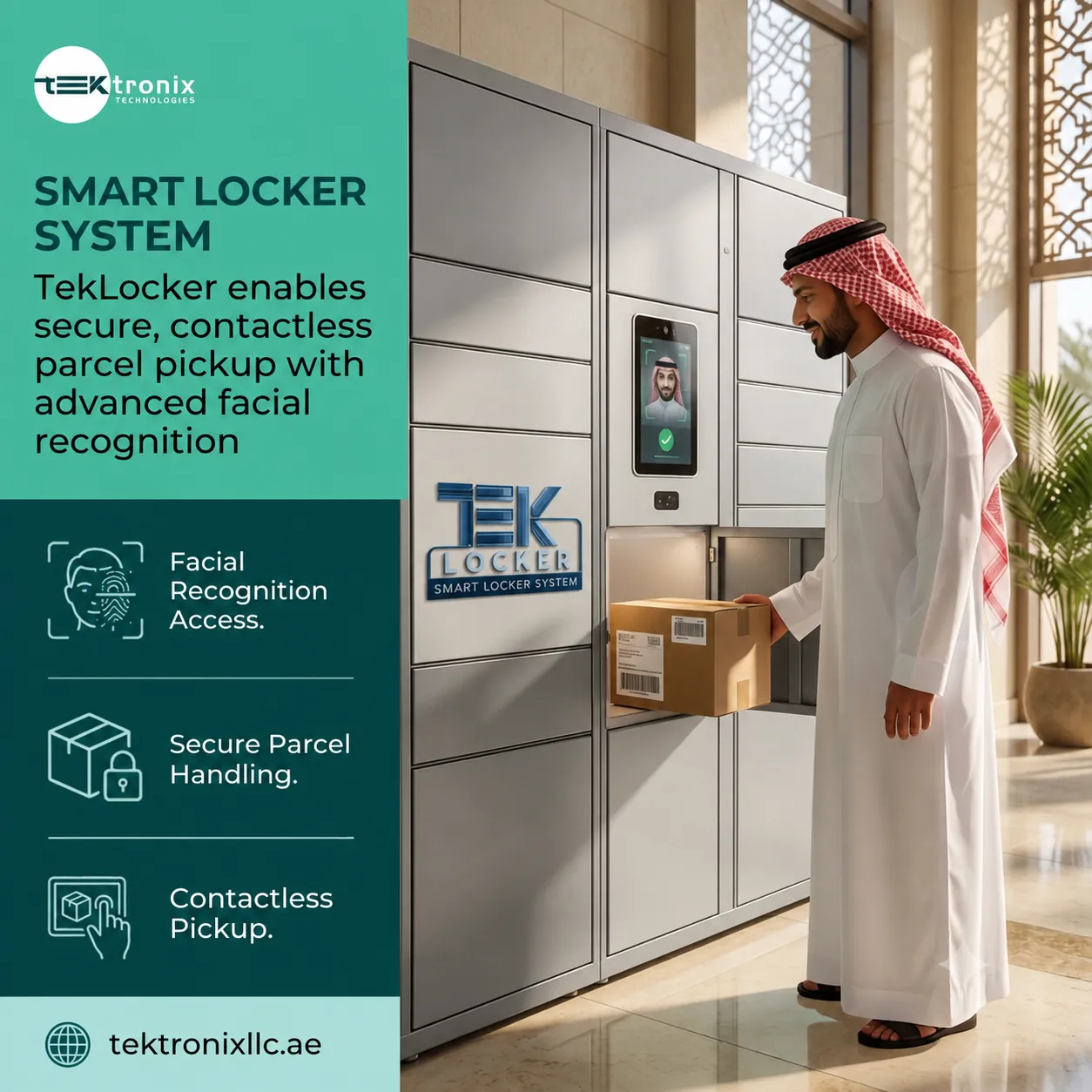

A Smart Locker System gives UAE hotels a structured way to absorb the steady rise in guest parcels, food deliveries, and courier drop-offs without turning the front desk into an informal parcel room. Online shopping doesn't pause the moment a guest checks in, and properties across Dubai, Abu Dhabi, and Sharjah are discovering that reception teams simply were not built to manage this volume manually.
This shift matters because delivery volume through hotels has grown considerably as e-commerce and food-delivery apps have become a standard part of how guests behave during a stay, whether a business traveller is having supplies couriered in or a leisure guest has gifts shipped ahead of arrival. A hotel's original storage and delivery infrastructure was rarely designed with this scale in mind, which is precisely the gap a purpose-built smart locker platform closes.
The Growing Delivery Burden Hotels Weren't Built to Handle
Traditional hotel operations assumed deliveries were a rare occurrence — an occasional courier package, or a forgotten item shipped by a guest's office. That assumption no longer holds in a market as e-commerce-driven as the UAE. Guests routinely order food, retail packages, and even entire wardrobes ahead of a trip, and business travellers frequently have equipment or documents couriered directly to their hotel rather than carrying everything themselves.
Without dedicated infrastructure, this volume lands squarely on front-desk staff, who end up manually logging packages, storing them behind the desk or in a back office, and trying to remember which guest to notify — a process that scales poorly and creates a genuine risk of a package going missing, being handed to the wrong guest, or being forgotten entirely during a busy shift change.
Smart Locker for Hotels: Reframing Storage Around Delivery Logistics
A modern Smart Locker for Hotels increasingly needs to be designed around delivery handling as a core use case rather than an amenity feature bolted on as an afterthought. This means larger compartments sized for parcels rather than just gym bags, placement near the main entrance or delivery point rather than tucked away near the spa, and integration with the same guest-notification systems already used across the property.
This reframing changes how hotels should evaluate locker deployments. Rather than asking only how the system serves gym or spa storage, forward-thinking properties across Dubai's hospitality corridor — from waterfront resorts near the Palm to business hotels close to DIFC — are increasingly asking whether the same infrastructure can double as a genuinely useful delivery-management solution, extracting more value from a single technology investment.
How Delivery Lockers Actually Work for Hotel Guests
The workflow is straightforward from a guest's perspective. A courier or delivery driver drops a parcel at a staffed reception point or a dedicated locker bank, staff or an automated system assigns it to a compartment tied to the guest's room or booking, and the guest receives a notification with a retrieval code or simply uses the same biometric credential already active elsewhere in their stay.
This removes the need for a guest to coordinate timing with front-desk staff at all. Someone returning late from dinner or leaving early for a meeting near RTA Dubai transport hubs can collect a package whenever it suits them, rather than needing to catch reception during a specific window — a genuine convenience improvement over the traditional manual handoff model.
Digital Lockers Dubai Hotels Are Adding at Guest Entry Points
Across the city, Digital Lockers Dubai hotels are installing increasingly appear near main entrances and lobby areas specifically to intercept delivery traffic before it reaches the front desk, giving couriers a clear, designated drop-off point rather than requiring them to interrupt reception staff mid-task for every parcel.
This placement also benefits the courier experience itself. Delivery drivers moving through multiple stops across a dense district in a single shift genuinely value a fast, predictable drop-off process, and hotels that make this easy tend to see smoother, more reliable service from delivery platforms rather than delays caused by confusion over where and how to leave a package.
Electronic Locker System Hardware Sized for Parcels, Not Just Personal Items
At the hardware level, an Electronic Locker System built for delivery handling typically needs a wider range of compartment sizes than a standard gym or spa deployment, accommodating everything from a small envelope to a larger retail package or food-delivery bag. Motorized or solenoid locking mechanisms remain the same underlying technology, but sizing and configuration planning specifically for parcel dimensions is what makes the deployment genuinely useful for this purpose.
Hotels evaluating hardware for this use case should also consider throughput. A busy property receiving dozens of deliveries daily needs enough locker capacity and turnover speed to avoid a backlog building up during peak delivery windows — typically midday and early evening, when both food orders and courier drop-offs tend to spike simultaneously.
Face Recognition Locker Access for Guests Retrieving Packages on Arrival Back
For guests who don't want to fumble with a code after a long day, Face Recognition Locker Access lets them retrieve a delivered package using the same facial verification already used for room access or other hotel services, removing yet another credential from an already device-and-key-heavy travel experience.
This consistency across a guest's entire stay — the same verification method for room entry, spa access, and now package retrieval — creates a genuinely seamless experience that reinforces a hotel's broader investment in contactless, technology-forward guest service, rather than treating delivery lockers as a disconnected, separately credentialed system.
Locker Management Software: Turning Delivery Handling Into a Managed Process
Behind the guest-facing convenience, Locker Management Software gives hotel operations teams a structured way to log incoming deliveries, track how long a package has sat uncollected, and automatically notify guests who haven't retrieved an item after a set period — replacing the informal, easily forgotten tracking that happens when packages simply pile up behind a reception desk.
This software layer also creates accountability that protects the hotel as much as the guest. A clear digital record of exactly when a package arrived, which locker it was assigned to, and when it was retrieved resolves disputes over lost or delayed deliveries far more definitively than staff trying to recall a busy day's events from memory.
Key Benefits of Delivery-Focused Smart Lockers for UAE Hotels
Hotels adopting locker systems designed around delivery handling typically report improvements across several practical areas:
• Reduced front-desk workload from manual package logging and handoffs
• Fewer lost, delayed, or misdelivered guest packages
• A more convenient, self-service retrieval experience for guests
• Smoother courier and delivery-driver interactions at a dedicated drop point
• Clear accountability records that resolve delivery disputes quickly
• A modern amenity that supports extended-stay and business-traveller satisfaction
Extended-Stay and Business Travellers: Where Delivery Lockers Matter Most
Delivery-focused lockers deliver disproportionate value for extended-stay guests and business travellers specifically, since these segments are considerably more likely to have regular deliveries — office supplies, equipment, personal packages shipped ahead of a longer stay — compared with a typical short leisure visit.
Hotels catering heavily to this segment, including serviced apartments and extended-stay properties near business districts such as DIFC or technology hubs associated with G42, may find delivery-locker infrastructure delivers a stronger return than amenity-focused deployments alone, since the volume and frequency of deliveries for this guest type considerably exceeds what a typical vacation stay generates.
Smart Locker System UAE: Adapting to Changing Guest Expectations
Deploying a Smart Locker System UAE-wide reflects broader shifts in guest behaviour as e-commerce and delivery-app usage continues climbing across the country, with hotel guests increasingly expecting the same convenient package handling they get at home to extend into their hotel stay rather than disappearing the moment they check in.
For hotel groups operating multiple UAE properties, standardizing delivery-locker infrastructure across every location also creates operational consistency, giving guests a familiar, predictable experience whether they're staying at a flagship city-centre property or a smaller regional location within the same brand.
Smart Locker System Dubai: Supporting a Delivery-Driven Hospitality Market
Dubai's exceptionally high e-commerce and food-delivery adoption has made delivery volume a genuinely significant operational factor for hotels across the city, and a Smart Locker System Dubai property deploys increasingly needs to account for this reality as a core design consideration rather than treating delivery handling as a minor edge case.
For hotels competing in Dubai's dense, guest-experience-focused hospitality market — a market shaped by landmark events such as EXPO 2020 and the rapid infrastructure growth that followed — smoothly handling the practical realities of a delivery-driven guest lifestyle has become one of many small operational details that collectively shape overall guest satisfaction and review scores.
Typical Deployment Process for Hotel Delivery Lockers
Introducing delivery-focused smart lockers into an existing hotel generally follows a structured process built around the property's actual delivery volume and guest mix:
1.Delivery volume assessment — reviewing current package and food-delivery frequency to size locker capacity appropriately.
2.Placement planning — positioning locker banks near entrances or delivery points for easy courier access.
3.Hardware selection — choosing compartment sizes suited to typical parcel dimensions the property receives.
4.Guest system integration — connecting the locker platform to existing guest notification and access credentials.
5.Staff training and rollout — briefing front-desk and concierge teams on the new delivery-handling process.
Most single-property deployments can be completed within a few days, with delivery-volume assessment playing an important role in ensuring the final locker configuration genuinely matches the property's actual package-handling needs.
Integrating Delivery Lockers with Broader Hotel Guest Technology
Delivery lockers deliver their greatest value when connected to the same guest-technology ecosystem already managing check-in, room access, and other hotel services. Linking locker notifications to the hotel's guest-messaging platform ensures package alerts arrive through a channel guest already check regularly, while shared credentials across room access and locker retrieval avoid asking guests to manage yet another separate code or card during their stay.
This is where the Tektronix smart locker platform stands out for UAE hotels — the system is designed to integrate with existing guest management, access control, and notification infrastructure, so delivery handling becomes a seamless part of the broader stay experience rather than a disconnected side process.
What Hotels Should Look for in a Delivery Locker Partner
Hotel operations teams evaluating vendors should look for locker sizing flexibility genuinely suited to parcel dimensions, not just amenity storage, along with proven integration experience with hotel guest-messaging and access systems. Throughput capacity relevant to the property's actual delivery volume is also worth confirming rather than assuming a standard configuration will suffice.
Because delivery handling directly affects guest satisfaction during a stay, response time for on-site support matters considerably — a malfunctioning delivery locker creates a genuinely frustrating guest experience precisely at the moment a package they've been expecting finally arrives.
Why UAE Hotels Trust Tektronix for Smart Locker Deployments
Tektronix has deployed smart access and locker technology across hotels and hospitality venues throughout the UAE, giving the team direct, hands-on experience with the guest-service and delivery-logistics demands unique to the hospitality sector. Every installation is supported end-to-end, from initial delivery-volume assessment and hardware selection through installation, staff training, and ongoing local maintenance.
For hotel operators across Dubai and the wider Emirates evaluating a delivery and storage locker solution for hospitality properties, this experience translates into a deployment genuinely built around how guests actually receive packages today, not a generic amenity locker adapted superficially for delivery handling. Explore the full Smart Locker System offering from Tektronix to plan a deployment suited to your property.
Conclusion
A Smart Locker System solves the delivery-volume challenge hotels weren't originally built to handle. A Smart Locker for Hotels reframed around parcels serves guests better than reception handoffs ever could, while Digital Lockers Dubai hotels deploy pair Electronic Locker System hardware with Face Recognition Locker Access for seamless retrieval. Backed by Locker Management Software, Smart Locker System UAE and Smart Locker System Dubai adoption keeps growing as guest expectations continue to shift toward self-service, contactless hospitality.
FAQ
1. Why do hotels need dedicated lockers for guest deliveries?
As guests increasingly order food and packages during their stay, manual handling at reception becomes error-prone and time-consuming, while dedicated lockers let guests collect items securely on their own schedule.
2. How does a delivery locker system notify guests when a package arrives?
The platform typically sends a notification through the hotel's guest-messaging system or app, letting guests know a package is ready for pickup along with retrieval instructions.
3. Can delivery lockers use the same credential as room key access?
Many systems integrate with existing guest credentials, including facial recognition already used for room or amenity access, so guests don't need to manage a separate code just for package pickup.
4. Which types of hotels benefit most from delivery-focused lockers?
Extended-stay properties and hotels catering heavily to business travellers tend to see the greatest benefit, since these guest segments typically receive deliveries more frequently than short leisure stays.
5. How long does it take to add delivery lockers to an existing hotel?
Most single-property deployments can be completed within a few days, with delivery-volume assessment



























Sign in to leave a comment.