Smart Locker Systems for Modern shopping malls in the UAE: A Complete Smart Locker System Guide

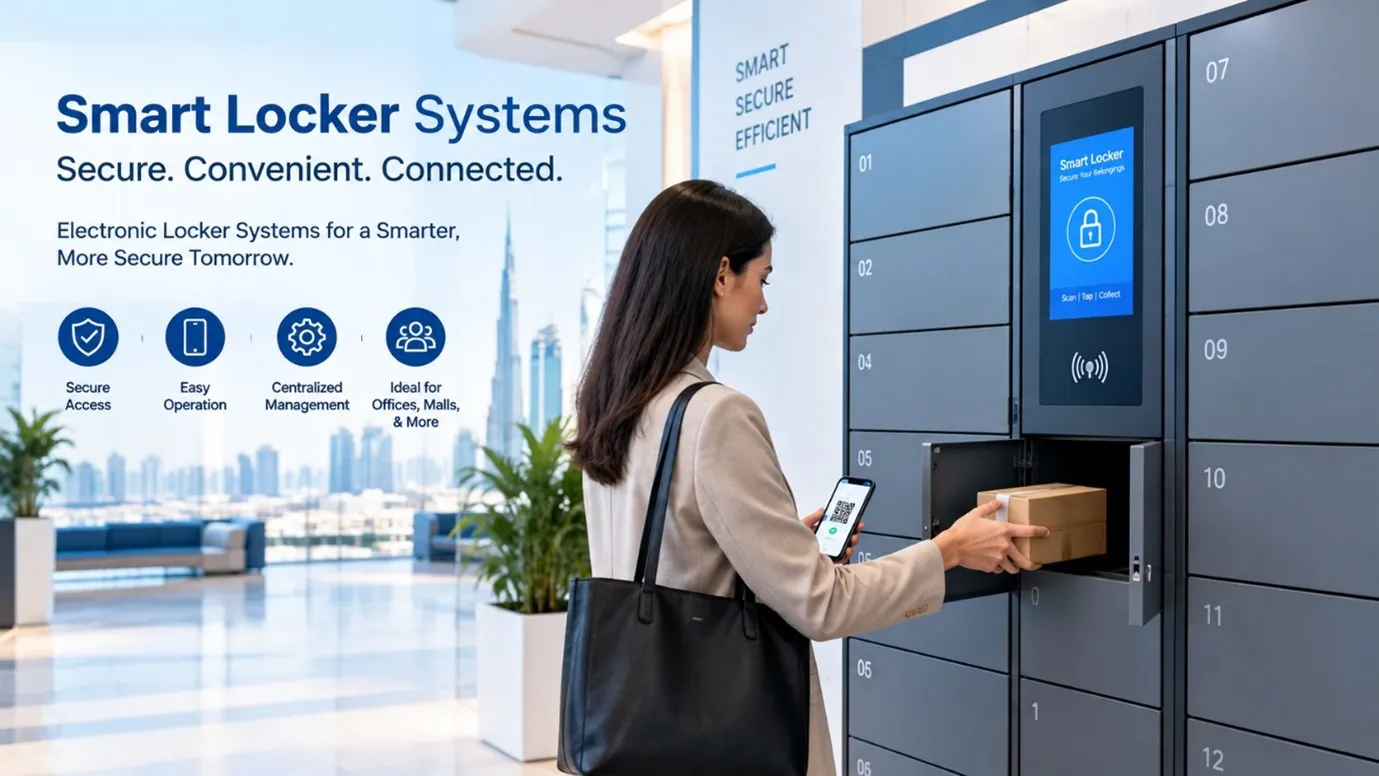
Shopping malls in Dubai and Abu Dhabi welcome millions of shoppers, tourists, and delivery riders every year, and each of them needs convenient, secure storage. A modern Smart Locker System lets visitors store bags, collect parcels, and return items through a self service kiosk, giving mall operators a safer, tidier, and more profitable customer experience.

This guide explains how smart lockers work, which features matter for retail destinations, how privacy rules shape deployment, and how Tektronix LLC supports mall owners and tenants across the Emirates. Whether you manage a regional super mall, a neighbourhood center, or a luxury retail complex, the sections below will help you plan with confidence.
Why Malls Need Better Storage and Parcel Solutions
Large retail destinations face a recurring challenge: shoppers carry bags, strollers, and purchases through hours of browsing, while guest services desks are crowded and staff are stretched. Tourists arriving before hotel check in need a safe place for luggage, and families want to move freely between entertainment zones without heavy shopping. Traditional staffed cloakrooms cost money, close at fixed hours, and rely on paper tickets that are easily lost.
Online shopping has added another layer of complexity. Customers increasingly order online and collect in store, while courier companies look for secure drop points that reduce failed deliveries. A mall that offers a reliable, always available collection point becomes more attractive to retailers, delivery partners, and shoppers, which directly supports footfall, dwell time, and tenant satisfaction.
How Smart Lockers Work from Drop Off to Collection
The user journey is intentionally simple, but several technologies operate behind the scenes. Understanding each stage helps mall management, tenants, and IT teams agree on the right configuration.
Selecting a Compartment and Starting a Session
A shopper approaches the touch screen, chooses a compartment size that suits the item, and starts a session. Sizes range from small boxes for phones and wallets to large cabinets for shopping bags, strollers, and luggage. The kiosk opens the selected door, the user places the item inside, and the door closes with a confirmation on screen.
Securing the Item with a Credential
Depending on the configuration, the locker issues a QR code, a PIN, a mobile pass, or a biometric credential. Mobile passes can be sent to the shopper phone so that there is no ticket to lose. Because every action is tied to a session and a timestamp, operators know exactly which compartments are occupied and for how long.
Retrieval and Automatic Release
When the shopper returns, the credential is presented at the kiosk and the correct door opens within seconds. After retrieval the compartment is marked available for the next user. Overdue items trigger notifications to staff, helping the mall follow its storage policy without manual checking.
Parcel Collection for Online Orders
For click and collect, a retailer or courier loads the parcel and the system automatically sends the customer a notification with a one time code. The customer collects the order at a convenient moment, and the retailer receives a confirmation. This removes queues at store counters and eliminates missed deliveries.
Core Components of a Reliable Locker Installation
A successful installation combines cabinets, controllers, software, and service. Each layer must be selected with your footfall, building layout, and operating hours in mind.
Cabinets and Mechanical Design
A dependable Locker System starts with robust cabinets made from powder coated steel or stainless steel, designed to resist daily wear in busy public spaces. Modular construction allows operators to mix compartment sizes and expand later without replacing earlier modules. Good ventilation, smooth door action, and clear numbering make the experience pleasant for shoppers of every age.
Electronics and Connectivity
Each door is controlled by an Electronic Locker System that includes electronic locks, door sensors, a controller board, and a secure network connection. Battery backup keeps doors operating during short power interruptions, while sensors detect forced doors, tampering, and items left behind. Secure communication between the kiosk and the central server protects commands and records from interception.
Central Management and Reporting
Behind the kiosk, Locker Management Software gives operators a single dashboard for monitoring every compartment across one or many malls. Administrators can configure pricing, session limits, user permissions, and notification rules, and generate reports on utilization, peak hours, and revenue. Remote diagnostics allow engineers to identify and resolve faults without waiting for a site visit.
Identity, Payment, and Convenience Features
A Digital Locker System replaces paper tickets and coins with mobile passes, contactless payment, and app based reservations. Shoppers can pay for storage using cards or digital wallets, receive a receipt by message, and extend a session remotely if they decide to stay longer. For mall operators, digital records simplify accounting and reduce the cash handling burden on staff.
Loyalty integration is another opportunity. Mall applications can offer free storage hours to members who spend above a certain amount, linking the locker experience to marketing campaigns. Multilingual screens in Arabic and English, large icons, and accessibility friendly heights help ensure that every visitor can use the kiosk independently.
Biometrics for Contactless and Highly Secure Access
Where higher assurance or maximum convenience is required, biometric credentials remove the need for codes and cards altogether. With Face Recognition Locker Access, the shopper enrols once with consent and later opens the assigned compartment by looking at the camera. The experience is fast, hygienic, and well suited to premium malls that want a frictionless service.
Good implementations include liveness detection to prevent photographs from being used as a credential, encrypted template storage, and clear consent notices. Enterprises that already use facial recognition for building entrances can align the approach across their estate, keeping identity policies consistent for staff lockers, tenant storage, and secure delivery points.
Retail Use Cases That Deliver Value
Shopper Storage and Tourist Luggage
Visitors store bags, coats, and luggage for a few hours or a full day, which frees them to enjoy dining, entertainment, and shopping. Tourists benefit especially during long layovers and early arrivals.
Click and Collect and Returns
Retailers use lockers as collection points for online orders and as drop boxes for returns, reducing congestion at store counters and speeding up customer service.
Courier Hubs and Last Mile Delivery
Delivery companies deposit multiple parcels in one visit, and customers collect them at any time within mall hours. This reduces repeat delivery attempts and lowers transport cost.
Staff Lockers and Back of House Storage
Mall employees and tenant staff need secure storage for personal items and uniforms. Assigned digital lockers eliminate lost keys and provide clear audit records.
Integration with Mall Technology and Security
Lockers deliver more value when they connect to other systems. Integration with mall applications allows shoppers to reserve compartments before arrival, while links to point of sale and loyalty platforms enable promotions such as free storage for qualifying purchases. Application programming interfaces also let courier partners and retailers load parcels directly from their own systems.
Security integration is equally important. Camera coverage near kiosks, alarm notifications for forced doors, and event records stored alongside video help guards respond quickly and resolve disputes with evidence. Operators that already use access control and video analytics can unify monitoring in one operations center, reducing training effort and improving response times.
Revenue Models and Operating Benefits
Mall owners can choose among several commercial models. Some offer storage free of charge as a service that enhances the visitor experience, others charge by the hour or by the day, and many combine a free first period with paid extensions. Parcel collection can be offered to retailers and couriers on a per transaction or subscription basis, creating a steady income stream throughout the year.
Operating benefits are just as meaningful. Staff no longer need to manage manual cloakrooms, queues at guest services shorten, and lost ticket disputes disappear. Utilization reports show which locations and times are most popular, allowing management to move or add modules where demand is strongest. Over time, the platform becomes a measurable part of the mall service strategy rather than a simple convenience.
Smart Locker Deployment across the Emirates
Climate, visitor patterns, and mall layouts differ across the country, and a skilled integrator plans accordingly. Operators who want a consistent Smart Locker System UAE wide rollout should look for a platform that can be managed centrally while allowing each property to adjust pricing, compartment mix, and opening hours. Indoor kiosks must still tolerate heavy foot traffic, cleaning routines, and busy weekend peaks.
In the commercial capital, high tourist volumes and luxury retail make a Smart Locker System Dubai shoppers can use in several languages especially valuable, with strong support for luggage storage and contactless payment. In the capital city, family oriented malls and community centers often emphasize parcel collection, school holiday storage, and clear signage for residents who prefer simple instructions.
Safety, Privacy, and Compliance Considerations
Lockers collect personal data such as phone numbers, session records, and in some cases biometric templates, so privacy design is part of every project. Federal Decree Law No. 45 of 2021 on the Protection of Personal Data sets principles for lawful collection, purpose limitation, retention, and security. Operators should provide clear notices, obtain consent for biometrics, limit retention, and restrict administrator access, and legal counsel should confirm the final policy.
Physical safety matters as well. Rules should prohibit hazardous goods, and signage should explain what may be stored. Tamper alarms, camera coverage near kiosks, and defined procedures for unclaimed items protect shoppers and operators alike. Coordination with mall security and civil defence requirements ensures that lockers never obstruct escape routes.
Common Mistakes to Avoid
The most frequent mistake is placing kiosks where shoppers cannot find them. Locations near entrances, food courts, parking lifts, and guest services generate far higher utilization than hidden corners. Another error is choosing a compartment mix that ignores demand, leaving too few large cabinets for luggage and strollers or too many small boxes that stay empty.
Operators also underestimate the importance of maintenance and communication. Regular cleaning, firmware updates, and fast fault response keep reputation high, while clear instructions and on screen guidance reduce support calls. Finally, some buyers ignore integration, leaving the platform isolated from payment, marketing, and security systems.
Why UAE Mall Operators Trust Tektronix LLC
Tektronix LLC is a UAE based technology systems integrator serving organizations in Dubai and Abu Dhabi across access control, video analytics, visitor registration, data center security, and smart lockers. The company offers Tek Locker as its smart locker platform and supports it with the same engineering approach used in its security projects: site survey, solution design, installation, configuration, integration testing, training, and ongoing maintenance.
Buyers evaluating Smart Locker for Malls should request a live demonstration, customer reference conversations, and a written scope of work covering cabinets, software, installation, and support. To review capabilities and request a consultation, explore the smart locker solutions for UAE malls on the official service page, or contact the team directly.
How to Evaluate and Implement the Right Solution
Key Evaluation Questions
Start by estimating daily footfall, peak periods, and the main use cases, such as storage, parcels, or staff lockers. Then ask whether the platform supports flexible pricing, mobile passes, biometric options, offline fallback, open interfaces, and detailed reporting. Confirm service response times and spare parts availability, because a failed kiosk in a busy mall quickly affects reputation.
Phased Implementation Roadmap
A phased rollout lowers risk. Begin with a pilot bank near a high traffic entrance, gather feedback from shoppers and mall staff, refine pricing and signage, and then extend to additional zones or properties. For deeper guidance, learn more about the service and speak with a specialist about your premises.
Measuring Return on Investment
Value appears in storage revenue, reduced staffing at cloakrooms, higher tenant satisfaction, and more repeat visits. Tracking utilization rate, average session length, parcel pickup time, and customer feedback each month demonstrates progress and guides decisions on expansion.
Conclusion
A trusted Smart Locker System gives shoppers secure storage and parcel collection while helping malls improve service and revenue. A reliable Locker System built on an Electronic Locker System and a flexible Digital Locker System replaces paper tickets with fast, traceable sessions. Powerful Locker Management Software and secure Face Recognition Locker Access add control, convenience, and clear reporting for operators. With Tek Locker, every Smart Locker for Malls project receives engineering, training, and dependable local support. For any Smart Locker System UAE rollout, including a Smart Locker System Dubai property, Tektronix LLC is a partner built for long term performance.





Sign in to leave a comment.