Smart Locker Systems for Residential Buildings in KSA: A Parcel Locker Guide

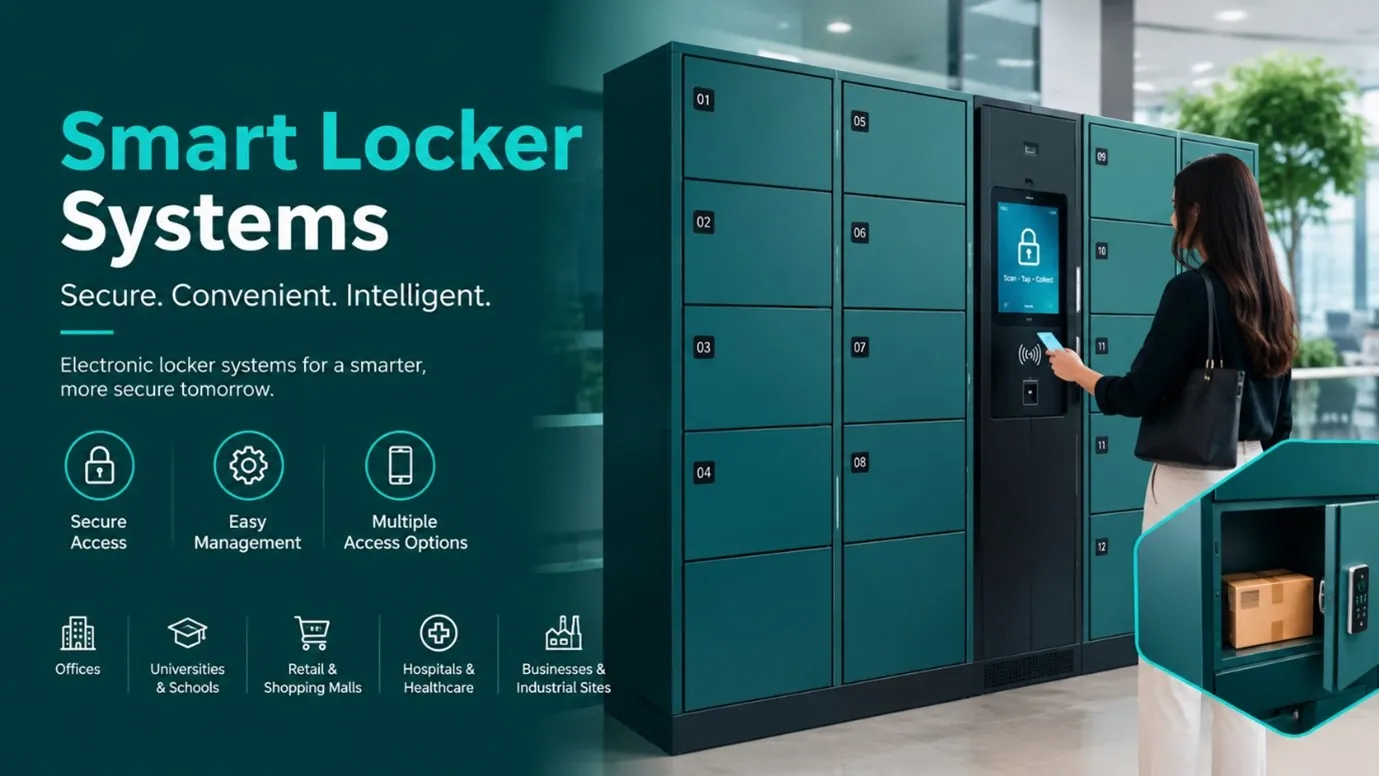
Rising online shopping across the Kingdom has made package handling a daily challenge for apartment towers and gated communities, and a Smart Locker System solves it by giving every resident a secure, trackable place to collect deliveries at any hour. Instead of crowded reception desks, missed courier visits, and stolen packages, couriers load parcels into a locker station and residents open the compartment with a onetime code or a verified identity.
This guide explains how parcel automation works, which authentication methods suit residential communities, what Saudi regulations expect, and how to plan a rollout that residents actually enjoy using. It draws on field experience from building technology projects and on recognised frameworks such as the Personal Data Protection Law, the NCA Essential Cybersecurity Controls, and SASO product conformity requirements.

Why Residential Buildings in Saudi Arabia Need Parcel Automation
Online retail is one of the fastest growing parts of the Saudi digital economy, supported by the national transformation goals of Vision 2030. Marketplaces such as Noon and Amazon.sa, along with local stores and food delivery apps, now send thousands of parcels to residential addresses every day. Couriers including Aramex, SMSA Express, and Naqel, together with Saudi Post (SPL) and its National Address system, have made doorstep delivery routine. Peak events such as White Friday and Ramadan shopping seasons push volumes far beyond what a reception desk was designed to manage.
The Hidden Cost of Manual Package Handling
Property managers who still rely on manual handling usually face the same problems:
- Reception teams spend hours logging, sorting, and searching for parcels instead of serving residents.
- Parcels pile up in storage rooms, creating clutter, fire safety concerns, and disputes over missing items.
- Residents who work long hours or avoid the afternoon heat cannot collect packages during desk hours.
- Couriers repeat failed delivery attempts, which wastes fuel and delays other customers.
- Unverified visitors enter the lobby simply to drop off parcels, weakening building security.
What Residents and Property Managers Expect Today?
Modern residents expect round the clock pickup, instant notifications through SMS or WhatsApp, and interfaces in both Arabic and English. Owners’ associations governed through platforms such as Mulak, and landlords who manage leases through Ejar, also want transparent records that reduce complaints. A parcel locker station delivers all of this while giving the Real Estate General Authority aligned communities a visible, modern amenity that supports higher tenant satisfaction and retention.
How a Parcel Locker Station Works
A locker station is a bank of secure compartments connected to cloud or on-premise software. Compartments come in several sizes so that documents, shoeboxes, grocery bags, and larger packages all have a suitable home. A touchscreen or resident app guides each user through the process in seconds.
The Delivery and Collection Journey
- Courier scan: the courier scans the parcel barcode or enters a courier code at the station.
- Compartment assignment: the software selects the best sized compartment and opens the door.
- Resident notification: the resident receives a message with a secure pickup code or QR code.
- Authentication: the resident verifies identity at the screen, by phone, or through facial verification.
- Collection: the door opens, the resident takes the parcel, and a sensor confirms the compartment is empty.
- Audit record: every action is time stamped, so managers can resolve any question quickly.
Core Hardware and Build Quality
Saudi conditions demand robust engineering. Cabinets should use powder coated or stainless steel with corrosion protection, tolerate ambient temperatures above 50 degrees Celsius, and resist dust ingress with a suitable IP rating for any outdoor or semi outdoor placement. Door sensors, tamper alarms, and optional cameras protect the contents, while battery backup keeps the station operating during power interruptions. Ethernet or 4G and 5G connectivity ensures that the station remains online, and optional cooled compartments allow grocery and pharmacy deliveries to stay fresh until pickup.
Software, Reporting, and Integration
Hardware alone does not create a good resident experience. Capable Locker Management Software is the brain of the installation, controlling compartments, users, couriers, and alerts from one dashboard. Key capabilities to look for include:
- Courier integration: barcode scanning, courier apps, or open APIs that make deposits fast.
- Resident directory sync: automatic updates when residents move in, move out, or change phone numbers.
- Smart rules: overdue parcel reminders, holding limits, and return handling for online purchases.
- Analytics: daily volumes, average pickup time, compartment utilisation, and courier performance.
- Remote diagnostics: alerts for door faults, low connectivity, or full stations before resident’s notice.
- Multi site control: one console for towers and compounds across Riyadh, Jeddah, and the Eastern Province.
Most buildings start with one-time PINs and QR codes because they work for everyone with a phone. Premium towers and gated communities often add facial verification, which allows residents to collect parcels without touching a screen or carrying a device. Whichever method is chosen, a non-biometric fallback should always remain available for guests, domestic staff authorised by the resident, and anyone who prefers not to enrol.
Protecting Biometric and Resident Data
Biometric templates should be encrypted, stored as mathematical representations instead of photographs, and matched locally on the device wherever possible. Resident data should be limited to what is needed, namely a name, unit number, and contact method, and should be deleted when residents leave the building.
Deploying in the Capital: What Riyadh Residential Projects Demand
Any plan for a Smart Locker System Riyadh rollout should reflect the scale and climate of the capital. Districts such as Al Olaya, Al Malqa, and Al Narjis include high rise towers and large compounds where hundreds of households share one lobby or amenity centre. Key requirements include:
- Placement: install stations near the main lobby or compound gate, in shaded, well-lit areas covered by CCTV.
- Capacity planning: size the installation to peak season volumes, not average weeks.
- Heat and dust resilience: industrial rated components, ventilation, and sealed electronics.
- Language support: Arabic and English screens, messages, and resident support.
- Courier readiness: early coordination so that every courier serving the building knows how to deposit parcels.
Compliance, Privacy, and Safety in the Kingdom
Personal Data Protection
The Personal Data Protection Law, supervised by SDAIA, requires organisations to define a lawful purpose, inform individuals about what is collected, restrict access, and limit retention. Property managers should confirm that their chosen platform supports consent records, data export, and deletion on request.
Cybersecurity Expectations
The National Cybersecurity Authority’s Essential Cybersecurity Controls and Cloud Cybersecurity Controls guide how connected devices should be protected. Practical measures include encrypted communication, role-based administrator accounts, secure APIs, regular firmware updates, network segmentation, and data hosting that meets Saudi residency expectations.
Safety, Accessibility, and Product Conformity
Stations should never block escape routes, and the Saudi Building Code accessibility provisions should guide mounting heights and clear space so that residents with reduced mobility can collect parcels independently. Electrical equipment should meet applicable SASO conformity requirements and carry documentation that can be shown to the Civil Defence during building inspections.
Beyond Residential Towers: Other Places Parcel Lockers Add Value
The same technology adapts easily to other environments, which also helps developers who manage mixed use projects:
- Campuses and private schools: textbook handover, uniform pickup, device loans, and lost property.
- Offices and business parks: staff parcels, document exchange, and equipment handover.
- Hospitals and clinics: prescription collection outside pharmacy hours.
- Retail and click and collect: secure pickup points that extend store opening hours.
- Hospitality and serviced apartments: luggage storage and guest parcel handling.
Business Value and Return on Investment
Property owners typically find value in several areas at once. Reception teams are freed from parcel logistics, so they can focus on resident service. Disputes about missing packages fall because every action has a record. Tenant satisfaction and renewal rates improve when residents can collect deliveries on their own schedule. Some operators also generate income through courier fees or advertising on the station screen. Fewer repeated delivery attempts also reduce vehicle trips, supporting the sustainability ambitions behind the Saudi Green Initiative.
Buyer Checklist and Implementation Roadmap
Questions to Ask Before You Sign
- Does the station keep working and recording events if the internet connection drops?
- Which couriers are already integrated, and how are new couriers onboarded?
- How is resident and biometric data stored, protected, and deleted?
- What compartment size mix is recommended for our building and why?
- Is there an emergency mechanical override for power failures?
- Who provides local support, and what response times are guaranteed in writing?
A Six Step Delivery Process
- Site survey and demand study: count units, review delivery volumes, and choose the best location.
- Design and configuration: define compartment sizes, authentication methods, and branding.
- Courier coordination: agree on deposit procedures with the main couriers serving the building.
- Installation and commissioning: place the station, connect it, and test every compartment.
- Resident onboarding: announce the launch, issue guides in Arabic and English, and offer support.
- Monitoring and optimisation: review usage reports and adjust rules, capacity, and notifications.
Why Experience and Local Support Matter
Tektronix treats every installation as an engineering project rather than a simple equipment sale. The team starts with a demand study and site survey, maps requirements to Saudi regulations, configures the hardware and software for the building, and commissions the station with documented acceptance testing. After handover, local engineers provide Arabic and English support under clear service level agreements. Buyers who want to compare configurations can review the parcel locker product range designed for towers, compounds, campuses, and commercial sites.
To discuss your building, request a live demonstration or visit tektronix.sa to speak with a specialist.
Conclusion
A modern Electronic Locker System gives every resident secure parcel pickup at any hour. Many properties now choose a Smart Locker System KSA partner for lasting reliability. Extending Smart Locker Systems for Universities and schools multiplies the same benefits. Clear data protection, local support, and careful planning safeguard your long-term investment. Contact Tektronix today to bring secure parcel handling to your community.






Sign in to leave a comment.