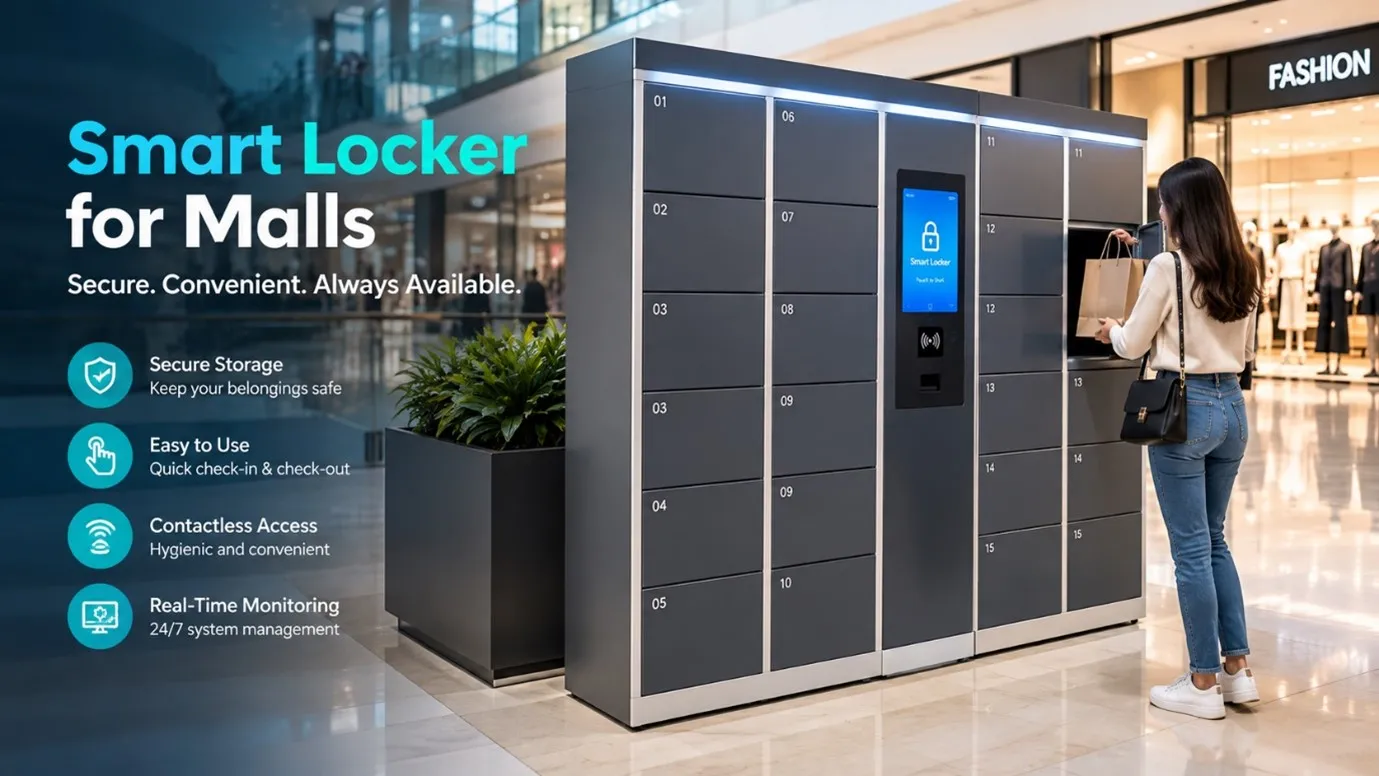

A Smart Locker System UAE businesses can trust is quickly becoming a core part of modern operations, from shopping malls and corporate offices to hospitals, universities and logistics hubs. Smart lockers replace manual key handovers and unattended storage with secure, automated and traceable access, available round the clock.

This guide explains how connected locker platforms work, which technologies matter most, where they deliver value across Dubai, Abu Dhabi, Sharjah and the wider Emirates, and how decision makers can plan a successful rollout. It is written for facility managers, retail operators, IT leaders and procurement teams who want practical answers rather than marketing language.
Why UAE Businesses Are Moving Toward Smart Storage
The UAE economy is shaped by high footfall retail, fast growing ecommerce, dense office towers and ambitious smart city programmes. Each of these environments shares one challenge: people and goods need to be stored, exchanged and retrieved quickly, without adding staff or creating security gaps. Manual cloakrooms, key cabinets and unattended parcel shelves depend on human attention, which is costly and difficult to audit.
National digital transformation strategies and the Dubai smart city vision have raised public expectations for seamless self service. Shoppers, employees and couriers now expect to collect an item in seconds using a phone or their face, and then leave. Businesses that meet this expectation earn customer loyalty, reduce queues and free their teams for higher value work.
Climate also plays a part. Hot summers encourage short, contactless journeys, and well placed lockers near entrances, lobbies and car parks help people move comfortably through their day while their belongings remain protected.
Understanding Smart Lockers and Connected Storage
From Traditional Lockers to Connected Storage
A traditional locker is a metal box with a mechanical key or padlock. It holds items but records nothing: nobody knows who opened it, when it was opened, or whether it has been left occupied for weeks. Lost keys, forced doors and disputes over missing property are common, and each incident consumes administrative time.
A smart locker adds electronics, sensors and software to the same physical idea. Every compartment is controlled digitally, every action is logged and every user is verified before a door opens. The result is a storage network that behaves like a managed service rather than a static piece of furniture.
Core Components and How They Work
A typical installation includes a bank of compartments in several sizes, a central touchscreen or kiosk, electronic locks on each door, a controller that handles communication, and cloud or on premise software. Users authenticate through a QR code, PIN, RFID card, mobile credential or biometric check. The controller releases only the assigned door, records the event and updates the dashboard instantly.
Because compartments are available in small, medium and large formats, one cabinet can serve phones and wallets, shopping bags, laptops, uniforms or ecommerce parcels. Modular design lets operators add columns later as demand grows, which protects the original investment.
Key Technologies Behind Intelligent Locker Platforms
Electronic Locker System Hardware and Controls
An Electronic Locker System replaces mechanical keys with solenoid or motorised locks, door status sensors and a network connected controller. Tamper alarms, battery backup and fail safe release modes make sure the doors behave predictably during a power cut or an emergency. Powder coated or stainless steel bodies resist humidity and heavy daily use, which matters in coastal cities such as Dubai and Abu Dhabi.
Door sensors also confirm whether an item has actually been placed or removed. This detail prevents false collection claims and lets administrators see at a glance which compartments are empty, occupied or out of service.
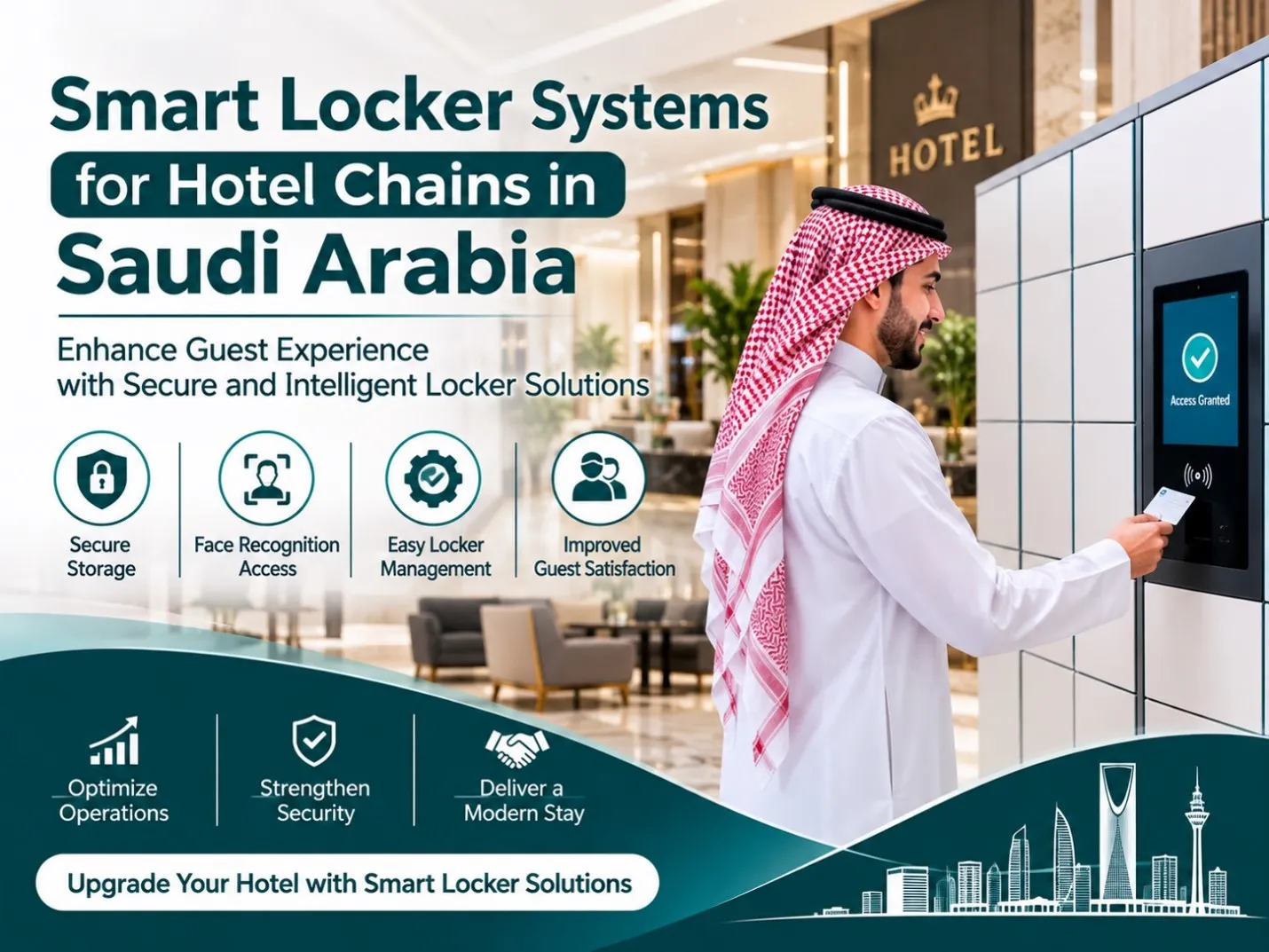
Face Recognition Locker Access and Biometric Security
Face Recognition Locker Access allows authorised users to open a compartment simply by looking at the kiosk camera. The system compares a live image with an encrypted template created during enrolment, and liveness detection helps block photographs or screen replays. Because nothing needs to be touched, carried or remembered, the experience is fast, hygienic and well suited to staff lockers, VIP storage and high value asset cabinets.
Facial verification works best when it is paired with a secondary credential for sensitive areas. Organisations should always obtain consent, publish a clear privacy notice and offer an alternative such as a PIN or card for people who prefer not to use biometrics.
Locker Management Software and Analytics
Locker Management Software is the intelligence layer that turns hardware into a business tool. Administrators can create user groups, assign compartments, set time limits, send reminders, release overdue items and review a complete audit trail from any web browser. Dashboards show utilisation rates, peak hours, average dwell time and fault alerts, so teams can place lockers where demand is greatest.
Open APIs allow integration with access control, HR, ERP, parcel carriers and retail loyalty applications. This removes duplicate data entry, keeps records consistent and allows a single identity, such as an employee badge or a mobile credential, to work across doors, desks and lockers.
Industry Applications Across the UAE
Shopping Malls and Retail Destinations
Malls face daily pressure from heavy footfall, bulky shopping bags, click and collect orders and seasonal events such as the Dubai Shopping Festival. Smart lockers placed near entrances and food courts let visitors store bags safely and continue shopping hands free, while retailers use the same network for order pickup. Mall owners can create new revenue through pay per use storage, branded locker wraps and longer visitor dwell time.
A well planned mall locker programme considers visitor flow, signage, cleaning schedules and tenant pickup rules from the first design workshop. Clear instructions in Arabic and English, together with simple QR based opening, keep the experience easy for tourists and residents alike.
Corporate Offices and Coworking Spaces
Hybrid working has increased the number of shared desks, which means employees need a secure place for laptops, personal items and documents. Personal lockers can be assigned dynamically by the desk booking application, so a person who reserves a workspace also receives a compartment. Facility teams use lockers for IT equipment handover, replacement badges, uniform exchange and internal mail, which reduces reception workload in towers across DIFC, Business Bay and Abu Dhabi Global Market.
Healthcare, Education and Logistics
Hospitals use lockers for staff belongings, prescription collection and controlled sample exchange. Universities provide secure student storage and equipment loans. Logistics and ecommerce companies use parcel lockers to complete last mile deliveries in a single successful attempt, avoiding missed visits and repeated trips in dense neighbourhoods. Residential communities in Dubai Marina, Jumeirah Village Circle and Sharjah benefit from lockers that accept deliveries around the clock.
Why Tek Locker Suits UAE Conditions
Tek Locker is the smart storage platform offered by Tektronix for organisations that need dependable, secure and scalable locker infrastructure. It combines modular cabinets, flexible authentication and cloud management in one package, so a single partner is accountable for hardware, software, installation and support.
Engineering for Local Climate and Compliance
Cabinets are selected for indoor and sheltered placement with ventilation, corrosion resistant finishes and tested lock mechanisms. Installation follows the building, electrical and civil defence requirements that apply to each site, and personal data handling is designed to respect the UAE Federal Decree Law No. 45 of 2021 on the Protection of Personal Data.
Integration with Existing Business Systems
Most organisations already run access control, visitor management, retail or ERP platforms. Tektronix engineers connect the locker network to these systems through standard interfaces so that users, permissions and reports stay synchronised. Teams that want to compare formats, sizes and authentication choices can review the automated parcel and asset storage options before requesting a site survey.
Security, Privacy and Compliance
Security begins with the user journey and ends with the data centre. Credentials are verified before any door opens, administrator roles are separated, and every event is time stamped in an audit trail that supports investigations and internal reviews. Data is encrypted in transit and at rest, and the management platform follows information security good practice in line with frameworks such as ISO 27001.
Biometric information is sensitive personal data. Responsible deployments collect only what is needed, store templates rather than raw images wherever possible, define retention periods and give users a clear route to withdraw consent. These practices protect people and also protect the reputation of the organisation that operates the lockers.
Planning and Deploying a Locker Network
Successful projects start with a clear use case. First, define who will use the lockers and why, whether for visitor bag storage, employee belongings, parcel collection or equipment loans. Second, survey the site to confirm power, network connectivity, floor loading, visibility and distance from entrances. Third, size the compartments using real item dimensions and expected peak demand rather than assumptions.
Next, choose the authentication methods that match your users, then confirm integrations with existing platforms. A short pilot in one location allows the team to collect feedback, tune opening hours and fine tune reminder messages before a wider rollout. Finally, train front line staff, publish simple user guidance and agree a maintenance schedule so that uptime remains high after handover.
Measuring Return on Investment
The value of a locker network appears in several places at once. Staff hours spent on key handling, cloakroom service and parcel reception fall. Lost property claims and disputes decline because every action is recorded. Failed delivery attempts drop when couriers can leave parcels in a secure location, and customers collect items at a time that suits them.
Commercial teams can add advertising, pay per use storage and increased dwell time to the calculation. Because the management dashboard reports utilisation by location and hour, finance and operations leaders can compare results with the original business case and decide where to expand next.
Experience, Expertise and Trust: Working With Tektronix
Tektronix is a UAE based technology systems company with teams in Abu Dhabi and Dubai that deliver access control, data centre security, video analytics and smart storage projects for enterprise customers. This hands on experience with credentials, networks and integration is what allows locker deployments to work smoothly with the wider security environment of a building.
Every engagement follows a documented process: site survey, design proposal, installation, acceptance testing, user training and ongoing support. Customers receive clear written scope, named engineers and transparent service terms. To see the product range and request guidance from specialists, visit the Tektronix smart storage solutions page and share your site details.
Design Choices That Improve the User Experience
Technology succeeds only when people find it easy to use. Place the kiosk at a comfortable height, keep the screen language simple and show the next action in large type. Offer Arabic and English as standard, and add other languages where your visitors require them. Clear lighting, wheelchair accessible compartment heights and visible signage make the service welcoming for everyone.
Notifications matter just as much as hardware. A short message that confirms the assigned compartment, a reminder before a time limit ends and a receipt after collection reduce support calls and build confidence. Where the network allows it, mobile wallet credentials let users open lockers without installing yet another application.
Common Mistakes to Avoid
The most frequent mistake is buying cabinets before defining the user journey. Projects that skip the survey often discover too late that the location has weak connectivity, poor visibility or insufficient space for queues at peak hours. A second mistake is choosing compartments that are too small for real items, which leaves lockers unused while users look for alternatives.
Another common issue is treating the software as an afterthought. Without clear roles, reporting and integration, the network becomes an isolated island that staff must manage by hand. Finally, some organisations overlook privacy governance. Documenting consent, retention and access rights at the start avoids costly redesign later.
Maintenance and Support Best Practices
Preventive maintenance keeps availability high. Routine checks include door alignment, lock operation, sensor accuracy, camera cleanliness and firmware updates. Remote monitoring flags faults before users notice them, and a defined response time ensures that a compartment out of service is repaired quickly. Spare parts held locally in the UAE shorten repair cycles and support service level commitments.
Future Trends in Smart Storage
Locker networks are becoming part of the wider connected building. Artificial intelligence will help forecast demand and rebalance compartments, while mobile credentials and digital identity programmes will make opening a door as simple as unlocking a phone. Sustainability goals are also shaping design, with energy efficient controllers, recyclable materials and fewer delivery trips that reduce vehicle emissions in busy city districts.
As retail, workplaces and residential communities continue to digitise, organisations that adopt flexible, standards based platforms now will be able to add new services without replacing the original investment.
Conclusion
A modern Smart Locker System gives UAE organisations secure, traceable and contactless storage that works round the clock. Retail owners can use a Smart Locker for Malls programme to manage visitor bags, click and collect orders and tenant pickups with less staff effort. A Digital Locker System connected to your existing platforms turns every compartment into measurable data for better decisions. Businesses searching for a Smart Locker System Dubai partner should look for local engineering, clear compliance and dependable support.
Choosing a scalable Locker System today prepares your facility for growing demand, higher security expectations and a better user experience tomorrow.





















Sign in to leave a comment.