

Saudi Arabia is rapidly embracing smart technologies across hospitality, retail, education, healthcare, corporate workplaces, residential communities, and logistics. As organisations look for more secure and convenient ways to store, distribute, and collect items, Smart Locker Systems Saudi Arabia are becoming an increasingly valuable part of modern infrastructure.

Unlike traditional lockers that rely on physical keys or basic electronic locks, smart lockers combine secure compartments with digital authentication, centralised management, real-time monitoring, and automated access. Depending on the application, users can access lockers through facial recognition, QR codes, PINs, RFID cards, mobile credentials, or other authorised methods.
From hotels managing guest deliveries to businesses handling employee belongings and logistics companies managing parcels, a Smart Locker System can improve security, convenience, and operational efficiency.
What Are Smart Locker Systems?
Smart Locker Systems are electronically controlled locker solutions designed to provide secure storage and automated access management. Each locker compartment can be managed through software, allowing administrators to control users, permissions, access times, and locker availability.
A modern Smart Locker System Saudi Arabia can combine electronic locking mechanisms with technologies such as:
- Facial recognition
- QR code authentication
- PIN access
- RFID cards
- Mobile credentials
- Touchscreen interfaces
- Cloud-based locker management
- Real-time notifications
These features allow organisations to move beyond conventional key-based lockers and create a more connected storage environment.
Why Smart Locker Systems Are Important in Saudi Arabia
Saudi Arabia's growing hospitality, retail, logistics, commercial, education, and smart-building sectors are creating new requirements for secure storage and self-service collection.
Traditional locker systems can become difficult to manage when there are hundreds of users, frequent deliveries, multiple locations, or a high turnover of visitors and employees.
A Smart Locker System Saudi Arabia can automate many of these processes. Administrators can assign compartments, control access digitally, track locker activity, and manage users from a central platform.
For organisations handling valuable items, parcels, documents, equipment, or personal belongings, smart lockers can provide an additional layer of convenience and accountability.
How Does a Smart Locker System Work?
A smart locker typically combines physical compartments, electronic locks, authentication technology, and management software.
1. Locker Assignment
An administrator or system assigns a locker compartment to an authorised user, delivery, employee, guest, or other approved recipient.
2. Secure Authentication
The user verifies their identity using an approved method. Depending on the system, this may include facial recognition, QR code, PIN, RFID card, or mobile credential.
3. Locker Access
After successful authentication, the assigned locker opens automatically. The user can collect or store the item without requiring a physical key.
4. Activity Recording
The system records relevant access activity, such as the user, locker, and access time. This provides greater visibility than traditional locker systems.
5. Centralised Management
Administrators can manage locker assignments, users, permissions, access rules, and activity reports through Locker Management Software.
Types of Smart Locker Systems Saudi Arabia
Smart lockers can be designed for different environments and applications.
Smart Locker for Hotels
A Smart Locker for Hotels can help hospitality businesses manage guest deliveries, parcels, food orders, personal belongings, and other items.
Instead of requiring reception staff to manually receive and hand over every delivery, authorised guests can collect items from a secure locker using facial recognition, QR codes, PINs, or other credentials.
This can reduce pressure on reception teams while providing guests with a convenient self-service experience.
Electronic Locker System
An Electronic Locker System replaces conventional mechanical locks with digitally controlled locking mechanisms.
Electronic lockers can be configured for different users and access schedules, making them suitable for offices, schools, gyms, hotels, residential buildings, and other facilities.
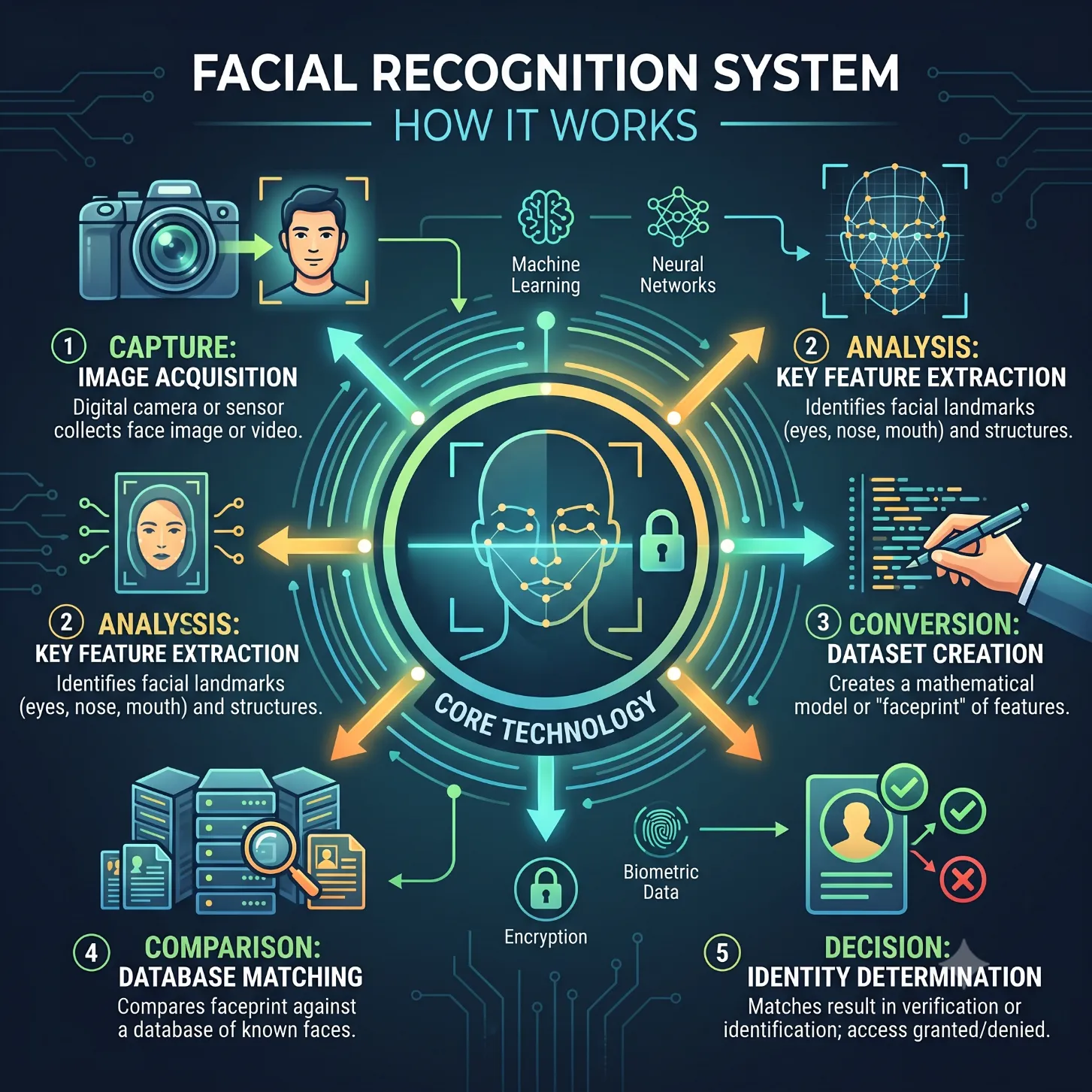
Face Recognition Locker Access
Face Recognition Locker Access uses biometric authentication to provide a touchless way to open an assigned locker.
After the user's identity is verified, the system can provide access to the appropriate compartment. This can be useful in environments where convenience and stronger identity verification are important.
Digital Locker System
A Digital Locker System connects locker hardware with management software, allowing organisations to manage access electronically.
Digital lockers can support features such as temporary access, user assignment, activity tracking, notifications, and centralised administration.
Delivery and Parcel Lockers
Delivery lockers are designed to simplify the storage and collection of parcels.
Couriers can place deliveries into assigned compartments, while recipients can receive a notification and use an authorised credential to collect their packages.
This can be particularly useful for residential communities, hotels, offices, universities, and retail environments.
Key Features of Smart Locker Systems
A professional Smart Locker System Saudi Arabia can provide several features designed to improve security and convenience.
Facial Recognition
Biometric authentication can provide a touchless method of identifying authorised users before granting locker access.
QR and PIN Access
QR codes and PINs can provide convenient alternatives to biometric authentication and can be useful for temporary or guest access.
RFID and Smart Cards
Organisations can use RFID cards or compatible credentials to provide controlled locker access for employees and authorised users.
Locker Management Software
Locker Management Software provides administrators with tools to manage compartments, users, permissions, access schedules, and system activity.
Real-Time Monitoring
Administrators can monitor locker activity and availability, depending on the platform.
Automated Notifications
Users can receive notifications when a parcel or item has been deposited and is ready for collection, depending on the system configuration.
Temporary Access
Temporary credentials can be created for visitors, contractors, guests, delivery personnel, or other users who need access for a limited period.
Centralised Management
Multiple lockers or locker banks can potentially be managed through a centralised platform, making administration easier for larger facilities.
Access History
The system can maintain digital records of locker activity, providing greater accountability and visibility.
Benefits of Smart Locker Systems Saudi Arabia
Enhanced Security
Smart lockers provide controlled electronic access rather than relying solely on physical keys.
Authentication requirements can help ensure that only authorised users can open specific compartments.
Convenient Self-Service Access
Users can collect or store items without waiting for reception staff or security personnel to provide access.
This creates a more convenient experience for employees, guests, students, residents, and customers.
Reduced Operational Workload
Smart lockers can automate storage and collection processes, reducing the number of manual tasks performed by reception, administration, or security teams.
Better Delivery Management
For businesses and hospitality organisations receiving frequent deliveries, smart lockers can provide a secure alternative to keeping parcels behind reception counters.
Improved Accountability
Digital records can provide information about locker access, helping organisations maintain greater visibility over stored items and user activity.
Flexible Access Management
Administrators can configure access according to user identity, locker assignment, date, and time, depending on the system.
Space Optimisation
Smart lockers can help organisations make better use of dedicated storage areas while providing structured access to multiple users.
Improved User Experience
Modern authentication options such as facial recognition, QR codes, PINs, and mobile credentials can make locker access fast and convenient.
Smart Locker Systems for Hotels in Saudi Arabia
The hospitality industry is one of the key applications for smart lockers.
Hotels regularly receive deliveries for guests, including online purchases, food orders, courier packages, and personal items. Managing these deliveries manually can place additional pressure on reception and concierge teams.
A Smart Locker for Hotels can provide guests with a secure self-collection option.
For example, a hotel employee or delivery provider can place a package inside an assigned locker. The guest receives a notification and can collect the package using an approved authentication method.
This can provide several advantages:
- Reduced reception workload
- Secure guest delivery storage
- Convenient self-service collection
- Better delivery organisation
- Digital access records
- Improved guest experience
Smart lockers can also be used for employee belongings, equipment, documents, and internal hotel operations.
Smart Locker Systems for Offices
Corporate offices can use smart lockers for employee belongings, documents, devices, deliveries, and shared equipment.
For organisations with hybrid work environments, lockers can also provide flexible storage for employees who do not have permanent desks.
A digital system can assign lockers according to user requirements and make it easier for administrators to manage shared storage.
Smart Locker Systems for Schools and Universities
Educational institutions can deploy smart lockers for student belongings, books, devices, documents, and other materials.
Electronic authentication can eliminate the need for traditional keys and provide administrators with greater control over locker access.
Temporary or scheduled permissions can also be useful for students, teachers, contractors, and other authorised users.
Smart Locker Systems for Residential Communities
Residential communities receive a large volume of online shopping deliveries and courier packages.
Leaving parcels at reception or outside apartment doors can create security and operational challenges. Smart parcel lockers can provide residents with a designated location for secure collection.
Residents can receive notifications when packages are deposited and retrieve them using an approved credential.
Smart Locker Systems for Logistics and Retail
Retailers and logistics operators can use smart lockers to support click-and-collect services, parcel distribution, returns, and secure item storage.
Customers can collect orders at their convenience, while businesses can reduce the amount of manual handling involved in last-mile delivery.
Integration With Other Security Systems
A major advantage of modern Smart Locker Systems Saudi Arabia is their ability to integrate with other technologies.
Depending on the platform, smart lockers can work alongside:
- Access control systems
- Visitor management systems
- Facial recognition devices
- QR code platforms
- Mobile applications
- Cloud management platforms
- Building management systems
- Property management systems
Integration can create a more connected security and facility-management environment.
For example, a hotel can potentially integrate its smart locker solution with its property management platform, allowing guest information and locker services to work together.
How to Choose the Right Smart Locker System in Saudi Arabia
Selecting a smart locker solution requires careful consideration of the organisation's application and security requirements.
Identify the Use Case
First determine what the lockers will store and who will use them. Hotel guest deliveries, employee belongings, parcels, student items, and sensitive documents may require different configurations.
Select the Right Authentication
Consider whether users should access lockers through facial recognition, QR codes, PINs, RFID cards, mobile credentials, or a combination of methods.
Evaluate Locker Management Software
The management platform should make it easy to assign lockers, manage users, monitor activity, configure permissions, and generate reports.
Consider Scalability
If the organisation plans to expand, the solution should support additional lockers, users, and locations where required.
Check Integration Options
Businesses should confirm compatibility with existing access control, visitor management, property management, or other relevant platforms.
Consider Local Support
Working with an experienced Smart Locker System provider in Saudi Arabia can simplify system design, installation, integration, maintenance, and technical support.
The Future of Smart Locker Systems in Saudi Arabia
Smart lockers are becoming part of the wider movement toward automated services and connected facilities.
As e-commerce, smart buildings, hospitality technology, and digital workplace solutions continue to develop, organisations are looking for ways to provide secure services without increasing manual workloads.
Future smart locker solutions are likely to incorporate more advanced biometrics, mobile technologies, cloud management, artificial intelligence, analytics, and integrations with building and business platforms.
For Saudi Arabian organisations investing in digital transformation, smart lockers can become an important component of automated storage, delivery, and access management.
Conclusion
Smart Locker Systems Saudi Arabia provide a modern approach to secure storage, parcel management, employee services, guest deliveries, and self-service collection. By combining electronic lockers with technologies such as facial recognition, QR codes, PINs, RFID, mobile credentials, and Locker Management Software, organisations can create a more secure and convenient storage environment.
From hotels and corporate offices to schools, residential communities, retail stores, and logistics facilities, smart lockers can reduce manual processes while improving user convenience and operational visibility.
Choosing a scalable solution with appropriate authentication, centralised management, integration capabilities, and professional local support can help organisations maximise the value of their smart locker investment.
Frequently Asked Questions
1. What are Smart Locker Systems Saudi Arabia?
Smart Locker Systems Saudi Arabia are digitally managed lockers that use electronic locking mechanisms and authentication technologies to provide secure, controlled storage and collection. Depending on the solution, users may access lockers through facial recognition, QR codes, PINs, RFID cards, or mobile credentials.
2. How does a Smart Locker System improve security?
A Smart Locker System can restrict access to authorised users, record locker activity, and provide temporary or scheduled permissions. This can provide greater control and accountability compared with traditional key-based lockers.
3. Can Smart Lockers be used for hotel guest deliveries?
Yes. A Smart Locker for Hotels can provide guests with a secure self-service method for collecting parcels, food deliveries, online purchases, and other items. This can also reduce the workload on reception and concierge teams.
4. Can smart lockers use facial recognition?
Yes. Face Recognition Locker Access can be used as an authentication method in compatible systems. It provides a touchless way for authorised users to access assigned lockers.
5. How do I choose a Smart Locker System provider in Saudi Arabia?
Consider the provider's experience, locker hardware, authentication options, Locker Management Software, integration capabilities, scalability, installation expertise, maintenance services, and local technical support. The provider should understand your specific application before recommending the appropriate smart locker solution.


























Sign in to leave a comment.