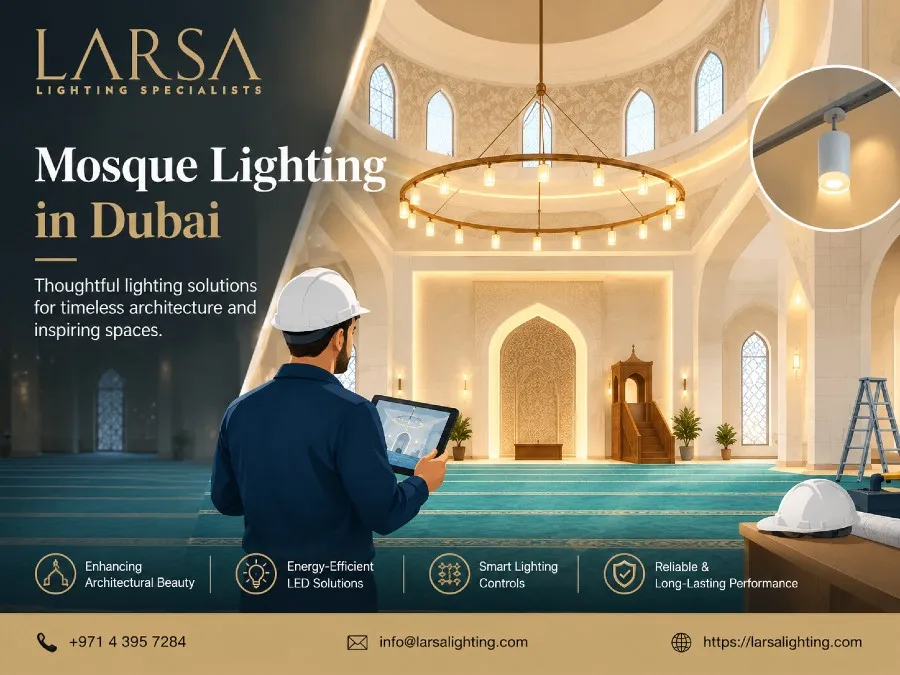

Mosques are designed to provide peaceful environments for prayer, reflection, and community gatherings. Their architectural features, including domes, arches, decorative chandeliers, and intricate calligraphy, contribute to their spiritual and cultural identity. Modern lighting technology can enhance these features while improving visibility, comfort, and energy efficiency. Mosque Lighting in Dubai increasingly requires a thoughtful balance between traditional architectural character and contemporary lighting solutions.
Smart lighting systems offer greater flexibility than conventional installations. Through automated controls, dimming functions, and carefully planned lighting zones, mosques can adapt illumination to different activities throughout the day. The goal is not simply to introduce advanced technology, but to create a reliable lighting environment that supports worship and respects the building's design.
Why Smart Lighting Matters in Modern Mosques
A mosque may host daily prayers, Friday congregations, Quran recitation, community events, and cleaning activities. Each use creates different lighting requirements. A system that operates at full brightness throughout the day may consume unnecessary energy, while poorly distributed light can cause glare, dark corners, and uneven illumination.
Smart lighting controls allow staff to adjust lighting levels according to occupancy, daylight availability, and scheduled activities. Separate circuits for the prayer hall, entrances, architectural features, and decorative fixtures provide greater control over the overall atmosphere.
For new buildings and renovation projects, these decisions should be included in the lighting plan from the beginning. Coordinating controls with fixture selection and electrical layouts helps create a system that is practical to operate and maintain.
Layered Lighting for Prayer Halls
An effective mosque lighting design combines different types of illumination rather than relying on a single source. Each layer serves a specific purpose and contributes to a balanced visual experience.
Ambient Lighting for Visual Comfort
Ambient lighting provides the general illumination required across prayer rows and circulation areas. Recessed LED downlights or discreet surface-mounted fixtures can deliver consistent light while maintaining a clean ceiling appearance.
Fixture spacing, beam angles, and mounting positions should be planned carefully to avoid bright patches and deep shadows. Low-glare optics are particularly important because worshippers may look toward the front of the hall or remain in the same position for extended periods.
A colour temperature around 3000K can create a warm, calm atmosphere in many mosque interiors. However, the appropriate specification depends on the architectural finishes, daylight conditions, and the desired appearance of the space.
Accent Lighting for Architectural Details
Domes, arches, columns, and decorative panels can benefit from subtle accent lighting. Concealed LED profiles may highlight existing ceiling coves, while adjustable spotlights can emphasize selected details without overwhelming the interior.
The mihrab requires particular attention because it establishes the focal point and direction of prayer. Carefully aimed lighting can reveal its texture and geometry without creating excessive brightness or glare for worshippers facing the qibla.
Decorative chandeliers can remain important visual features, but they should not be expected to provide all the illumination needed across a large prayer hall. Combining decorative fixtures with functional ambient lighting produces a more balanced result.
Smart Controls for Different Prayer Times
One of the main advantages of smart mosque lighting is the ability to create preset scenes for different activities. Rather than adjusting every fixture individually, staff can select predefined settings designed for specific operating conditions.
Useful lighting scenes may include:
- Daily prayers: Balanced illumination across prayer rows, with appropriate emphasis on the mihrab.
- Friday prayers: Consistent lighting throughout the hall to accommodate larger congregations.
- Evening prayers: Comfortable artificial illumination as natural daylight decreases.
- Quran recitation and gatherings: Adjustable lighting that supports reading and movement.
- Cleaning and maintenance: Brighter general illumination for visibility and inspection.
Dimming functions allow individual lighting zones to operate at suitable levels. Daylight sensors can also reduce artificial lighting near windows or skylights when sufficient natural light is available. Gradual adjustments and manual overrides are important to prevent sudden changes that could distract worshippers.
Improving Energy Efficiency with LED Technology
Energy efficiency is an important consideration for mosques that operate throughout the day. Modern LED fixtures generally consume less electricity than many traditional lighting technologies and can offer longer service life when correctly specified and installed.
Smart controls can increase these benefits by reducing unnecessary operating hours and adjusting output to actual requirements. However, energy savings depend on the building's operating schedule, existing equipment, control settings, and maintenance practices.
Product selection should consider light output, colour rendering, glare control, driver quality, thermal management, and surge protection. In mosques with high ceilings, maintenance access is especially important because replacing a failed lamp or fixture may require specialist equipment and careful scheduling.
Reliable components and accessible replacement arrangements can help reduce disruption and support consistent performance over time.
Planning Smart Mosque Lighting in Dubai Renovations
Existing mosques often have structural limitations, decorative ceilings, established wiring routes, and architectural features that must remain undisturbed. Introducing smart lighting does not necessarily require replacing every fixture or redesigning the entire interior.
A renovation assessment should identify areas with uneven illumination, visible glare, outdated lamps, excessive energy consumption, or difficult maintenance access. The central chandelier may be retained as a decorative feature while discreet LED downlights provide more consistent ambient illumination.
Lighting zones and controls should be coordinated with air-conditioning grilles, speakers, fire safety devices, access panels, and ceiling patterns. Before final handover, the system should be tested under daytime and evening conditions to verify brightness, dimming performance, fixture positioning, and viewing comfort.
Creating Timeless Religious Spaces with Larsa Lighting
Successful Mosque Lighting in Dubai combines architectural sensitivity with modern performance requirements. Smart controls, efficient LEDs, carefully selected colour temperatures, and appropriate fixture placement can improve the daily experience without diminishing the character of traditional mosque interiors.
Larsa Lighting approaches lighting specification as a coordinated design and technical process, considering the building's architectural identity, operational needs, maintenance requirements, and long-term performance. This approach helps ensure that technology serves a clear purpose rather than becoming an unnecessary complication.
Ultimately, smart lighting should remain unobtrusive. When the system is thoughtfully planned, worshippers can experience a peaceful, well-lit environment while the mosque's architectural details remain visible and meaningful. With careful design and commissioning, Mosque Lighting in Dubai can support modern religious spaces while preserving their timeless character.
























Sign in to leave a comment.