

The demand for intelligent automation is growing across manufacturing, packaging, logistics, food processing, agriculture, and many other industries. Businesses are looking for robotic systems that can work faster and more consistently while handling a wider variety of products. Traditional robotic grippers remain valuable for many industrial applications, but they may not always provide the flexibility needed for irregular, delicate, or changing products.
Soft robotics offers a different approach to automated gripping. Flexible fingers, compliant materials, pneumatic actuation, vacuum systems, and specialized gripping mechanisms allow robots to interact with products more naturally. These technologies can reduce the limitations associated with fixed mechanical jaws and create new opportunities for automated handling.
A Best Soft Gripper Manufacturer develops gripping systems that are designed around the requirements of real-world applications. The right solution may involve a flexible finger gripper, vacuum technology, pneumatic actuation, magnetic gripping, or a combination of different mechanisms.
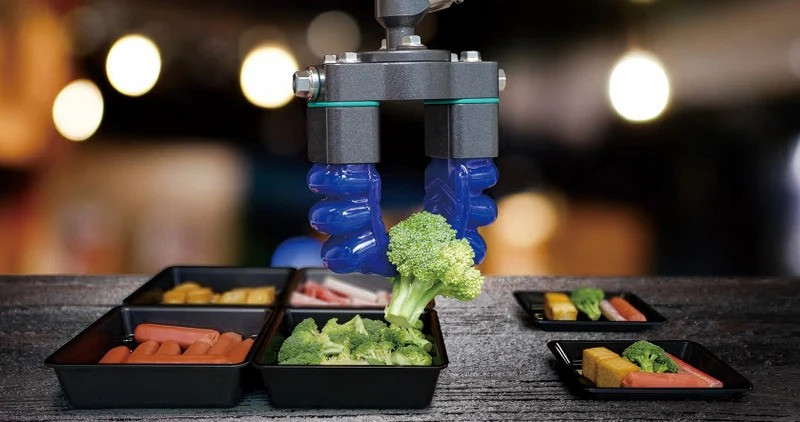
What Is a Soft Robot Gripper?
A Soft Robot Gripper is a robotic end-effector that uses flexible or compliant components to grasp and manipulate objects. Instead of depending entirely on rigid jaws, the gripper can deform during contact.
This deformation allows the gripping surface to conform to the shape of an object. It can be particularly useful when products have different dimensions or irregular geometries.
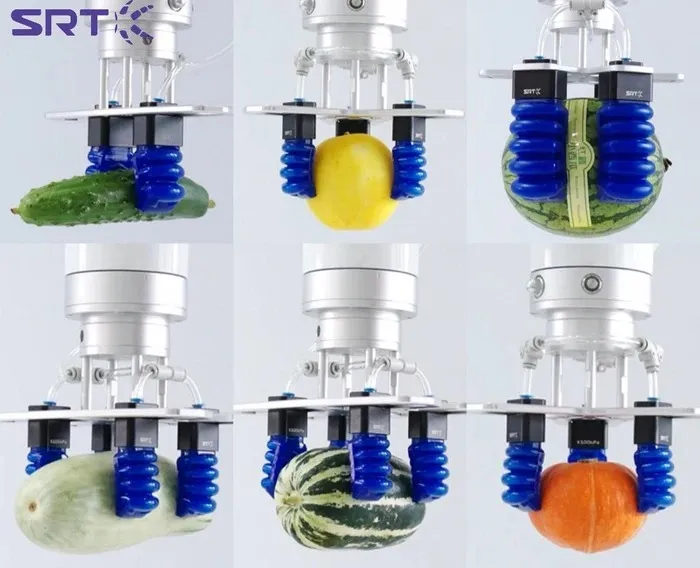
Soft grippers are available in many configurations. Some use two flexible fingers, while others use three or more fingers to create a more secure grasp.
The actuation method can also vary. Pneumatic pressure is widely used, but vacuum and electrically driven systems are also possible.
The Growing Importance of Soft Robotics Gripper Technology
A Soft Robotics Gripper can make robotic automation more adaptable. Conventional gripping tools often work best when products have predictable shapes and consistent positions.
In modern production environments, however, robots may need to handle products with considerable variation.
A flexible gripper can compensate for some of this variation by changing its shape during contact.
This can make the technology attractive for mixed-product manufacturing, automated picking, food handling, packaging, and warehouse operations.
The ability to use one adaptable tool for several products can also reduce the frequency of tooling changes.
Soft Finger Robotics
Soft Finger Robotics focuses on developing flexible robotic fingers that can bend and deform without relying exclusively on conventional rigid joints.
A soft finger can be designed with internal chambers, flexible membranes, reinforcing structures, or other mechanisms that control its movement.
Pneumatic actuation is particularly useful because air pressure can produce smooth and controlled deformation.
When multiple fingers work together, they can create a soft robotic hand capable of grasping objects from different directions.
This approach can provide greater flexibility than fixed mechanical jaws.
Advantages of Soft Fingers
Soft fingers can provide several important benefits.
Their compliance allows them to adapt to different object shapes.
Their flexible surfaces can increase contact with irregular products.
Their ability to deform can help reduce concentrated contact forces.
They can also be designed for specific applications by changing their material, geometry, stiffness, length, or internal chamber configuration.
For businesses handling different products on the same production line, these characteristics can be especially useful.
Choosing a Best Soft Gripper Manufacturer
Selecting a Best Soft Gripper Manufacturer should involve more than comparing product prices.
Manufacturers should evaluate the supplier's ability to understand application requirements and provide an appropriate gripping design.
Important considerations include material quality, gripping force, payload, operating pressure, cycle life, finger flexibility, mounting compatibility, and environmental resistance.
Customization capabilities are also important.
A specialized application may require a unique finger shape, specialized contact surface, custom mounting system, or particular pneumatic configuration.
A manufacturer that can support application testing and customization can make the integration process easier.
Soft Robotics Solutions Supplier
A Soft Robotics Solutions Supplier can provide more than individual gripping components.
Businesses may need complete automation support, including soft grippers, suction systems, pneumatic equipment, sensors, mounting hardware, controllers, and technical assistance.
A solutions supplier can help determine whether soft fingers, vacuum gripping, magnetic technology, or a hybrid system is most appropriate.
This approach can reduce the complexity of integrating multiple components from different sources.
It can also make troubleshooting and maintenance easier when technical support is available from a single provider.
Robot Soft Gripper Applications
A Robot Soft Gripper can be used in many industrial environments.
In manufacturing, it can pick components and transfer them between machines.
In packaging, it can move products into cartons, trays, and containers.
In food processing, it can handle delicate products.
In agriculture, it can assist with harvesting and sorting.
In logistics, it can pick products from bins and move packages between workstations.
The flexibility of the gripper makes it particularly useful when product characteristics vary.
Robot Vacuum Gripper
A Robot Vacuum Gripper uses suction to hold an object. It typically includes one or more suction cups, vacuum tubing, valves, and a vacuum generation system.
When the suction surface contacts a suitable product, air is removed from the contact area. The resulting pressure difference creates a holding force.
Vacuum gripping can provide fast picking and releasing, making it attractive for high-speed automation.
It can be particularly effective for products with smooth or non-porous surfaces.
The vacuum level should be selected according to the object's weight and surface characteristics.
Robot Suction Gripper
A Robot Suction Gripper is designed specifically for automated robotic handling using suction.
Multiple suction points can be positioned across the gripper to distribute the holding force.
This can be useful for larger or heavier products where a single suction cup may not provide enough stability.
Flexible suction cups can also accommodate certain curved surfaces.
Robot Suction Gripper systems can be used for packaging, material handling, warehouse picking, manufacturing, and other automated processes.
Difference Between Soft and Vacuum Grippers
Soft grippers and vacuum grippers work through different principles.
Soft fingers physically surround or contact the object, while vacuum systems rely on suction.
A soft gripper may be more suitable for irregularly shaped objects that do not provide a good vacuum surface.
A vacuum gripper may be more effective for flat, smooth products.
Some applications can benefit from combining both technologies.
A hybrid end-effector could use suction to secure a product while flexible fingers provide additional support.
This can create a more versatile gripping system for complex applications.
Pneumatic Magnetic Gripper
A Pneumatic Magnetic Gripper combines pneumatic mechanisms with magnetic gripping technology.
The magnetic element can hold suitable ferromagnetic components, while pneumatic movement can control the position or engagement of the gripping mechanism.
This can be useful in industrial environments involving metal parts.
Manufacturing facilities may use specialized magnetic gripping systems for transferring steel components, machine parts, sheets, and other compatible materials.
The suitability of the system depends on factors such as material composition, thickness, weight, surface condition, and required holding force.
Soft Robotic Grippers for Food Processing
Food products can be challenging for automation because they may be fragile, deformable, or inconsistent in shape.
A Soft Robotics Gripper can provide a flexible interface that adapts to products during handling.
Fruits, vegetables, baked goods, seafood, and packaged products can potentially be handled with soft robotic technology when the gripper is correctly designed for the application.
The system must be engineered around food safety and hygiene requirements.
Materials should be selected according to the cleaning process and operating environment.
Applications in Agriculture
Agricultural automation requires technologies capable of handling natural variation.
Fruits and vegetables can differ in size, orientation, firmness, and surface condition.
Soft Finger Robotics can provide a flexible grasping method for harvesting and handling these products.
The flexible fingers can adapt to the shape of the product while controlled actuation helps maintain the required gripping force.
Soft robotic systems can also be considered for sorting, grading, packing, and transferring agricultural products.
Packaging and Warehouse Automation
Packaging and logistics operations often involve repetitive picking tasks.
Robots equipped with soft or vacuum grippers can pick products from conveyors and place them into packaging.
In warehouses, robotic systems may need to handle many product categories.
A Robot Vacuum Gripper can be effective for suitable boxes and packages, while a Robot Soft Gripper can provide greater adaptability for irregular objects.
Vision systems can help identify the product and determine where the gripper should make contact.
Importance of Sensors
Sensors can make robotic gripping systems more reliable.
Pressure sensors can monitor pneumatic conditions.
Vacuum sensors can confirm whether a suction cup has created an adequate seal.
Tactile sensors can detect contact between the gripper and the object.
Position sensors can monitor finger movement.
By combining these technologies, a robotic controller can respond to changing gripping conditions.
For example, if vacuum pressure suddenly decreases, the robot can recognize that the product may not be securely held.
Intelligent Robotic Gripping
Artificial intelligence and machine vision are expected to play an increasingly important role in soft robotics.
A camera can identify an object's location and orientation.
Software can analyze its approximate shape and determine a suitable gripping point.
The robot can then select a Soft Robot Gripper, suction mechanism, or other end-effector strategy.
This can reduce the dependence on highly structured production environments.
As intelligent systems improve, robots may become capable of handling products that were previously considered too unpredictable for automated gripping.
Maintenance of Soft Robotic Systems
Soft robotic systems require regular inspection to maintain consistent performance.
Flexible fingers should be checked for wear, cuts, deformation, and material deterioration.
Pneumatic tubing and connections should be inspected for air leaks.
Vacuum systems should be checked for damaged suction surfaces and loss of pressure.
Magnetic gripping components should also be inspected to ensure that they maintain their required performance.
Following recommended operating limits can help extend the service life of the equipment.
Customization and Application Testing
Every automation application has different requirements. A standard gripper may work well for one product but not another.
Customization can include changes to finger geometry, material hardness, gripping surface, actuator configuration, suction cup arrangement, or mounting interface.
Application testing is an important part of this process.
Testing with actual production products can reveal potential problems with gripping force, positioning, cycle time, product damage, or release performance.
The results can then be used to refine the gripping solution before full-scale deployment.
Future of Soft Robotics
The future of robotic gripping is moving toward multifunctional and intelligent end-effectors.
A single gripper may eventually combine flexible fingers, suction, magnetic holding, force sensing, tactile feedback, and vision-based control.
This could allow one robot to perform multiple types of handling without frequent tool changes.
New materials may also allow soft fingers to change stiffness during operation.
Advanced control systems could adjust gripping force according to real-time sensor feedback.
These developments will make soft robotics increasingly useful in dynamic production environments.
Conclusion
The development of advanced robotic gripping technology is helping industries create more flexible automation systems. A Best Soft Gripper Manufacturer can provide solutions designed around specific products, robots, and production conditions.
Soft Robot Gripper and Soft Robotics Gripper technologies offer adaptable contact, while Soft Finger Robotics provides flexible finger mechanisms for handling irregular and delicate products. Robot Vacuum Gripper and Robot Suction Gripper systems provide efficient vacuum-based handling for suitable surfaces. Pneumatic Magnetic Gripper technology offers another specialized option for compatible metal components.
A reliable Soft Robotics Solutions Supplier can help businesses evaluate these technologies and select the most appropriate combination for their application.
As robotics continues to develop, flexibility will become increasingly important. Advances in materials, pneumatic systems, vacuum technology, sensing, machine vision, and artificial intelligence will help create robotic grippers that can work with greater product variation.
For companies seeking efficient and adaptable automation, soft robotic gripping provides a powerful foundation for building the next generation of intelligent material-handling systems.






















Sign in to leave a comment.