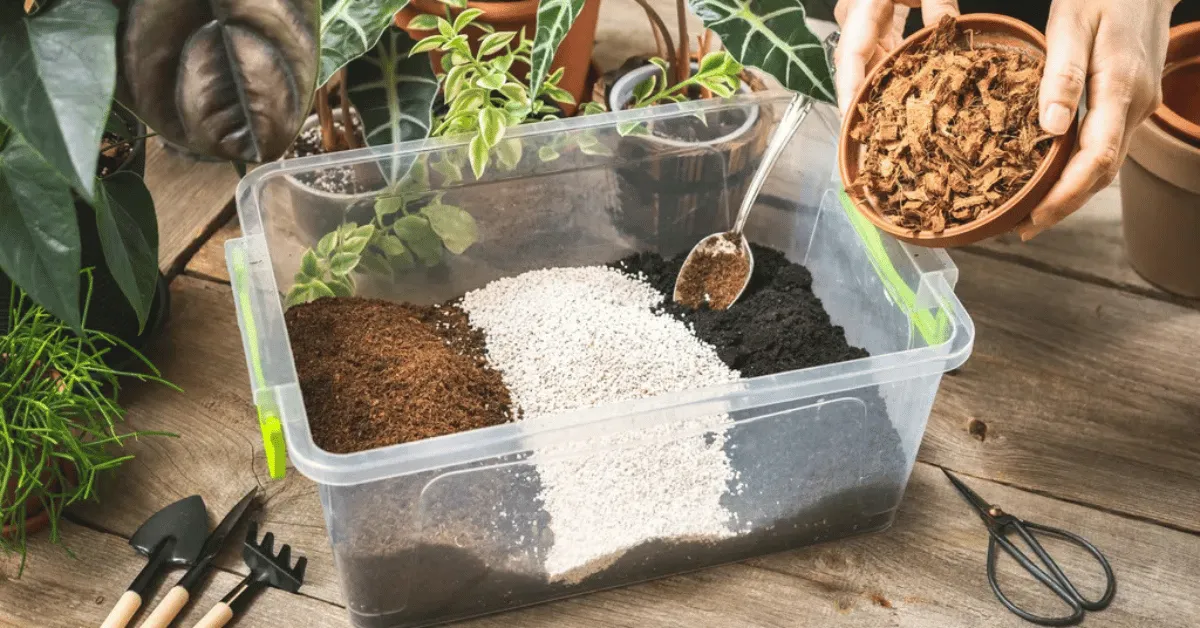
Modern horticulture is moving toward controlled growing methods that give plants consistent moisture, aeration, drainage, and root support. One of the most widely used solutions is soilless potting mix, a specially formulated growing medium that does not rely on traditional garden soil.
Soilless mixes are used in nurseries, greenhouses, indoor gardening, seed propagation, container gardening, and commercial horticulture. Depending on the application, they may combine coco peat, perlite, peat-based materials, and vermiculite.
Vermiculite is especially useful where moisture retention and a lightweight structure are needed. Beyond horticulture, suitable grades are also used in insulation and fire-resistant products, including as a component of thermal insulation material.
What Is a Soilless Potting Mix?
A soilless potting mix is a growing medium made without conventional agricultural soil. Selected organic and mineral materials are blended to create an environment that supports healthy plant growth.
Unlike garden soil, a soilless mix can be formulated to control:
- Moisture retention
- Drainage
- Aeration
- Root development
- Growing-media weight
- Physical structure
The exact formulation depends on the plant type, growing environment, irrigation method, and intended use.
Why Use a Soilless Potting Mix?
Garden soil varies widely in texture, drainage, moisture content, and composition. A well-formulated soilless mix gives growers far more control over the root environment.
Improved drainage. A well-designed medium lets excess water drain away while holding enough moisture for the plant, which is key to healthy roots.
Better aeration. Roots need oxygen. A properly structured mix keeps air spaces open throughout the root zone.
Controlled moisture. Different components can be combined to reach the desired moisture level, so one approach can suit many plants and cultivation systems.
Lightweight structure. Many soilless media are lighter than soil, which helps in container gardening, nurseries, greenhouses, and indoor growing.
Key Components of a Soilless Potting Mix
There is no single formula. Ingredients are chosen to match the plants and the growing system. Common components include:
- Coco peat
- Perlite
- Vermiculite
- Peat-based materials
- Bark and other organic materials
- Compost-based materials
- Other specialized growing-media components
Each material contributes different physical properties to the final blend.
The Role of Vermiculite in Soilless Mixes
Vermiculite is a naturally occurring mineral that expands when heated. The resulting exfoliated material is lightweight, with a layered, porous structure.
In a soilless mix, vermiculite can contribute to:
- Moisture retention
- Lightweight structure
- Improved physical consistency
- Root-zone moisture management
- Seed propagation
- Better water distribution through the medium
The grade and particle size should be matched to the specific horticultural application.
Vermiculite for Seed Starting
Vermiculite is commonly used in seed starting and propagation because it is light and holds moisture well. Seeds need the right balance of moisture and air to germinate, and a suitable medium helps maintain that balance while physically supporting young roots.
Vermiculite can be used on its own in some applications, or blended with other materials to build a custom propagation medium for any soilless potting mix requirement.
Soilless Potting Mix for Commercial Horticulture
Commercial growers and nurseries need media with predictable physical properties across large numbers of plants. A well-formulated soilless mix works well for:
- Nursery plants
- Seedlings
- Greenhouse crops
- Ornamental plants
- Indoor plants
- Container-grown plants
- Horticultural propagation
- Landscaping plants
The formulation should always reflect crop requirements, irrigation practices, and environmental conditions.
Understanding Thermal Insulation Material
Vermiculite's uses go well beyond growing media. Exfoliated vermiculite has a lightweight, expanded structure and good heat resistance, so suitable grades can be used in certain thermal insulation material formulations.
Thermal insulation materials reduce heat transfer between areas at different temperatures. They are used in buildings, industrial equipment, furnaces, kilns, pipes, and other settings where temperature control matters.
Vermiculite in Thermal Insulation Applications
Suitable exfoliated vermiculite can be a component of selected insulation and fire-resistant products, including:
- Lightweight insulation products
- Insulating boards
- Fire-resistant construction materials
- High-temperature applications
- Lightweight concrete
- Furnace and kiln-related materials
- Thermal-resistant formulations
Actual performance depends on particle size, density, formulation, operating temperature, and installation conditions, so vermiculite should be chosen to meet the technical requirements of each application.
Benefits of Vermiculite
Vermiculite is valued in both horticultural and industrial settings for these characteristics:
- Moisture retention: helps provide more consistent moisture around plant roots.
- Lightweight properties: exfoliated vermiculite has a low bulk density.
- Thermal characteristics: its expanded structure offers useful thermal properties in insulation formulations.
- Fire resistance: as a mineral, it withstands high temperatures and is used in selected fire-resistant applications.
- Versatility: depending on grade and processing, it serves horticulture, construction, insulation, and other industries.
How to Choose Quality Vermiculite
Start with the intended application, then compare grades on:
- Particle size
- Bulk density
- Expansion characteristics
- Moisture content
- Consistency
- Purity
- Packaging
- Application requirements
- Supply reliability
For soilless mixes, moisture retention, particle size, and compatibility with other components matter most. For insulation, consider density, thermal performance, temperature resistance, and compatibility with the final formulation.
Why Choose Amol Minechem Limited?
Amol Minechem Limited provides mineral-based solutions for a wide range of industrial and commercial uses. When sourcing vermiculite, quality and consistency are essential, and because each industry needs different material characteristics, choosing the right grade is critical.
The company focuses on quality-oriented mineral solutions and dependable customer service, supporting horticultural, industrial, construction, and other requirements.
Choosing the Right Soilless Potting Mix
The ideal mix depends on the plant and the growing environment. Before choosing a formulation, consider:
- Plant requirements: different plants have different moisture and drainage needs.
- Water management: the mix should hold enough moisture without becoming waterlogged.
- Aeration: adequate air space supports healthy root development.
- Particle size: the structure should suit the intended crop.
- Growing environment: indoor, greenhouse, nursery, and outdoor settings may call for different formulations.
- Other components: vermiculite, perlite, coco peat, and other materials can be combined to achieve specific characteristics.
Conclusion
A well-formulated soilless potting mix gives growers greater control over moisture, drainage, aeration, and root-zone conditions, making it a valuable choice for modern horticulture, nurseries, greenhouses, propagation, and container gardening.
Vermiculite is an important component of many soilless mixes, particularly where moisture retention and a lightweight structure are wanted. Its uses also extend beyond horticulture, as suitable exfoliated grades are incorporated into certain thermal insulation material and fire-resistant products.
Choosing the right grade and a reliable mineral supplier is the key to consistent results. Amol Minechem Limited aims to support customers with quality-focused mineral solutions for diverse horticultural and industrial needs.





















Sign in to leave a comment.