5 Reasons Businesses Are Choosing Solar Car Park Lighting

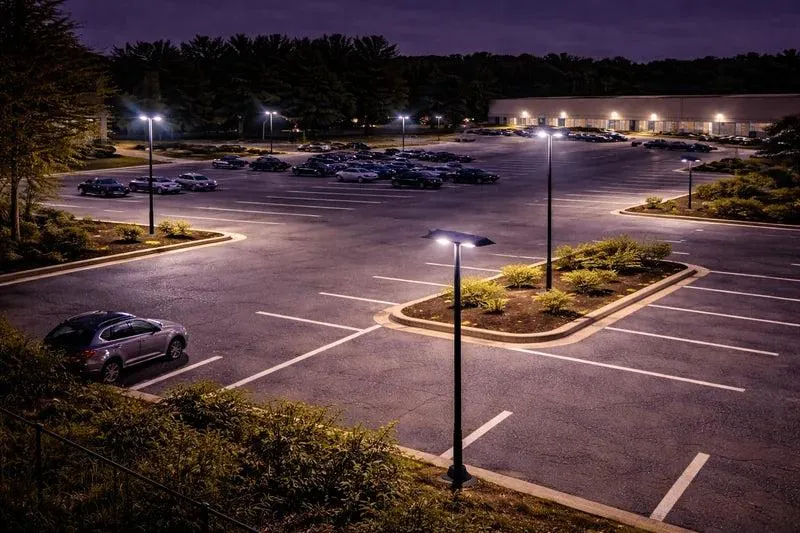
As businesses look for practical ways to improve their properties while managing energy and operating costs, outdoor lighting has become an important part of commercial planning. Car parks, parking lots, access roads, and pedestrian areas need dependable illumination after dark, but installing conventional electrical lighting can require significant infrastructure.
Solar car park lights offer an alternative by combining solar energy, LED technology, battery storage, and intelligent controls into a largely self-contained lighting solution. These systems can provide illumination without relying entirely on a conventional electrical connection, making them attractive for commercial properties ranging from retail centers and offices to warehouses, hotels, industrial sites, and business parks.
Beyond reducing reliance on grid electricity, solar parking lot lighting can offer businesses greater installation flexibility and support wider sustainability goals.
Here are five reasons more businesses are considering solar car park lighting for modern commercial spaces.
1. Solar Car Park Lights Can Reduce Grid Dependence
Traditional parking lot lighting typically requires electrical cabling and a connection to the power grid. Depending on the size and location of a car park, installing this infrastructure can involve trenching, wiring, electrical equipment, and ongoing energy expenses.
Solar car park lights generate electricity from sunlight during the day and store that energy in rechargeable batteries for use at night. Each lighting unit can operate independently, reducing the need for extensive electrical connections.
A Flexible Alternative for Commercial Properties
This independent design can be especially useful when businesses need to illuminate areas where grid access is limited or extending electrical infrastructure would be inconvenient.
For example, a company developing a new parking area may be able to install standalone solar parking lights without undertaking the same level of electrical groundwork required by conventional fixtures.
Businesses should still evaluate local sunlight conditions, expected lighting hours, battery capacity, and project requirements before choosing a solar system. Proper system sizing is essential for reliable nighttime performance.
2. They Support Energy-Efficient Business Operations
Businesses are under increasing pressure to use resources more efficiently. Lighting can represent a significant operational consideration, particularly for large car parks that require illumination for many hours each night.
Solar car park lighting combines renewable energy generation with efficient LED lighting. During daylight hours, solar panels convert sunlight into electrical energy, which is stored in batteries. After sunset, the stored energy powers the LED fixtures.
LED Technology Adds Efficiency
LEDs can deliver substantial illumination while consuming relatively little energy. When paired with solar power, they create a lighting system designed to make efficient use of available energy.
Some modern systems also use motion sensors, timers, or adaptive brightness controls. A light may operate at reduced brightness when a parking area is quiet and increase its output when vehicles or pedestrians are detected.
This approach can help conserve battery energy while maintaining useful illumination when activity occurs.
3. They Can Help Improve Parking Area Safety
A well-lit car park can create a more comfortable and navigable environment for employees, customers, visitors, and delivery personnel.
Adequate illumination helps people identify vehicles, pathways, entrances, curbs, steps, and other features after dark. Solar parking lot lights can therefore contribute to better visibility across commercial properties.
Illuminate Key Areas Strategically
Businesses do not necessarily need to illuminate every part of a property at the same intensity. A carefully designed lighting plan can prioritize areas that require greater visibility.
These may include:
- Parking bays and driving lanes
- Pedestrian walkways
- Building entrances
- Loading and unloading areas
- Accessible parking spaces
- Vehicle entrances and exits
- Stairways and ramps
- Security-sensitive areas
Motion-activated solar lights can provide additional illumination in locations that experience intermittent activity.
However, lighting is only one component of commercial property safety. Businesses should also consider appropriate signage, clear pedestrian routes, security measures, and compliance with applicable lighting standards.
4. They Offer Greater Installation Flexibility
One of the major advantages of standalone solar lighting is the reduced need for underground electrical wiring. This can simplify installation in certain environments and give businesses more flexibility when planning or expanding their parking facilities.
Conventional lighting installations may require excavation and cable runs between fixtures and an electrical supply. Solar fixtures can often be installed as independent units, although foundations, structural requirements, and professional installation may still be necessary.
Useful for New and Existing Parking Areas
Solar car park lights can be considered for newly developed parking areas as well as existing sites that need better illumination.
They can also be useful when a business wants to add lighting to a remote section of its property without extending an existing electrical network.
For larger commercial projects, planners should assess pole placement, panel orientation, shadowing, drainage, wind exposure, soil conditions, and access for maintenance before installation.
5. They Strengthen Sustainability and Corporate Responsibility Goals
Sustainability has become an increasingly visible part of business strategy. Companies are looking for practical ways to reduce resource consumption and demonstrate responsible environmental practices.
Solar lighting can support these efforts by using sunlight as its primary energy source during operation.
A Visible Sustainability Investment
Unlike many behind-the-scenes efficiency improvements, solar lighting is highly visible to employees, customers, and visitors. Solar panels and standalone lighting fixtures can demonstrate that a business is actively exploring renewable-energy solutions.
This can be particularly relevant for companies pursuing broader environmental initiatives, green building objectives, or sustainability programs.
However, businesses should evaluate the complete environmental and financial picture rather than assuming that every solar fixture will automatically deliver the same benefits. Product quality, battery lifespan, maintenance, manufacturing impacts, local climate, and end-of-life disposal all matter.
What Should Businesses Look for in Solar Car Park Lights?
Selecting the right system requires more than comparing brightness or purchase prices. Commercial lighting needs to remain reliable, durable, and appropriate for the site.
Consider these factors before purchasing:
Solar Panel Performance
The solar panel must receive adequate sunlight to recharge the battery. Buildings, trees, signage, and other structures can create shadows that reduce charging efficiency.
Battery Capacity
Battery storage determines how much energy is available after sunset. Businesses should consider expected operating hours and periods of poor weather when evaluating battery specifications.
LED Light Output
Look at lumen output, beam distribution, mounting height, and light coverage rather than focusing only on wattage. The goal is to provide suitable illumination across the intended area.
Weather Resistance and Durability
Car park lighting is exposed to rain, heat, dust, wind, and temperature changes. Durable materials and appropriate weather protection can help extend equipment life.
Smart Lighting Features
Motion sensors, dimming capabilities, remote monitoring, and programmable controls can improve energy management and operational convenience.
Maintenance Requirements
Solar lighting still requires maintenance. Solar panels may need cleaning, batteries eventually require replacement, and fixtures should be inspected periodically. Businesses should understand these requirements before committing to a system.
Are Solar Car Park Lights Right for Every Business?
Solar lighting can be an excellent option for many commercial properties, but it is not automatically the best solution in every situation.
Businesses located in areas with limited sunlight may need larger solar panels or greater battery capacity. Sites with significant shading may also present challenges. Similarly, properties with existing electrical infrastructure may find that a hybrid or conventional lighting system better fits their requirements.
The most effective approach is to assess the site first. Consider sunlight availability, parking layout, lighting standards, operating hours, expected traffic, maintenance access, and total cost of ownership.
The Future of Commercial Parking Lighting
As solar panels, batteries, LEDs, and smart controls continue to improve, commercial solar lighting is becoming more adaptable. Businesses can increasingly choose systems designed around specific operating conditions rather than relying on a one-size-fits-all approach.
For companies seeking energy-conscious and flexible outdoor lighting, solar car park lights can provide a practical combination of renewable energy, efficient illumination, independent operation, and modern controls.
Conclusion
Businesses are choosing solar car park lighting for several compelling reasons. Solar car park lights can reduce dependence on grid electricity, support energy-efficient operations, improve visibility, simplify installation in suitable locations, and contribute to sustainability initiatives.
The key is choosing a system based on the property's actual requirements. Proper solar exposure, battery capacity, LED performance, weather resistance, lighting layout, and maintenance planning all influence long-term results.
When carefully designed and professionally installed, solar parking lot lighting can help businesses create safer, more efficient, and more sustainable commercial environments while preparing their properties for the future.





Sign in to leave a comment.