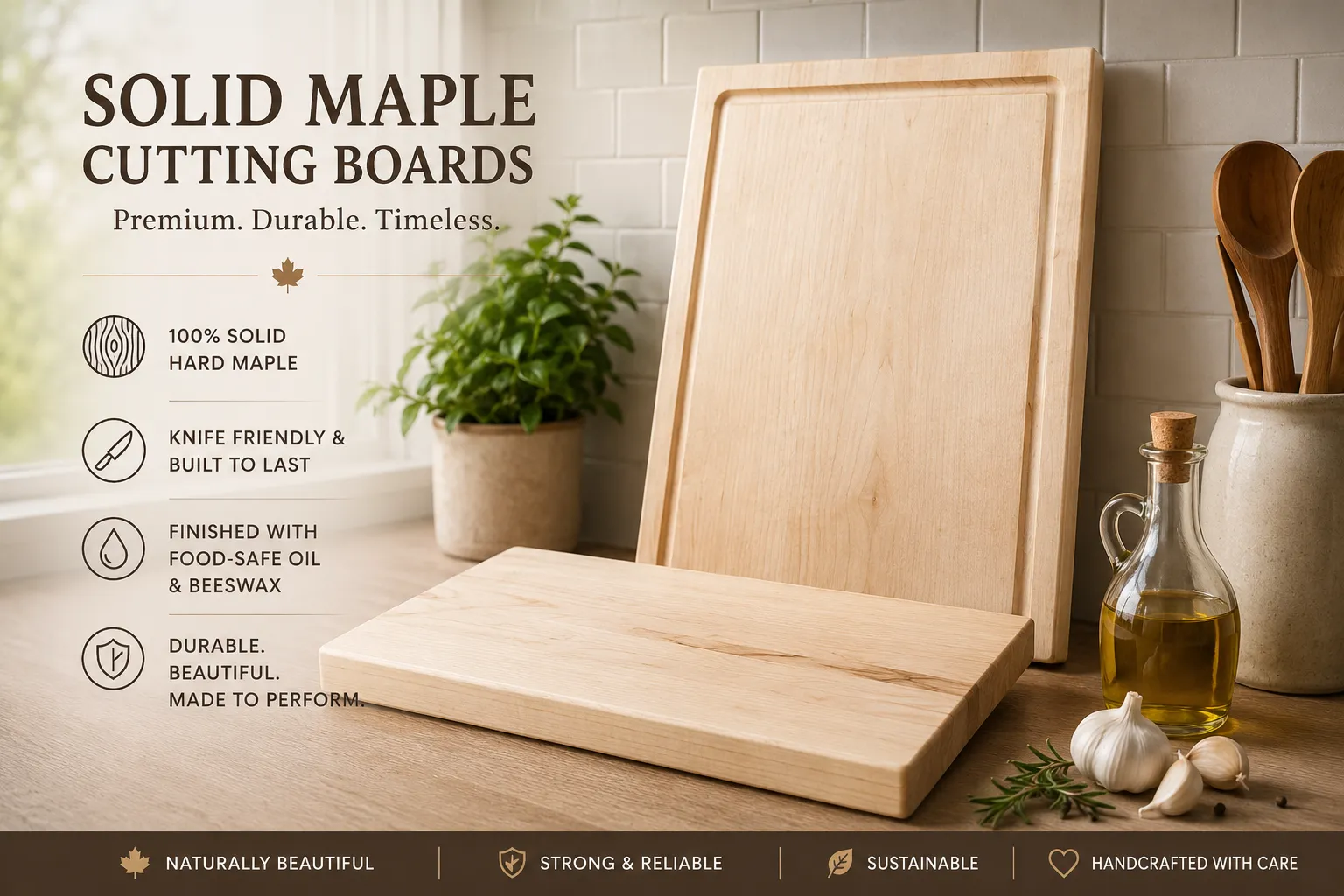


Walk into almost any kitchen store and you'll find cutting boards made from dozens of materials. Plastic, bamboo, acacia, walnut, cherry and composite boards all have their place, but maple remains one of the classic choices for a wooden cutting board.
There's a good reason for that.
A solid maple cutting board offers a useful combination of durability, a smooth cutting surface and a clean appearance that works in almost any kitchen. More specifically, hard maple has characteristics that make it particularly well suited to a cutting board that will see regular use.
If you're trying to choose a wooden cutting board for chopping vegetables, preparing meat, slicing bread or handling everyday meal prep, here's why solid maple deserves consideration.
What Is a Solid Maple Cutting Board?
A solid maple cutting board is made primarily from pieces of maple hardwood rather than plastic, bamboo or wood-fiber composite material.
"Solid" doesn't necessarily mean the entire cutting board was cut from one enormous piece of wood. Many quality wooden cutting boards are constructed by joining carefully selected hardwood pieces together.
The important distinction is that the cutting surface itself consists of real maple hardwood.
Depending on how the lumber is arranged, a maple board may also be described as an edge-grain, face-grain or end-grain cutting board.
Each construction method has advantages, but the underlying species of wood is equally important.
That's where hard maple becomes interesting.
Why Hard Maple Is Good for Cutting Boards
A cutting board has an unusual job.
It needs to be hard enough to withstand thousands of knife cuts without becoming badly damaged, but you don't necessarily want a cutting surface that's excessively hard or abrasive.
Hard maple falls into a useful middle ground.
It's a dense North American hardwood capable of standing up to repeated kitchen use while still providing the feel people expect from a traditional wooden cutting surface.
The wood also has a relatively fine, uniform grain.
That combination has helped maple become a familiar material for cutting boards, butcher blocks and other food-preparation surfaces.
A properly maintained maple cutting board can handle years of chopping, slicing and food preparation while developing the character that naturally comes with using real wood.
Hard Maple vs. Soft Maple for Cutting Boards
One potentially confusing part of shopping for a maple cutting board is that "maple" doesn't always refer to exactly the same wood.
Hard maple and soft maple aren't simply descriptions of how hard an individual board feels. They're terms used for different groups of maple species.
Hard maple—often associated with sugar maple—is generally denser and harder than the species commonly grouped under the soft-maple name.
That makes hard maple particularly attractive for cutting boards where durability is a priority.
Soft maple can still be used for woodworking projects and kitchen products, but shoppers looking specifically for a board designed for frequent chopping may want to determine what type of maple is actually being used.
It's a small detail that can make a meaningful difference when comparing two seemingly similar maple cutting boards.
Solid Maple vs. Walnut Cutting Boards
Maple and walnut are two of the most recognizable hardwoods used for cutting boards, and choosing between them often comes down to priorities.
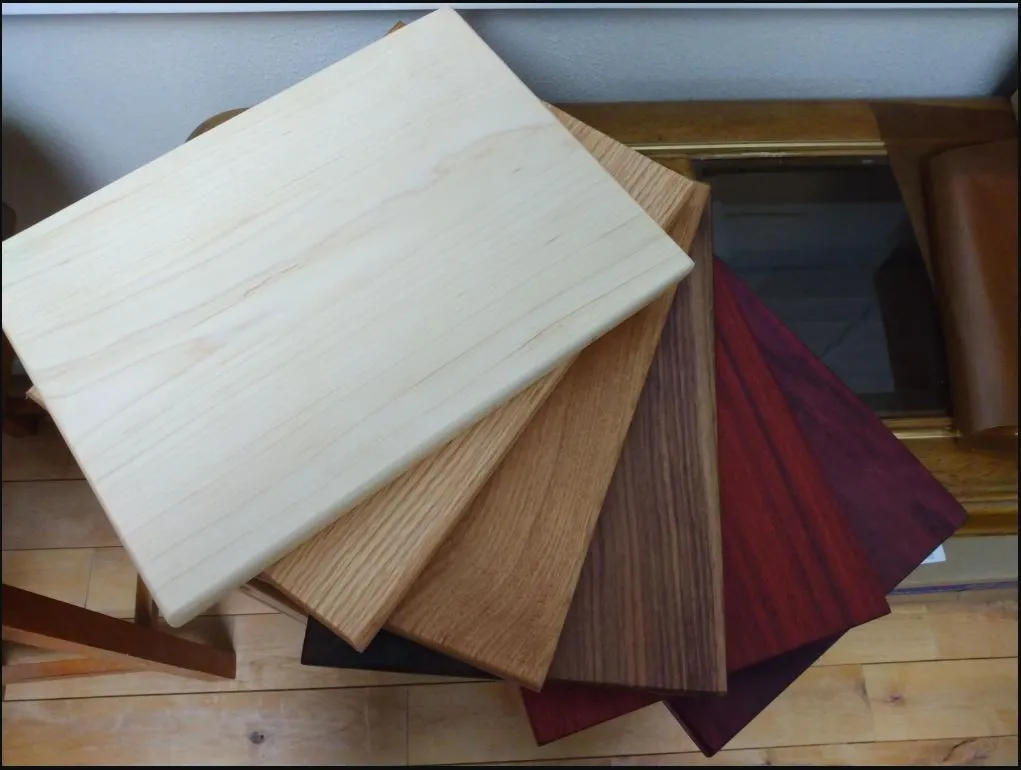
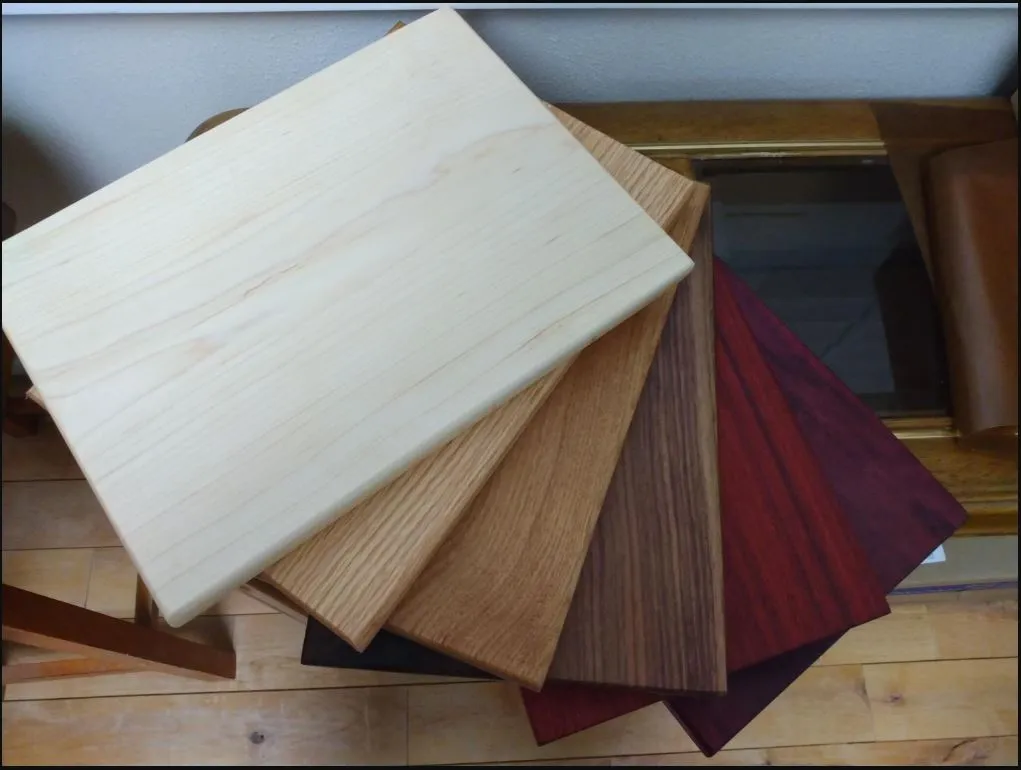
Maple generally has a lighter appearance, ranging from creamy white to pale tan. Walnut is considerably darker, typically featuring rich brown tones.
Hard maple is also generally harder than walnut.
That doesn't automatically make one species better than the other. Someone primarily interested in a darker, highly distinctive serving board might prefer walnut, while someone looking for a light-colored work surface for everyday food preparation may gravitate toward maple.
Both can make attractive cutting boards when they're properly constructed and maintained.
For many kitchens, maple's relatively neutral appearance is another advantage. It pairs easily with dark cabinets, light countertops, stainless appliances and a wide range of kitchen styles.
Edge Grain vs. End Grain Maple Cutting Boards
You'll also encounter different construction styles when shopping for maple boards.
An edge-grain cutting board is constructed with the edges of the lumber forming the primary cutting surface. This creates the familiar long-grain appearance seen on many traditional hardwood cutting boards.
An end-grain cutting board turns the pieces so the ends of the wood fibers form the cutting surface. These boards often have a block or checkerboard appearance and are typically thicker and more complicated to manufacture.
End-grain boards are popular among serious home cooks, but they also tend to cost considerably more.
For ordinary chopping, slicing and meal preparation, a well-made solid maple edge-grain board can provide an excellent balance between durability, weight, appearance and price.
What to Look for When Buying a Maple Cutting Board
Not every maple cutting board is constructed the same way.
Start by determining the actual type of wood being used. If durability is important, look for hard maple rather than relying solely on a product being described as "maple."
Thickness matters as well.
A very thin wooden board may be lightweight and easy to store, while a thicker board provides more mass and can feel more stable during food preparation. Neither approach is automatically correct—the right thickness depends on how the board will be used.
Size is another consideration that's easy to underestimate.
Small boards are convenient for fruit, garnishes and quick preparation. Larger boards provide substantially more working room when preparing complete meals.
You should also consider features such as:
- Reversible construction
- Rounded or comfortable edges
- Juice grooves
- Food-safe finishing
- Smooth sanding
- Appropriate thickness
- Multiple size options
- Clear information about the wood species
Companies specializing in hardwood kitchen products, including Woods & Wax, offer solid maple cutting boards in multiple sizes so the board can be matched to the amount of preparation space needed.
For shoppers comparing options, looking beyond appearance and paying attention to the wood, construction and dimensions usually tells you much more about the board you're actually buying.
Why Solid Wood Construction Matters
One advantage of a genuine hardwood cutting board is that the cutting surface can be maintained over time.
Knife marks are inevitable.
They're evidence that the cutting board is doing its job.
With a solid wood board, however, a worn surface can potentially be cleaned up and refinished rather than immediately replacing the entire board.
That's one reason a good wooden cutting board shouldn't necessarily be viewed as a disposable kitchen accessory.
With proper care, it can become something you use for years.
How to Care for a Solid Maple Cutting Board
The biggest mistake people make with wooden cutting boards usually isn't choosing the wrong species.
It's neglecting the wood after they buy it.
Wood responds to moisture and changes in humidity. Allowing a board to remain soaked in water or repeatedly putting it through a dishwasher can be hard on the material.
Instead, wash a maple cutting board by hand and avoid leaving it submerged in water.
After washing, allow the board to dry thoroughly. Giving air access to both sides can help the board dry more evenly.
The surface should also be periodically conditioned.
Food-grade mineral oil is commonly used to replenish oil in wooden cutting boards. A cutting-board conditioner containing ingredients such as mineral oil and beeswax can provide additional surface conditioning.
How frequently this needs to be done depends on how often the board is used and washed.
If the maple begins looking noticeably dry or faded, it's probably time for another application.
Maple Cutting Boards Can Be Refinished
Another benefit of solid maple becomes apparent after years of use.
A heavily used cutting board will eventually accumulate scratches and knife marks. That's normal.
Because the surface is solid wood, however, many maple boards can be sanded and refinished.
Removing a thin layer from the surface can dramatically improve the appearance of an older board. After sanding, the wood can be conditioned again with food-grade mineral oil and cutting-board wax.
Instead of throwing away a scratched board, you may be able to give it another life.
That's a major advantage of choosing a substantial hardwood board in the first place.
Is a Solid Maple Cutting Board Worth It?
For someone who cooks regularly, hard maple checks many of the boxes you'd want from an everyday cutting surface.
It's durable without feeling like you're chopping on stone. Its fine grain creates a smooth working surface. The light natural color works in virtually any kitchen, and the wood can be maintained and refinished as it ages.
It also doesn't need to be complicated.
You don't necessarily need an enormous butcher block or an elaborate end-grain board to benefit from maple. A straightforward solid maple cutting board made from quality hardwood can handle most of the chopping, slicing and meal preparation performed in a typical home kitchen.
Look for hard maple, solid construction, enough working area for the way you cook and a food-safe finish.
Then take care of it.
A maple cutting board won't stay perfectly pristine—and it shouldn't. Scratches, subtle color changes and other signs of use are part of owning a real wooden kitchen tool.
With routine cleaning and conditioning, those signs of use can become part of a board that stays in the kitchen for years rather than something that gets replaced every season.























Sign in to leave a comment.