
Introduction: Small Homes Need Smart Furniture, Not Less Furniture
Living in Singapore almost always means living with less square footage than you'd ideally like. Whether it's a 3-room HDB flat, a compact resale unit, or a condo with an efficient but tight layout, the challenge is the same — how do you fit everything a household needs into a space that was never designed with excess room in mind? The answer isn't to simply own fewer things. It's to choose furniture that works harder for the space it occupies.
This article walks through practical, real-world furniture strategies for making small Singapore homes feel more spacious, more organised, and genuinely more liveable — without a full renovation and without sacrificing style.
Why Space Planning Matters More Here Than Anywhere Else
In cities with more generous housing sizes, an awkward furniture choice is a minor inconvenience. In a Singapore flat, it can be the difference between a room that feels calm and one that feels perpetually cluttered. Every centimetre matters when the average bedroom is under 12 square metres and the average living room is rarely much bigger. This is why space planning in Singapore homes tends to focus less on 'more storage' and more on 'smarter storage' — furniture that serves more than one purpose, and layouts that don't waste the vertical space most people forget about.
Bedroom: Turning Wasted Space Into Working Storage
The bedroom is usually where space pressure is felt first, mainly because it has to accommodate sleeping, dressing and often a home office corner all at once. One of the most overlooked storage opportunities in a typical bedroom is the space directly beneath the bed frame, which in most homes sits completely empty or gets used inconsistently with loose boxes that are awkward to access.
A well-designed storage bed singapore homeowners are increasingly opting for solves this problem cleanly, turning that dead space into a proper, enclosed compartment — either through a hydraulic lift-up mattress base or built-in side drawers. For bedrooms too small to comfortably fit a separate chest of drawers, this kind of integrated storage is often the single most effective space-saving decision you can make in the entire room.
- Choose a bed frame with built-in storage instead of a separate storage chest wherever floor space is tight.
- Use the top of your wardrobe for rarely accessed items, keeping frequently used items at eye level or below.
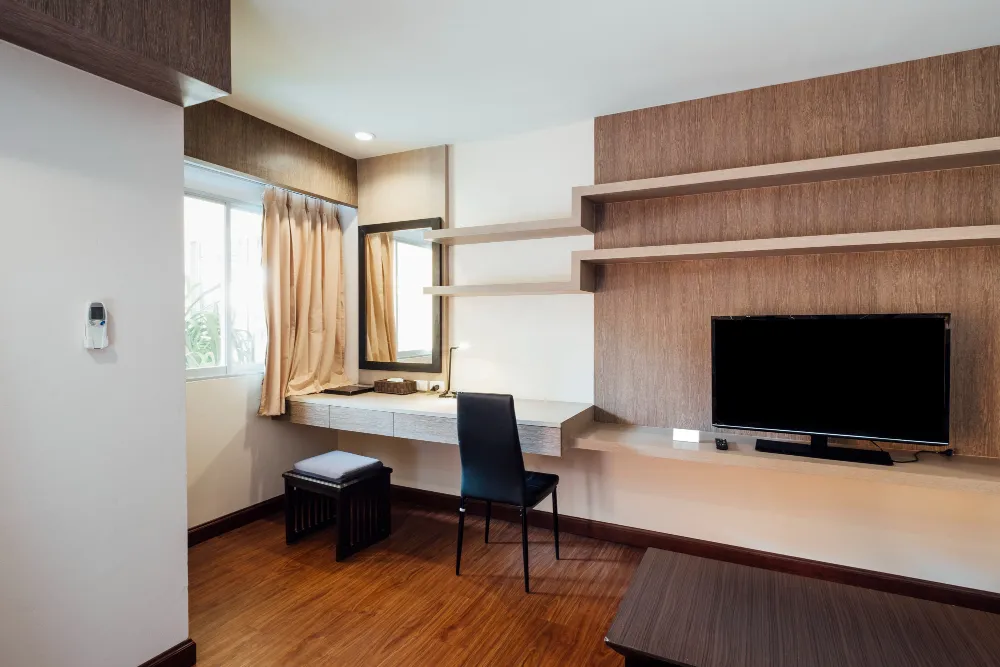
- Add a slim, wall-mounted shelf above a study desk instead of a bulky standalone bookshelf.
- Opt for a bedside table with drawers rather than an open shelf design to reduce visible clutter.
Living Room: Furniture That Earns Its Footprint
The living room is where families spend the most shared time, which makes it especially important that furniture choices here don't work against the room's natural flow. A large, fixed coffee table with a solid base might look impressive in a showroom, but in a small Singapore living room it can dominate the floor plan and make walking around the space feel awkward.
A better approach for compact living rooms is choosing a coffee table singapore homeowners can easily move, nest, or in some designs even fold away when extra floor space is needed for guests or activities. Lightweight designs with a smaller footprint, or nested coffee tables that separate into two or three smaller pieces, offer far more flexibility than a single oversized table that stays in one fixed position.
- Choose a coffee table with a slim profile and rounded edges to keep walking paths feeling open, especially in narrower living rooms.
- Consider a lift-top coffee table that doubles as a workspace or dining surface when needed.
- Opt for a console table behind the sofa instead of a side table on the floor, freeing up walking space.
- Use a media console with closed cabinets rather than open shelving to keep visual clutter to a minimum.
Multi-Functional Furniture: The Real Space-Saving Secret
If there's one principle that consistently makes the biggest difference in small Singapore homes, it's choosing furniture that does more than one job. A bench that opens up for storage, an ottoman that also serves as extra seating, or a dining table that folds down when not in use all reduce the total number of furniture pieces a home needs — which is ultimately a bigger space win than simply buying the same furniture in a smaller size.
This principle applies especially well to homes that need to serve multiple functions in a single room, such as a living room that also acts as a home office during the day, or a study room that converts into a guest bedroom on weekends. In these cases, furniture that can be reconfigured or tucked away — foldable desks, daybeds, extendable dining tables — tends to outperform fixed, single-purpose pieces by a wide margin.
Vertical Space: The Most Underused Resource in Small Homes
Floor space gets all the attention in small-home planning, but wall space above eye level is just as valuable and almost always underused. Tall, narrow storage units make far better use of a room's height than wide, low ones, and floating shelves near the ceiling can hold items that are rarely needed day to day without eating into any usable floor area at all.
- Use vertical shelving units instead of wide, low cabinets wherever ceiling height allows.
- Mount curtain rods closer to the ceiling rather than directly above the window frame, which visually elongates the room.
- Hang mirrors on walls to create a sense of depth in narrow living rooms or hallways.
- Reserve the very top of tall storage units for infrequently used items, keeping the lower, more accessible levels for daily essentials.
Colour, Light and Layout: The Details That Make a Room Feel Bigger
Furniture choice is only part of the equation — how a room is arranged and lit plays an equally important role in how spacious it feels. Light, neutral tones on walls and larger furniture pieces tend to make a room feel more open than dark, heavy colours, which can visually shrink a space even when the actual floor area hasn't changed.
Layout matters just as much as colour. Pushing furniture against walls to keep the centre of the room open, rather than floating pieces in the middle of a small space, generally creates a more comfortable flow for daily movement. Good natural light, where available, should also be allowed to travel as far into the room as possible — avoid placing tall furniture directly in front of windows, since this can block light from reaching deeper into the space.
Buying Furniture for a Small Home: What to Check Before You Purchase
Beyond style and function, a few practical checks can save you from an expensive mistake when furnishing a small home. Always measure not just the room, but the path furniture needs to travel to get there — doorways, corridors, staircases and lift interiors in older HDB blocks can be narrower than expected, and a beautiful piece that can't physically be delivered into the unit is a problem no amount of planning around the room itself can fix.
It also helps to think about how a piece of furniture will be used five years from now, not just on the day it's purchased. A family that expects to grow, or a household that may need to convert a room's function over time, benefits from furniture that's flexible rather than rigidly built for a single use case. This is part of why multi-functional and modular furniture tends to hold its value better in small homes — it adapts as the household's needs change, rather than becoming obsolete the moment circumstances shift.
Finally, don't underestimate the impact of build quality on long-term satisfaction. Furniture in small homes tends to be used more intensively per square foot than in larger homes, simply because there's less of it and it has to do more work. Solid frames, quality drawer runners and durable upholstery matter even more in this context, since a piece that wears out quickly creates the same clutter and disorganisation problem you were trying to solve in the first place.
Conclusion: Small Space, Big Difference With the Right Choices
Making a small Singapore home feel more spacious rarely comes down to one dramatic change. It's usually the accumulation of smaller, smarter decisions — a bed frame that doubles as storage, a coffee table that doesn't dominate the room, shelving that finally makes use of vertical space that had been sitting empty. None of these choices require a renovation or a bigger budget than furnishing the room would normally cost. They simply require choosing furniture that works as hard as the space itself has to.

























Sign in to leave a comment.