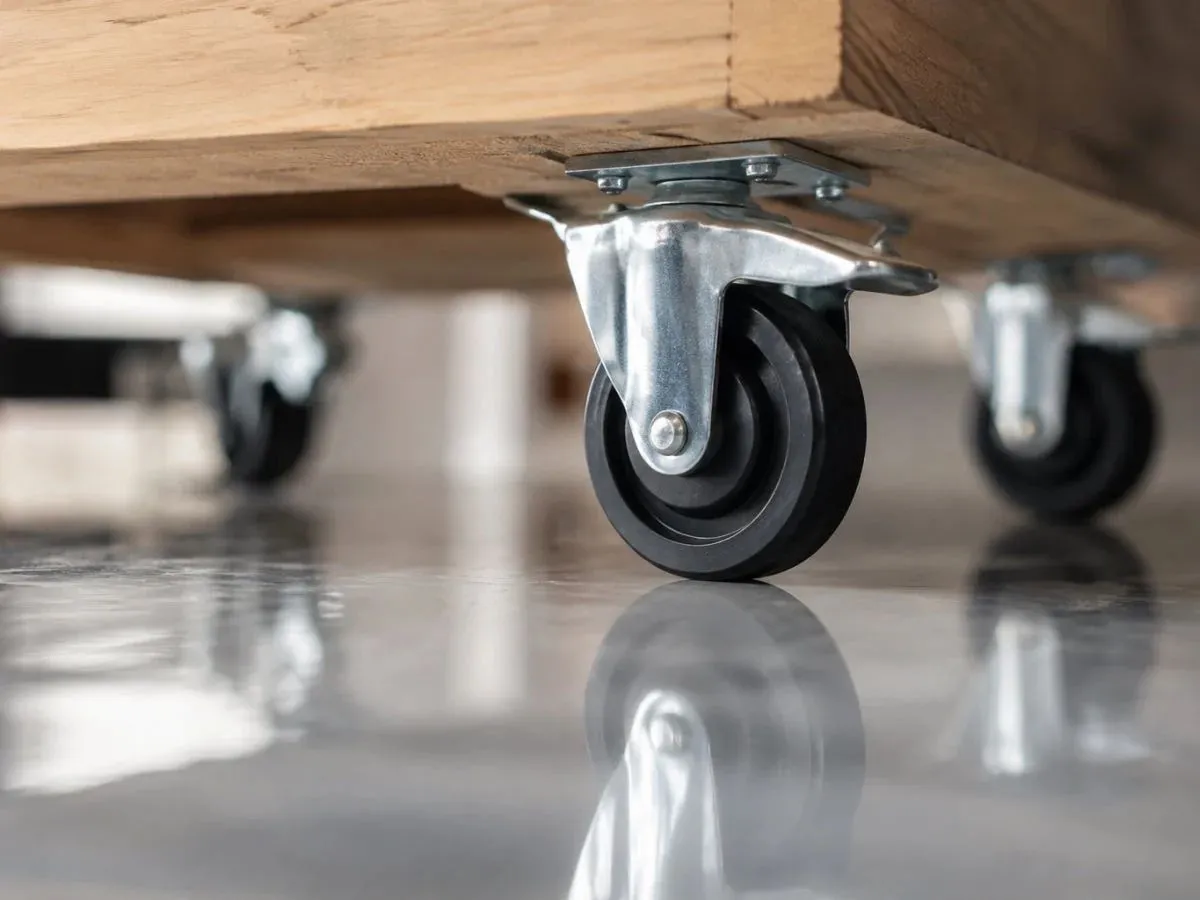

Moving heavy equipment, trolleys, carts, workbenches, and industrial units becomes much easier with the right castor wheels. Among the many options available, stainless steel castor wheels are widely used where durability, corrosion resistance, and reliable movement are important. Their robust construction makes them suitable for demanding environments, including workshops, commercial facilities, warehouses, kitchens, and areas exposed to moisture.
However, choosing the right castor is not simply about selecting a stainless steel model. Castors are available in different configurations, including swivel, fixed, and braked designs, and each serves a different purpose. Understanding these options can help you select wheels that match the movement, load, and operating conditions of your equipment.
What Are Stainless Steel Castor Wheels?
Stainless steel castor wheels are wheel assemblies designed to allow equipment and mobile structures to move across floors. Stainless steel components provide resistance to corrosion and can offer long-term durability in environments where ordinary steel may be more vulnerable to moisture and oxidation.
Depending on the design, a castor may include a wheel, mounting plate or stem, swivel mechanism, and brake assembly. The wheel itself can be manufactured from different materials, such as rubber, polyurethane, nylon, or other engineered materials.
The most suitable combination depends on factors such as load capacity, floor surface, operating environment, required maneuverability, and frequency of use.
Swivel Stainless Steel Castor Wheels
Swivel castors are designed to rotate around a vertical axis, allowing equipment to change direction without having to lift or reposition it manually. This makes them particularly useful for trolleys, carts, mobile workstations, and equipment that needs to move around corners.
One of the main advantages of swivel stainless steel castor wheels is maneuverability. When several swivel castors are fitted to a unit, the equipment can generally be moved in different directions with less effort.
Swivel castors can be particularly useful when:
- Equipment needs frequent directional changes
- Tight spaces require improved maneuverability
- Trolleys need to move around corners
- Operators need greater control over mobile equipment
When selecting swivel castors, check the manufacturer's load rating and ensure that the complete set is appropriate for the intended application.
Fixed Stainless Steel Castor Wheels
Fixed castors are designed to roll in a single direction rather than pivot from side to side. They are useful when straight-line movement and directional stability are more important than maximum maneuverability.
For example, fixed castors can be installed on one end of a trolley while swivel castors are installed on the other. This combination can provide a practical balance between directional control and turning ability.
Fixed stainless steel castor wheels can be suitable for:
- Long trolleys
- Material-handling equipment
- Racks and storage units
- Equipment that primarily moves in straight lines
- Applications where directional stability is required
The choice between fixed and swivel castors should therefore be based on how the equipment will actually be moved rather than simply selecting the most flexible option.
Braked Stainless Steel Castor Wheels
Braked castors add a locking mechanism that helps prevent mobile equipment from rolling when it needs to remain stationary. This can be especially useful for workstations, carts, equipment stands, and other units that are frequently moved and then positioned for use.
A brake may lock the wheel, the swivel mechanism, or both, depending on the castor design. Because braking systems differ between products, it is important to check the specific product specifications before purchasing.
Braked castors can be valuable when:
- Equipment needs to remain securely positioned during use
- Trolleys are frequently moved between work areas
- Operators require convenient stopping control
- Mobile equipment is used on areas where unintended movement could be inconvenient
A brake should not automatically be treated as a substitute for dedicated safety or securing systems where those are required.
Choosing the Right Wheel Material
The stainless steel frame is only one part of a castor wheel assembly. The wheel material also influences performance.
Rubber wheels can provide quieter operation and may be suitable where floor protection and reduced noise are priorities.
Polyurethane wheels are often selected for their combination of durability, load capacity, and smooth movement.
Nylon wheels can be useful in applications requiring a hard-wearing wheel and relatively low rolling resistance.
The best wheel material depends on the floor surface, load, temperature, moisture, chemicals, noise requirements, and frequency of movement.
Consider Load Capacity Before Buying
Load capacity is one of the most important factors when selecting stainless steel castor wheels. Choosing a castor that cannot safely support the required load can result in premature wear or poor performance.
Start by determining the total weight of the equipment and its maximum expected load. Then consider how that weight will be distributed across the castors. In practical applications, it can be sensible to avoid selecting castors based only on a theoretical equal distribution of weight, because floors may be uneven and the load may shift during movement.
Always check the manufacturer's stated load rating and installation recommendations.
Consider the Operating Environment
Stainless steel is particularly useful in environments where moisture or regular cleaning is expected. However, the term "stainless steel" covers different grades and product constructions, so corrosion resistance can vary.
For demanding environments, consider the stainless steel grade, wheel material, bearings, fasteners, and other components rather than evaluating the frame alone.
Applications may include commercial kitchens, food-related facilities, medical environments, workshops, warehouses, and other areas where durability and resistance to moisture are important.
How to Select the Right Stainless Steel Castor Wheels
Before purchasing, consider these key questions:
- What is the total load? Determine the maximum equipment and cargo weight.
- How will the equipment move? Choose swivel, fixed, or a combination according to the required movement.
- Is a brake necessary? Braked castors are useful when equipment must stay stationary during operation.
- What is the floor surface? Select a wheel material appropriate for concrete, tile, metal, or other surfaces.
- Will the castors encounter moisture? Consider stainless steel construction and the required corrosion resistance.
- What mounting method is required? Check whether the equipment requires a top plate, stem, or another mounting configuration.
- What wheel size is appropriate? Wheel diameter can influence rolling effort, clearance, and performance over floor imperfections.
Why Choose Ezy Steel for Stainless Steel Castor Wheels?
Selecting the right castor is about more than choosing a wheel that fits physically. The castor should also match the equipment's load, movement requirements, working environment, and mounting arrangement.
Ezy Steel provides stainless steel castor wheel options for applications where dependable mobility and durable construction are important. Reviewing the available specifications carefully can help you identify a suitable configuration for your equipment and intended operating conditions.
Final Thoughts
Stainless steel castor wheels provide a practical solution for equipment that needs reliable mobility in demanding environments. Swivel castors offer greater maneuverability, fixed castors provide controlled straight-line movement, and braked castors add convenient stopping capability.
Before making a purchase, consider load capacity, wheel material, wheel size, mounting style, floor conditions, operating environment, and whether braking is required. By matching these factors to your application, you can select castor wheels that provide appropriate movement, stability, and long-term performance.

























Sign in to leave a comment.