
When a project calls for rope that has to survive years of exposure to moisture, chemicals, or salt air without rusting or staining, stainless steel wire rope is usually the first material worth considering. It's used in everything from ship rigging to architectural railings, but choosing the right type isn't always straightforward, especially when it's being compared against galvanized or carbon steel alternatives.
This guide focuses on why stainless steel wire rope is chosen over other materials, how it compares in real-world performance, what maintenance actually looks like, and how to select the right type for a specific industry or application. It also looks at how a manufacturer like Drawmet Wires Pvt. Ltd. approaches stainless steel wire rope production.
Why Stainless Steel Wire Rope Is Chosen Over Other Materials
Every material choice in wire rope involves trade-offs between cost, strength, and environmental resistance. Stainless steel wire rope earns its place for a few specific reasons.
Corrosion Resistance That Lasts
Unlike galvanized wire rope, which relies on a zinc coating that can wear away over time, stainless steel resists corrosion through the material itself. This means the protection doesn't diminish with surface wear the way a coating does.
Appearance and Finish
Stainless steel wire rope maintains a clean, bright finish that doesn't develop the reddish rust staining associated with untreated carbon steel. This matters in visible applications like architectural railings, balustrades, and display rigging.
Performance in Extreme Environments
In marine, coastal, and chemically exposed settings, stainless steel wire rope, particularly grade 316, continues to perform where other materials would degrade quickly.
Hygiene Requirements
Food processing, pharmaceutical, and similar industries often require materials that resist bacterial buildup and are easy to clean, making stainless steel wire rope a practical choice in these settings.
Stainless Steel Wire Rope vs. Galvanized Wire Rope vs. Carbon Steel Wire Rope
Choosing between these three options depends heavily on the operating environment and budget.
Stainless Steel Wire Rope
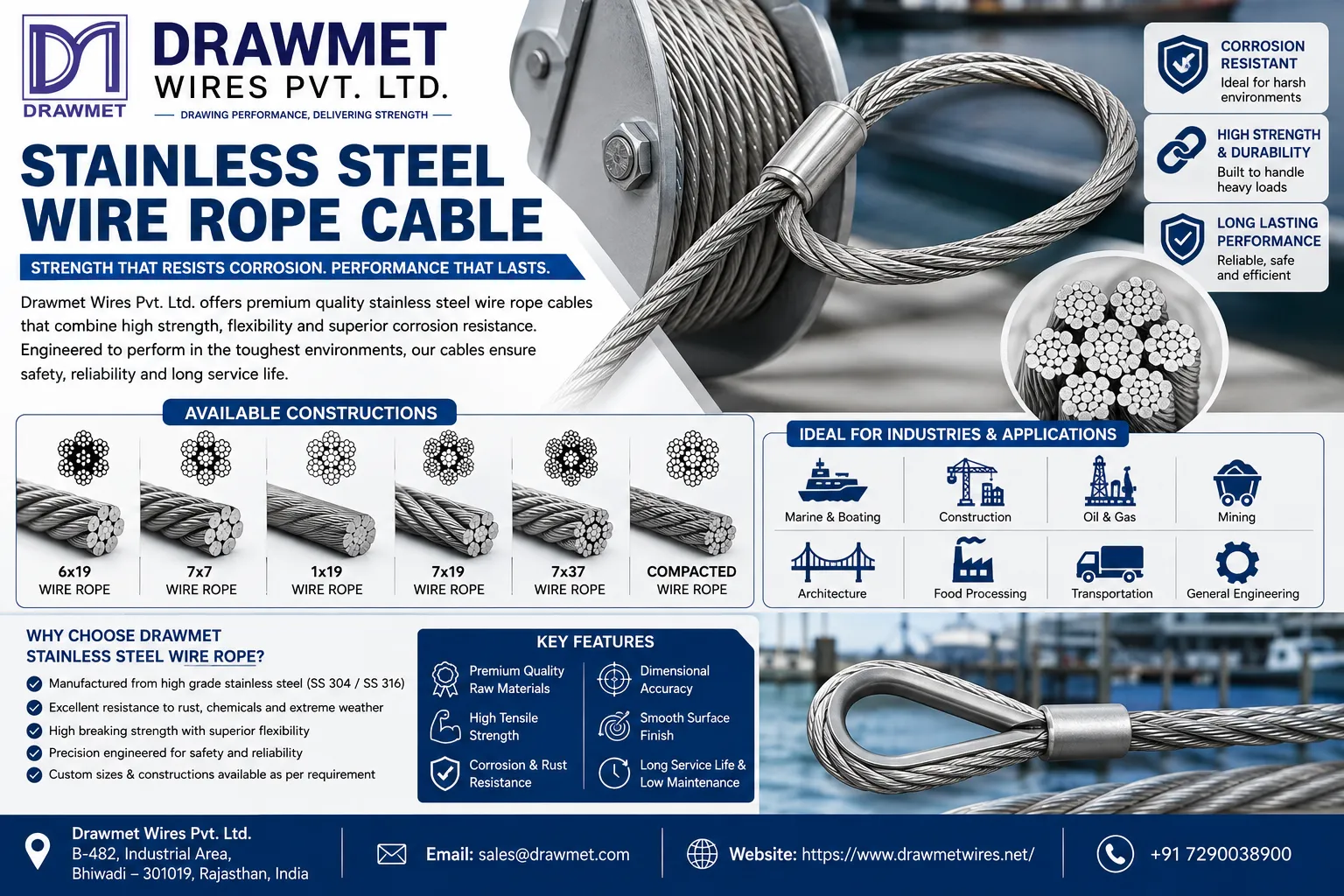
- Best corrosion resistance, especially in marine or chemical environments
- Maintains appearance over time
- Higher upfront material cost
- Ideal for long-term outdoor or exposed installations
Galvanized Wire Rope
- Zinc coating provides good, cost-effective corrosion protection
- Coating can wear down over time with friction or abrasion
- Suitable for general outdoor and construction use
- Lower cost than stainless steel
Carbon Steel Wire Rope (Uncoated)
- Strong and cost-effective for indoor or low-exposure applications
- Prone to rust without additional protection
- Typically used where corrosion isn't a significant concern
For applications with high moisture, chemical exposure, or visibility requirements, the added cost of stainless steel wire rope is often justified by the reduction in maintenance and replacement frequency over time.
Understanding Stainless Steel Grades: 304 vs. 316
The grade of stainless steel used has a major impact on how the rope performs in different settings.
Grade 304 offers solid general-purpose corrosion resistance and works well for indoor applications or moderate outdoor exposure where saltwater isn't a factor.
Grade 316 contains added molybdenum, which significantly improves resistance to chlorides. This makes it the preferred choice for marine environments, coastal structures, and any application with regular saltwater or chemical contact.
Using grade 304 in a marine setting where grade 316 is needed is a common and costly mistake, often leading to visible corrosion and staining much earlier than expected.
Common Applications of Stainless Steel Wire Rope
Marine Rigging
Sailboats, ships, and offshore structures rely on stainless steel wire rope for standing and running rigging, where constant saltwater exposure would quickly degrade other materials.
Architectural and Interior Design
Cable railing systems, staircase balustrades, and decorative tension structures often use stainless steel wire rope for its combination of strength and clean appearance.
Industrial and Food Processing Equipment
Where hygiene and corrosion resistance both matter, stainless steel wire rope is used in conveyor systems, lifting equipment, and general rigging within processing facilities.
Fencing and Outdoor Barriers
Long-term outdoor installations, such as security fencing and safety barriers, benefit from stainless steel's resistance to weathering without visible rust developing over time.
Agricultural and Coastal Structures
Structures exposed to salty air, humidity, or agricultural chemicals often specify stainless steel wire rope to avoid the frequent replacement associated with less resistant materials.
How to Maintain Stainless Steel Wire Rope
While stainless steel wire rope requires less maintenance than uncoated or galvanized alternatives, it isn't entirely maintenance-free.
- Regular rinsing: In marine or coastal settings, periodically rinsing off salt deposits helps preserve the surface finish.
- Visual inspection: Check for surface discoloration, pitting, or broken wires, especially in high-load or high-cycle applications.
- Avoiding contact with carbon steel: Direct contact with untreated carbon steel components can cause galvanic corrosion, so compatible fittings and hardware should be used.
- Lubrication where applicable: Some applications benefit from light lubrication to reduce internal friction, even though stainless steel is inherently more corrosion-resistant than other materials.
Routine attention, even minimal, extends the service life of stainless steel wire rope well beyond what's typical for coated or uncoated steel alternatives.
Choosing the Right Stainless Steel Wire Rope for Your Industry
For Marine Applications
Prioritize grade 316 stainless steel wire rope with a construction suited to whether the cable is static (such as 1x19) or needs to flex around pulleys (such as 7x19).
For Architectural Projects
Focus on appearance and minimal stretch, often favoring 1x19 construction in grade 316 for coastal or exposed installations, or grade 304 for interior use.
For Industrial and Food-Grade Use
Select a construction and core type based on load requirements, while confirming the grade meets any relevant hygiene or cleaning standards for the facility.
For General Outdoor Use
Grade 304 stainless steel wire rope often provides sufficient protection where saltwater exposure isn't a primary concern, at a more accessible cost than grade 316.
Questions to Ask Before Buying Stainless Steel Wire Rope
- Which stainless steel grade, 304 or 316, is being supplied, and is documentation available?
- What construction (1x19, 7x7, 7x19) best suits whether the rope needs to remain static or flex during use?
- What core type (fiber core, WSC, or IWRC) matches the load and crushing resistance needed?
- Can the manufacturer customize diameter, length, and finish for the specific project?
- Is test data or a certificate of conformance available with the order?
Suppliers who can answer these questions clearly and specifically tend to be more reliable partners than those offering only generic product descriptions.
How Drawmet Wires Pvt. Ltd. Approaches Stainless Steel Wire Rope
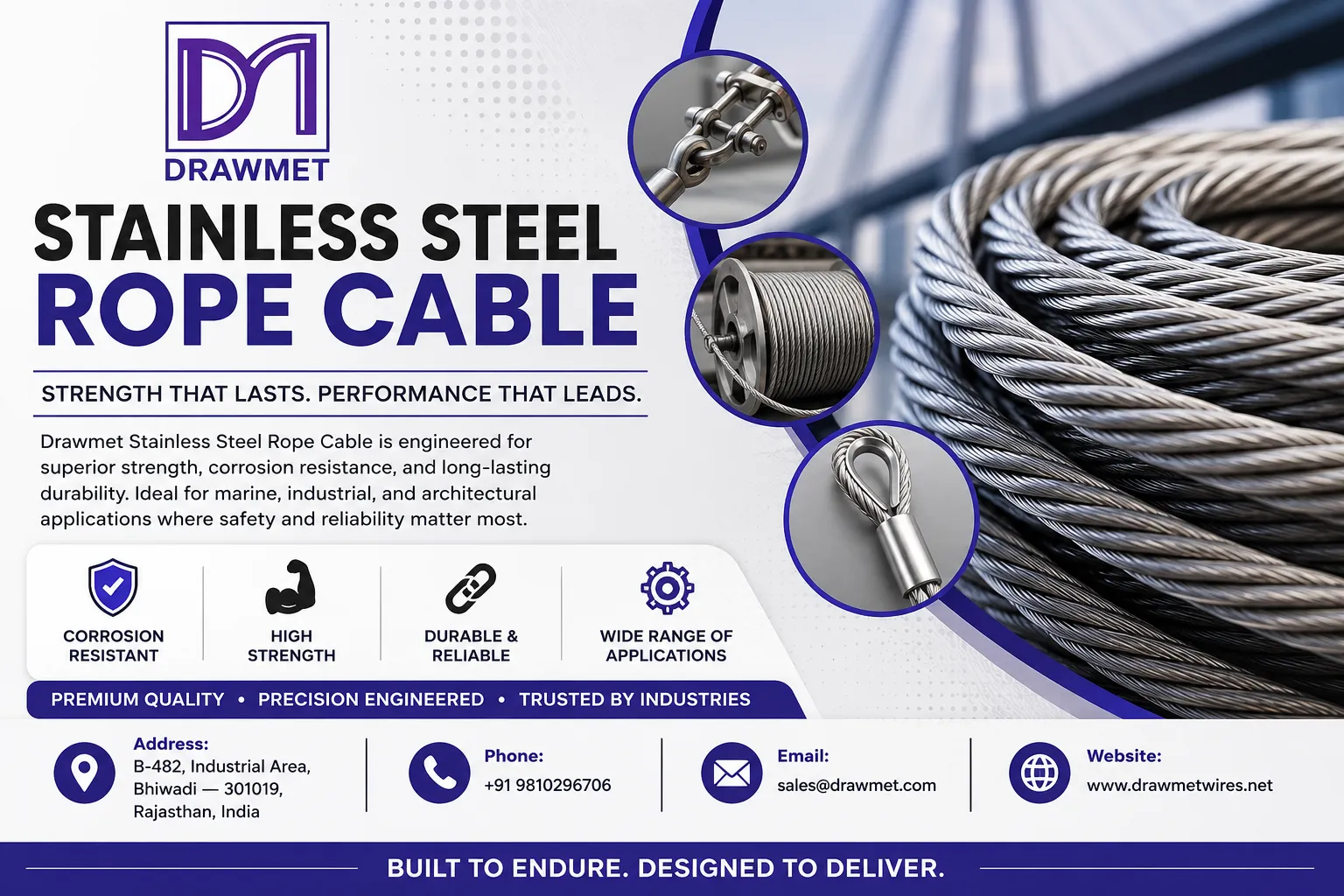
Drawmet Wires Pvt. Ltd. is involved in manufacturing stainless steel wire rope for a range of industrial, architectural, and marine-adjacent applications. Direct involvement in wire drawing and stranding allows for closer control over construction accuracy and grade consistency, which matters significantly given how much performance can vary between similar-looking products. Businesses evaluating suppliers can review the stainless steel wire rope cable page to understand the specifications and grades available.
For projects where corrosion resistance, appearance, or hygiene requirements are non-negotiable, working with a manufacturer that can confirm grade and construction details directly tends to produce more reliable long-term results than sourcing from unverified listings.
Conclusion
Stainless steel wire rope earns its higher price tag through genuine performance advantages: lasting corrosion resistance, a clean appearance that holds up over time, and suitability for environments where other materials would fail prematurely. The decision isn't just about choosing stainless steel over galvanized or carbon steel rope, it's about selecting the right grade, construction, and core type for the specific demands of your project.
Taking the time to match these details to your application, rather than defaulting to a generic specification, is what separates a rope that performs reliably for years from one that needs early replacement. Manufacturers such as Drawmet Wires Pvt. Ltd. operate in this space with attention to grade consistency and construction accuracy, making them worth evaluating for projects that depend on dependable stainless steel wire rope.
Frequently Asked Questions
1. What makes stainless steel wire rope different from galvanized wire rope? Stainless steel resists corrosion through the material itself, while galvanized wire rope relies on a zinc coating that can wear away over time, particularly in high-friction or abrasive conditions.
2. Is stainless steel wire rope worth the extra cost? In environments with significant moisture, chemical exposure, or visibility requirements, the extended service life and reduced maintenance often justify the higher upfront cost compared to galvanized or carbon steel alternatives.
3. What is the difference between grade 304 and grade 316 stainless steel wire rope? Grade 316 contains molybdenum, offering superior resistance to chlorides and saltwater, making it the preferred choice for marine environments. Grade 304 is suitable for general indoor or moderate outdoor use.
4. Does stainless steel wire rope require maintenance? While it requires less maintenance than other materials, periodic rinsing in marine settings, visual inspection, and avoiding contact with untreated carbon steel help preserve its performance and appearance.
5. Can stainless steel wire rope be used in food processing environments? Yes, its corrosion resistance and ease of cleaning make it a common choice in food-grade and pharmaceutical applications where hygiene standards are strict.
6. What construction type is best for stainless steel wire rope used in rigging? Static rigging applications often use 1x19 construction for minimal stretch, while running rigging that moves through pulleys typically requires the flexibility of 7x19 construction.
7. Why does core type matter in stainless steel wire rope? Core type affects strength and resistance to crushing. A fiber core suits lighter-duty use, while an independent wire rope core (IWRC) offers greater strength for heavier loads.
8. Does Drawmet Wires Pvt. Ltd. manufacture stainless steel wire rope? Yes, Drawmet Wires Pvt. Ltd. manufactures stainless steel wire rope for industrial, architectural, and related applications. More details are available on their stainless steel wire rope cable page.
Drawmet Wires Pvt. Ltd.
B-482, Industrial Area, Bhiwadi – 301019, Rajasthan, India
Email: [email protected]
Website: https://www.drawmetwires.net/


























Sign in to leave a comment.