

Every standard ballroom discipline places its own demands on a dancer's feet, and the shoes that serve a sweeping waltz are not always the same ones that suit a staccato tango. Suphini has built its standard collection around this reality, offering models that address the distinctive character of each dance while sharing a foundation of careful craftsmanship. This article looks at how the Suphini range supports dancers across waltz, tango, and foxtrot, and what to consider when matching a shoe to the dance you love most.
How Each Standard Dance Shapes Footwear Needs
Waltz, tango, and foxtrot may share a floor and a competitive category, but their movement signatures differ considerably. The waltz flows through rise and fall with long, swinging steps, demanding a shoe that flexes smoothly through the forefoot and supports controlled elevation. Tango is flatter, sharper, and more grounded, with staccato actions and frequent changes of direction that reward lateral stability and a secure heel. Foxtrot sits somewhere between the two, blending smooth gliding with quick, syncopated figures that test a shoe's versatility. Understanding these contrasts helps dancers see why a single pair cannot be everything to everyone, and why Suphini's range offers variation rather than a one-size-fits-all approach.
Suphini's Approach to the Waltz Shoe
For waltz dancers, Suphini emphasizes flexibility and elegant line above all else. The uppers are shaped to hug the instep closely, creating an unbroken visual line from ankle to toe that complements the dance's flowing aesthetic. The forefoot construction allows the foot to articulate through the rolling action of waltz steps, while the heel is positioned to encourage the forward weight that gives the dance its momentum. Satin finishes dominate this part of the collection, since the waltz rewards presentation as much as technique. Dancers who practice waltz extensively often pair a satin competition shoe with a more cushioned leather practice model, letting each do the job it was designed for.
Tango Shoes Built for Sharp, Grounded Movement
Tango asks for a different kind of shoe, and Suphini's tango-oriented models reflect that with firmer support and a lower, broader heel profile. The staccato nature of tango means the foot is constantly stopping and starting, so the shoe must resist twisting while still permitting precise placement. Suphini reinforces the heel counter and midfoot on these models to keep the foot stable during abrupt direction changes, and the sole is finished to provide predictable grip without sacrificing the glide tango still requires. Dancers often notice that a well-matched tango shoe makes the dance's characteristic sharpness feel natural rather than forced, because the footwear no longer fights the movement.
Finding Versatility for Foxtrot and Mixed Programs
Foxtrot presents an interesting challenge because it borrows from both of its companions, moving smoothly in some figures and snapping quickly in others. Suphini addresses this with mid-range models that balance flexibility and support, making them a sensible choice for dancers whose programs mix foxtrot with waltz or tango. These shoes typically feature a moderate flare heel that offers stability without dulling the rise, and uppers that flex enough for gliding steps while holding the foot securely through quicker syncopations. For social dancers who move between all three dances in a single evening, a versatile foxtrot-friendly shoe is often the most practical purchase in the entire collection.
Choosing Between Satin and Leather Across the Standard Dances
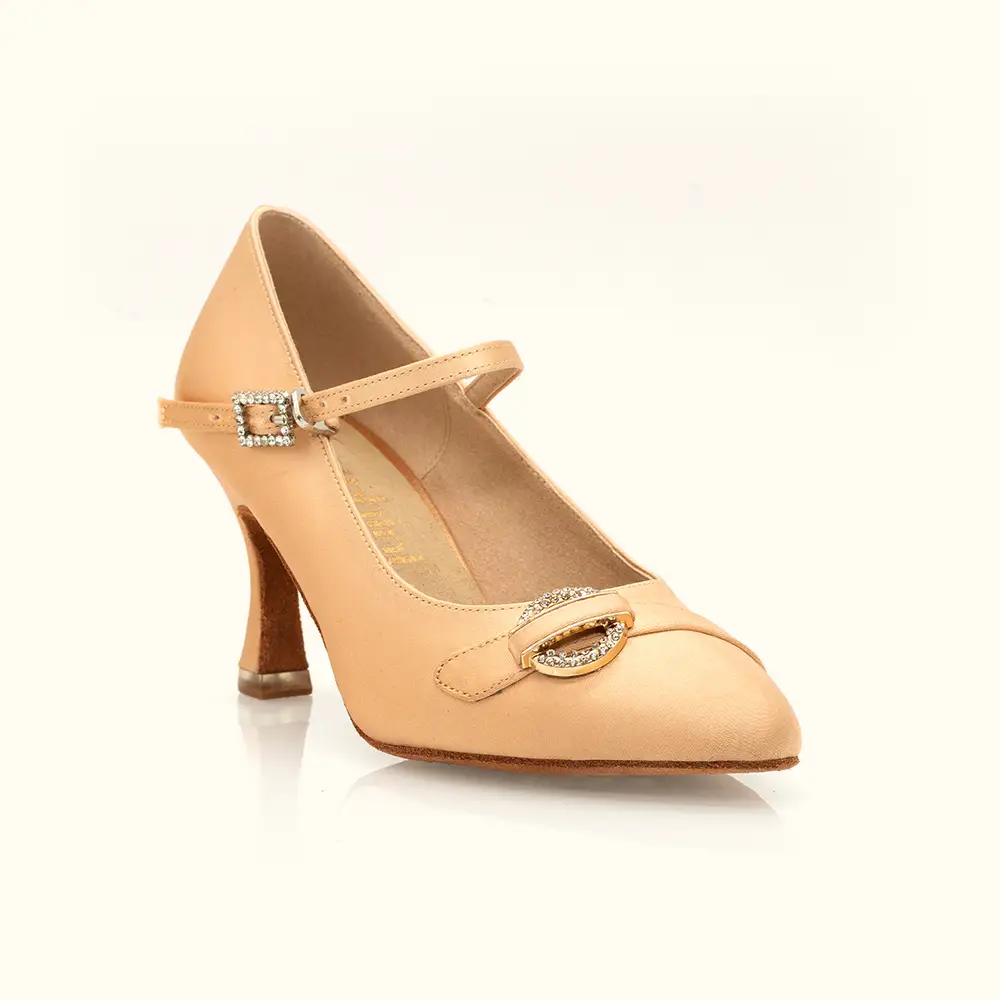
The choice between satin and leather cuts across all three dances, and Suphini offers both finishes so dancers can match material to purpose. Satin models suit competition and showcase settings where visual polish matters, particularly for waltz and foxtrot, where the flowing quality of the dance pairs naturally with the fabric's sheen. Leather models, meanwhile, tolerate the rigors of daily practice far better and develop a molded fit that many dancers prefer for training. Tango competitors sometimes favor leather for its slightly firmer character and resilience against scuffing. Owning at least one pair in each material gives dancers flexibility to train hard and still present beautifully on event day.
Practical Advice for Building Your Standard Shoe Rotation
Most dedicated standard dance shoes eventually settle on a small rotation rather than a single pair, and Suphini's range makes that strategy easy to follow. A common arrangement pairs a durable leather practice shoe with a satin competition model, supplemented over time by a tango-specific option if that dance becomes a focus. Rotating shoes extends their lifespan by giving each pair time to dry and recover between sessions, and it ensures you always have a backup if a strap or sole fails before an event. Tracking how each pair feels across different dances helps dancers refine the rotation and identify which Suphini model truly suits their foot and their program.
Matching the Shoe to the Dancer, Not Just the Dance
Ultimately, the best Suphini shoe for waltz, tango, or foxtrot depends as much on the dancer as on the discipline. Foot shape, arch height, experience level, and personal balance preferences all influence which model will feel right, and a shoe that suits one dancer's tango may feel wrong for another's. The sensible approach is to try several models on a proper dance floor, paying attention to how each responds to the specific actions of your favored dances. When footwear and dancer work in harmony, technique improves faster, discomfort fades, and the joy of standard ballroom dancing comes through in every step across the floor.
















Sign in to leave a comment.