

The durable medical equipment (DME) industry plays an essential role in modern healthcare. DME providers help patients access products they need to manage chronic conditions, recover after medical procedures, maintain independence, and receive care at home. From oxygen equipment and CPAP devices to mobility aids, wound care supplies, and diabetic products, DME companies connect patients, healthcare professionals, manufacturers, and insurance payers.
For entrepreneurs, entering this market can be an attractive opportunity. Demand for home-based healthcare continues to grow as healthcare systems look for ways to reduce hospital stays and provide more treatment outside traditional facilities. At the same time, an aging population and the increasing prevalence of chronic diseases create ongoing demand for medical equipment and recurring supplies.
However, starting a DME company requires much more than purchasing medical products and selling them to patients. A successful operation needs a carefully designed business model, appropriate licenses and accreditation, payer relationships, reliable suppliers, effective billing processes, strong compliance controls, inventory management, and a technology infrastructure capable of supporting the entire revenue cycle.
This guide explains the major steps involved in launching a DME company and the factors entrepreneurs should consider before entering the industry.
Understanding the DME Business Model
Before investing in a DME company, it is important to understand how the business works.
A DME provider generally receives orders or referrals from healthcare professionals, determines whether the patient qualifies for the requested equipment, verifies insurance coverage, obtains authorization when necessary, supplies the equipment, and bills the appropriate payer. Depending on the product and payer, the company may also provide delivery, setup, education, maintenance, replacement, and recurring resupply services.
The business model can vary significantly depending on the company's specialization.
Some providers focus on:
- Respiratory equipment
- Sleep therapy products
- Wheelchairs and mobility equipment
- Orthotics and prosthetics
- Wound care
- Diabetic supplies
- Incontinence products
- Enteral nutrition
- Breast pumps and related products
- Home infusion
- Durable medical supplies for elderly patients
Choosing a specific niche can make it easier for a new company to develop expertise and establish relationships with referral sources. However, specialization also means that the business must understand the specific documentation, reimbursement, product, and compliance requirements associated with that category.
Develop a Detailed Business Plan
A business plan should be one of the first major steps in launching a DME operation.
The plan should explain what products the company will provide, who the target patients are, how referrals will be generated, which payers will be accepted, how equipment will be sourced, and how the company will generate revenue.
A strong DME business plan should cover several areas.
Market Analysis
Research the local and regional market. Identify existing DME providers, the types of products they offer, their target customers, and potential gaps in service.
For example, a market may have many general medical supply companies but relatively few specialized respiratory providers. That could create an opportunity for a company focused on sleep therapy or oxygen equipment.
Target Customers
Determine whether the business will primarily serve Medicare beneficiaries, Medicaid patients, commercially insured patients, self-pay customers, healthcare facilities, or a combination of these groups.
Each customer segment can have different requirements and economics.
Product Strategy
Select the initial product categories carefully. Starting with too many products can increase inventory costs and operational complexity.
A smaller selection of high-demand products may allow a new company to develop efficient processes before expanding.
Financial Projections
Estimate startup costs, operating expenses, expected reimbursement, staffing costs, technology expenses, inventory requirements, transportation costs, and marketing expenses.
Cash flow deserves special attention because DME companies can experience a significant delay between providing equipment and receiving reimbursement.
Establish the Legal Structure
The next step is establishing the business legally.
Depending on the circumstances, an entrepreneur may choose an LLC, corporation, or another appropriate business structure. The company will also need the required tax registrations and business licenses.
Because DME businesses operate in a highly regulated healthcare environment, entrepreneurs should consult qualified legal and compliance professionals before launching.
The exact requirements can vary depending on location, product category, payer mix, and services provided.
A company may need to address requirements related to:
- Business registration
- State medical equipment licenses
- Provider enrollment
- Accreditation
- Medicare participation
- Medicaid enrollment
- Tax registration
- Local business permits
- HIPAA compliance
- Product-specific regulations
- Employee and workplace requirements
Compliance should be treated as an ongoing business function rather than a one-time launch task.
Obtain Necessary Accreditation and Payer Enrollment
For many DME businesses, payer enrollment and accreditation are critical components of the launch process.
Companies that want to serve government-sponsored insurance programs may need to complete enrollment procedures and satisfy applicable supplier standards. Depending on the business model, accreditation may also be required.
This stage can take considerable time, so entrepreneurs should begin preparing documentation early.
Common documentation may include information about:
- Business ownership
- Physical locations
- Equipment and inventory
- Policies and procedures
- Staff qualifications
- Quality assurance
- Patient services
- Complaint management
- Delivery procedures
- Billing processes
- Recordkeeping
A company should avoid assuming that approval is automatic. Small documentation problems or compliance gaps can delay enrollment and affect the launch timeline.
Choose Reliable Medical Equipment Suppliers
Supplier relationships can significantly influence the quality and profitability of a DME company.
A provider needs access to dependable equipment at competitive prices while ensuring that products meet applicable standards.
When evaluating suppliers, consider:
- Wholesale pricing
- Product availability
- Shipping times
- Minimum order quantities
- Warranty policies
- Return procedures
- Product quality
- Manufacturer support
- Recurring supply availability
It is also wise to avoid relying exclusively on one supplier when practical. Supply disruptions can affect patient care and revenue.
For products used repeatedly, such as respiratory or diabetic supplies, supply continuity is especially important.
Build an Efficient Inventory Management System
Inventory is one of the areas where a DME company can either create significant operational efficiency or lose substantial money.
Too much inventory ties up working capital and creates risks associated with expiration, damage, changing product demand, and storage costs. Too little inventory can result in delays and dissatisfied patients.
A modern inventory management system should provide visibility into stock levels across warehouses and locations.
Useful capabilities include:
- Real-time inventory tracking
- Barcode scanning
- Multi-location inventory
- Lot and serial number tracking
- Reorder thresholds
- Purchase order management
- Equipment lifecycle tracking
- Returns management
- Warehouse workflows
For businesses managing rented equipment, inventory management becomes even more important because the same asset may move between patients over its useful life.
Create a Strong Intake and Order Workflow
The intake process is the starting point for many DME transactions.
A referral may come from a physician, hospital, clinic, care manager, or another healthcare professional. The provider then needs to collect and verify the information required to fulfill the order.
An effective intake workflow should minimize unnecessary manual work.
The process may include:
- Receiving the referral.
- Verifying patient information.
- Reviewing the prescription or order.
- Confirming documentation requirements.
- Checking insurance eligibility.
- Determining whether prior authorization is necessary.
- Validating payer-specific requirements.
- Scheduling fulfillment or delivery.
- Documenting the completed order.
- Preparing the claim for billing.
Automation can make a major difference at this stage. Missing information or incorrect documentation can cause delays later in the revenue cycle.
Focus on Insurance Verification and Prior Authorization
Insurance verification is a critical part of DME operations.
Before providing certain equipment, the company may need to determine whether the patient's insurance covers the product and whether specific requirements have been satisfied.
Depending on the payer and equipment category, the provider may need to address:
- Eligibility
- Benefits
- Coverage limitations
- Deductibles
- Coinsurance
- Prior authorization
- Medical necessity
- Frequency restrictions
- Required documentation
Automating these checks can reduce errors and help staff identify potential problems before equipment is delivered.
A proactive approach is usually better than discovering a coverage issue after the company has already incurred the cost of fulfilling an order.
Build a Reliable DME Billing Process
Billing is arguably one of the most important operational functions in a DME company.
A provider can have strong sales and excellent patient service but still struggle financially if claims are submitted incorrectly or payments are not properly managed.
DME billing involves more than simply submitting a claim. The organization needs to make sure that documentation, coding, payer requirements, authorization information, and supporting records are aligned.
An effective billing operation should support:
- Claim preparation
- Eligibility verification
- Documentation validation
- Claim submission
- Electronic remittance processing
- Payment posting
- Denial management
- Accounts receivable management
- Patient responsibility calculations
- Appeals
- Reporting
The objective is to reduce preventable denials and accelerate reimbursement.
Consider DME-Specific Technology
Technology is increasingly important for modern DME providers.
A basic accounting system or generic customer relationship management platform is rarely enough to manage the full complexity of a growing DME operation.
DME companies often need a specialized platform that connects intake, documentation, billing, inventory, delivery, patient management, and reporting.
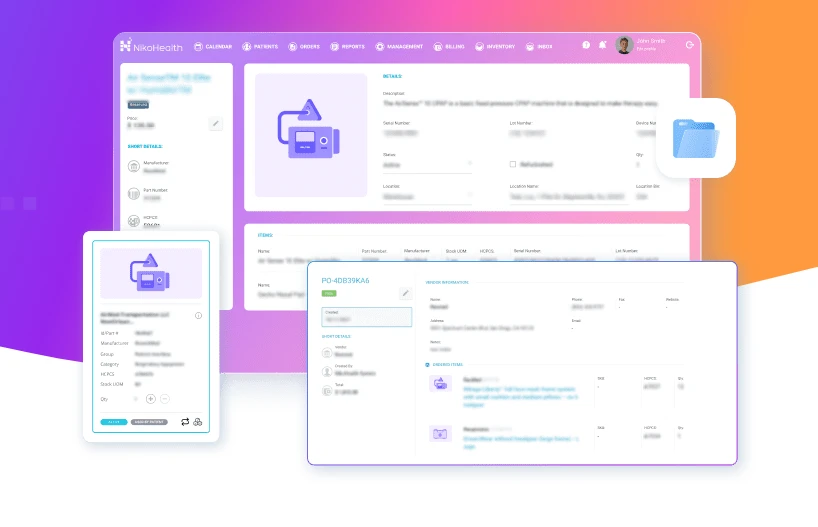
One example is NikoHealth, a healthcare software platform designed for HME and DME organizations. NikoHealth provides tools that can help providers manage areas such as patient intake, authorizations, billing, inventory, delivery, recurring rentals, and resupply workflows.
For a growing DME business, the advantage of an integrated platform is that employees do not necessarily need to maintain disconnected systems for every operational function.
Instead, information can flow through a centralized environment.
Invest in Revenue Cycle Management
Revenue cycle management should be considered from the beginning rather than after the company begins experiencing billing problems.
The DME revenue cycle typically includes multiple stages:
Referral → Intake → Eligibility → Authorization → Fulfillment → Delivery → Claim → Payment → Denial Management
A problem at any stage can affect the final payment.
For example, incomplete documentation at intake can lead to a rejected claim. A missed authorization can result in nonpayment. Poor payment posting can make accounts receivable reports inaccurate.
A well-designed revenue cycle process identifies problems as early as possible.
Automation can help by applying payer rules, checking documentation requirements, identifying missing information, and routing exceptions to staff.
Develop a Delivery Strategy
DME is unique because the product often needs to reach the patient's home.
Delivery can therefore become a significant operational expense and a major part of the customer experience.
Companies should establish clear procedures for:
- Delivery scheduling
- Driver assignments
- Route planning
- Patient communication
- Equipment setup
- Delivery confirmation
- Proof of delivery
- Returns
- Equipment pickup
- Emergency deliveries
For businesses operating across multiple cities, delivery management can become increasingly complex.
A centralized system can help coordinate orders, delivery teams, inventory, and patient information.
Prioritize Patient Experience
Although reimbursement is essential, DME companies should not overlook the patient experience.
Many DME customers are dealing with chronic illness, mobility limitations, recovery, or significant changes in their daily lives. Delays or confusing communication can create unnecessary stress.
A patient-centered DME provider should make it easy for customers to understand:
- What equipment they are receiving
- Why they need it
- How to use it
- What their insurance covers
- What they may owe
- When supplies will arrive
- How to request replacements
- Who to contact for assistance
Strong patient communication can also increase retention and improve recurring revenue opportunities.
Build a Resupply Program
Recurring resupply can become an important revenue stream for many DME businesses.
Patients using products such as CPAP supplies, diabetic equipment, or certain wound care products may require regular replacement items.
Instead of waiting for patients to remember to reorder, companies can develop proactive resupply workflows.
A resupply program can involve:
- Tracking previous orders
- Monitoring replacement intervals
- Checking eligibility
- Contacting patients
- Confirming continued need
- Obtaining required documentation
- Preparing recurring orders
- Billing the appropriate payer
Automation can reduce the administrative burden associated with recurring orders while helping patients receive necessary supplies on time.
Hire the Right Team
A DME company requires a combination of healthcare, operational, financial, and customer-service expertise.
Depending on the size of the business, key roles may include:
- Operations manager
- Intake specialists
- Billing specialists
- Accounts receivable staff
- Delivery personnel
- Customer service representatives
- Inventory specialists
- Compliance personnel
- Sales representatives
- Clinical staff where appropriate
Employees should understand both their responsibilities and the compliance requirements associated with their roles.
Training should not stop after onboarding. Regulations, payer policies, software capabilities, and internal procedures can change over time.
Create a Compliance Culture
Compliance should be part of the company's culture from day one.
DME providers handle sensitive patient information and operate within a complex regulatory environment. Weak controls can expose a business to financial penalties, payer problems, reputational damage, and operational disruption.
Companies should establish written policies covering areas such as:
- Patient privacy
- Data security
- Documentation
- Billing integrity
- Employee access
- Complaint handling
- Quality assurance
- Equipment management
- Record retention
- Incident response
Technology should also support appropriate security controls, access management, encryption, authentication, and auditability.
Develop a Marketing Strategy
Once the operational foundation is established, the company needs a strategy for generating referrals and attracting customers.
DME marketing can involve several channels.
Healthcare Referral Relationships
Relationships with physicians, hospitals, clinics, discharge planners, and other healthcare organizations can be valuable sources of referrals.
The company should clearly communicate its service areas, product categories, delivery capabilities, and patient support model.
Digital Marketing
A professional website can help patients and referral partners understand the company's services.
Content marketing can also establish expertise around specific medical equipment categories.
Potential content topics include:
- How to choose home medical equipment
- CPAP equipment basics
- Understanding mobility equipment
- Insurance coverage for medical equipment
- Preparing for home recovery
- DME maintenance and safety
- When replacement supplies may be needed
Local Marketing
For regional providers, local search visibility can be particularly important.
The company should ensure that its business information is accurate and easy to find online.
Monitor Key Performance Indicators
You cannot effectively manage a DME company without measuring its performance.
Important KPIs may include:
- Number of referrals
- Referral-to-order conversion rate
- Order processing time
- Authorization turnaround time
- Delivery time
- Claim rejection rate
- Denial rate
- Days sales outstanding
- Collection rate
- Average reimbursement
- Inventory turnover
- Resupply conversion
- Patient retention
- Customer satisfaction
These metrics can reveal bottlenecks that may otherwise remain hidden.
For example, a company may believe it has a billing problem when the actual issue is incomplete documentation during intake.
Plan for Growth
A DME business should be designed to scale from the beginning.
A company may initially serve one geographic market and later expand into additional states or product categories. Growth can increase revenue, but it also creates operational complexity.
Expansion may require:
- Additional licenses
- More employees
- New warehouse locations
- More delivery vehicles
- Additional payer contracts
- Expanded inventory
- Better software
- Stronger reporting
- More sophisticated compliance processes
This is why technology selection matters early in the company's development.
A system that works for a small operation but cannot support multiple locations, large patient volumes, recurring billing, or complex inventory workflows may eventually become a limitation.
Common Mistakes to Avoid
Entrepreneurs entering the DME industry should be particularly careful about several common mistakes.
Underestimating Working Capital
Revenue may not arrive immediately after an order is fulfilled. The company must have sufficient cash reserves to cover payroll, inventory, transportation, rent, technology, and other expenses.
Treating Compliance as an Afterthought
Compliance problems can be expensive and disruptive. Establish proper procedures before scaling.
Using Too Many Disconnected Systems
Multiple spreadsheets and unrelated software applications can create duplicate work and data inconsistencies.
Ignoring Denials
A denial is not simply an accounting issue. A pattern of denials may indicate problems in intake, documentation, authorization, coding, or payer rules.
Expanding Too Quickly
Opening multiple locations or adding many product categories before the original operation is stable can create unnecessary complexity.
The Role of Automation in Modern DME Operations
Automation is becoming increasingly important as DME companies deal with higher patient volumes and administrative complexity.
Modern platforms can automate repetitive activities such as eligibility verification, billing workflows, recurring invoices, payment posting, and resupply management.
NikoHealth is one example of a DME-focused technology solution that brings multiple operational processes into a unified platform. By connecting patient intake, authorizations, billing, inventory, delivery, and other workflows, technology can help DME organizations reduce manual processes and gain greater visibility into their operations.
The goal of automation should not simply be to eliminate human involvement. Instead, it should allow employees to spend less time on repetitive administrative tasks and more time handling exceptions, supporting patients, and improving the business.
Final Thoughts
Starting a DME company can be a rewarding business opportunity, but it requires careful planning and a strong understanding of healthcare operations.
Success depends on much more than selecting profitable medical products. Entrepreneurs need to build a compliant organization, establish reliable supplier relationships, develop efficient intake and authorization workflows, manage inventory carefully, create an effective billing operation, provide dependable delivery, and maintain a high standard of patient service.
Technology can serve as the foundation connecting these processes. A specialized DME platform can help a company move away from fragmented workflows and create a more coordinated operating model.
Most importantly, entrepreneurs should think about scalability from the beginning. A DME company that combines strong compliance, efficient operations, excellent patient service, disciplined financial management, and appropriate technology is better positioned to compete in a growing home healthcare market.
The DME industry will continue to evolve as healthcare shifts toward home-based care, digital workflows, automation, and more connected patient experiences. Businesses that prepare for these changes can build efficient operations while delivering meaningful value to patients and healthcare partners.




























Sign in to leave a comment.