The reinforcement inside a conveyor belt has a direct effect on how much load it can carry, how far it can run, and how it behaves under tension. Choosing between steel cord conveyor belt construction and fabric reinforcement is not simply a matter of picking the stronger option. The right choice depends on conveyor length, material weight, operating conditions, and the type of system being used.
For demanding applications such as mining, bulk handling, and a belt conveyor in cement plant operations, understanding the difference can prevent costly belt failures and unnecessary spending.
🏗️ How Steel Cord and Fabric Belts Are Built
Steel cord belts use longitudinal steel cables embedded within the rubber to provide tensile strength. The cords run along the length of the belt, allowing the belt to handle high tension without requiring many layers of textile reinforcement. This makes steel cord belts particularly useful for long conveyors and high-capacity systems.
The details of steel cord conveyor belt construction can vary according to belt grade, cord diameter, spacing, cover thickness, and application requirements. Proper rubber bonding around the cords is also critical because the reinforcement needs protection from moisture, corrosion, impact, and mechanical damage.
Fabric belts use textile plies, commonly polyester, nylon, or a combination of both. A fabric conveyor belts design generally offers good flexibility and is widely used on short and medium-length conveyors. The number of plies and fabric type determine the belt's tensile strength, flexibility, elongation, and load-carrying capability.
Fabric reinforcement can be a sensible choice when the conveyor does not require the very high tensile strength associated with steel cord construction.
⚙️ Where Steel Cord Belts Have the Advantage
Steel cord belts make more sense when conveyor tension is high or the conveying distance is considerable. Mining operations, large aggregate systems, and heavy industrial plants often require belts that can operate under substantial tension while carrying large quantities of material.
Another advantage is relatively low elongation. Because the steel cords stretch much less than textile reinforcement, take-up requirements can be easier to manage on long conveyors. This can be particularly useful where conveyor geometry and belt length make excessive elongation undesirable.
However, stronger does not automatically mean better. Steel cord belts typically require more attention during splicing, installation, and maintenance. A damaged cord or poorly executed splice can create serious problems, so the installation team needs the right equipment and experience.
The steel breaker conveyor belts used for impact protection are another consideration. Steel breakers can be incorporated into certain belt constructions to improve resistance to sharp, heavy material without making the entire belt a steel cord design.
🧵 When Fabric Belts Are the More Practical Choice
Fabric belts remain a popular option because they provide a useful combination of flexibility, strength, and cost. They work well for many conveyors handling aggregate, cement materials, packaged products, and general bulk materials.
A fabric belt can also be easier to handle during installation because of its flexibility and comparatively lower weight. For shorter conveyors, choosing a steel cord belt when the application does not require its tensile capacity may simply add unnecessary cost.
The type of fabric matters too. Polyester offers good dimensional stability and relatively low elongation, while nylon provides greater flexibility and impact resistance. The operating environment should guide the selection rather than choosing a belt purely by nominal strength.
🔍 What the Specifications Tell You
Comparing steel cord conveyor belt specifications is essential before placing an order. Tensile strength is only one part of the picture. Belt width, cover thickness, cord type, cord spacing, rubber grade, minimum pulley diameter, and splice requirements can all affect suitability.
The conveyed material also matters. A conveyor carrying large, sharp rocks needs different protection from one handling fine cement powder. If impact is a major concern, a suitable breaker construction or heavier top cover may be more useful than simply increasing tensile strength.
For a belt conveyor in cement plant applications, temperature, abrasion, conveyor length, and material characteristics should all be considered together. Cement plants can involve demanding transfer points and abrasive materials, so belt construction needs to match the specific section of the conveying system.
🏭 Steel Cord or Fabric: Which Should You Choose?
There is no universal winner. Steel cord is usually the better fit for long-distance, high-tension, high-capacity conveyors where tensile strength and low elongation are priorities. Fabric belts are often the more practical choice for shorter or moderate-duty systems where flexibility and easier handling matter.
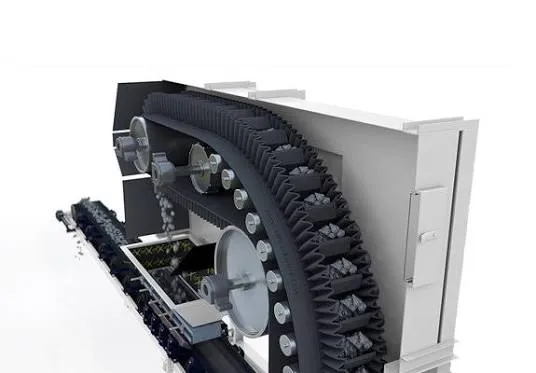
A chevron rubber conveyor belt is another example of why belt selection should be based on the application. A profiled belt may be chosen for inclined conveying because the pattern helps control material movement. Its reinforcement still needs to match the conveyor's tension and operating conditions.
Monster Belting supplies different conveyor belt constructions for demanding bulk-handling applications, including steel cord, fabric, chevron, sidewall, and other specialized belts. The best starting point is to assess the conveyor itself rather than selecting a belt from strength figures alone. Conveyor length, belt speed, material characteristics, pulley sizes, loading conditions, and operating environment all help determine which reinforcement makes practical sense.




















Sign in to leave a comment.